Facebook Campaign Gets Consumers Ready For Opn Customs
I noticed today that Oticon had pushed out a new Facebook marketing campaign speaking about the new Oticon Opn custom hearing aids. The landing page of the campaign gives some pretty good details about exactly what custom hearing aids will be, and their Made For iPhone abilities. Without any further blah, let’s take a look.
The Famous Oticon Open Sound
The Opn from Oticon has become famous for its very different sound quality in noisy situations. This is because Oticon is using a very unique way to use directional microphones to process speech sounds. The first question I would have about the customs would be are they capable of the same type of processing? The answer is not yet clear on that point, but, I would guess that any Opn custom with twin microphones should be capable of the now famous Opn sound. We will clarify that point when we get the full technical details at launch.
Five Opn Custom Hearing Aid Types
The new Opn customs will be available in five different In The Ear models at every technology level. That’s an IIC. a CIC, an ITC, a Half Shell ITE and a Full Shell ITE. The last three in that list will be Made For iPhone hearing aids which will make many people happy. It makes Oticon only the second hearing aid brand to offer Made For iPhone custom hearing aids. Let’s take a look at the devices.
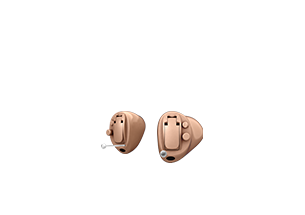
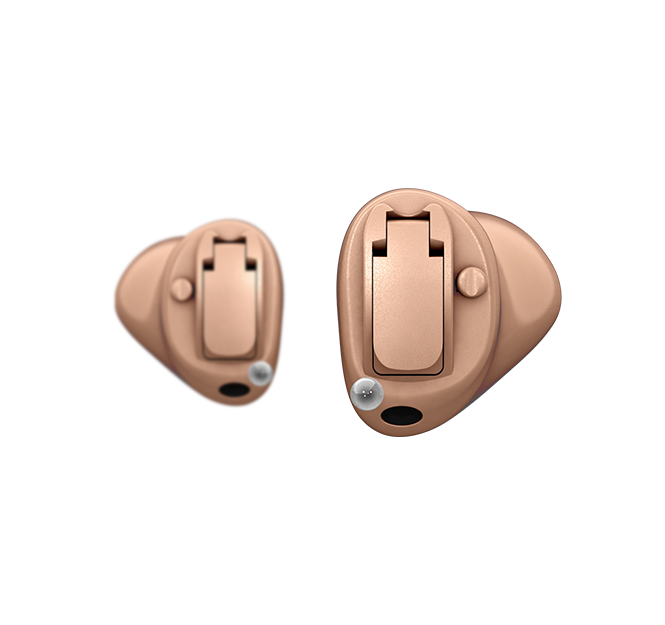
Invisible In Canal
They say “These ‘invisible’ hearing aids sit far enough in the ear canal that people won’t be able to see them. A thin plastic pin remains accessible, which you use to pull the hearing aids out again. Like all Oticon Opn hearing aids, the Invisible-In-the-Canal (IIC) style automatically adjusts to different sound environments – which means you don’t have to touch them or change their settings during the day.” The IIC will definitely not be Made For iPhone and in fact may not be wireless at all. Oticon have made some strides in the design of the device and they say it will be the smallest IIC ever. They reckon that it should physically fit 8 out of every 10 people. The devices appear to be powered with a size 10 battery.
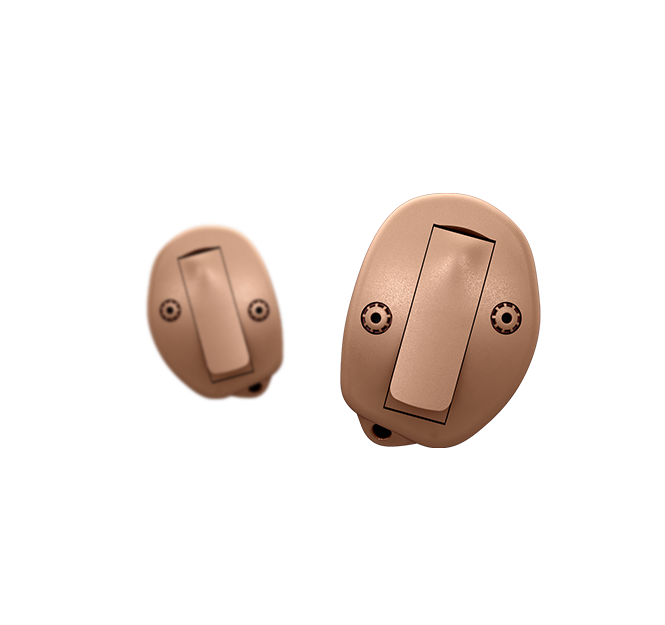
Completely In Canal
They say “These very discreet hearing aids sit completely inside the ear canal and are hard to see – though not entirely hidden. They have an optional control button.” Again, the CIC devices will not be MFI enabled, however, I would expect them to be wireless enabled. That should mean that they will be compatible with Oticon’s own wireless hearing aid accessories. The addition of an optional control button also gives CIC users the ability to manually control the aids, which is never a bad thing. The devices appear to be powered with a size 10 battery. Looking at the faceplate of the CICs, they could be a twin mic hearing aid, if so, they may well deliver the Open Sound.
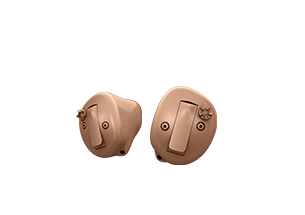
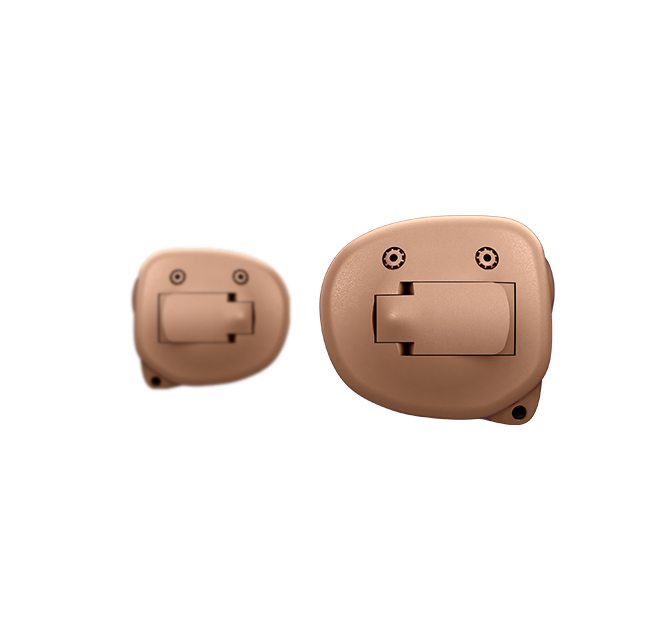
In The Canal
They say ” In-the-Canal (ITC) hearing aids can accommodate larger batteries and more advanced technologies such as Bluetooth® low energy technology. This is because they are larger and more visible than the two smaller types shown here: Invisible-in-the-Canal (IIC) or Completely-In-the-Canal (CIC) hearing aids. With Bluetooth, ITC hearing aids can connect to other devices including smartphones, TVs, computers, music players and remote microphone accessories. You can make hands-free calls using your hearing aids, and listen to stereo audio and music wirelessly. The larger faceplate allows you to control them via the programme button or a volume wheel, and makes them easier to handle.” This is an excellent hearing aid, it will be Made For iPhone and have access to their Connect Clip, while being pretty discreet.
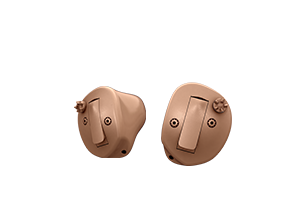
In The Ear Half Shell
They say “These in-the-ear hearing instruments fill up more of the visible part of the ear. They are easy to use, fully featured, and offer wireless connectivity.” The half-shell offers the best of both worlds, a slightly easier to handle device that offers manual controls that still offers discretion. The half-shell device will be MFI enabled and have access to the Connect Clip, it should also offer the Open Sound. There is no word so far on whether they will be able to fit a telecoil in it though. While some aren’t that interested in Loop systems, many love the telecoil once they have tried it out in a theatre or public place.
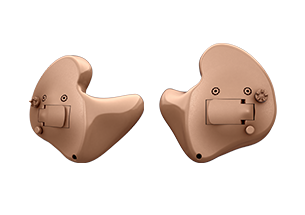
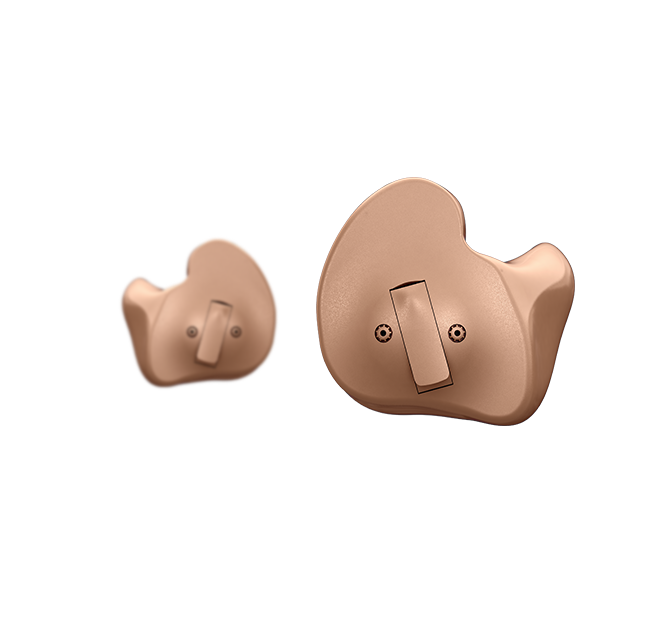
In The Ear Full Shell
They say “For people who prioritise an instrument that is extra easy to handle, control, and adjust. These in-the-ear hearing aids are fully featured and offer wireless connectivity.” The full shell should offer a size 13 battery and I have little doubt that it has a telecoil on board as well as access to Oticon’s own wireless accessories and a direct connection to iPhones. Again, with the twin-mics onboard the device should offer the Open Sound.
While Oticon has not given an official release date, (word is, end of October 2018), you have to believe it will be sooner rather than later. With the Facebook campaign stoking interest in Consumers, they will need to strike while the iron is hot. As the devices are released and we get the full technical details, we will add them to our Oticon Hearing Aids Brand Page. So keep checking back for more.
With the recent launch of the Widex Evoke, we have moved into new territory for hearing aids. In the article hearing aid innovations that change everything, I detailed machine learning as one of the features that will change everything for hearing aids as we move forward. But why do I think so you may ask and what difference can it make? I don’t think I am too unrealistic in saying that it could change not just your experience with hearing aids, but also your experience with hearing professionals dramatically and forever. Let’s take a look at why.
The Age Old Fine Tuning Problem
Its the age old fine-tuning problem, you go and see your hearing professional and try to explain the issues that you had in a particular sound environment. They then make changes to the programming of your hearing aids. Unfortunately, those changes are made in quiet rooms in clinics and you don’t know what the effect will be until you are back in the situation. So starts a back and forth system until one of two things happen, the hearing professional gets it right, or you give up.
We have been aware of this problem for many years and in recent times some of the hearing aid brands have introduced telehealth features to begin to tackle the issue. But what if you made your own changes in real time? What if those changes were then used as the basis of better programming for not just your hearing aids, but everyones? Meet machine learning.
Using Massive Computer Power To Crunch Numbers
In essence, machine learning is a part of the greater artificial intelligence movement in computers. Large amounts of data are processed to in order that a management system can learn from the data. Machine learning and other artificial intelligence strategies have been used in healthcare for several years, but never before in hearing aids. The direct connection of hearing aids to a Smartphone (which we can thank GN Resound for) is what has made it possible.
In the case of the Widex Evoke, the machine will be learning the preferences of hearing aid users in different sound situations. This will allow the machine to make better judgements on what hearing aids should do in complex sound situations. Hopefully, it will be learning the preferences of thousands of hearing aid users, with luck in the future, it will be hundreds of thousands.
The issue with machine learning is that in order for it to be successful, it needs large volumes of data points to crunch through. Without that data, both its learnings and effects are limited at best. If Widex can convince users to become involved with the machine learning feature, those users will be rewarded with hearing aids that continuously evolve to be better at what they do. In other words, their hearing aids will continuously be upgraded to be better at what they do based on real-world data.
Designing Simple
Widex seems to have taken pains to design the user part of the function to be simple. This is really important because if it is difficult to use, users just won’t use it. Widex offer a very simple A/B choice structure, does A profile sound better in this situation or B profile? The user picks and the data is stored and sent to the cloud via the Smartphone app. It is important for me to point out here that the data is anonymised, so you don’t have any privacy worries with this type of system.
A Limited System Loop
At present, the data will be used to understand how the hearing aids may better perform in different sound situations. That understanding will be used to change the underlying strategies in the hearing aids with firmware upgrades that will be pushed out by Widex through the Evoke app. In this way, the system is a limited loop, however, as machine learning evolves, I think you can expect to see changes happening in real time.
Evolution of Machine Learning in Hearing Aids
I believe that as machine learning is adopted across hearing aid manufacturers, we will see an evolution in its function. We will see always on continuous data exchange between the hearing aids and the cloud server system. This will lead to higher functionality in hearing aids than ever before. Hearing aids of the future will continuously improve as more people use them in more situations.
This will be dependent on users having access to wider fine-tuning protocols on their Smartphone apps and acceptance of greater complexity. Again, back to the data needed, more data points means better learning and decisions. I think the user of the middle future will happily accept that though, in fact, I think the customer of five years hence may well demand it.
Changing The Relationship With Professionals
What will it mean for your relationship with hearing professionals though? If hearing aids are going to continuously be fine-tuned in your ear, what will you need to see your hearing professional for? Initially, I don’t think this technology will have any effect on the current journey. However, as the technology evolves and uptake by users increases, I think the reasons that you see your professional will change.
When the full evolution of machine learning is complete, I think the only reasons you will attend your professional will be purely service based. Basically to check the function of the hearing aid, to check your ability to hear and to validate or verify that the hearing aid is delivering the speech signal you need. I think that this is five or more years away, but the technology will change things.
Changing The Business Model?
Will it change the business model of hearing aid delivery? I think it may, I think there will continue to be a hearing healthcare professional involved to test your hearing and give you recommendations on hearing solutions that are ideal for you and your lifestyle. Will they sell and fit those hearing aid solutions? Yes, no maybe, I think there will be different options and the answer to those questions will be based on the preference of the user.
In essence, I think that as technology evolves the business model will change, I believe it to be inevitable. Based on my experience with hearing aid advocates across the world, I do believe that my profession will continue to be involved with hearing aids and the people who wear them. Even the most ardent supporter of self-fitting and access to fine-tuning has always wanted the continued involvement of a professional.
What shape that involvement will take remains to be seen though, and I think it will be governed by the changing shape of the technology.
We recently had some contact with a research company, they are undertaking a research project for a leading hearing aids company. In essence, they are looking for people who have purchased from Miracle-Ear within the last year and they are interested in how you have got on.
They are an independent marketing research firm engaged in a project for a leading hearing aids company. For the study we specifically need to speak with people in the US, who have purchased a Miracle-Ear hearing aid in the past year or so. The interview will be about their hearing loss condition and treatment journey. Ideally, they would want to speak to people in their 70’s.
40-minute online chat, receive a $100
Respondents would participate in a 40-minute online video chat interview in their own home and will be compensated $100 for their time and opinions. All respondents will need for the study is access to a strong internet connection along with a device with a camera and microphone such as a computer, a tablet, or smartphone.
The interview would take place on May 7 and 9 at a time that would be convenient for the respondents. If you are interested, contact Rachel Geltman at rgeltman@videochatnetwork.net
Buy Hearing Aids & After Care From the Comfort of Your Own Home
I noticed a new website recently called Lively Hearing Aids who are based in New York. They are offering hearing aids sold online. Not something that’s new perhaps, but this is the first time I have seen this type of offering with so many high-level and well-respected Audiologists involved. There is a lot of Audiology weight behind the business and they are using Remote Care systems to provide ongoing follow up and care. Let’s dig a little deeper.
Audiological Authority
The site names some well-respected Audiology names as both the Head of Audiology Research (Dr Harvey Abrams, Ph.D.) and the Head of Clinical Audiology (Dr Christina Callahan, Au.D). It also names some well-respected Audiological names as Board Members. So there is a lot of Audiological authority behind this business.
Showing my inherent bias, I want to talk about the website. The site is beautifully built and a lot of thought and expertise has gone into it. That means investment, to me that screams a business who plans to be around for a while. Just based on the website alone, I would have to say that a lot of thought and care has gone into this business. That is further validated by the choice of hearing aid technology for sale.
The Hearing Aids
While the site is a little vague about the hearing aid technology level, it couldn’t be clearer that the hearing aids involved are Resound LiNX 3D Receiver In Canal devices. They are a good choice for several reasons, firstly, they are pretty good devices and secondly, they can be remote fine-tuned. Which leads me to the process involved.
What Are You Buying?
For $2350 you are buying a pair of LiNX 3D hearing aids (not sure of the tech level but we hope to update later) Updated: You are buying a pair of LiNX 3D 5 hearing aids (thanks to Jeff Helm for the info) and the following:
Support from trained specialists, 7 days a week
1 year supply of batteries
Lively app for smartphone/tablet control
2-year manufacturer’s warranty (standard warranty programme, Lively say they will also fix out of warranty repairs for a price)
2-year loss and damage protection
What is The LiNX 3D 5?
The Resound LiNX 3D 5 is the lowest level of technology in the LiNX 3D range. Because of the way Resound offer hearing aids, I wouldn’t call it entry level as such. To compare it with other hearing aid brands, the LiNX 3D 5 would be similar in nature to the 50 level in Phonak hearing aids or the 220 level in Widex hearing aids.
The Buying Process
Lively has a clear process for you to buy:
Take their online hearing test: They say “With this fast and free online test, you can give our licensed audiologists the info they need to program your hearing devices. Already took a test? You can also upload an audiogram”.
Buy them and try them: They say “Order from Lively and we’ll ship our state-of-the-art hearing devices to your door. Try them for 100 days and if you’re not satisfied, we’ll refund 100% of your purchase (even return shipping)”.
Get aftercare from the convenience of your own home: They offer two years of support with the hearing aids and they say “Tell your Lively audiologist about your hearing experience via phone, video chat, or our app. They’ll make the necessary adjustments remotely, so you can hear the difference instantly”.
Well Designed Service
All in all, it seems like a well-designed service which more or less meets the Blamey and Saunders standard (the standard we use to assess online hearing sales). The online hearing test is interesting, if you go above a certain level it informs you that Lively can’t really help you and you should see a local Audiologist. You have to see that as a good thing.
I am always concerned with online hearing tests though, we have one here on Know and it is scientifically validated, but it isn’t used to output an audiogram, it is just used to tell you if you might need to see someone. The other thing is that while the test may be scientifically validated, is the user?
The Problems I see
I still see some issues with this type of model and I have expressed them before. They are as follows:
No one looks in your ears, what if it is wax or a medical condition?
There is no bone conduction information, so we aren’t sure if it is conductive
How accurate is the hearing test considering people may take it in non-ideal conditions?
One way or the other it will be interesting to see what happens with Lively over the next while. I have put a request to the site to ask a few questions and I will either update this article or write a new one if I get a response.
As remote audiology care systems become ever more prevalent, I would expect to see more sites like Lively to crop up, I do believe that is the way the hearing aid world is going.
Bernafon talks about custom Made For iPhone hearing aids
While Oticon has been busy, their stablemate Bernafon has been also. They are revealing a lot more about their own Zerena Made For iPhone custom hearing aids. Here is what they will have on offer.
First Behind The Ear, Now In The Ear
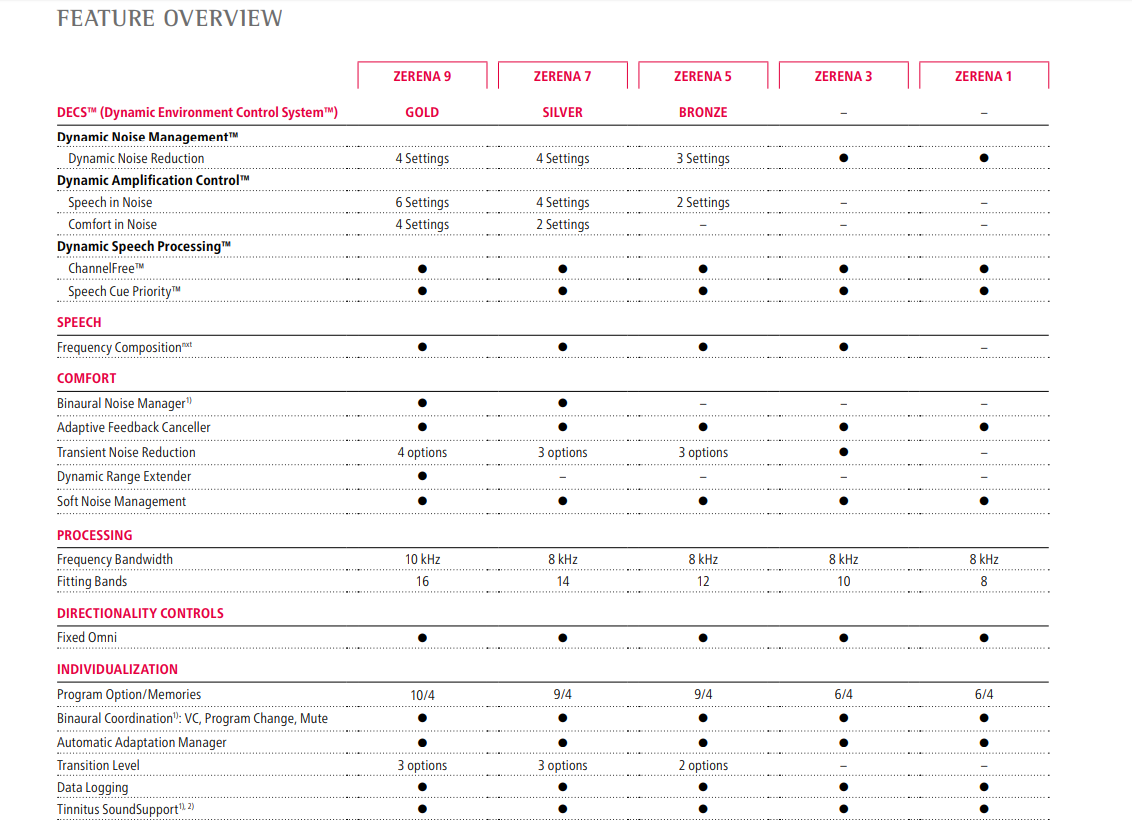
Initially and like Oticon, Bernafon offered the Zerena in behind the ear type devices only. I have worn a set for a while now and I have to say I have been impressed with them. Now they are ready to release their In The Ear range and they have started to publicise the devices. They have also introduced two new lower-end technology levels to the Zerena platform the Zerena 3 and the Zerena 1. You can see the feature overviews below, click on the image to show a larger image for easier reading.
Five Zerena Custom Hearing Aid Types
The new Zerena customs will be available in five different In The Ear models at five different technology levels. That’s an IIC. a CIC, an ITC, a Half Shell ITE and a Full Shell ITE. The last three in that list will be Made For iPhone hearing aids which will make many people happy. It makes Bernafon the joint second hearing aid brand with Oticon to offer Made For iPhone custom hearing aids. Let’s take a look at the devices.
Invisible In Canal
They say “The IIC is the smallest custom hearing instrument available. It is designed to fit entirely into the ear canal and is therefore in most cases invisible. It is suitable for users with mild to profound hearing losses..” The IIC will definitely not be Made For iPhone and in fact may not be wireless at all. Bernafon has taken the new hardware advances jointly made with Oticon in the design of the device and they say it will be the smallest IIC they have ever produced. They believe that it should physically fit 8 out of every 10 people. The devices appear to be powered with a size 10 battery.
Completely In Canal
They say “The CIC custom hearing instrument is designed to fit almost entirely inside the ear canal and is therefore barely visible. It is suitable for users with mild to profound hearing losses..” Again, the CIC devices will not be MFI enabled, however, I would expect them to be wireless enabled. That should mean that they will be compatible with Bernafon’s own wireless hearing aid accessories. The devices appear to be powered with a size 10 battery. Looking at the faceplate of the CICs, they could be a twin mic hearing aid, which may mean directional microphone features and functionality.
In The Canal
They say “The ITC custom hearing instrument is designed to fit in the lower third of the external ear and is ideal for users with limited dexterity. It is suitable for users with mild to profound hearing losses.” I have confirmed that this will be the smallest custom Made For iPhone hearing aid in the range. This is an excellent hearing aid, it will be Made For iPhone and have access to their SoundClip-A, while being pretty discreet.
In The Ear Half Shell
They say “The ITE HS is the largest and most powerful of all custom hearing instruments. It is designed to fit half the external ear and is ideal for users with limited dexterity and reduced vision. It is suitable for users with mild to profound hearing losses.” Half-shell devices offer the best of both worlds, a slightly easier to handle device that offers manual controls, while still being relatively discreet. The half-shell device will be MFI enabled and give you access to the SoundClip-A. I haven’t heard yet whether they will be able to fit a telecoil in it though.
In The Ear Full Shell
They say “The ITE FS is the largest and most powerful of all custom hearing instruments. It is designed to fit the entire external ear and is ideal for users with limited dexterity and reduced vision. It is suitable for users with mild to profound hearing losses.” The full shell will be powered by a size 13 battery and it will have a telecoil on board. It is also MFI enabled and will connect to the SoundClip-A and Bernafon’s other wireless accessories.
Bernafon is to launch the Zerena custom devices to the market at the end of October 2018. As the devices are released and we get the full technical details, we will add them to our Bernafon Hearing Aids Brand Page. So keep checking back for more.
We often get feedback from consumers about different facets of hearing aids and hearing care. They talk about things they aren’t happy with or wish were different. At Hearing Aid Know, we have begun to undertake consumer hearing aid surveys. Our first one is up and we will continue with it for a while. When we have some decent answers from a large enough sample, we will then change the survey to look at other topics. This is your chance to help to shape the future of hearing aids and hearing care. We will be feeding the survey responses back to the main hearing aid brands as we move forward and we hope to begin to write some articles based on them as well. This is the opportunity to make your voice heard.
The surveys are completely anonymous and we won’t be gathering any recognisable personal data. We are going to try to keep the surveys short and sweet moving forward, trying to keep them to perhaps ten good questions.
If you like what you see, share it so others can benefit
I had a recent experience with someone that really jarred me. We were talking about new hearing aids, their existing ones needed repair and were getting to the stage that their ongoing life expectancy was limited. I told them that I would send them away for repair to see if the manufacturer would do it. I also said that as they were nearly ten years old, it might be time to consider new ones. They said well I am pretty old now, I might not have much longer to live. I wanted to shake them hahaha, but I settled for asking them when did they think they got too old for quality of life?
Difficult Situation
Situations like this are always difficult for me, I like to get the point across but I always feel like I am straying into selling something to the Patient. Listen, don’t get me wrong, that is in fact what I do, I sell hearing aids to customers and then take care of them. However, I always try to offer the very best advice possible, give them all the information and then leave them to make an informed decision. So when I am forced to ask these types of questions I always feel uncomfortable.
They Have To Be Asked
The questions need to be asked though because in doing so, I believe I am helping the person in front of me get to the heart of the matter. In this way, I hope that they can reason their way through their fears. That they can overcome the voices in their heads. Because many times the real problem is some underlying personal struggle.
Too Old, Too Stupid
Such rubbish, you are never too old, and too stupid doesn’t even deserve a response. Those are the voices in your head, haven’t I told you before to ignore them? Quality of life is important, to believe that it is not is to rob yourself of it. This idea that you might die soon, therefore, you don’t deserve an expensive product that will ensure your life is better is balderdash.
The idea that you might be too stupid to work out how new technology works is also complete balderdash. If someone spends the time to train you and help you, you will have no problems. I always feel that a failure to understand is really a failure in teaching. It simply wasn’t explained simply enough. All of this leads me onto Cyrill Blewitt and why he is my new hero.
Cyrill Blewitt Rocks
Yes indeed, Cyrill, you rock mate, Cyrill is 82 and the proud owner of a set of Resound LiNX 3D hearing aids which are making a big difference to his life. Not just that, but Cyrill is actively engaged in hearing better by using the accompanying smartphone app to ensure that he gets the best possible performance out of his devices. Sure as the Pope is Catholic, Cyrill has no worries about being too old, or too stupid. You know what, you shouldn’t either. Grab life by the ears and get on living.
If you like what you see, share it so others can benefit
The latest addition to the Phonak CROS B range is now available. The CROS B-R rechargeable CROS hearing aid model has been fully launched across all of the major territories. The device is just one model of a full range of CROS devices which include custom types. We thought we should take a closer look at it.
WIreless CROS Since 2011
Phonak have been synonymous with wireless CROS and Bi-CROS devices since 2011 when they introduced their first. Since then, they have become the go-to hearing aid brand for the devices. In their latest release fluff, they stated that nearly 90% of professionals who have used Phonak CROS intend to use it again. To be honest with you I was surprised it wasn’t higher.
89% of professionals who have already dispensed Phonak CROS intend to recommend it again
Phonak CROS devices have almost become the gold standard within this segment. I have used them in the past and I have had some really good results from them. CROS systems can be power hungry though as they are constantly using the wireless audio streaming protocol. Which can mean more regular battery changes.
Over twenty hours of use on one charge
No More Battery Worries
The new rechargeable CROS system simply means that there are no more battery worries for users. No spare batteries, no changing batteries, no worrying about the battery running out. The devices will deliver a full day of use with a charge. In fact, they have been tested to deliver over 20 hours of use with just one charge. The CROS B-R is exactly the same size as the Audeo B-R and can be charged with the same charging dock.
Three Levels of Tech
The rechargeable CROS is only available for the three levels of tech available with corresponding rechargeable hearing aids. So that’s the 90, the 70 and the 50. However, the rest of the CROS B range is fully compatible with all levels of technology.
Binaural Voice Streaming
This feature is one of the reasons that Phonak hearing aids do so well in noise. The CROS B leverages a feature called Stereozoom, which allows the focus of the microphones on one voice in a crowd and they also offer the Speech in Loud Noise program with StereoZoom. It is available in combination B90 (as an automatic feature) and B70 (as a manual programme feature) performance level hearing aids. For the lower performance levels, CROS B provides Real Ear Sound and omnidirectional microphone modes.
Streaming Accessories
The CROS B devices are compatible with all of the streaming accessories that Phonak make available. Once a streaming device is detected, the CROS device shuts off and the streamed audio is heard directly in the hearing aid on the better ear. Once the streaming audio is stopped, the CROS B automatically begins to stream audio from the worst side. That’s a pretty clever feature, other manufacturers don’t offer.
If you like what you see, share it so others can benefit
Great Hearing Aids, Impressive Sound, Love The Rechargeability
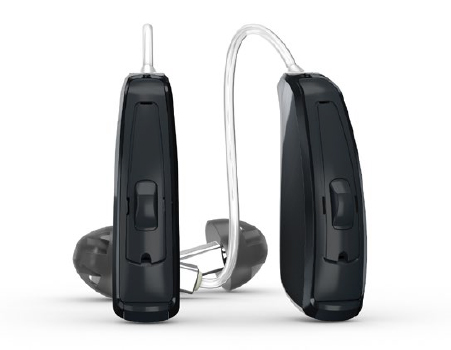
I was hugely impressed by the ReSound LiNX 3D last year, so I was eager to try out the latest model from GN ReSound. The LiNX Quattro has all the features and performance of the 3D but manages to surpass it in terms of speech recognition and sound quality. And, oh yeah, the Quattro is a rechargeable hearing aid, no more fiddling with batteries!
I’ve been writing on this site now for about 15 years (not enough recently, as Geoff would say) and even after all this time I am still surprised how hearing aid technology manages to improve year-on-year. When I tried the ReSound 3Ds last year they were pretty much perfect, I could hear wonderfully, Bluetooth phone calls were a revelation and I struggled to find fault with them. And here we are, a year on and I’m surprised again as the Quattro range improves on the 3Ds awesome feature set and allows me to hear more still.
This is great for me personally, I have a progressive hearing loss, i.e. it is getting worse all the time, so it’s great that as my hearing gets worse the technology gets better and I’m still able to communicate well most of the time even though I have absolutely no useful hearing left with aids.
Rechargeable for Convenience
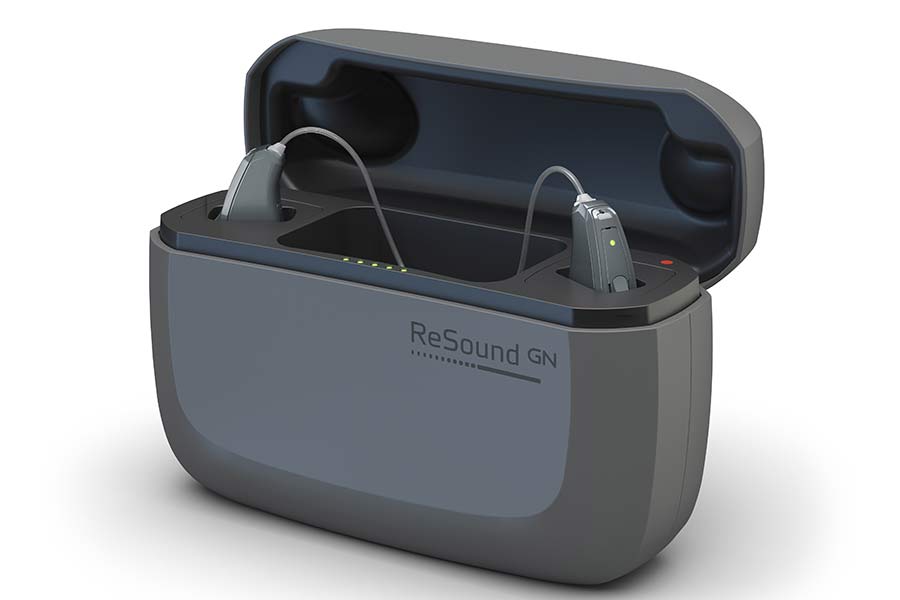
Any product with a rechargeable battery is only useful if it lasts a decent amount of time between charges, annoys the hell out of me that I have to charge my phone twice a day. The photo at the top of the page shows a pair of Quattro hearing aids sitting in their charging case, you can use the Quattro for 30 hours on a single full charge, so can easily wear them the whole day without having to worry about the battery dying on you.
If you stream via Bluetooth a lot (for phone calls or music) then the battery does drain a bit quicker but you’d still easily get a whole day of use out of them, worry-free. The case charges the hearing aids and the case itself is charged via a USB lead, the case can charge a pair of aids three times before it needs plugging in again.
The Quattro from GN ReSound is an impressive rechargeble hearing aid. The aids can be used for up to 30 hours between charges.
For me, not having to change the batteries and having worry-free 24 hour usage is great, but for people who might not be able to change hearing aid batteries easily, it might be the difference between being able to use hearing aids and not – the fiddly battery change might not be possible for people with arthritis or mobility problems in their hands.
How it works
Recharging could not be simpler: You take your aids out of your ears and place them into the charging box, that’s it, done. When you put the aids into the box you see a line of green lights show up on the box, this indicates how much charge is in the aids, you’ll also see a little green light flashing on each aid to indicate that it is charging, if you don’t see a flashing light on the aid then move it a little to make sure it is sitting right in the hole.
Bluetooth streaming for phone calls, music and TV
The Quattro, like the 3D before it, is a Made For iPhone (MFI) hearing aid, which means that you can stream audio from your iPhone or iPad directly into your hearing aids with a very high quality. GN ReSound was one of the first to work directly with Apple on audio streaming, that experience shows as the Quattro delivers a rich and glitch-free sound.
I said this in the 3D review and I will say it again: having such great audio playing directly into my hearing aids has enabled me to make stress-free phone calls for the first time years, due to my severe hearing loss I just could not get enough volume or clarity on calls the normal way, streaming fixes that for me, I can answer a call in total confidence that I will be able to hear with ease.
There is no delay in streaming, when your phone rings, you hear the ring in your hearing aids, if you answer it then you are straight into the call.
An important thing when streaming is being able to still be aware of environmental sounds, you don’t really want to walk out in front of a truck whilst listening to the latest Kanye track because you didn’t hear the truck. Quattro strikes a balance of these sounds, environmental sounds are lowered quite a bit to make the streaming clear but it’s still enough to be able to hear what’s around you – this is also adjustable by your hearing aid provider and also via the smartphone App.
Made for iPhone – remote control
Another aspect of the phone to hearing aid connectivity is being able to control your hearing aids using your phone. ReSound have an App that lets you do a ton of stuff with your Quattro hearing aid, more of that in a bit, but because the Quattro is an MFI hearing aid, the integration with Apple iOS allows you to do some things outside of the App.
Your phone effectively acts a remote control, which is really nice if you want to change volume and don’t want to be seen by people making strange-looking hand gestures around your head. A triple-press of your phone’s home button takes you to a simple control panel where you can adjust the volume, switch between programmes and also use the “live listen” feature that turns your iPhone into a remote microphone. The short video below shows me making some quick adjustments (no sound).
GN ReSound Smart 3D App
GN introduced their Smart 3D App with the 3D range of hearing aids, the same App works with the LiNX Quattro hearing aids, the only difference is that the App automatically recognises that you have Quattro hearing aid and automatically switches on some new features.
This App is easy to use and gives you a lot of customization options – it is well designed in that it does not have any fiddly controls our options that require any deep knowledge of how the hearing aid works. App options are clearly labelled and easy to press, this App should be pretty easy for most users to pick up and use effectively.
You can, of course, switch between programmes via the App and change volume, the basic stuff – where this App really shines is the sounds customisation it gives you, these options can make a real difference to voice quality in particular environments, if you tweak these settings and find something you like you can save them so that you can select them again another time with a single button press.
You have three sliders that allow you to change bass/mid/treble, changing these make a huge difference to how the hearing aids sound, you have real control here, for example, boosting the mid and/or treble can help you to hear a very softly spoken person.
The ReSound Smart 3D App isn’t a novelty that the company thought would be a good selling point (“Hey, we’ve got an App, how cool is that?”), it’s a powerful tool that gives you fine-grained control over your hearing experience, allowing you to configure your own personal setup.
A comfortable and natural sound in everyday environments
Its all well and good a hearing aid having some cool Apps and snazzy features, the real proof of the pudding is how well you can hear as you go about your daily life.
The first thing I will say about the GN Quattro is: I’ve worn a lot of hearing aids over the years, fitted by a lot of different people and this is the only time that I have ever been completely happy with the hearing aid after the first fitting! Usually I go back to see the hearing aid professional a number of times to get things tweaked and tuned until I am happy with the sound – with the Quattro everything is right the first time, which I think is actually a big win for ReSound and us patients as people are used to things “just working” these days, you don’t expect to have to fine-tune your TV after buying it, you turn it on and it is ready to go: I got my Quattro’s fitted by Kate Ogden and they were just ready to go. That won’t happen for everyone as people’s brains need to get used to hearing new sounds and that can take time, but I’m mentioning it here as it’s a first for me.
GN Resound says that the Quattro offers “more layers of sound” and I don’t think that is an idle boast. I have noticed voices and music both having more detail to them, this, of course, makes voices easier to understand.
What I thought I would do in this review is list hearing-related problems that I have and talk about how the Quattro is helping me with those problems.
Hyperacusis and noise reduction
Hyperacusis is a sensitivity to loud noises. I suffer a bit from this and it is a very common problem, in the past, I have had real trouble with slamming doors, dog barks and even running water hitting a metal sink, my hearing aid at the time just couldn’t bring these down to a comfortable level. Noise reduction in the Quattro gives me confidence that I won’t experience any uncomfortably loud sounds – when the noise reduction algorithm does kick in it is fast and seamless and still allows for good speech recognition. I’ve found some aids to have too aggressive noise reduction and speech is also reduced too much but the Quattro strikes a good balance to block out unwanted noise and keep you in the conversation.
Tinnitus
I have a constant buzzing in my right ear, sufferers often find that wearing hearing aids help to mask the tinnitus and reduce its annoyance – this has always been the case for me: no tinnitus when I’m wearing hearing aids but it flares up when I take them out. Exactly the same with the Quattro: does a great job of masking my tinnitus.
Speech Understanding and Recognition in Noise
I have been using the default programme on my Quattro, which is called “All Around”, this works well for me in all environments, even pubs/bars and other noisy places. The Quattros do a remarkably good job focusing on the speaker(s) in your line of sight (you are usually looking at the person you are listening too), whilst still giving me a good sound from speakers to my side and back, I can comfortably listen to the people in front but am still aware of the other conversations – this works really well in a crowd.
I think the best thing I can say about these hearing aids is that they don’t leave me feeling tired at the end of the day because listening is hard work. That might seem like an obvious thing to say but having a severe hearing loss and trying to keep in the conversation all day can be exhausting, with these aids I find it much less work.
Directionality
Talking above about being able to focus on people in front of me but still being able to be very aware of chatting from other angles leads me on to the directionality features. This used to be a horrendous problem with older hearing aids, I could hear a voice but couldn’t be sure exactly where it was coming from, this meant I would quickly lose the drift of groups conversations as by the time I’d worked out who was talking the next person would say something, so I was forever catching up.
A pair of Quattro’s effectively work together to fix directionality issues, when you are wearing two aids they communicate with each other to locate sound sources and bring prominent voices to your attention. As I said above, the default “All Around” programme puts an emphasis on voices in front of you whilst keeping the full 360 degrees in your attention but you can alter setting using the app to put full focus in front of you or to give equal focus around the 360 degrees. The full focus at the front will work if you are in a very noisy bar or restaurant and you need full attention on the person in front an equal around 360 will work better if you are in a meeting or group where the conversation is darting around the group.
Directionality in the LiNX Quattro works brilliantly in the default mode but it is easy to alter it to suit specific environments either by using the App or getting your hearing care provider to set up different programmes for you to switch between.
Music
Music sounded great with the LiNX 3D and I have streamed a lot of music, podcasts and audiobooks using them. The Quattro hearing aid goes even further than the 3D, it has the same clarity when streaming but the “more layers of sound” that Quattro delivers shines here, it does add to the sound quality of music and lets me hear a fuller sound and also small parts of songs that I may have missed before, a snare here, a beep there, a tonal change there – the Quattro enables me to hear the subtleties of the soundscape that I had been missing.
Wind Noise
An addition to the Smart App that I really like is that the “wind noise reduction” option is available to use on the “All Around” default programme, this is a slider that lets you pick how aggressive wind-noise cancellation is – I’ve found this option very useful when I’m out walking the dogs. Wind noise is a very hard problem for hearing aid manufacturers to get right, ReSound does a great job with the Quattro. You can ramp up the wind reduction slider on the App until you feel comfortable and then reduce it when you are out of the wind, it helps a lot, wind noise is still there to some extent, you can still hear the wind blowing on the hearing aid’s microphone, but it isn’t overpowering and voices can be heard easily over the wind.
An excellent hearing aid
GN ReSound has done it again, I thought their 3D line was amazing but the Quattro is even better, it has all the great features of the 3D but adds superior sound quality, both when listening to everyday sounds and streaming music. Being rechargeable is the icing on the cake.
I was really pleased to meet Andrew Hugill who is a professor of music and a composer at EUHA recently. Andrew suffered hearing loss from Meniere’s disease which is quite a difficult hearing loss to treat because of its nature. In essence, Andrew hasn’t enjoyed music for over ten years, simply because any hearing aid he tried helped him to hear better but never came close to allowing him to appreciate music. That is ten years without something he loves, but with the LiNX Quattro, things have changed. Here is what I found out.
Music Composition
Andrew loves music, it really is as simple as that, he has devoted his working life to it. However, when he suffered a hearing loss brought on by Meniere’s his ability to appreciate it was destroyed. Meniere’s disease causes fluctuating reverse slope hearing loss. Reverse slope hearing loss is a rare phenomenon and most hearing aids struggle to help, primarily because they are designed to focus on high-frequency emphasis which is usually where the problem lies.
I asked Andrew what his experience had been with hearing aids before. Andrew explained that while hearing aids did help with his ability to communicate, they just didn’t allow him to appreciate music. Music sounded alien to his ear, no matter how good the hearing aids where.
What’s Changed?
I asked him what has changed for him, he replied that pretty much everything has. The LiNX Quattro delivers music to him in a normal manner, allowing him to appreciate the full soundscape of music from the low lows, to the high highs. For the first time in ten years, he is now listening to music again. That is an amazing statement for a man whose whole life is centred on music.
For the first time in ten years, I am listening to music again
Challenges Still
Andrew’s hearing loss is compounded by the fact that he has a perforation in his eardrum, which means that he has to wear a vented ear mould. Of course, for the full enjoyment of those low-frequency sounds, he needs all of the low-frequency amplification possible and the vent in the mould allows some to escape. His solution, a simple one, vented ear moulds for day to day use and un-vented ear moulds for the enjoyment of music and when he is composing. Unfortunately because of the perforation, if he wore closed ear moulds all of the time there is a high chance of him getting an ear infection.
Re-Invigorated
I really enjoyed talking to Andrew because we actually share a lot of different vision around the future of the hearing aids we wear. Both of us are interested in augmented audio reality and how hearing aids may one day deliver much more than just the ability to hear better. One thing really struck me about Andrew, his re-discovered ability to enjoy music has re-invigorated him.
It has made a huge difference to his outlook and his plans. He is planning a project now centred around music experience. He envisages writing a piece that will allow people with different hearing abilities to enjoy it. It will be a complex task and I wish him well with it.
His story was moving, for a man whose joy is obviously music, losing the ability to enjoy it must have been devastating. His experiences with Quattro and his reaffirmed love of the music that is a massive part of his life was fantastic to behold.
I really appreciated spending some time with him because it allowed me to consider my own perspective on what hearing aids do. It has also spurred me to try to ensure that we at Hearing Aid Know help everyone with hearing loss understand what hearing aids can do for them. Arbitrary nonsense about stigma or embarrassment should never put someone off a device that can truly make their life better. Andrew has spoken himself movingly about his struggle with Meniere’s and you can read his account here.
Like Your Music? Try LiNX Quattro
I have tried the LiNX Quattro and I will be reviewing it very soon, as will Steve. I like my music, but I am by no means an expert. Andrew Hugill is, so if he says the Quattro is good for music, I think you can take his word for it.



 Itshearingaidknow