Interview with Andrew Goodwin from Deafness Research UK

Deafness Research UK is a charity that helps to create radical improvements in the prevention, diagnosis and treatment of all forms of hearing impairment. Andrew Goodwin is their Information and Outreach Advisor and he kindly agreed to take some time out of his busy schedule to answer a few questions:

Can you tell us a bit about yourself and your role at Deafness Research UK?

[Andrew Goodwin] My name is Andrew Goodwin and I’m the Information and Outreach Advisor at Deafness Research UK. My job is twofold. The first bit is to manage the advisory service, keeping our factsheets up-to-date and answering queries from the public. The second part of the job is the outreach side of things. I go out with our Bionic Ear Show up and down the country, visiting schools, businesses and various community groups. At these shows, I give hearing tests for people and offer advice on a whole range of problems to do with the ear, such as infections and hearing loss.

How is your Bionic Ear Show received? Are people generally positive towards having their hearing tested? Do you meet a lot of people who have hearing loss but who won’t accept it or do anything about it – is it possible to convince those people to get something done? Do you encounter any stigma towards hearing loss?

[Andrew Goodwin] The feedback over the last year or show has been tremendous! We generally get 5 out of 5 from teachers, school kids of all ages and even tough men working on  oil rigs in the north sea! We recently were at an exhibition in Reading, Berkshire and over the 3 days, we tested over 250 people. It was so easy to get people sat down in front of the screeners as most people are concerned about their hearing. Not enough to go to the docs, but are willing to get it screened. The majority were not surprised by the results, but I would say around 10% got a shock, especially those who had noise related hearing loss. We do get a few tears! Fortunately, I’m able to inform people in the next steps to take and have excellent factsheets which can help. I do work hard at convincing people, especially those with noise related hearing loss to do something. Having bright blue hearing aids is a real boon here as I can point to them as say, “You really don’t want to start wearing things like these!” Getting people to turn down their MP3 players or listen to them in a sensible manner is a bit of a crusade of mine.

The biggest problem is when I come across people who have age related hearing loss. Most people either refuse to believe me, or don’t recognise the severity of their loss, or have a hearing aid but keep it in the bedside drawer rather than in their ears where it would do some good. Recent research suggested that the average age people are fitted with aids is around 65, but the age when the start wearing them is around ten years later.

All of this confirms that there is still a stigma around hearing loss; especially age related hearing loss. This is slowly being eroded by two things, people are losing their hearing earlier due to a significant increase in noise related hearing loss; the second being the improvement of hearing aids, visually as well as technically. The fact that we now have more people in their 40’s and 50’s wearing slightly funky hearing loss will help break down the stigma. Nobody thinks twice about wearing glasses as they are so much a fashion item. When you see people like Vivienne Westwood, Tom Ford and Brad Pitt wearing cool aids, then they won’t be such an item of derision…I hope!

What kinds of research are you doing at the moment?

[Andrew Goodwin] some of the studies we are doing at the moment are on hearing loss, improving the quality of the hearing aid programs and tinnitus treatments.

I was always under the impression that hearing aid manufacturers developed their own programme’s in isolation in a kind of battle to see who could release the latest and greatest. Do new programmes tend to get created by researchers like yourself and then developed by the manufacturers?

[Andrew Goodwin] Most manufactures do their own development, but we also have independent researchers who then work with manufacturers. There are a couple of researchers here at the Ear Institute and other places around the UK that are looking at improving the algorithms used by the computers inside hearing aids.

Do you think we will see a cure for sensorineural hearing loss and tinnitus in our lifetime? Are we close?

[Andrew Goodwin] I’m very very confident that we will see some treatments for tinnitus in the next 10 years becoming a reality. Hearing loss will have to wait a bit longer! The whole auditory system is incredibly complex. Much more so than vision. Scientists have now realised just h much of what we “hear” actually goes on in the brain rather than in the cochlea.

I’ve read a bit about stem cell replacement operations being performed in Asia but I’ve never seen it mentioned in the western hearing press – is stem cell replacement a reality? Is it something we could all benefit from soon?

[Andrew Goodwin] As you can imagine, stem cell therapy is such a huge ethical issue, any researcher worth their salt will be treading very carefully indeed. You may have heard numerous stories of people being “cured” of hearing loss, but nothing has been released in respected journals, such as Nature, so I would treat these stories with caution. The reality is that research is going on, but no proper, clinically proven effective treatment is available at the moment, anywhere in the world.

There is some good news though, last year, scientists released a paper (in Nature and other scientific journals) showing for the first time in the history of this planet, hair cells in a mouse’s cochlea, regrowing after being damaged. Up till then, no mammal could do this. Reptiles, birds and fish all have the ability to regrow hair cells after damage, but no mammals. This is incredibly exciting and “could” lead to a treatment many years down the line.

The introduction of digital hearing aid technology brought huge benefits, do you think we will ever see anything so ground-breaking again? What will we be wearing in our ears in five year’s time?

[Andrew Goodwin] The introduction of digital technology was a quantum leap forwards for people who could benefit from them, me included! When I lost my hearing, it was only digital aids that were able to give me the semblance of hearing and I had to wait 18 months between losing the hearing and technology catching up; so I’m very grateful for digital technology. In the future, I don’t think we will have so much of a huge leap forwards other than better processing algorithms and better microphones. This will allow the hearing aids to give us better quality sound in a variety of situations, including the holy grail of hearing a single voice at a party!

Is there any way we can get involved with Deafness Research UK?

[Andrew Goodwin] YES! Our primary aim is to raise funds so that we can fund research into the causes of hearing loss and possible cures. We’ve got people running the London marathon, holding coffee mornings and everything in between. If people want to help fund-raise for us, we’ve got a team standing by for your call! On top of that, the FREE Bionic Ear Show I mentioned goes out to schools and businesses round the UK, so if you want us to visit your school, give free hearing screening to the staff where you work again, just drop me a line.

A massive, massive thank-you to Andrew for taking the time to answer my questions!
Earmeter.com – How an iPad can be an incredibly useful tool for hearing aid practices

I created a web-application for hearing aid practices a while back, it’s called Earmeter – essentially, it’s a patient-engagement tool that aims to help both the hearing professional and the patient get the most from each other. I’ve started a blog on the Earmeter site, it will be more industry-focused than Hearing Aid Know, I’ll still be writing on here too. This is a snippet of the first post on there, about using an iPad:

Hearing aid consumers are becoming more tech-savvy all the time, baby-boomers and younger patients are already using the latest gadgets in their everyday lives, so why not bring your consultation up to date with some new technology for your patient?

A tablet computer for the patient to use during consultations is potentially a great way to help them to understand their hearing loss, hearing aids and to keep them fully engaged in the process of improving their hearing.

Review of Starkey’s Voice IQ hearing aid upgrade

If you’ve been reading this blog for a while you’ll know that I’ve been wearing a pair of Audiosync iSync hearing aids (also know as Starkey Otolens). On a recent visit to my audiologist I got the opportunity to try out Starkey’s Voice IQ software upgrade and because I didn’t want to send my iSyncs back to Starkey, and be without them for a week, we decided to get the Voice IQ upgrade in my S Series instead.

So, I’ve been wearing my S Series 11 with Voice IQ for about a month now.

What is the IQ upgrade?

It is better noise reduction. All modern digital hearing aids have dynamic noise reduction (DNR) capabilities, which means that the aid is always monitoring your environment and trying to reduce unwanted background noises and emphasise speech as much as possible. The tricky thing with doing this is being able reduce the volume of the noise without reducing the volume of speech.

Typically, noise reduction will happen between words and in other gaps in speech. Starkey’s IQ does that but it reduces noise between the syllables of words too. To show you what I mean by that, look at the two sentences below, the first is a typical noise reduction technique and the second is the IQ, the point where noise reduction occurs is show with a *.

“Hello,*I’d*like*a*bag*of*bananas*please”

“He*llo,*I’d*li*ke*a*bag*of*ba*na*nas*pl*ease”

So you can see that IQ suppresses background noises in the middle of words too. Well, that’s my understanding of how it works anyway – regardless, the really important question is:

Is it any good?

Short answer: yes. It has surprised me in that it has helped me to understand speech in situations that I wouldn’t normally associate with the need for noise reduction. Here’s a few examples of where (and what) I’ve been able to hear much more clearly with IQ:

  • Lyrics in music. I haven’t been able to listen properly to lyrics in, oh, at least 15 years. IQ definitely helps, I haven’t gone from hearing next to no lyrics to hearing them all but I can definitely pick up a lot more.
  • Speech in wind. I get a lot more wind-noise with my S Series than I do with my iSyncs, simply because the S Series are exposed to the wind and the iSyncs are tucked deep down in my ear canal. Even though, wind-noise is pretty bad I can hold a conversation with IQ – iSyncs with IQ would be a great combination.
  • In the kitchen. Running water hitting a sink always used to block out people talking, don’t know what it is about running water in a sink but it always used to cause my hearing aids to block out more or less all sounds.
  • Small groups. I’m now much better able to pick out the voices I want to hear from the hubbub of background voices in a small group.

I’ve been really impressed with how I’ve noticed voices breaking through the background noises that used to be masking them. I think breaking through sums up IQ perfectly for me: I used to have a lot of situations where voices where in the background and masked by other noises but IQ has flipped that situation around and put the voices in front of the noise.

So is it worth it?

Whenever I review hearing aids I always get emails from people asking if they are worth buying, which is normally hard to answer because they cost a lot of money and seeing as I haven’t tried out every aid on the market it is difficult to compare one to another. But I strongly recommend Voice IQ without any hesitation. If you have bought an S Series or other Starkey aid that supports IQ then I think you will see massive benefits from it.

Because it is a software upgrade then you should be able to try a compatible Starkey model with and without it. You could trial your new aids for a few weeks without Voice IQ, get the upgrade, and trial again with it. You will definitely hear a big difference.

Hearing aids for the discerning gentleman from ExSilent

I’ve just discovered the ExSilent hearing aid brand thanks to the always-informative Hearing Mojo. ExSilent is a young company from the Netherlands that produces invisible hearing aids that sit deep in the canal.

Hearing Mojo is covering ExSilent’s new QLeaf Pro aid that has a feature that allows you to change programmes by tapping gently the outside of your ear. The problem being that invisible hearing aids sit so deep that it would be very difficult to press a button on the hearing aid’s shell – Starkey solved this problem with their iSyncs by letting you switch programmes and other settings using either a remote control or your mobile phone. Others use a magnetic wand that you wave close to your ear.

Read David’s piece on Hearing Mojo for an explanation of ExSilent and their products.

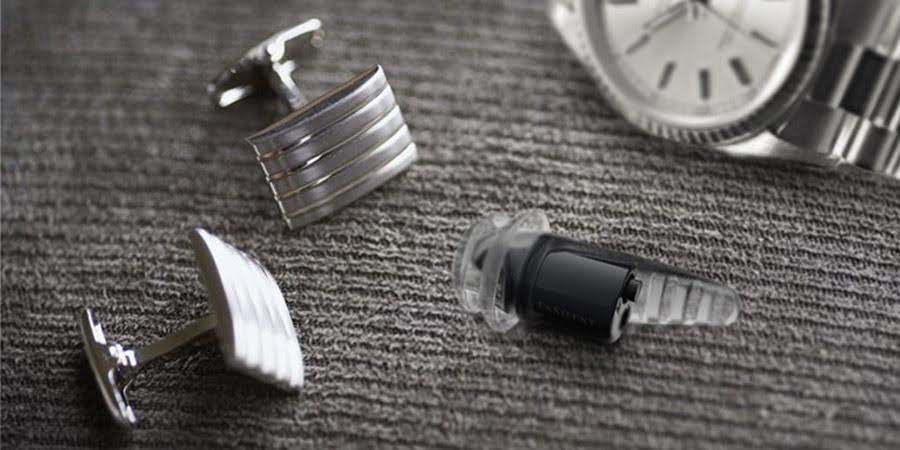
As I said above, I hadn’t heard of ExSilent before and I’ve just visited their website for the first time and I was struck by their brand photos on there. Here’s one from their site:

Amazing! It took me a good 20 seconds to even see the hearing aid in that picture (it looks better on their site that it does on here). If that’s not saying, “your hearing aid is part of your wardrobe, don’t fear it” I don’t know what is. It’s this kind of advertising that will help bring hearing aids into the mainstream and make them something that people are comfortable wearing.

Guy loses hearing, then tries World of Warcraft

Earlier this year World of Warcraft player Unwelcome suffered an accident that permanently robbed him of his hearing. Feeling alienated and shunned by his real life friends, he returned to World of Warcraft for some online alienation and shunning.

The loss of one’s hearing is a tragic and traumatic event, but it doesn’t necessarily mean an end to gaming. Many popular games offer subtitle options for the hearing impaired. World of Warcraft itself is quite deaf-friendly on a basic level, overflowing with text-filled quests that don’t require aural cues to complete.

It gets a bit more complicated when you’re in a raiding guild, however. Unwelcome found himself living up to his name when he recently returned to his raiding guild of four years. He detailed his experience in a post on the World of Warcraft forums.

So i came back to wow. Now I’ve been playing with my guild for about 4 years. We have all become close friends. We have even done some rl guild parties. I explained why i have been off for so long to the guild. I explained my condition. Everyone was pretty supportive for about 5 minutes.

Do you know what the first question i got from my guild leader was? He asked me if i could still use (popular voice chat program) vent (Ventrilo). I told him no, but tried to assure him it wouldn’t be a problem as i usually research the fights beforehand and use dbm.

He tells me that i can’t raid unless i have vent. Guild rules and all. I was pissed. After a huge blow out between us i get removed from the guild and put on ignore.

Read the original article in full on Kotaku.

I might not hear you….

  • Just because I heard you yesterday does not mean I will hear you today
  • If my back is turned I might not hear you
  • If I’m concentrating on something I might not hear you
  • If it’s windy I might not hear you
  • If other people are talking I might not hear you
  • If I’m tired I might not hear you
  • If you are covering your mouth I might not understand you
  • If my tinnitus is bad I might not hear you
  • If you shout I might not understand you
  • If we’re in a big open room I might not hear you
  • If you are not looking at me I might not hear you
  • If I have a cold I might not hear you
  • If you have a cold I might not understand you
  • If you are behind me I might not hear you
  • If we are in a group I might not hear you
  • If it’s noisy I might not hear you
  • If you didn’t get my attention first I might not hear you

Just because I heard you yesterday does not mean I will hear you today.

This list was inspired by this post from SayWhatClub.com.

My audiogram

audiogram

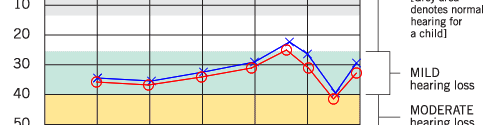
The audiogram above shows my hearing as of November 2013. The hearing test was done at the John Radcliffe hospital in Oxford during my fitting for a pair of NHS hearing aids (Oticon Spirit II BTEs).

You can see from the audiogram that my hearing is in the moderately-severe to severe range – just touching on a profound loss in the higher frequencies. I have a progressive hearing loss, so my hearing hasn’t always been this bad but it has always been the same ‘shape’ – when I first got my hearing tested, aged 5, it looked more like this:

audiogram2

How much can I hear?

Short answer: almost nothing. Without my hearing aids I cannot hear much at all, I don’t hear any speech or music, I cannot hear the phone or the TV. Even if someone puts their mouth right to my ear I cannot hear what they say, if they try and shout it is just painful, but still no understanding. I can just about pick up a slamming door or a dog bark that is close by.

What about with hearing aids?

I wear a pair of Starkey S Series ITEs at the moment. With them in I can hold a conversation with someone one-to-one usually without too much hassle (even though I do have to concentrate all the time and it is hard work) – it’s much easier when the room is smaller and acoustics are good. I cannot hear well if someone is calling across a room or shouting from distance. Group conversations are really difficult, it’s tough to keep up with who is saying what.

Given that I have a progressive loss I don’t know how much longer I’m going to be able to use a hearing aid for – I don’t have far to go before my loss becomes profound across the range and a hearing aid won’t be much good to me by then. When that happens it’ll be time to seriously think about a cochlear implant or talking the family into learning BSL.

Understanding an audiogram (hearing test results)

Explaining The Audiogram

An audiogram is the document that we use in Practice to record of a hearing test. In other words, it is the hearing test graph that we record the hearing test results on to show how well a person can hear different types of sounds. It is used to determine if a person has a hearing loss, and if so, how bad that loss is. In essence the audiogram is a record of the lowest sounds you can hear.

Blank Audiogram

Blank Audiogram

Understanding an Audiogram

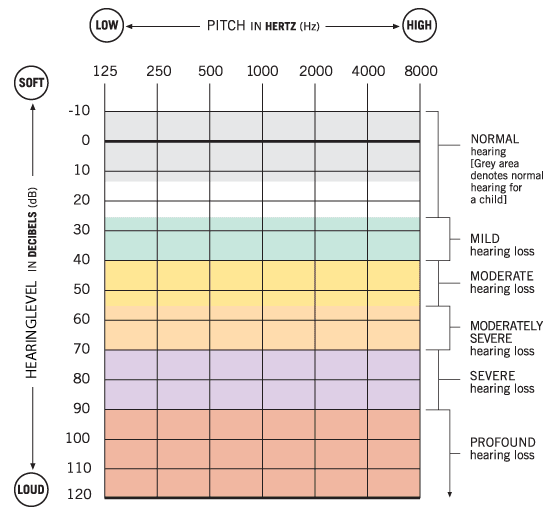
The audiogram above is empty, no test results have been recorded on it yet. You can see down the left hand side the numbers starting at -10 and going up to 120 – these numbers represent the decibel level (volume) at which you can hear a particular sound. The higher the number, the louder the sound. The decibels (-10 to 120) down the left hand side represent the full safe range of human hearing. The numbers running along the top, from 125 to 8000, represents the frequency or pitch of different sounds, from low pitch (for example a tuba, cannon shot or distant thunder and the vowels in speech) through to high pitch (for example breaking glass, a baby’s scream or a bird singing and the consonants in speech).

The Frequencies of Speech

These frequencies are tested because they are important frequencies for human speech. In essence, all hearing tests undertaken are primarily focused on speech. You may have the ability to hear at higher frequencies than are recorded on the chart or tested, but they are unimportant for the understanding of speech. Low frequencies in speech tend to be the vowel sounds in speech, high frequency sounds in speech are the consonant sounds in speech. Vowels have more power, they are formed in your chest and travel well, consonants are formed in your mouth, they don’t travel well but they are the sounds that form the clarity of speech. Without them, speech is all mumbling.

Levels of Hearing Loss

The wording on the right of the audiogram above groups the decibels to show different levels of hearing loss. If someone was tested on a sound and they heard it at 10 decibels (dB) then they have normal hearing ability for that sound – if they could not hear that sound until it was played at 50dB then they have a moderate hearing loss for that sound. You won’t see the groupings on the right hand side on most audiograms

The Hearing Test

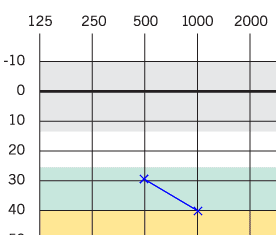
During a hearing test, different sounds will be played at different frequencies and intensities, usually starting at 1Khz (1000 Hz) and progressing through to the high pitches before testing low pitches. For each pitch the sound will be played clearly at an intensity you can hear, it will then be reduced to a level you can no longer hear. The intensity will be increased until the softest intensity you can hear it at is found. The the audiogram is then marked to show the decibel level for the tested pitch. In the example below you can see that the person tested was able to hear a 500hz sound at 30dB and a 1000hz sound at 40dB.

audiogram-snippet

Hearing Test Results

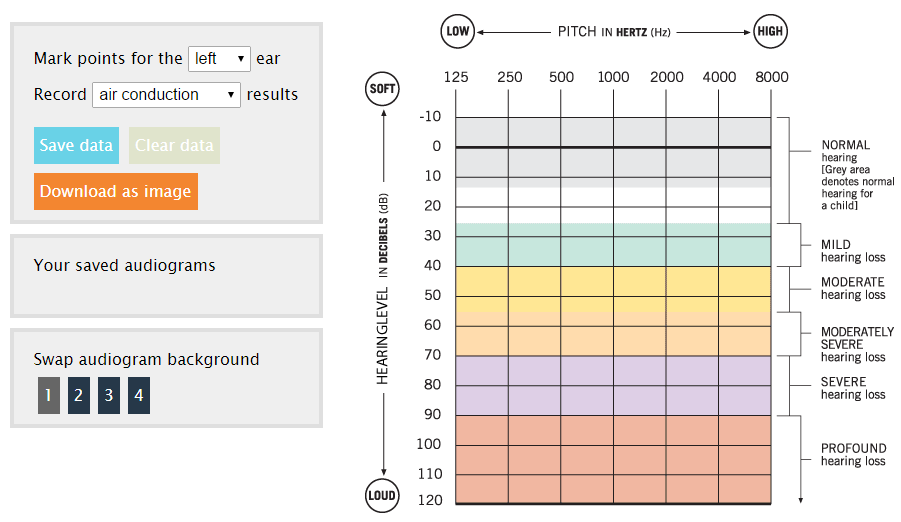
An audiogram will usually show three different results: pure-tone results for the left ear, pure-tone results for the right ear and bone conduction results. The pure-tone tests for the left and right ear are the “normal” hearing test, the one where you wear a pair of headphones and are asked to press a button when you hear a sound. The left ear results are shown as blue lines connecting blue crosses and the right ear is shown as red lines connecting red circles. A bone conduction test is where a small headset is placed just behind one of your ears rather than over it – the results for this are shown as green lines connecting green triangles.

In some cases further advanced audiometry needs to be undertaken. These tests are called masking. They are undertaken under strict rules where your original test shows particular parameters. Masking is undertaken by playing a rushing wind sound in one ear while tones are played to the other. It is done to keep one ear busy, while the other ear is tested.

If you like what you see, share it so others can benefit

Hearing expert is pride of Scotland

A hearing expert who drove over 200 miles to help a patient is the pride of Scotland after being named the UK’s Audiologist of the Year for 2010.

David Bryce, who is from Aberdeen, has been chosen as the nation’s top hearing professional in a competition voted for by patients around the UK.

The competition is run by hearing aid battery maker Rayovac, the manufacturer of the world’s number one selling zinc air hearing aid batteries. It encourages patients with hearing difficulties to nominate professionals who go above and beyond the call of duty in the provision of care.

David, who runs Scottish Hearing Services centre with his family, is the first Scottish professional to win the Audiologist of the Year title. The competition is now in its third year and is held for the 3,000 plus hearing care professionals working in the UK today.

He is an experienced professional who has been caring for patients for over 20 years and was nominated for the award by regular visitor, Brian Johnston

David said: “Brian is someone who’s been coming to my clinic for many years so I’m very touched that he went to the effort of voting for me. I feel very proud to have won and happy that the service I provide is appreciated by patients like Brian.

“It’s very much a team effort as well, as I rely a great deal on my colleagues to provide on-going support and aftercare to patients.”

In his nomination, Brian praised the high quality of David’s care, highlighting his knowledge of hearing, his compassion and understanding of patients’ problems, particularly the time and care he takes to explain what he is doing and discuss any technical issues. This includes spending significant amounts of time trialling new settings on his hearing aids to find the perfect one.

He also highlighted David’s attention to care extended to driving more than 200 miles to visit him at home in Thurso and getting to know his family.

The award continues to attract a growing number of high quality entries year-on-year and was judged by an independent panel of industry experts including Alan Talbot, head of the British Society of Hearing Aid Audiologists (BSHAA), Tom Davison, a consultant at the RVI Hospital in Newcastle and Gillian Lacey from Hearing Dogs for Deaf People.

As winners, both David and Brian receive prizes, with David now in the running to be named this year’s European Audiologist of the Year – a title that will be awarded at the EUHA conference in Germany in October.

Paula Brinson-Pyke of Rayovac explains: “David demonstrates all the qualities of an outstanding hearing professional. He cares deeply for his patients, shows great sympathy and compassion and works incredibly hard to help them get them the right support they require.

“Reading through his nomination it was very easy to see the affection and regard in which he is held by his patients and the undoubted impact he has on their lives.

“He is a fitting winner of the award which has once again demonstrated the outstanding level of care and commitment provided by audiologists around the UK.”

Besides the winner, sixteen other hearing professionals were highly commended by the judges for their work. They include Gareth Morris, Hearing Aid Solutions; Tony Vaughan, Hidden Hearing; Tara Tripp, Tara Tripp Hearing Care; Robert Beiny, The Hearing Healthcare Practice; Jenny Crenshaw, Hidden Hearing; John Lloyd, Crystal Hearing UK; Jo Farquhar, Taylors; Alistair Kinsey, The Hearing Company; Ivind Thoresen, Kingscross Hospital; Alan Walshaw, Keighley Health Centre; Jo Rae, The Hearing Healthcare Practice; Nick Chitty, Oxford Hearing Centre; Stephen Fairfield, House of Hearing; Sid Sidhu, Regional Hearing; Deepak Jagota, Oxford Road; Shona Jackson, House of Hearing.

For further information about the Rayovac Audiologist of the Year competition visit: www.audiologistoftheyear.eu