Which? survey concludes that independent practices are the best hearing aid providers

400 Which? Members who had bought a hearing aid in the past 3 years were recently surveyed to find out about their hearing aid buying experiences in the UK.

Results were based on a survey conducted between 28th March and 8th April 2014 of 407 Which? Connect members who had bought a hearing aid within the previous 3 years.

80 local independent retailers along with 255 national retailers made up the sample.

Customers scores were a combination of satisfaction and recommendation and the star ratings for product and pricing were based on the range of products, transparency of their pricing, clarity of information provided with them and time given to decide on products.

Staff and Service was made up of ratings of the professionalism and knowledge of staff, customer service, handling of questions and concerns plus explanations given.

AIHHP is delighted to see the latest findings from this survey, which supports the work of its’ independent members.

Chair, Duncan Collet-Fenson commented “As a group of leading hearing aid audiologists who are committed to promoting and maintaining the very highest professional and ethical standards in hearing healthcare; our aim is always to ensure that the needs of our customers are put first, without any allegiance to specific manufacturers. By being independent we can absolutely guarantee the best solution to meet our customers hearing requirements.”

Original article: http://www.aihhp.org/which-survey-independents-are-the-best-hearing-aid-providers/
A Mysterious Sound Is Driving People Insane — And Nobody Knows What’s Causing It

Dr. Glen MacPherson doesn’t remember the first time he heard the sound. It may have started at the beginning of 2012, a dull, steady droning like that of a diesel engine idling down the street from his house in the Sunshine Coast of British Columbia. A lecturer at the University of British Columbia and high school teacher of physics, mathematics and biology, months passed before MacPherson realized that the noise, which he’d previously dismissed as some background nuisance like car traffic or an airplane passing overhead, was something abnormal.

“Once I realized that this wasn’t simply the ambient noise of living in my little corner of the world, I went through the typical stages and steps to try to isolate the sources,” MacPherson told Mic. “I assumed it may be an electrical problem, so I shut off the mains to the entire house. It got louder. I went driving around my neighborhood looking for the source, and I noticed it was louder at night.”

Exasperated, MacPherson turned his focus to scientific literature and pored over reports of the mysterious noise before coming across an article by University of Oklahoma geophysicist David Deming in the Journal of Scientific Exploration, a peer-reviewed academic journal devoted to exploring topics outside of mainstream science. “I almost dropped my laptop,” says MacPherson. “I was sure that I was hearing the Hum.”

“The Hum” refers to a mysterious sound heard in places around the world by a small fraction of a local population. It’s characterized by a persistent and invasive low-frequency rumbling or droning noise often accompanied by vibrations. While reports of “unidentified humming sounds” pop up in scientific literature dating back to the 1830s, modern manifestations of the contemporary hum have been widely reported by national media in the United Kingdom, the United States and Australia since the early 1970s.

Read the full article on mic.com.

The technology that might be powering your next hearing aid (and making it cost less)

On Semiconductor have released two new DSPs, with the aim of lowering manufacturing costs of both high-end and low-end hearing aids. The R3920 and R3110 are new additions to their 
RHYTHM range of products.

A DSP (or Digital Signal Processor ) is the microchip inside a hearing aid that converts incoming sounds to allow you to hear them more clearly.

Whilst the biggest players in the hearing aid industry still create their own DSP technology the push by companies like On Semiconductor to provide low-cost DSPs make it much simpler for other companies to challenge the likes of Phonak, Starkey and Widex.

The R3920 is the high-end model, it offers features 16-channels of wide dynamic range compression (WDRC), providing audiologists the freedom of fine granularity fitting. The iSceneDetect™ environmental classification algorithm on R3920 discerns various sound environments and then selects the most appropriate mode automatically for a high-quality, custom audio experience. Impulse noise reduction, another new feature on R3920, monitors and attenuates sharp, impulsive noises such as clattering dishes that could otherwise be very uncomfortable for hearing aid users.

The lower-spec model, the R3110, is aimed more at low-cost hearing aid suppliers who are selling pre-programmed or self-programmed aids. It provides a “turnkey” solution that requires little or no programming by a hearing professional but still offers features like noise reduction, feedback cancellation, telecoil and dual microphones.

This is great news for us, the customers – as the price of the technology that goes into hearing aids drops and the features offered improves, companies can offer the complete aid package to us at better prices.

The big six hearing aid manufacturers (William Demant, Sonova, Starkey, Siemens, ReSound and Widex) still account for around 80% of all hearing aid sales but if more companies can get to market with high-quality, low price products built upon DSPs from the likes of On Semiconductor then I hope we’ll see falling prices, increased innovation and more happier customers.

Wear: an assistive hearing device being funded through Kickstarter


wear-assistive-hearing-device

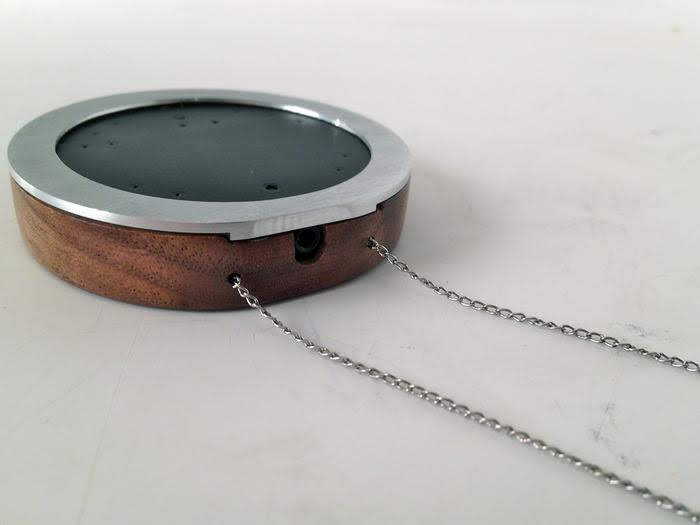
Wear is an assistive device designed to improve quality of life for people with hearing loss. Wear is a high fidelity directional analog microphone that is significantly lower in price than existing hearing aids. This microphone can be used with any pair of headphones, has a volume control, is rechargeable, and comfortable to wear.

Wear has been in development for the past two years, it incorporates a low profile micro-miniature, patent pending, directional microphone technology that creates a 6 foot zone which captures, focuses and clarifies conversations in noisy environments, while reducing the effects of extraneous noise.

Wear is not a replacement for a hearing aid, it is designed to be used when an individual is interested in having a quality conversation in very noisy environments like family get togethers, restaurants or meetings. Wear can also be used as a commentators microphone eliminating the need to hold a microphone during an interview and other high quality audio recording applications.

Wear is a project by Eric Rosenthal, Michelle Temple from Brooklyn – they have been working on prototypes for two years and are now using the Kickstarter website to try and raise funds to create and ship the finished product. The Kickstarter page for the project is: http://www.kickstarter.com/projects/771490867/wear-a-wearable-personal-assistive-hearing-device

Sign language interpreters are really for the hearing, so they can feel better about themselves

As if the story about the fake sign language interpreter at Nelson Mandela’s memorial service wasn’t bizarre enough already.

The Guardian has published an opinion piece by Slavoj Žižek in which he says that the fake interpreter story, “confronted us with the truth about sign language translations for the deaf“, which he says is, “it doesn’t really matter if there are any deaf people among the public who need the translation; the translator is there to make us, who do not understand sign language, feel good

So, according to Slavoj, sign interpreters are put in place to give people a sense of doing the right thing rather than to improve access for the deaf and hard of hearing.

My initial reaction was that Slavoj’s article was absolute garbage but then, after thinking about it for a minute, I realised there is actually some truth in it. I would like to think the the majority of people who book interpreters for events do so for the right reasons: either they genuinely want to improve access to their event or they have been asked to do so by someone else – but there could be people who just want to improve their own standing as a caring company/individual, after all, people do –>give to charity for selfish reasons.

It was wrong for Slavoj to dismiss all interpreter bookings as feel-good projects for the hearing but I bet he’s not 100% wrong.

My guest article about the future of hearing aid sales: prices, the internet and self-programming

I’ve written a guest article on Geoffrey Cooling’s Just Audiology Stuff website, it’s my opinion on the future of hearing aid sales. Spoiler: It’s online sales with smart self-programming software.

Geoffrey’s website is a great resource for hearing aid dispensers and practice owners or anyone else who is interested in marketing, sales and hearing healthcare.

You can read my article here: http://justaudiologystuff.com/index.php/another-hearing-aid-consumers-view-unbundling-and-business-disruption/

Was the sign language interpreter at Mandela’s memorial a fake?


sign

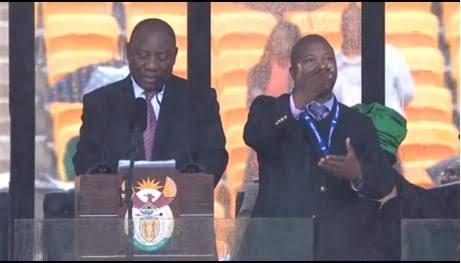
Speakers at Nelson Mandela’s memorial service were joined on stage by a sign language interpreter, but according to many sign experts he is a fake.

During the service, Wilma Newhoudt-Druchen, the first deaf woman to be elected to the South African parliament tweeted: “ANC-linked interpreter on the stage with dep president of ANC is signing rubbish. He cannot sign. Please get him off.” Another tweet from Francois Deysel, a South African sign language interpreter, added that he was “making a mockery of our profession”.

Apparently the interpreter has been used at previous African National Congress events and members of the deaf community have already raised concerns about him. The African government will now look into how this man has been able to sign at public events despite not using any known dialect of sign language. Sheena Walters, of the World Association of Sign Language Interpreters, said, “It seems quite obvious that the interpreter isn’t using South African sign language”.

The longest anyone can bear Earth’s quietest place is 45 minutes

anechoic

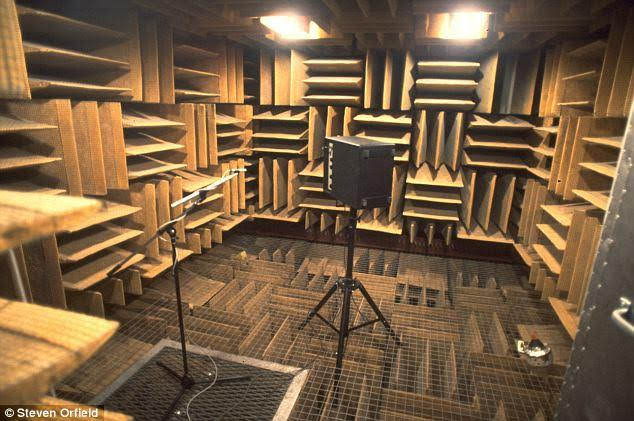
Orfield Labrotories in Minnesota have built an anechoic chamber that is so quiet that no-one can bear to be inside for more than 45 minutes. It has entered into the Guiness Book Of World Records as officially the quietest place on earth – tests measured background noise in the chamber as -9.4 dBA. Yes, that’s minus 9.4 decibels!

The labrotory’s founder, Steven Orfield, said, “”We challenge people to sit in the chamber in the dark – one person stayed in there for 45 minutes. When it’s quiet, ears will adapt. The quieter the room, the more things you hear. You’ll hear your heart beating, sometimes you can hear your lungs, hear your stomach gurgling loudly. In the anechoic chamber, you become the sound”.

The chamber is used by companies to test the noise levels of their products – Harley Davidson have tested their bikes in there and Whirlpool their washing machines.

The chamber is so quiet (and dark) that it is very disorientating, if you stay in too long then you start to hallucinate. You also need to be sitting down when inside, Orfield said, “How you orient yourself is through sounds you hear when you walk. In the anechnoic chamber, you don’t have any cues. You take away the perceptual cues that allow you to balance and manoeuvre. If you’re in there for half an hour, you have to be in a chair”.

I’ve been in many sound-proofed rooms for hearing tests in which the lack of noise is noticable, you can almost feel the quietness. Hard to imagine what it is like in this chamber but I’m sure my tinnitus would keep me company.

Hearing aid prices – do the numbers add up?

I’ve written before that I think that hearing aid vendors need to split the product from the service so I decided to try and breakdown a hearing aid’s price a bit to find out if it is too expensive or not.

I did a bit of Googling and found that an average price for a top of the range hearing aid in the UK is about £1500. This is the rough ballpark for new models from all manufacturers.

How much would you guess that a hearing aid costs to make? I’m guessing too because I’ve never been able to find out the true cost of the physical product (despite a lot of asking!). An iPod costs around £200 to buy and, like a hearing aid, is packed full of amazing technology. Lets factor in that hearing aids are smaller and that smaller components are presumably more expensive. Lets say a hearing aid costs £500 to make.

So if a vendor is selling the product and the service combined then you are paying £1000 for the service. What’s in that service? You’ll need a hearing test, a fitting and probably a few further visits for re-programming to get things right. You also get a warranty for a number of years, which covers repairs and re-programming. A visit to an audiologist is usually an hour long session. How much is an hour of time worth? It costs me £50 per hour to get my car repaired so lets say £70 an hour. A test, fitting + three more visits = £350. That leaves £650, for the warranty and vendor profit. No idea what manufacturers or repair shops charge for repair but I guess that £650 could get eaten up pretty quick if you have a few problems with your aid.

That doesn’t seem completely unreasonable at first glance, but that £1500 is for one hearing aid; if you need two aids then the numbers start to look a bit more unreasonable. £3000 purchase price: £1000 for hearing aids and £2000 for the service. We aren’t doubling the number of visits needed for fitting or re-programming but a fault under warranty is twice as likely.

My main problem with combining product and service is that people will use different amounts of service. Some people will never use their warranty and only need one re-programming and others will take forever to get the programming right and have faults. People should pay for what they need and no more. When I take my car to the garage I pay for the work done, not a flat fee – people have different problems, different situations and different requirements. What if I don’t want a warranty longer than the manufacturer’s one?

A £3000 purchase is not an easy one for most people. It’s going to mean getting into some debt or going without something else; it’s a big decision. I think splitting the product from the service would reduce the upfront cost massively and make a purchase a much easier decision.

Maybe my numbers above are way off and, to be honest, I think £500 to make a hearing aid is an over-estimate. What do you think? Any comments on hearing aid prices and the way they are sold?