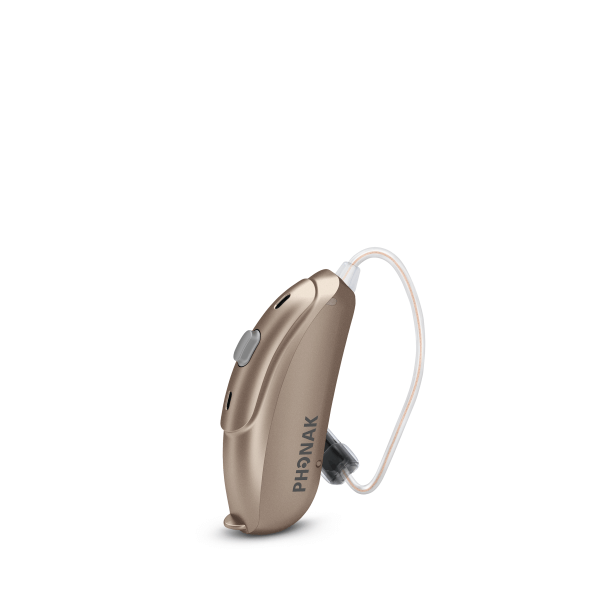
The Audeo V 10 is the smallest hearing device in the new Audeo Venture range. It runs on a size 10 battery and can be fitted with two types of receiver which allows it to cover many hearing losses.
With the introduction of the new Venture chip Phonak re-designed the casings on their hearing aids. The Audeo V 10 has an updated casing with a push button that allows manual programme changes. The device is available in eleven different colour choices. Even though it is a highly discreet hearing aid it is also a versatile one.
Wireless but no telecoil
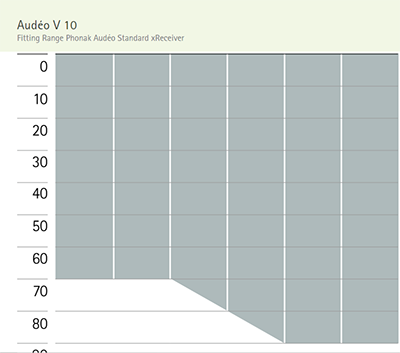
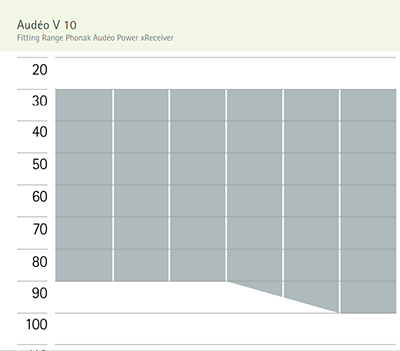
It can be fitted with an S or X receiver which allows it to cover most hearing losses down to severe. It is a wireless enabled hearing aid and can connect to all of Phonak’s outstanding wireless accessories. However,the device has no telecoil receiver so it is not loop enabled.
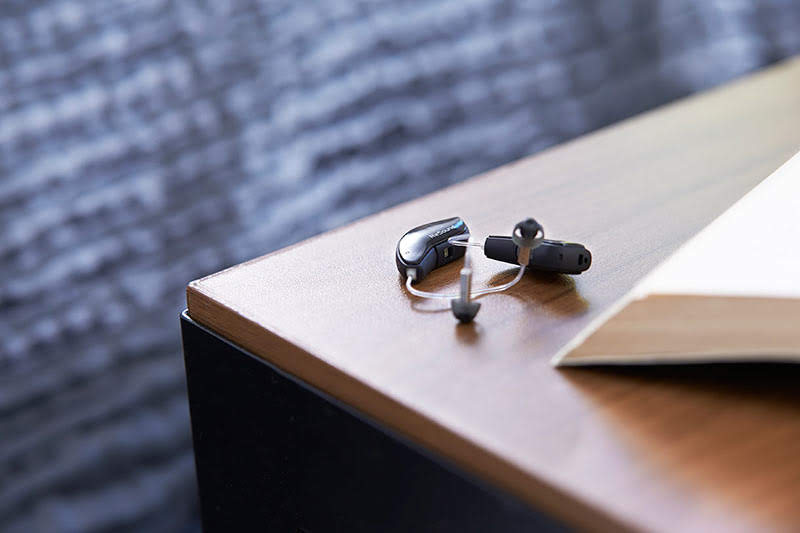
It is a RIC device and so it suffers from the usual pros and cons of those devices. If you don’t take care of it, the receivers are liable to fail. They can of course be easily replaced by your professional in the case of failure which probably makes it a better option.
Versatile, discreet, wireless but lacking a telecoil
The Audeo V range has been available for a while and the feedback we get from hearing professionals is that they are quite reliable. If you are looking for a versatile but discreet wireless enabled hearing aid, this might be the one for you.
I really think these are really strong offerings from Phonak, they are a great choice for discretion but just be aware of the possible drawbacks. As always, if you have any questions about the Audeo V 10, or any hearing aid, give us a shout.
A new form of ear cleaning is being introduced by Independent hearing healthcare Practices. across the UK and Ireland. The new procedure is called Endoscopic Earwax Removal, two of our partners have introduced the procedure to their Practices, let’s see what they have to say.
Earwax Removal Services Worcester
Victoria and Tom Dixon of Worcester Hearing Centre have introduced the new procedure in their practice. They already offer extensive ear care services including irrigation earwax removal and microsuction earwax removal in Worcester. Victoria was the first in the Practice to become certified in the new process and she was kind enough to have a word with us about it.
Victoria has years of experience in offering clinical hearing care and she is a highly respected member of the hearing healthcare profession. She said that offering the new earwax removal method made sense for them and their Practice. It was just part of their commitment to providing better and more in-depth choices to their Patients.
In essence the procedure is similar to microsuction earwax removal, with the exception that a video endoscope is used instead of a microscope. Victoria said that the use of the endoscope makes the process so much easier, the endoscope gives a wide view of the ear canal and just watching it on the video screen makes it so easy to remove the wax.
Earwax Removal Services Cork
The second partner to introduce the process is Audiology Medical Services in Cork, Ireland, Trevor Cronin, one of the senior professionals there spoke to us. He agreed with Victoria’s sentiments, he said that Kay and Charles Lewis ( the owners of the business) were committed to offering cutting edge services to the customers. They saw the new earwax removal process as a natural extension of their services. They also offer irrigation earwax removal and microsuction earwax removal in their practices in Cork, Waterford, Tralee and Kilkenny.
Trevor echoed Victoria’s statement about the video monitor, he also said that he felt the view given was far easier than keeping your eyes to the microscope and made manipulating the suction tube far easier. The two things combined made removing the earwax totally very easy.
The Procedure
You probably will have gathered by now, the procedure is usually undertaken with a video endoscope and a medical suction machine. Although, it can be undertaken with the endoscope and manual earwax removal tools. The wide view of the video endoscope makes the procedure easy, safe and thorough. Our partners see it as a natural extension of their commitment to offering a cutting edge service and we expect more of them to add the service to their offerings.
I have recently returned to Practice, mainly because I missed dealing with people and the simple joy of solving their problems. I have been surprised at how much denial of hearing loss is still a factor in my consultations. For some reason, I assumed that over the years I have been away doing other things that education and awareness would have changed things. I was pretty shocked to find out it hadn’t!
My own cognitive bias
I am afraid it is my cognitive bias at play, I am the type of person that if I have a problem I deal with it. So when I come to the time when I have a hearing loss, I will deal with it without much thought. I also suffer from something called don’t really care. I am not very good at considering what other people think about me. It is not arrogance or pig-headedness, it is simply the concept that what other people think about me is none of my business. I look to myself for my own happiness. So stigma will not be an issue for me to consider when the time comes.
Limiting your life
If you don’t address your hearing loss you are in fact limiting your life, limiting the experiences you have and the people you communicate with. I have always known this but it came into stark contrast in one particular consultation recently. One person explained to me that they knew they had hearing loss and associated problems, but what they had done was to change what they do to accommodate it. They went to quiet restaurants and cafes, their friends knew they had hearing loss so they adjusted to help out. They just avoided noisy situations so they didn’t face problems.
Why, oh why, oh why?
I wanted to scream, I wanted to say WHY! So let me get this straight, you have a problem, but it is not that bad because you are limiting your lifestyle so you don’t have to face the problem. Oh, and all your friends know so they adjust their behaviour. Really? And this makes sense to you why? Many of us professionals find it difficult to deal with this level of denial, most of us look on our job as to identify a hearing loss, identify the areas that the hearing loss is having an effect on in your life and then educating you on what is happening and providing treatment options for you to make decisions on.
When we are faced with this level of denial we begin to ask questions, but in doing so we feel that we are moving towards selling you a solution. Many of us feel uncomfortable in that position because we see ourselves as quasi-medical professionals, not sales people. Don’t get me wrong, we know there is a sales element in what we do, but it is not the over-riding focus of our profession. There are many things I can say here, that I feel comfortable with, things that I might not feel comfortable saying in a consultation. So here goes, with both barrels, buckle up!
Are you mad?
Honestly, are you mad? Your denial is ruining your enjoyment of life and all of its wonders. Your denial is limiting the experiences you expose yourself too. It is limiting you socially, something that we know has a dramatic effect on your general well being. I know you are smarter than this, so the question I will ask again is are you nuts?
Your family and friends are exasperated
Yup, they have a pain in their famous place with you and your denial, believe me, they are. Expecting them to adjust for you and your problem is really arrogance, you have decided to limit your life so they should as well? They won’t, what will happen is eventually you will end up isolated. They will become exasperated with repeating themselves, they will become exasperated with always being your interpreter.
People aren’t god damned mumbling!
Nope, they aren’t, you can’t hear them properly, your ability to hear the high-frequency consonants in speech has been dramatically affected. Those sounds are exceptionally important for the clarity and understanding of words. They are still saying them, you just aren’t hearing them properly. So again, hate to burst your bubble, it isn’t them, it’s you.
Everywhere is so noisy, no one can really hear properly
Nope, most people manage in noisy environments unless of course the noise is completely overwhelming. Believe me, if the noise was completely overwhelming people would not go there. The problem is that noise makes it much harder for you to hear the consonants in speech. Something that you already have a serious problem with. Again, sorry, it’s not the noise it’s your hearing.
The effects of hearing loss on mental health and relationships
If you ignore your hearing loss you will have a dramatic effect on both your own mental health and your relationships with family and friends. I talked about this a little earlier but let’s look at what clinical studies say. Unfortunately, the biggest studies are US based, but people are people no matter where they live. A study by the National Council on Aging (NCOA) in the States found that those with untreated hearing loss were more likely to report depression, anxiety, and paranoia. Paranoia was a bit of surprise for me, but when you consider it, it probably makes sense.
This study also attempted to understand the impact of untreated hearing loss on the family members and close friends of people who suffered with it. They questioned just over two thousand close family members or friends of the hearing impaired were asked a parallel set of questions both before treatment and after treatment. It was shown that the benefits of treatment with hearing aids were significant. There were improvements in many areas of life including relationships, social life and sense of independence. In fact, in most areas there was a dramatic increase. Strangely enough, the benefits were always felt more by the family members rather than the hearing impaired (1.).
Relations at home improved by 56 percent according to the user, 66 percent according to family and friends.
Self-image improved by 50 percent according to the user, 60 percent according to family and friends.
Life overall improved by 48 percent according to the user, 62 percent according to family and friends.
Mental health improved by 36 percent according to the user, 39 percent according to family and friends.
Social life improved by 34 percent according to the user, 41 percent according to family and friends.
Relations at work improved by 26 percent according to the user, 43 percent according to family and friends.
Listen, we could go on here but the point of this article is not to beat you over the head with your failings. Because they aren’t failings, hearing loss is a simple condition that needs treatment. It is not a failing, it is not a sign of weakness, it is not something that reduces you. It is only all of these things when you don’t decide to treat yourself. That is your only failing. Because not treating the problem leads to consequences for you, your family and your friends. That is the real problem.
Walgreens have partnered with Connect Hearing to sell hearing aids in a small number of Walgreens stores as a trial to see if dispensing from big-brand pharmacies is a viable business model. Connect Hearing is owned by Sonova, the Swiss hearing aid manufacturer, which owns the Phonak and Unitron hearing aid brands.
In response to a HearingHealthMatters articles about this partnership, Sonova’s Michael Issac confirmed that Walgreens stores in Dallas, Phoenix, Orlando and Chicago had been selected for the trial. He also said that no decision had been made as to whether a wider rollout would take place.
Having a hearing care centre in high-street stores is common here in the UK – the Boots pharmacy chain have a large number of shops with a hearing aid dispenser section, which are run by Sonova. Specsavers, traditionally a glasses dispenser, also have a large number of stores with an in-house audiologist and have a competitively-priced selection of white label haring aids branded as their own (I believe they are Phonak but don’t know for sure).
Sonova had previously partnered with Costco but that didn’t go so well for them and they ended up posting lower profits and annoying independent hearing aid dispensers, their traditional sales outlet. It is interesting that they are trying again and it is possibly a nod towards the future of hearing aid purchasing.
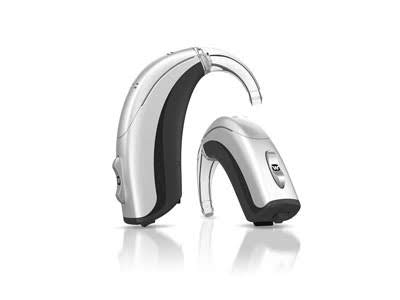
The Widex Fashion, a powerful but discreet BTE solution that was introduced a few years ago. Let’s take a look a closer look at the Fashion
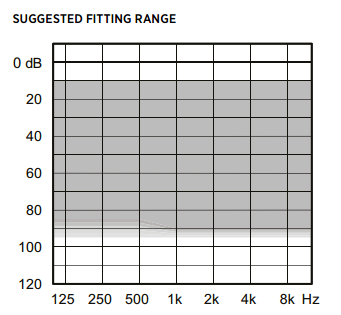
Introduced by Widex a couple of years ago. The Fashion replaces their 9, 19 and M hearing aid which they have discontinued in their Unique hearing aid range. The Fashion is a traditional BTE aid which covers many losses from mild to severe. It is quite versatile and it can be fitted with either a traditional tube and mold, or a thin tube and instant tip.
As we said, it covers many hearing losses, but, it is still a discreet option. The device is quite thin if a little long in comparison to the old M. However, this slightly bigger size brings big benefits for the user.
It has an easy to use combination program and volume control button which gives you full control as you move around different situations during the day. It also has telecoil receiver which allows you to connect to loop systems. On top of that is a bigger battery which is easier to handle and gives you more time between changes.
Widex have always had a fantastic power management system which meant they could run hearing aids on smaller batteries. They have introduced a new power management system which again extends the power to consumption ratio. It simply means that the aids can do more for longer with the same battery. The Fashion is also wireless enabled and will connect to any of the Widex wireless accessories.
I am not saying that BTE hearing aids don’t break down, they just break down the least.
I have fitted quite a few fashions and if possible I always tried to convince Patients that they were right for them because of their inherent reliability. BTEs are the most reliable hearing aids of the hearing aid types.I am not saying they don’t break down. They just break down the least. As always, if you have any questions about the Widex Fashion, or any hearing aid, give us a shout.
The phrase Smart Hearing has been coined over the last few years. It usually relates to GN Resound hearing aids, specifically the Made For iPhone devices. However, the term can cover many of the most modern hearing aids available from the biggest manufacturers. For the purpose of this article though, we will really concentrate on the Resound hearing aids.
Smart Hearing
So what is Smart Hearing? In this context it really refers to hearing aids that connect freely and easily to other devices, in particular smart phones. Only two hearing aid manufacturers have gone down the path of direct connection to smart phones, GN Resound and Starkey. GN Resound was the first to market with the LiNX, which they quickly followed with the original Enzo. They have been wildly successful, the LiNX and its replacement the LiNX2 have been well received and widely adopted by professionals.
Many hearing aid manufacturers have introduced hearing aids that they label Made For iPhone, while they will connect to an iPhone, they will only do so through a streaming device. The difference with ReSound’s and Starkey’s Made For iPhone hearing aids is that they connect directly without any intermediate devices. Something that many of their users appreciate, one less thing to carry around or forget to charge.
Resound Enzo2 Hearing Aids
Super Power Smart Hearing
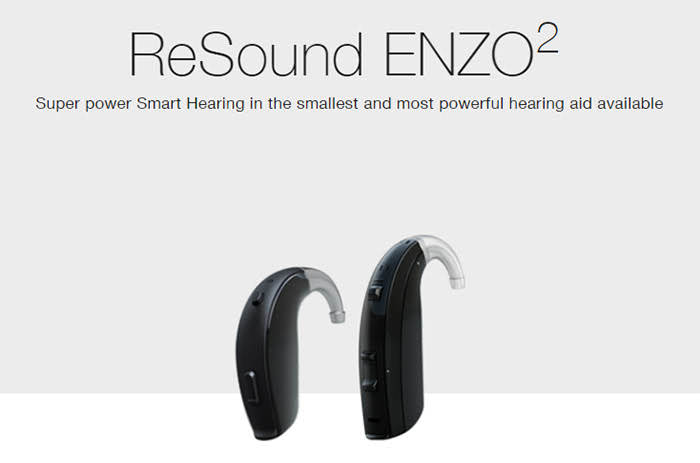
ReSound Enzo2™ is the next generation of Smart Hearing aids from GN Resound for people with severe and profound hearing loss. The Enzo2™ is the latest Made For iPhone super power hearing aid from GN Resound. In fact GN Resound are the only company that make a true Made For iPhone super power hearing aid. The range comes in two devices, the 88 and the 98 which is a 675 battery device. The range comes in three levels of technology, the 9 which is the top of the range, the 7 and the 5 which is the entry level.
GN have included Spatial SenseTM in ReSound Enzo2, the user comments on this new feature is outstanding. The feature has been developed to give users a greater understanding of where sounds are coming from. Combined with other key features, it delivers a rich, balanced sound.
Direct connection to your Smart Phone without any intermediate streamer make these hearing aids really Smart
Wireless connectivity
So this is where we really talk about smart, the ReSound ENZO2 allows you to connect directly with an iPhone, iPad or iPod touch, and makes your Smart Hearing aids work like wireless headphones. This allows you to enjoy phone and video calls with ease. It is interesting to note that for people who have severe to profound hearing loss visual cues are a real help for speech understanding. In a study undertaken by GN Resound, visual cues provided by a FaceTime video call were shown to have significant benefits for people with severe and profound hearing loss. Even if you don’t have an iPhone you can still stream phone calls and music from your Android smartphone or any other Bluetooth-enabled phone by using the ReSound’s Phone Clip+.
Resound LiNX2 Hearing Aids
As we said, Resound launched the LiNX in 2014, however the very quickly followed it with the LiNX2 in 2015. With this release, ReSound is once again leading the pack in the Made for iPhone hearing aid space. The LiNX2 is available in the same 3 technology levels as the previous generation, that being the top of the range 9, the 7 and the 5, but they offered an expanded range of new hearing aid styles with this release.
ReSound LiNX2™In The Ear Hearing Aids
New styles
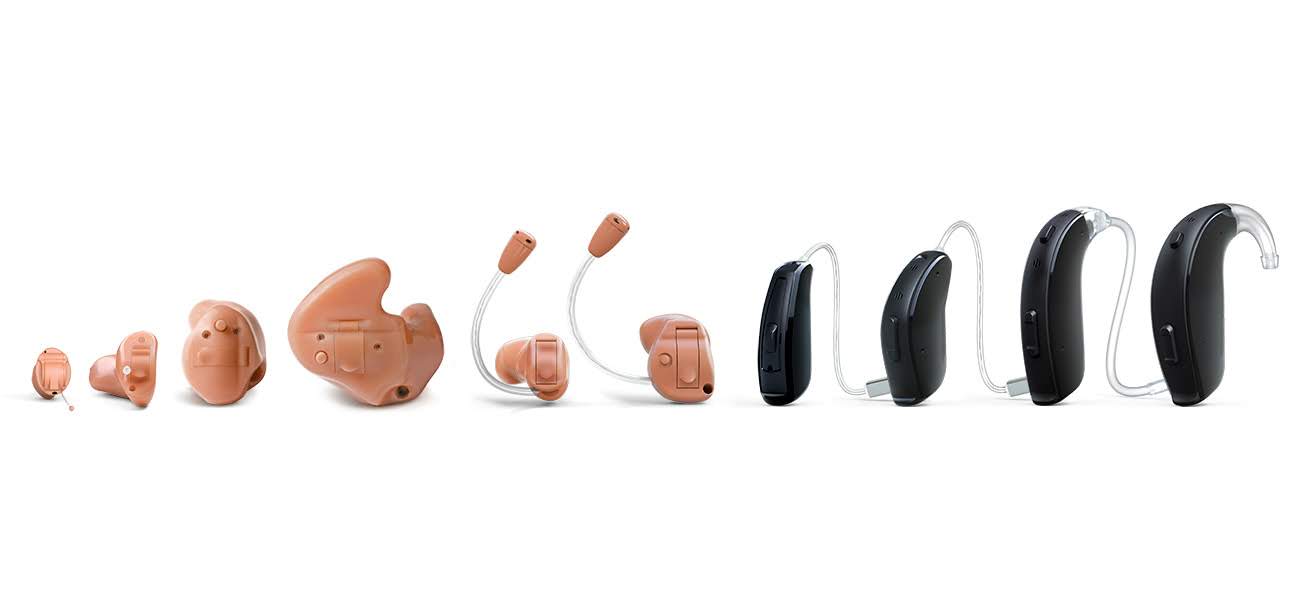
Up to the release of the LiNX2, Made for iPhone hearing aids had only been available in behind-the-ear styles. Along with the popular BTE and RIE styles, the LiNX2 is available in the following additional custom styles: IIC, CIC, ITC, ITE and MIH.
However, only the ITC, ITE, and MIH styles are wireless capable and compatible with the ReSound Smart™ App and can support direct audio streaming. In addition, the RIE and BTE styles had an updated redesign, with new casing and user controls.
IIC Invisible in Canal
non-wireless (invisible-in-canal)
CIC Completely in Canal
non-wireless (completely-in-canal)
ITC In The Canal
wireless Made for iPhone (in-the-canal)
ITE In The Ear
wireless Made for iPhone (in-the-ear) with telecoil
MIH-S Microphone in Helix Small
non-wireless (small microphone-in-helix)
MIH Microphone in Helix
wireless Made for iPhone (microphone-in-helix) with telecoil
RIE 61
wireless Made for iPhone (receiver-in-ear) with push button
RIE 62
wireless Made for iPhone (receiver-in-ear) with volume control and telecoil
BTE 77
wireless Made for iPhone (sound-tube BTE or standard BTE) with push button, volume control and telecoil
BTE 88
wireless high-power Made for iPhone (standard BTE) with push button, volume control and telecoil
That is the Resound Smart hearing aids line up, we think Resound is the pre-dominant manufacturer in this category. The Halo from Starkey hasn’t been nearly as well received, although they too have launched a new and updated range. We shall talk about them another time.
Happy users
The feedback from users of the Resound Smart hearing aids has been excellent, there have been some issues with bluetooth connection, but that is really down to the vagaries of bluetooth. As opposed to any real problems with the hearing aids. People really like the freedom that the devices allow them, they also like the functionality that the Resound Smart app delivers. As always, if you have any questions, or you would like some thing explained, drop us a line.
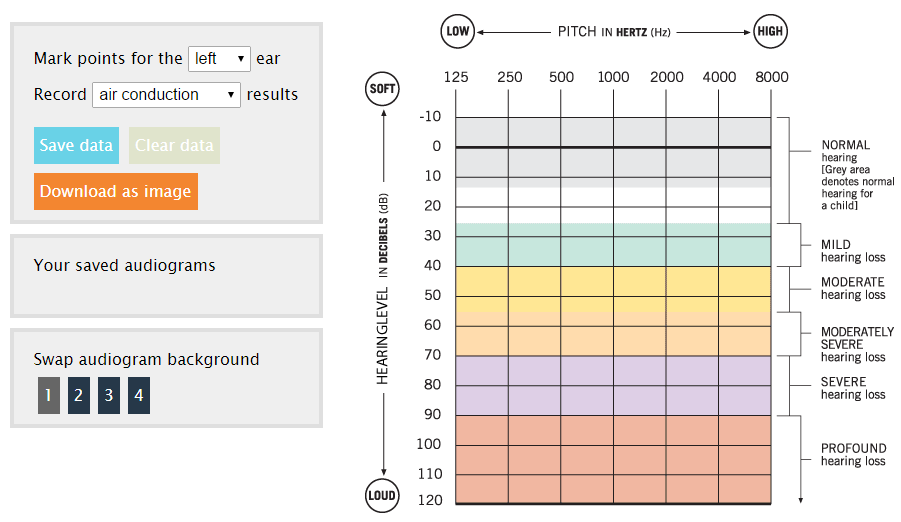
AAudiogram Creator is a free tool that lets you record hearing test results, save them for viewing later and download them as an image to your computer, smartphone or tablet.
I have released a new version of Audiogram Creator with the following features:
– You can now record results for the following tests: air conduction, bone conduction, masked air conduction and masked bone conduction using the industry-standard symbols.
– The new “download as image” button lets you….yeah…. download your audiogram as an image to your local device. This option will work on Chrome and Firefox browsers and may work on newer versions of Internet Explorer – if your browser doesn’t support the download option then you will not see the button, in this case you can try right-clicking on the audiogram and your browser may give you a “save picture as” option.
– The audiogram is a bit tidier – the symbol are easier to read and the lines between the symbols have better spacing, making the results easier to read.
NOTE: Any audiograms that you saved with the old version of audiogram creator will not be available in the new version.
Any feedback is very welcome. I’d like to make this tool as useful for people as I can. If you have any plain images that I could use as a background they would be gratefully received, the current background image that shows the speech banana is a little bit rough.
We have all by now read the lurid headlines in relation to the ongoing research into untreated hearing loss and its apparent link to neurocognitive disorders like Dementia. Headlines like the one above are likely to strike fear into people. But hey, that is what sells Newspapers, let’s take a closer look at the evidence.
In the recent past, there has been a lot of news articles talking about the effects of untreated hearing loss. Many of them focus on the effects of untreated hearing loss on the brain. From the studies that they quote, there appears to be a link between untreated hearing loss and cognitive diseases like Alzheimers and dementia.
Update: In a report presented July 20 at the Alzheimer’s Association International Conference 2017 (AAIC 2017) in London, The Lancet International Commission on Dementia Prevention, Intervention, and Care said that more than one-third of global dementia cases may, in fact, be preventable. They believe that there is the possibility to prevent dementia through addressing lifestyle factors that impact an individual’s risk. The AAIC announced. These potentially modifiable risk factors—which included hearing loss—have been identified at multiple phases across the lifespan, not just in old age.
“Our results suggest that around 35 percent of dementia is attributable to a combination of the following nine risk factors: education to a maximum of age 11-12 years, mid-life hypertension, mid-life obesity, hearing loss, late-life depression, diabetes, physical inactivity, smoking, and social isolation,” the study said. You can see more about this in the new article Untreated Hearing Loss & The Dementia Connection
Again, this should be treated as further weight of evidence in relation to untreated hearing loss and cognitive decline. The study is not definitive, but for the AAIC to make a statement such as this, it means that they feel there is a great deal of veracity in the link.
A Careful Reading of The Facts
It is important that we carefully look at the facts that we know, those facts need to be based on scientific study. The facts are not so clear-cut as the headlines would have you believe, yes it appears that there is a link, but it is by no means a causative link. Let me explain, the outcome of a study can show no link, a causative or causal link or a correlative link.
Causative links are proven links, for instance, smoking is a causative link for cancer. We know after much study that smoking has a direct link to the causation of cancer. Correlative links are different when something is correlative, it means that we know that when one thing happens it is often the case that something else is happening.
The data has not reached the stage where we can say there is a definite causative link. In fact, the data may never exist, it could be proved that there was ever only a correlative relationship. With this in mind I want to review a couple of studies in relation to cognitive decline, hearing loss and hearing aid use.
The Link Between Hearing Loss & Cognitive Disorders
What we do know is that studies show a very strong causative link between untreated hearing loss and more rapid cognitive decline. These studies only address the link between the hearing loss and the rate of cognitive decline. They show that there is a link between untreated hearing loss and more rapid cognitive decline in the people who suffer it. They do not show that that cognitive decline is directly linked to or may lead to Dementia or other cognitive disorders.
A study undertaken by Deal et al(1) show that the rate of 20-year memory decline for people with untreated hearing loss in a group, was twice the average rate of decline reported in national studies of cognitive change in older adults (Salthouse, 2010; Hayden et al., 2011). In comparison, the hearing aid users in this study with moderate/severe hearing loss showed a rate of cognitive decline that was only slightly higher than the rate for subjects with normal hearing. This seems to prove that treating hearing loss when needed reduces cognitive decline.
This study was undertaken over a long period with 253 subjects. It shows that there is more than a passing relationship between untreated hearing loss and more rapid cognitive decline. It is thought that the cognitive decline could be related to hearing loss may be correlated with temporal lobe and whole brain atrophy(brain shrinkage)(2) (Lin & Albert, 2014; Peelle, et al., 2011; Lin et al., 2014 ). It is thought that increased social isolation, increased perceptual effort and changes in brain volume are related to the cognitive decline. However, and this is what matters, whether the two conditions are related to a shared underlying cause is not yet known.
More Evidence That Hearing Aids Reduce Cognitive Decline
Another long-term study shows that wearing hearing aids reduces the more rapid cognitive decline associated with hearing loss. it underlines the importance of having hearing loss treated at the earliest possible opportunity. It also shows that hearing loss is a more important health issue then is generally appreciated.
“Self-Reported Hearing Loss: Hearing Aids and Cognitive Decline in Elderly Adults: A 25-year Study,” (3) was published in the October edition of the Journal of the American Geriatrics Society. The study compared cognitive decline among older adults who were using hearing aids and those who were not. The study found that there was no difference in the rate of cognitive decline between a control group of people with no reported hearing loss and people with hearing loss who used hearing aids. However, untreated hearing loss was significantly associated with lower baseline scores on the Mini-Mental State Examination, a well-established test of cognitive function.
Professor Hélène Amieva, a leading researcher in the Neuropsychology and Epidemiology of Aging at the University of Bordeaux, France, headed up the study. The study followed a massive 3,670 adults, age 65 and older over a 25-year period as part of the Personnes Agèes QUID cohort (PAQUID), a cohort specifically designed to study brain aging.
Evidence That Hearing Aids May Improve Cognitive Function
A recent study by Jamie Desjardins, PhD, an assistant professor in the speech-language pathology program at The University of Texas at El Paso, has shown that hearing aids actually improve the function of the brain in people with hearing loss. We know that untreated hearing loss can lead to emotional and social difficulties, reduced job performance, and a diminished quality of life. As people age, cognitive skills like working memory, the ability to pay attention to a speaker in a noisy environment, or the ability to process information rapidly, begin to decline.
The study was designed to explore the effects of hearing loss on brain function. The study was undertaken on a group of individuals in their 50s and 60s with bilateral (both ears) sensorineural hearing loss who had never used hearing aids. The study participants took cognitive tests to measure their working memory, selective attention, and processing speed abilities before and after using hearing aids.
Two Weeks Of Hearing Aid Use Showed Improvement
Just two weeks of hearing aid use showed improvements in cognitive abilities, tests revealed an increase in percent scores for recalling words in working memory and selective attention tests. They also showed an increase in cognitive processing speed, in essence the time for participants to select the correct response was faster. By the end of the study, participants had shown significant improvement in their cognitive function..
Will Hearing Aids Slow or Prevent Dementia?
That is a question that can not be answered yet, simply because we don’t have enough evidence that untreated hearing loss directly contributes to Dementia in one way or the other. We know that they certainly seem to exist together in many cases. This is an emerging area of study, the results reported here offer strong support that the risk of rapid cognitive decline caused by hearing loss can be reduced, by treating hearing loss with hearing aids.
We do know that hearing aids are an effective way to improve communication and decrease social isolation. We now know that hearing aids will slow the more rapid cognitive decline seen in people with untreated hearing loss. What effect that will have on the onset of Dementia or other cognitive disorders is questionable.
It is clear that the two conditions are related and because hearing loss is easily treatable it may be one of the few ways in which someone can take steps to manage their risk of cognitive decline.
In essence, judgement is still reserved here except for one thing we do know, it is always a good idea to treat hearing loss. We hope we have given enough clear information here, if you have any questions, don’t hesitate to contact us.
1. Deal, J., Sharrett, A., Albert, M., Coresh, J., Mosley, T., Knopman, D., Wruck, L. & Lin, F. (2015). Hearing impairment and cognitive decline: A pilot study conducted within the Atherosclerosis Risk in Communities Neurocognitive Study. American Journal of Epidemiology 181 (9), 680-690.
2.Lin, F. & Albert, M. (2014). Hearing loss and dementia – who is listening? Aging and Mental Health 18(6), 671-673.
Samsung look set to enter the hearing aid industry, they will probably unveil a new hearing aid in 2016 and it will almost certainly tie in with a release of their Galaxy smartphones.
Samsung are creating quite a stir in the industry, with lots of speculation about their pending products. They have filed a number of hearing-related patents in the US, which got tongues wagging. They had a number of people attending International Hearing Aid Conference (IHCON) back in 2014 where they were apparently photographing everything and gathering as much information as the could. According to the press in Korea, they purchased $13.9M worth of hearing aid amplifiers in April 2015, which is a large order, so whatever they have planned it seems like they are going for it in a big way.
More choice and possibly ground-breaking innovation from a new player in the hearing aid market can only be a good thing for us consumers.
So what are Samsung’s hearing aids going to look like, how will they work, how will they be sold and how good will they be? No-one knows yet. Another unanswered question is whether Samsung will seek FDA approval for their devices or whether they will market them as “personal sound amplifiers” rather than medical devices, thus avoiding the regulatory process.
There are long-established hearing aid styles, namely in-the-ear and behind-the-ear, and the various flavours of each, and I would imagine Samsung will stick with the tried and tested models. I don’t expect them to come out with anything that looks radically different to what we wear today.
Samsung are the second biggest player in the smartphone market, behind Apple, so the obvious thing for them to do is to make their new hearing aid(s) work in unison with their phones. Apple already have their Made For Iphone system, which currently works with ReSound, Starkey, Beltone and some other hearing aid ranges – it is certain that Samsung will follow suit and make their latest phones and hearing aids work together. This will probably mean the best possible hearing experience on calls and when streaming music and video from your phone but will likely allow you to control your aid with your phone. I see this going much further than just being able to change the volume and programmes, I wouldn’t be surprised to see in-built hearing tests that record your audiogram on your phone, location aware hearing settings using the phone’s GPS, easy connection to a hearing professional for tuning your aids remotely, among other things. Smartphones these days are so powerful, when tightly coupled to a hearing device, the sky is the limit.
How will they be sold? That largely depends on whether Samsung get FDA approval or not. My feeling is that they will not get approval and will not sell them as medical devices, this will free them up to sell online and via other channels without the need for the patient to seek help from a hearing professional. I’m not sure whether the lack of FDA approval makes any difference to what features the devices can have, seems to me that the FDA approval controls more how you market and describe your product rather than what the product actually does: i.e. hearing aids are “medical devices” that try to “correct a hearing loss” and “are fitted for an individual’s medical condition” whereas PSAPs are more simply defined as “devices that enhance some sounds in specific situations”. I wonder if Samsung can bring a fully-functioning hearing aid to market but call it a PSAP?
Samsung’s entry into the hearing aid market will be interesting, I hope they bring some innovation with them.
According to California-based Grand View Research, Inc. the hearing amplifiers market is expected to reach $78.2 million by 2022.
The market research and consulting group published a report in June on the global hearing amplifiers market by product. The total market value of the sector was $54.3 million in 2014 and is expected to grow at a compound annual growth rate (CAGR) of 4.7% from 2015 to 2022, to reach this projected performance.
Hearing amplifiers are usually lower-cost, lower-spec alternatives to hearing aids. One example of an amplifier on the market today is the SoundHawk.
The report cites two major growth factors: increasing prevalence of deafness and hearing disorders, and the rise in the cost of hearing aids. Hearing amplifiers are expected to become preferred products for certain patients with more easily manageable hearing loss because of the significantly lower cost compared to hearing aids (three to five times lower on average). Changing customer dynamics and high research & development expenditure are also expected to play positive roles.
In terms of product type, on-the-ear amplification devices accounted for a far larger proportion of the market than in-the-ear models. Both product types are however expected to see constant growth over the forecast period, the first because of comfort and high connectivity, and the second because of performance and esthetic appeal.
The report covers North America, Europe, Asia-Pacific, and the rest of the world (RoW). The Asia-Pacific region is forecast to see the highest growth as a result of rapid expansion in retail healthcare and overall aging of the population in China. Introduction of technologically advanced devices in China is also expected to support the market.

 Itshearingaidknow