We got a great question recently from one of our readers in the United Kingdom. The reader asked about the difference between free trials and money back offers and what she could expect in relation to the process.
The questions were excellent and it was obvious I hadn’t explained the difference clearly enough or answered all the questions that a consumer might have. So here are the questions:
Your article states that a trial period is different from a Money Back guarantee; can you explain how? Is it that no money is paid upfront for a trial period and that one is only trialling a pair of “in stock” aids, not brand new aids which you have chosen? If so, can these be programmed for your individual loss? Are there any other differences? Is the Money Back Guarantee period for trialling the exact pair of aids which have been purchased so that you can be sure that you get along with the exact pair selected?
Be clear about what is on offer
Many companies in the hearing aid space talk about a trial period, however you need to be clear from the start what that actually is. While many talk about a trial they are actually talking about a period of time where you can get your money back. They aren’t necessarily talking about a free trial of hearing aids where no money is involved. This isn’t as widespread as it once was, most companies are now very clear about what they offer.
When companies do talk about an actual free trial, they are usually talking about you trying a set of hearing aids for a specific period. Those hearing aids will normally be a set of non custom hearing aids either BTEs or RICs. They may not necessarily be stock hearing devices, for instance, if you were really interested in a specific set of non custom hearing aids from a particular manufacturer they would be ordered in for you to try.
Even if the devices were stock, they will be completely programmed to your hearing loss so the settings are customised to you. This should give you the peace of mind to make a decision on your experience. If you have selected a particular set of aids and trialled them, the devices you use during the trial are the hearing instruments you will purchase.
Very few people offer a free trial on custom in the ear hearing aids. Usually they are purchased under a money back process. The main reason for this is worries on the part of the Practitioner about committment. There is more work and internal expense to have a set of custom hearing aids produced. So Practitioners want to be sure you are committed to the process by seeing the colour of your money.
In fairness I think that is only fair, however there is an easy way around this. Just trial a BTE or RIC version of the custom hearing aids you are interested in. For instance, say you were interested in the Widex Unique 330 CIC. You could ask for a trial of the the Widex Unique 330 Passion, Fusion or Fashion M. Those aids are in essence just different shapes of exactly the same technology. So if you were happy with them, you would be happy with the performance of the CIC.
Money back periods
Money back periods are exactly as they sound, you purchase a pair of hearing aids and you have a period of time where you can get your money. In essence, money back periods are really about giving you the confidence to buy a set of hearing aids. It allows you to know that if you don’t get on with them, you can give them back and get your money back. However, always be clear how much money you are getting back because there is often an administration fee.
From a personal point of view, if I go through the process with you, organise a set of hearing aids and see you twice during the first month, I would be looking to retain a service charge. And in fact many companies do. Always check if there is a service charge and how much it is on any money back offer. I hope I have made it clearer and thank you for the inspiration.
If you like what you see, share it so others can benefit
I always watch TV and Netflix with the sound down and subtitles on, I’ve been doing this for at least 5 years, probably longer. The sound does go on if someone else is watching as well but in our house this doesn’t happen all that often, my daughter mostly watches YouTube on her iPad and my Wife is into the likes of “Real Housewives of Orange County” whereas “Breaking Bad” is more my cup of tea. So quite often I can watch with my preferred setup of no sound and subtitles.
I get asked why I prefer subtitles when I can stil hear. For several reasons…..
Yes, I can still hear, but I don’t hear like most people do, it is not something that is easy and happens passively, I have a severe hearing loss so listening and understanding conversations is hard work, it is effort.
So the first reason I turn the sound down on the TV is that I want to enjoy the show effortlessly. After a full day of listening, pardoning?, trying to stay in the conversation it is nice to kick back, relax, and just watch the show – if I relied on the sound I would no doubt be rewinding often to try and work out what I had missed, who said what and what the hell is going on. Not fun.
Secondly, I don’t want to disturb others in the house by having the TV too loud, if I had the volume up where I had the best chance of hearing it I would be drawing glances from the family. I was at my parents’ house the other week, my Mum has a mild/moderate hearing loss but refuses to wear her hearing aids – she turned the TV on, rammed it up to an insane volume and you could see everyone in the room wince, it actually hurt my ears, she was asked to turn it down pretty quickly!
Lastly, I’m pretty sensitive to loud noises, I think many people with hearing loss are, so there would be a balancing act between having the TV loud enough to hear but having to bear the noisier parts of the show.
Subtitles work really well for me, I don’t feel like I’m missing out on anything by having no sound, you can still see easily an actor’s mood and feeling without actually hearing how they said something. But a weird thing is when I do finally hear a show that I have watched for a long time on subtitles – those voices! uh! They sound like that? I always have an idea in my head of how someone someone sounds but it is never how they really sound, you can imagine my surprise when I finally heard Dr Sheldon Cooper talk!
As reported in the Hearing Journal, a recent small study undertaken in Australia on self-fitting hearing aids has thrown up some interesting results. Although the study was small, it has added some weight to the call for further study. Its conclusions were as follows “While limited, these data suggest that self-fitting aids may provide satisfactory benefit and performance to those who can manage the self-fitting process. Our findings show that at least one currently available self-fitting product is comparable to those measured with professionally dispensed hearing aids”.
Again, the study was limited in numbers, however, it’s conclusions are in line with the thoughts of many hearing aid activists. For many years hearing aid activists across the world have called for greater control and inclusion in their care. Many have called for the power to undertake fine tuning and some have consistently called for self-fitting to be offered as a feature. This study gives some weight to that call. Let’s take a look at the study in greater detail. The study was completed by only five people, however, the age range of the group is of interest. The group was aged between 72 and 79 years of age.
Quite often this cohort is considered by many in the profession as people who would not necessarily be interested in technology and participation in their own care. The fact that these people were involved in a trial of self-fitting hearing aids seems to advise us to re-consider our outlook. In essence, the trial proved that the concept of self-fitting hearing aids providing a benefit of a similar nature to assisted fitted hearing aids has validity.
There is, of course, a caveat, self-fitting is only for people who can manage the self-fitting process. Again, that makes sense and is in line with the thoughts of hearing aid advocates like Steve. In essence, most hearing aid advocates think that self-fitting and or fine tuning will be of interest to a cohort of hearing aid users, not necessarily everyone. They also believe that even the people who are interested in self-fitting or fine-tuning will still want some sort of involvement of a professional in the process.
Self Fitting Hearing Aids Available
Self-fitting hearing aids have been available for some time in Australia. Blamey and Saunders have offered self-fitting hearing aids for some time now. The hearing aids are purchased online and a kit is sent out to help you fit them.
Self-fitting hearing aids have been available for some time in Australia. Blamey and Saunders have offered self-fitting hearing aids for some time now. The hearing aids are purchased online and a kit is sent out to help you fit them.
Self-fitting hearing aids have also become available in the US with the recent introduction of the iHear product line up. In fact, iHear have the only FDA approved home hearing test kit in the States. So there is a demand for the products and it appears that demand is growing.
The key worry for professionals is around efficacy and safety for users. The study goes some way to alleviating fears. Knowing all of this, the question has to be will self-fitting of hearing aids become the norm? If it does, what input if any will be wanted from professionals by consumers? I think professionals will have to begin to explore this question, they will also have to decide what they can offer and how they can do it.
As to the future of self-fitting, I think it will probably come to pass. There is a demand for it and that demand is being very cleverly met by businesses globally. I think as the market and demand grow more traditional hearing aid manufacturers will need to look at it. Although, I do think that it is a market that will run in tandem with the traditional type of hearing aid provision. I also think that self-fitters will want some involvement of professionals in the process. Whether that service element is provided by the manufacturers of the devices or third party providers will remain to be seen.
We would love to hear your thoughts on self-fitting of hearing aids, drop us a line at info@hearingaidknow and let us know what you think.
If you like what you see, share it so others can benefit
Ear Candles Don’t Work, Not Just That, They are Actively Dangerous
There seems to be a real fad for hopi ear candling at the moment. It is claimed that it can do everything from removing ear wax, through relieving sinus pain all the way to stopping tinnitus apparently. The tinnitus one was new on me, to be honest, but when someone asked me in the clinic today if ear candling was the right thing to do for relief of their tinnitus I asked where did they get that idea? They showed me, it was on the Internet, so it must be true! Well, it’s not, let’s talk some sense, ear candling doesn’t even remove ear wax, let alone anything else. Let’s talk hopi ear candles.
What are the Claims About Hopi Ear Candles?
So first, let’s take a look at what they are supposed to be able to do, there are a lot of claims made about ear candles, it seems the only things they don’t do is feed the poor or bring about world peace. This list is not exhaustive but it is everything I was able to find up to the point that I could no longer tolerate the rubbish.
relieve sinus pressure and pain (honestly how?)
cleanse the ear canal (afraid this one is proven rubbish)
improve hearing (probably based on the fact it removes ear wax, which it doesn’t)
assist lymphatic circulation (it’s magic, that must be it!)
regulate pressure (????)
purify the mind (sorry but hahahahahahaha)
strengthen the brain (????????)
relieve pain and fever associated with a ruptured eardrum (do not put a lighted candle in your ear with a perforation, in fact don’t put anything in your ear with a perforation unless told to by a doctor)
cure swimmer’s ear and other ear infections (don’t do it!)
relieve earaches (nope, just nope!)
sharpen the senses of smell, taste, and color perception ( are we talking about LSD infused candles?)
stabilize emotions (because having warm wax fall on your face is just what you need to make you calm)
stop tinnitus (ringing in the ears) (this really makes me mad, nope, nope, nope)
help TMJ pain and stiffness (magic!)
relieve vertigo (????)
fortify the central nervous system (more magic)
purify the blood (just hahahahahahaha)
act as an anti-inflammatory, antiseptic, or antibiotic ( magic I tell you, magic!)
cure Meniere’s syndrome (not a chance, again a serious problem that needs proper care)
aid sinusitis (how, tell us. we are fascinated)
release blocked energy ( …………….)
reduce stress and tension (honestly, has anyone fallen asleep yet?)
cure auricular zona (a herpes zoster infection of the ear) (Herpes zoster is a nasty one that needs treatment with anti virals)
open and align the chakras (can someone show me where my chakras are, I definitely need them aligned?)
open the spiritual centers and cleanse the auric bodies (hahahahahahaha)
The only thing that Hopi Ear Candles can’t do is feed the poor and bring about world peace!
Researching this piece was enlightening, the claims made for these candles are just outlandish. Some of them are just plainly ridiculous and they have no basis in scientific fact. Nor do they providers of the service try to provide any factual basis for the claims they make. Normally I would have little interest in this sort of thing, however, when sham practitioners make claims about serious illnesses it is time to start balancing out the rubbish. Before I go on, if you think you have excess earwax and you are determined to try a natural home remedy, you should consider a solution of hydrogen peroxide which you can read about here.
Tinnitus is Not To Be Taken Lightly
Tinnitus can be a serious problem for some people, it can have a dramatic effect on their life and well being. They will try any possible treatment angle that makes a claim if it seems even vaguely true. The same can be said for Menniere’s. The desperation to seek help and or reassurance is just manipulated by these ridiculous claims. Tinnitus is a symptom of an underlying problem, normally it is a symptom of underlying hearing loss, however, sometimes it can be a symptom of something serious. Sticking a candle in your ear and setting it on fire will not help you in any way with relief of tinnitus.
Any tinnitus that is causing real problems in someone’s life needs to be properly investigated. There is no cure for tinnitus right now, however, there is an effective treatment. The claim that ear candling can help may be based on the fact that ear wax removal can often lead to an abatement of tinnitus. This is true, but only in the case that the tinnitus is caused by the ear wax blockage. Removing the blockage relieves the tinnitus. However, here is the real catch, ear candling does not even remove ear wax, that is the simple truth. So, to the question, do hopi ear candles help or cure tinnitus, the answer is no.
The Claims About Ear Wax Removal
It is claimed that the act of burning the candle softens the ear wax and produces a vacuum which sucks the ear wax out. In any and all scientific testing of this, it was found that it doesn’t. Think about this clearly, ear wax solid enough to block an ear tends to be old and relatively hard. You would need a huge amount of vacuum to suck it out in this way. That vacuum would also burst the eardrum in the process.
Micro-suction ear wax removal uses vacuum to remove wax, however, it is a controlled vacuum which is only powerful enough to suck wax out when it is in direct contact with the wax. We don’t just stick a hoover in your ear and hope for the best.
But Where Does The Residue Come From?
At the end of your ear candling treatment, you are shown the results of your ear wax removal with all of the dirt and impurities. Many people ask where does that come from? Yes, they just burned a cotton tube soaked in beeswax, probably going to be some residue from that, you think? In all the scientific studies the residue was shown to be part of the candle and nothing else.
Where Do Hopi Ear Candles Come From
Who knows? There are varied claims about ancient Egyptians, native Indians and Tibetans, the only people I didn’t see was Aliens. Again, any claim is scant on evidence. That kind of sums them up in their entirety really, scant on evidence.
Will Ear Candling Remove Ear Wax?
Hell No! The only thing you are doing is putting yourself at risk, the risk of fire, burns to the face, ear canal or eardrum and middle ear injury to the ear from dripping wax. Plugging of the ears by candle wax, bleeding, perforation of the eardrum and finally delay in seeking needed medical care for an underlying condition. In fact, the FDA has this to say
FDA has received reports of burns, perforated eardrums and blockage of the ear canal which required outpatient surgery from the use of ear candles. And a survey of ear, nose and throat physicians published in 1996 in the medical journal Laryngoscope reported 13 cases of burns of the ear, seven cases of wax occlusion of the ear canal, and one case of a perforated eardrum. The authors of this study also reported that the burning ear candles dripped candle wax on the eardrum of the test subjects and in a model of the ear. http://www.fda.gov/MedicalDevices/Safety/AlertsandNotices/PatientAlerts/ucm200896.htm
Personal Experience
I have never had any personal experience with ear candling, but I know a man that has! One of our associates Paul Nand underwent ear candling many years ago. Before he attended he took images of his ear canals showing ear was blockages. After he attended he returned to his practice and took more images. Funnily enough, the ear wax blockages were still there. Nothing had changed.
As succinctly as possible, ear candles are balderdash, rubbish, a scam. They don’t work, they actually physically can’t work and anyone who says they do is either self-deluded or outright looking to take your money. If you have an ear wax buildup, have your earwax removed by a professional with a recognised method. It is safer for everyone involved and it will mean that your ear wax will actually be removed.
If you like what you see, share it so others can benefit
This is copied from a Reddit post by kerrigan7782 – normally I would just link to external sites but I don’t know if Reddit posts are deleted after a certain amount of time. The text is about the sound being emitted during the take-off of a space rocket.
The Saturn V itself, (and all large rockets nowadays) are so loud that they will kill themselves from volume alone. NASA must employ a Sound Suppression System that dumps enormous quantities of water continuously onto the launch pad to muffle the sound waves reflecting off the launch pad surface as they are so powerful that they will damage the rocket itself.
Now then, lets do the math, this chart handily informs us that the Saturn V rocket produced a SWL (Sound Power Level) of about 220 decibels, which is sufficient to melt concrete nearby and set grass aflame a mile away, however, lets just look at sound attenuation calculations alone and compare them to smaller figures to make it seem more comprehend able.
Since I am not a physicist or engineer (yet) I am going to use the simplified math that direct sound attenuates at a rate of 6 dB each time you double the distance. Since I am lazy I am going to go one step further and use this site’s calculator to convert SWL to SPL.
At 20 meters from the rocket nozzle an observer might be experiencing 182 db SPL, the equivalent of more than a pound of TNT detonating 15 feet away or 1 ton of tnt detonating 150 feet away, survival would be extremely unlikely, wind force would be over 100 mph, buildings would be torn apart, it would become very, very hot from the sound pressure alone compressing the air.
At 100 meters it would fade to (merely) 170 db, you would be unable to breathe or likely see at all from the sound pressure, glass would shatter, fog would be generated as the water in the air dropped out of suspension in the pressure waves, your house at this distance would have a roughly 50% chance of being torn apart from sound pressure alone. Military stun grenades reach this volume for a split second… if they are placed up to your face. Survival chance from sound alone, minimal, you would certainly experience permanent deafness but probably also organ damage. At this distance, the ambient air temperature would remain relatively steady, with perhaps a little heating or cooling, (alternatively it might alternate between hot and cold as the low frequency vibrations pass over you)
At 500 meters, 155 db you would experience painful, violent shaking in your entire body, you would feel compressed, as though deep underwater. Your vision would blur, breathing would be very difficult, your eardrums are obviously a lost cause, even with advanced active noise cancelling protection you could experience permanent damage. This is the sort of sound level aircraft mechanics sometimes experience for short periods of time. Almost twice as “loud” as putting your ear up to the exhaust of a formula 1 car. The air temperature would drop significantly, perhaps 10-25 degrees F, becoming suddenly cold because of the air being so violently stretched and moved.
At 2 kilometers (140+ db), you are reaching the closest you could be without near instant permanent hearing loss without hearing protection. You would feel a similar amount of force from the sound pressure as a football player tackling you. Your throat and vocal cords would start vibrating along to the sound of their own accord. The air temperature would drop “only” a few degrees from expansion.
At 5 km, or 3 miles (135 db) it would have a similar volume as a freight train horn continuously blowing in your near proximity, but low and rumbling. Permanent hearing damage would result without significant hearing protection.
NASA actually lets people view the shuttle launch at a distance of around 7 miles (front seat of rock concert-esque volumes predicted here, freaking casuals). I should also mention that this is a very simplified model that ignores wind speed, humidity, altitude, the existence of the ground, everything to do with the source of the sound (like superhot rocket exhaust) and some other factors.
And at last, I leave you with one of my favorite videos in the world. (turn it up, a lot)
Tinnitracks is a website and smartphone-application that treats tinnitus by getting you to listen to specially-crafted music over a period of time.
A number of studies (see below) have shown that tinnitus sufferers who listen to filtered (or “notched”) music see some considerable improvement in their tinnitus after several months. The music used in the treatment is filtered to remove sounds at the specific frequency of the person’s tinnitus – so music used in the treatment is tailored specificlly for the individual. Luckily, almost any music can be filtered and used, so you probably won’t have to spend months listening to something you really can’t stand.
There are two types of tinnitus: subjective and objective. Objective tinnitus can be detected by other people and is usually caused by myoclonus or a vascular condition. In some cases, it is generated by a self-sustained oscillation within the ear, which can arise from muscle spasms around the middle ear. Subjective tinnitus is the most frequent type, it can have many possible causes but, most commonly, results from hearing loss and noise exposure which damages hair cells in the inner ear. Subjective tinnitus can only be heard by the affected person.
Tinnitraks http://www.tinnitracks.com/en/ works for subjective tinnitus sufferers and those who are aged 18-60 and have a hearing loss of less than 65 dB are likely to see the best results.
The core idea indicated in the research, and the key to Tinnitracks’ treatment is that subjective tinnitus sufferers have increased activity in their brain’s auditory cortex that relates specifically to the frequency of their tinnitus – and so by exposing the brain to sounds (the music) with that frequency removed it will re-balance that increased activity and reduce tinnitus symptoms.
Tinnitracks is currently only available in Germany but hopes to gain approval from the relevant medical boards and offer its treatment in other countries.
Study sources
1 Okamoto, H., & Stracke, H., Stoll, W., & Pantev, C. (2010). Listening to tailor-made notched music reduces tinnitus loudness and tinnitus-related auditory cortex activity. Proceedings of the National Academy of Sciences of the United States of America, 107(3), 1207–1210. http://www.ncbi.nlm.nih.gov/pubmed/20080545
2 Pantev, C., Okamoto, H., & Teismann, H. (2012a). Music-induced cortical plasticity and lateral inhibition in the human auditory cortex as foundations for tonal tinnitus treatment. Frontiers in systems neuroscience, 6(June), 50.http://www.ncbi.nlm.nih.gov/pubmed/22754508
3 Pantev, C., Okamoto, H., & Teismann, H. (2012b). Tinnitus: the dark side of the auditory cortex plasticity. Annals of the New York Academy of Sciences, 1252(1), 253–8. http://www.ncbi.nlm.nih.gov/pubmed/22524367
4 Stracke, H. , Okamoto, H., Pantev, C.( 2010). Customized notched music training reduces tinnitus loudness. Communicative integrative biology, 3(3), 274–277. http://www.ncbi.nlm.nih.gov/pmc/articles/PMC2918775/
Earwax removal is a far easier process when the person uses an oil to soften the earwax and condition the skin of the ear canal. However, sometimes even with consistent use of the oil, moving earwax is still problematic. I was reminded of this last week when I was referred a customer by a colleague.
Icky Gooey Earwax, Got To Love It
I am one of a rare breed, men and women who get excited by icky gooey earwax, the gooier the better! No, it isn’t a rare fetish, it is the joy of knowing that this will wash out nicely thank you. When we remove earwax from someone’s ear, the wetter the wax is, the easier it is to remove. The easier it is to remove, the better a procedure is for a customer. The key to this is the use of a good ceruminolytic, that’s usually pharmaceutical grade olive oil, or almond oil, or even a mix of both.
The oil is soaked up by the earwax, like a sponge you know, which makes it wet and sloppy. We like wet and sloppy, to paraphrase Robin Williams, maybe not in a jungle but definitely in our earwax. Wet and sloppy earwax is very easy to suck out using micro suction or wash out using irrigation. The current fashion is for microsuction earwax removal which tends to be quick, easy and without mess. I still like irrigation though, it tends to wash everything away, completely cleaning the canal and eardrum.
Even Oil Use May Not Soften It Enough
However, even using oil as prescribed may not be enough to soften up the wax. It depends on how old the wax is, the longer the wax has been in the ear canal, the higher the difficulty of removal. As I said, I was reminded of this just last week. I looked after three customers last week during a clinic, the first was an exceptionally quick procedure with the earwax in both ears just flowing out with irrigation.
The other two were not quite as easy procedures. I knew one of them was going to be a bit difficult because a colleague had referred the customer to me because he couldn’t get a plug of wax to move with micro suction. In cases like this, irrigation may move what micro suction can’t. The customer had used an oil as prescribed, but the plug was old, dry and pretty well lodged. I eventually broke it down with irrigation until what was left washed to the mouth of the canal so I could pull it out. The customer was shocked by the size of it and the hardness, it was like a little stone.
The third earwax removal of the day was a bit of a doozey, the customer thought there was a problem with one ear only and had been using drops on it. It turned out it was both ears and the wax had been there for a very long time. In essence, both ears were packed with wax and I do mean full to the gunwales. The customer realised he had an issue with one ear after taking a shower and not being able to hear.
Typical Presentation, Earwax Like a Sponge
This pretty typical, it is usually after a shower, a bath or a swim, it goes back to what I said earlier. Earwax is like a sponge, it will soak up fluid and expand in the ear canal. Suddenly it will block out the canal and put pressure on the ear drum and your hearing is dramatically affected. I managed to move most of the wax from one canal, but because the customer had not used oil on the other ear, there was little or no movement there. So, the customer is gone away to use oil for a week and I will remove the rest then.
Use The Damned Oil!
Okay, so sometimes the oil doesn’t do the full job, but it allows some of the earwax to be removed. This exposes the rest of it to the oil, which will make sure that it can be removed at the next session. Using these oils will make it easier for you and for the professional, it makes the process more comfortable and more rapid. In my experience, this is always the case.
A Thousand and One Earwax Removals
Speaking of experience, I actually don’t know how many earwax removal procedures I have done. I know it is a fair few, but it doesn’t hold a candle to a colleague of mine. Greg Clements just reported histhousandth and thousand and first earwax removal in Glasgow. Now that is a lot of icky, gooey earwax!
If you like what you see, share it so others can benefit
I’m getting annoyed with my ears ‘cos they don’t hear properly. Background noise destroys sound waves and I have found that it’s irritating. When people are stating important stuff and you only catch enough to make partial sense of the conversation. The embarrassment is intense when you repeatedly request them to repeat their words. Add to this my increasingly blurred vision and I guess I’m being told by my body that I’m old
A brand New ITE Hearing Aid Solution For Single Sided Deafness
Phonak have just released their updated CROS solution, the CROS 2. Based on the Venture platform the CROS 2 is actually a range of hearing aids that includes custom ITE hearing devices for the first time.
Single sided deafness
Single sided deafness or asymetrical hearing loss are complex hearing problems to deal with and CROS or BI-CROS systems are the only way forward. These systems were traditionally difficult for people to use because they only way to deliver them was through a wired system. With the introduction of wireless systems the hearing aids were easier to use and far more effective at what they do.
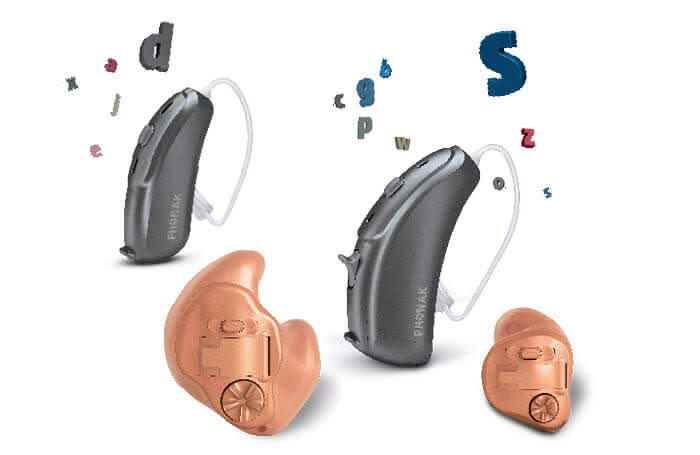
Phonak introduced their upgrade CROS system the CROS 2 late last year, and instead of just being the usual BTE device, they introduced a range of devices. A range of CROS devices that for the first time included custom fit ITE hearing aids.
Phonak has introduced a CROS system with an ITE for the first time
The CROS 2 Hearing Aid Range
The CROS 2 range is made up of four different hearing aid types, two BTE type devices, one with a 312 battery and the other with a size 13. It also includes two ITE devices one with a 312 battery and one with a size 13. The CROS 2 devices will work with any Venture based hearing aid (including another custom ite) of any technology level, however, they will deliver at their best if you pair them with a device from the V70 or V90 technology level.
In essence what the CROS 2 does is take the signal (the audio) from the bad side and streams or transfers it to the good side. It does it in a way that retains the natural cues so your brain perceives it as coming from your bad side. Using this type of strategy can be hard on the batteries, however, with the introduction of the CROS 2 Phonak also introduced a new power management system that stretches the battery life by 30%.
I have fitted a few wireless CROS systems and I never failed to be pleased by the results. When you have a customer standing in front of you with the mouth open in shock, you know it is working well. The first question is always, I can hear on my bad side, how is that?? Usually asked in a shocked tone.
I could explain, but I don’t have the urge to write an academic paper and put you to sleep. Suffice to say, the brain is an astonishing piece of hardware, if you present sound in the manner that it is normally, the brain just works it out.
Some success stories
I haven’t been involved in the fitting of a Phonak CROS 2 but I know a few who have and the feedback has been excellent. We just heard a great success story from Scotland that we will review on the blog soon. So if you have single sided or asymetrical hearing loss and you think it is time you got yourself a solution, or if you already have but are looking for a new one, the Phonak CROS 2 might just be the system for you.
As always, if you have any questions about the Phonak CROS 2, or any hearing aid, give us a shout.
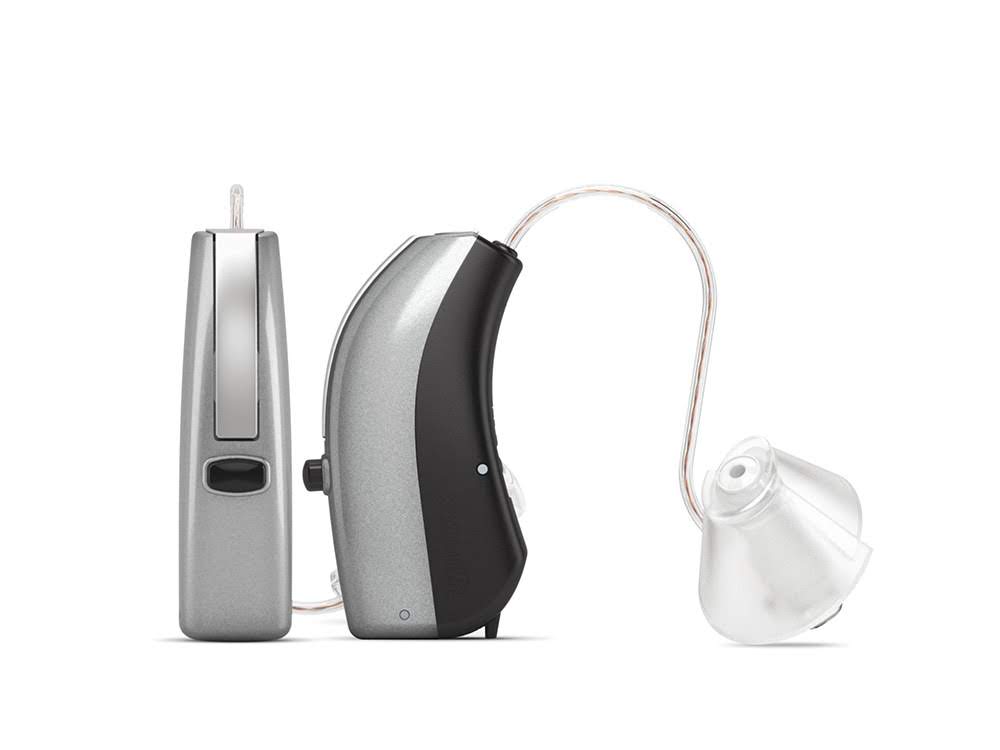
The Widex Fusion is a powerful, versatile and discreet RIC (Receiver in Canal) solution that was introduced a few years ago. It truly is a great hearing aid but it does suffer from the disadvantages inherent in RIC / RITE devices. Let’s take a look a closer look at the Fusion.
Introduced by Widex a couple of years ago, the Fusion is a versatile RIC hearing aid which covers many losses from mild to severe to profound. Depending on the hearing loss, the Fusion can be fitted with an instant tulip tip, a double dome (for more severe losses) or custom tips or moulds.
As I said, the device covers many hearing losses, but, it is still a very discreet option. The device is quite thin and quite short, it is of course bigger than their ultra discreet Passion RIC. However, this slightly bigger size brings big benefits for the user.
It has an easy to use program button which allows you to change programmes on the go as you move from sound situation to sound situation. It also has telecoil receiver which allows you to connect to loop systems. On top of that is a 312 battery which is easier to handle and gives you more time between changes.
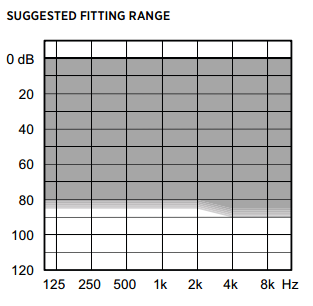
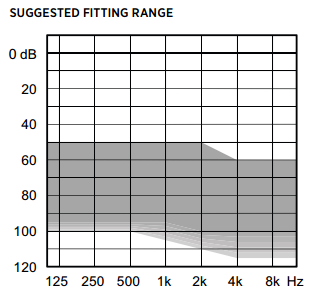
The device can be used with a choice of four different receivers which gives it a huge fitting range which covers mild hearing loss to severe to profound. The S receiver is the least powerful and thinnest receiver, then there is the M receiver, the P receiver and the HP receiver which is the most powerful. The S, M & P receivers can be fitted with instant tips or custom molds, the HP receiver is a special order and comes in it’s own specially made mold. Below you can see the fitting range of the M receiver and the HP receiver.
As we said in the Widex Fashion post, Widex have always had a fantastic power management system which meant they could run hearing aids on smaller batteries. They have introduced a new power management system which again extends the power to consumption ratio and it is available in the Unique range including the Fusion. Alongside the telecoil the Fusion is also wireless enabled and will connect to any of the Widex wireless accessories.
I have fitted a lot of Fusions to people who were always happy with them. The one issue is that tehy are a RIC / RITE which means there is a possibility of receiver failures if you don’t take care of them. The upside is that most receivers can be replaced in the office of your professional if need be.
One caveat here, Widex does not like allowing hearing healthcare professionals to replace the HP receivers if they fail. They are a bit difficult to replace and they can be damaged if not handled properly. So if you have a HP receiver and it fails it may have to be sent away for repair. You can read more about the hearing aid types and their pros and cons on the hearing aid types page.
I really think these are fantastic hearing aids and a great choice for discretion and versatility, just be aware of the possible drawbacks. As always, if you have any questions about the Widex Fusion, or any hearing aid, give us a shout.



 Itshearingaidknow