As I have said before, quite often I come across people in the clinic with issues like hearing the TV. In fact the issue and the complaining of their loved one’s is the main reason why they have arrived in my clinic. A typical comment is I have to turn the TV up but everyone complains it is too loud. Sometimes, even when I turn the volume up it is still not clear. I discussed this earlier this year in Can’t Hear The TV? You May Not Need Hearing Aids. I have come across a new solution for hearing the TV that I want to discuss.
Very Little Hearing Loss
When I test their ability to hear though what I find is a mild high frequency hearing loss. I am beginning to see this type of loss in the clinic more and more. It is representative of the growing awareness of hearing and hearing health care within the general population.
The situation is simple, the hearing loss is not something that we would treat with hearing aids. It is simply too mild but I don’t feel comfortable sending someone away that has a problem. I have always thought that I should at least try to help with the issue.
With that in mind, I have been doing some research on different solutions to help people with specific lifestyle problems caused by a hearing loss that we wouldn’t consider hearing aids for. In this the first of this type of article, I want to talk to you about wireless TV headphones from Sennheiser.
A Solution To Hear The TV Clearly
Sennheiser
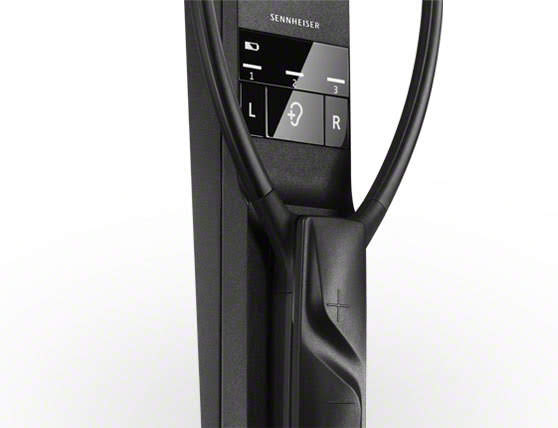
RS 5000 Digital Wireless TV Headphones
The RS 5000 system consists of a base station transmitter which is also a charger unit for the headset. The base station connects to your TV and the wireless headset receiver sits onto it to charge. It is a particularly smart piece of kit that Sennheiser have designed to help people who have difficulty hearing the TV clearly.
In fact the unit uses a new TV Speech Intelligibility feature to deliver better clarity for people with mild hearing loss. The feature works by making speech easier to understand. They have designed it to dynamically reduce background noise which is part of the TV audio but may interfere with the spoken word.
What’s in the box:
Headphone with built-in Li-Pol rechargeable battery
Docking station
1 pair of ear pads for small ears
Power supply unit with country adapters for EU, UK, US and AUS TV
Connection cable for 3,5mm headphone audio out
TV Optical cable for digital audio out
Instruction manual
Setting it up
The set up is pretty easy, plug the base station into a wall socket and connect your TV to it. You have a choice of connections included and it will connect with both digital and analog TV outputs. I used both the analog connection with the included 3.5mm cable and the digital audio connection. Both connections delivered outstanding audio quality.
The headset
The headset allows you to hear the transmitted audio within a range of up to 70 m. We tested it out walking around the house and got no audio drop out. It will also deliver up to 12 hours of playing time. Which we imagine would be enough to please even the heaviest TV addict.
The headset is ultralight. Because of the way you wear it, it puts no pressure on your ears or temples even during long sessions. it has an auto off function and when not in use, it just switches itself off. You can also adjust the volume of sound on the headset and change your hearing profiles.
3 hearing profiles and balancing the sound
The device offers three hearing profiles to choose from, which deliver clearest speech and a great music. You can also adjust the left and right volume separately for a pleasant and balanced sound. I think this is a great feature for someone who has an asymetrical hearing loss.
Our Experience on Test
So first of all, it was easy to set up and I had it up and running in a couple of minutes. The headset is really interesting, when I put it on first I thought that the lack of pressure against my ears would mean lousy sound. So the fantastic sound surprised me.
It is light and comfortable and I wore it for hours without any issues. There are actually four sound profiles, the first is just the audio reproduced as is. The three hearing profiles are really interesting though.
Hearing profile one
This profile boosts low frequency sounds and takes the edge slightly off high frequencies. It is a lovely warm sound with a bit of bass oomph that is ideal for listening to music.
Hearing Profile two
This profile boosts high frequencies quite strongly. It does provide exceptional clarity delivering clear sibilants and consonants in speech sounds. It also makes high frequency tones such as bird calls clear. This is a pretty good profile for people with mild high frequency hearing loss.
Hearing profile three
This profile is really interetsing for me, it lowers low frequency sounds. This reduces the chance of low frequency sounds masking the high frequencies. This allows high frequencies to be clear
I used the three hearing profiles and was more than happy that they did exactly what they said. I listened to some music with them without any of the hearing profiles and was impressed at the sound. Hearing profile one really delivered a nice music experience. the bass was great while the treble sounds remained clear.The two hearing profiles also delivered. I used hearing profile one during a couple of TV programmes that were primarily speech based. It ensured that speech was crisp and clear even when heavily accented.
I used both hearing profile two and three during a couple of films and TV shows. To be honest I was happy with both. But, I could see where hearing profile three lowered the background sound allowing speech to be clearer. It did so without making the sound un-natural in anyway which was also great.
Good for people with mild hearing loss
I think these are great devices for people with mild hearing loss looking for a solution for the TV. You can listen to your TV programmes at your own volume without interfering with anyone else. They will also make that sound a little clearer for you. On top of that, the price isn’t overwhelming. At under 300 quid (can be bought for $250 in the US) they are a financially manageable solution to your main problem.
The only downside I found with them is that they cut you off from the people around you somewhat. Although I was thinking about that and it actually may be a good thing. By that I mean that if they want to speak to you they have to get your attention. That might not be a bad thing, because if they have your attention, there is a better chance of you hearing what they say clearly. In finishing, this is definitely a device I will discuss with people who have mild hearing loss and problems with the TV.
I have discussed solutions like this before, a really interesting one that we have yet to try is the new concept in earphones from Bose that we discussed in Bose Hearphopnes, Hearing Aids?
If you like what you see, share it so others can benefit
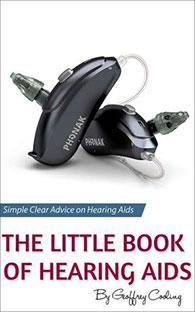
We understand that choosing hearing aids can be quite difficult even if it is your second set. The worry for most people is getting it right. Hearing aids are like any other high technology product. What they do and the features they offer are often clouded in techno jargon that makes it difficult to understand. This book will help clear that up for you, it is a definitive hearing aid buying guide for consumers. Your feedback is always welcome, the book was expanded in 2017 based on the feedback of buyers.
According to the National Institute on Deafness and Other Communication Disorders, an estimated 48 million Americans suffer from some form of hearing loss—the vast majority of them older adults. Almost one-third of people ages 65 to 74 report difficulty hearing, and the number rises to about half at 75.
In the United Kingdom, there are more than 11 million people with some form of hearing loss, or one in six of the population. Evidence is mounting that untreated hearing loss is a significant health concern, and studies have linked it with other serious health problems, including depression, a decline in cognitive ability, memory and concentration, and perhaps even dementia.
The latest research indicates that dealing with your hearing loss as early as possible is important to your long term future. However, doing so with confidence has always been an issue. There are so many questions, who is the best hearing aid brand? What is the best hearing aid for me? Who can I trust to take care of my hearing health? We have set out to answer those questions and more.
A Hearing Aid Buying Guide That Makes Sense!
This is a clear, no gibberish book on hearing aids and buying them. We talk to many people here on Know, consistently they ask us technical questions in relation to general hearing aid stuff. We thought there has to be a better way to get the information out so we took all the questions that we had been asked and wrote clear no jargon answers.
For 2017, we have updated the book and widened the scope of it. After feedback from some buyers we decided that info about the hearing aids was great, but info about the providers, manufacturers and the basis for hearing aid prices also, was better. The book is now also available in paperback. Here is what you can expect.
A Review of The Hearing Aid Book
An Educating and informative read!
I’ve been wearing hearing aids for 15 years and currently looking to buy some new ones. After hours of searching through the Internet I was even more confused! This book helped me focus my search.
A VERIFIED AMAZON CUSTOMER
5 out of 5
What’s in The Little Book of Hearing Aids 2017?
The original book focused purely on hearing aids and the technology involved. For the second edition it made much more sense to focus on the journey of buying a hearing aid from beginning to end. So I did, I have tried to ensure that this is the definitive hearing aid buying guide. Here is what the new book includes
A new section on Providers of hearing aids, what’s the difference and why might it matter?
A new section on buying a hearing aid, what do you need to know?
A new section on hearing aid prices, what goes into a price?
A new section on the hearing test, what you should expect to happen and why
A new section on hearing Aid Brands, who are the biggest?
Widex hearing aids, what’s on offer
Phonak hearing aids, what’s on offer
Starkey hearing aids, what’s on offer
Signia hearing aids, what’s on offer
Resound hearing aids, what’s on offer
The different hearing aid types
Their Pros and Cons
A section on rechargeable hearing aids
Hearing aid technology levels and what you can expect from them
Hearing aid features, what do they actually do and how will they help
A new section on Over The Counter hearing aids
How you can clean and care for hearing aid types
Hearing Aid Providers / Suppliers
What is the difference between a National hearing aid provider and an Independent? What does it actually matter to you?
Buying A Hearing Aid
What exactly do you need to know about buying a hearing aid? What exactly are white label hearing aids? What should happen during the hearing test to give you the confidence that you are being tested correctly? What should happen during the fitting and follow up, and why is ongoing care important?
Hearing Aid Prices
What goes into the price of a hearing aid? How hearing aid prices are changing internationally. What is unbundled hearing aid pricing?
Hearing Aid Brands
Who are the big six hearing aid manufacturers, the top hearing aid brands? What are they offering right now?
Hearing Aid Types
We detail the different hearing aid types and their pros and cons, explaining clearly what you need to know.
Hearing Aid Technology
What’s the real difference between mid range and high end hearing technology except for the price? Yes, we tell you that clearly as well.
Hearing Aid Features
Damned directional what? Those hearing aid features are important, we reduce the gobbledygook, explain what they do and try and give a real world example of where they will help you.
Over The Counter Hearing Aids
What are they, when are they coming and what will they mean for the consumer?
Clear hearing aid advice, independent advice and no damned gobbledygook!
So if you, or anyone you know is either thinking about purchasing hearing aids, or is in the process of making a decision about what hearing aids are right for them, you need this book.
Don’t worry, we will still answer any questions you send us. You can buy either paperback or kindle editions of the hearing aid guide book here
If you like what you see, share it so others can benefit
I came across a really fantastic video from Duracell a while ago. The video was designed to help motivate people who were worried about their hearing to take action. It should also hopefully motivate people with untreated hearing loss to finally take action. The video was designed for an education campaign in the States for May 2016. However, it should be shared again and again.
Some people may argue that the video lays it on a bit thick, some may even argue that it is not really realistic. To them my answer is rubbish! The scenarios in the video are all too real for many people and as for it laying it on really thick? I have to say that I thought it was exactly right, I think the level of emotion involved in hearing loss and its impact on people and their family is represented exceptionally well. And I would just like to point out I wasn’t crying, something got in my eye, no matter what my wife tells you!
In fact, the reaction of the man and his wife when he finally begins wearing hearing aids is why I continue to Practice. I have said it before, I really love to help people, however, don’t make me a saint yet, it is not all altruistic, I get a real buzz out of making a positive impact on someone’s life. Take a look at the video below, and if you suspect that you have hearing loss, get off your ass and sort it out! Don’t have us go round your house, we know where you live!
If you like what you see, share it so others can benefit
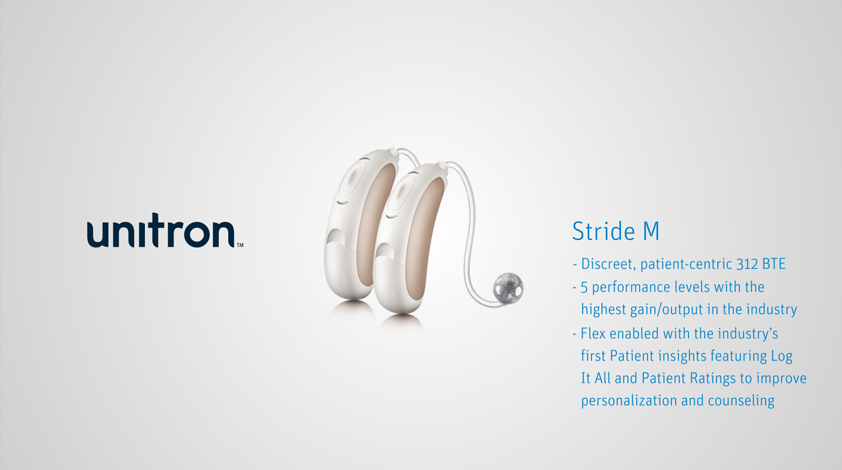
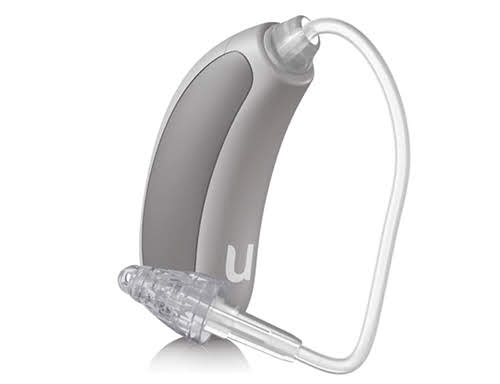
Unitron have just introduced a new Mini BTE that we think is really interesting. It is exceptionally functional with user controls, 312 battery and a telecoil, yet it is still as small and discreet as the average RIC device. They have said that they designed it so that people who are not suitable for RICs may still have the option to get a device that is similar in nature. I think that they may have actually introduced a RIC killer. Let’s talk about the Stride M.
They recently launched the Stride M which is the newest and most discreet member of the Stride hearing aid family. The Stride hearing aid family is made up of traditional hearing aids, both BTEs (behind the ears) and ITEs (in the ears). The Stride is built on the North™ sound processing platform which is their latest platform. The Stride M 312 BTE is designed to provide quite powerful performance in a style that delivers comfort, discretion, and functionality.
Unitron
Stride M 312 BTE
The 312 behind-the-ear (BTE) hearing instrument delivers a really discreet option in the Stride product family on the North platform which offers high-output power. The Stride M uses all of the North features, including SpeechZone 2, SoundNav and Sound Conductor, to provide a better hearing experience even in difficult sound environments. The Stride M has both user controls and a telecoil in a very small package.
The Stride M is a stylish and discreet BTE, in fact it could be easily confused with their Moxi Kiss or Moxi Fit RICs (Receiver in Canals). This device is Unitron’s smallest BTE offering, however, it still manages to provide the highest output of any 312 BTE. It can be fitted using a traditional hook and tube or it can be fitted with thin tubes.
This versatility makes it suitable for patients with a wide range of hearing losses, or who, for a variety of reasons, can’t wear a receiver-in-the-canal devices. It is this versatility that may well make it the most popular BTE that Unitron have ever delivered. It has all the benefits of a RIC device without any of the drawbacks.
Here is a quick run down of what the Stride M has to offer.
Size 312 Battery means it lasts even longer
As discreet as Most RIC devices
User controls which deliver real versatility of control
Can be fitted with thin tubes as well as traditional tubes and moulds.
There is a telecoil onboard, so it seems you can have everything
The Stride M delivers many benefits over a RIC device, thin tubes are easier to clean than receivers. They are also cheaper to replace than receiver wires. They certainly don’t break down from wax or moisture ingression the way receivers do. All in all, it seems that the Stride M offers the best of both worlds, all the benefits of a RIC device without all the drawbacks.
If you are looking for advice on hearing aids, you should check out our e-book. It details types, pros and cons,technology levels and features of hearing instruments in clear and easy to understand language.
If you like what you see, share it so others can benefit
Widex is introducing a new BTE to their Unique line up, the new Unique Fashion Mini BTE will be a replacement for their discontinued and iconic M device. When the Unique platform was introduced there were many raised eyebrows at the lack of a mini BTE device. Many professionals were very fond of the M, it was a versatile and discreet option for people with moderate hearing loss. In fact many professionals picked the device over a RIC because it was inherently more reliable. The Fashion device which was introduced with the Dream platform was certainly no replacement for the tiny M.
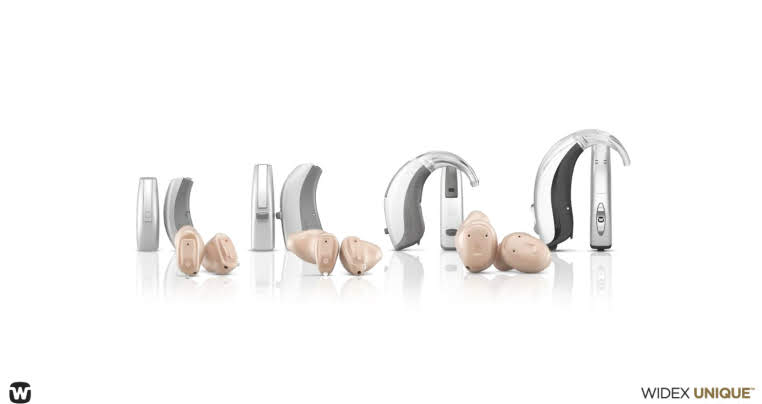
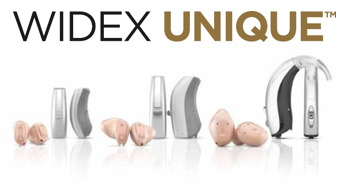
The 2016 Widex Unique Hearing Aid Line-up
Widex Unique Fashion
The Fashion device was really introduced as a replacement for the old Widex 19 device, although when they discontinued the 9 device it served as an ideal replacement for that hearing aid type as well. It was a versatile device offering the ability to fit many hearing losses. The inclusion of the new toggle button allowed the device to be sleeker without the loss of a programme button or volume button. As a replacement for the 9 and 19, it was truly an excellent device, but it certainly was not an ideal replacement for the ultra discreet M. I liked the M a lot, it was sleek, small, powerful and a BTE, a hearing aid type I really like, so I was sorry to see it go.
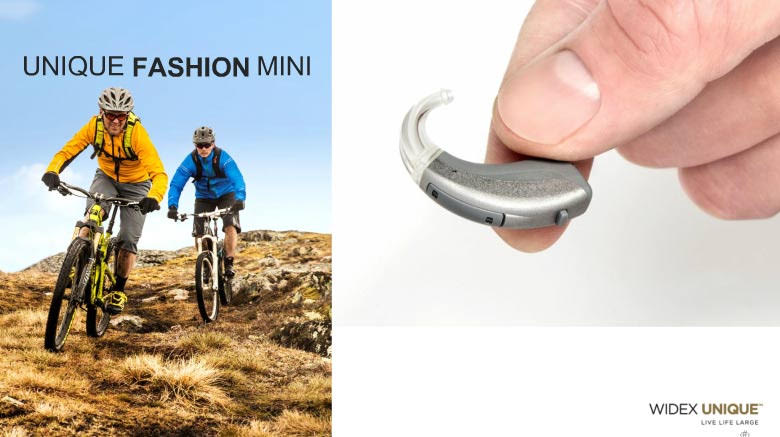
Unique Fashion Mini BTE
So finally, Widex have replaced the M device, they are introducing the new Unique Fashion Mini which is as discreet, but actually more versatile than the M. Alongside the release of the Fashion Mini, they are also introducing new and updated earware options that can be used with the new device. let’s take a look at the new mini and talk about why we are excited about it.
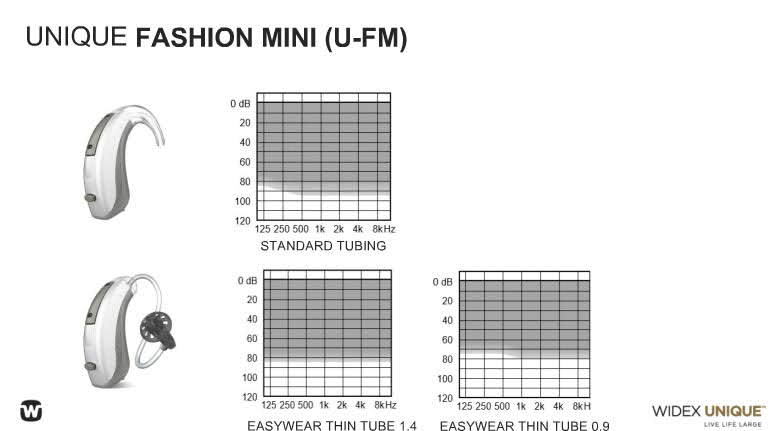
The new Fashion Mini is similar in dimensions to the old M, which means it is a really discreet option. However, Widex have made a few changes, all for the better I must add. Here is a run down:
Size 312 Battery means it lasts even longer
New multi-function button added which gives real versatility
The addition of new thin tube earware options now delivers three levels of output
The device is suitable for up to a 95dBhl loss
No Telecoil onboard, but you can’t have everything
The new Easywear earware options are pretty cool, they are shaped and designed in exactly the same way the RIC earware is presented. The new shape means that the earware should eliminate lateral movement in the ear canal, simply meaning they should stay in nicely. The earware is available in a 0.9 and a 1.4 diameter tube, this allows two levels of output with the thin tube delivering different levels of fitting range
As I said, I am excited about the introduction of this device. The M was a really versatile device and it allowed us to fit a really discreet option without having to resort to a RIC. I liked that because BTEs are inherently more reliable than RIC devices. The introduction of the new Fashion Mini means that we can fall back on a Mini BTE from Widex when we think a RIC might not be a suitable option for a user.
The Fashion Mini BTE should be launched in the UK next week, not a moment too soon really. As always, if you have any questions, or you would like some thing explained, drop us a line.
If you like what you see, share it so others can benefit
Let’s Talk The Future of Hearing Device Technology
The last few years have been an exciting time for hearing aids. They have got much better and more effective at what they are supposed to do. Something which wasn’t necessarily true before. While more innovation in this department is always welcome and will continue to be delivered. Innovation outside that core focus is speeding up, let’s talk about where we are and where we could be.
The hearing aid industry is no stranger to innovation, in fact, the fortunes of the big hearing device manufacturers are built on research, innovation and ever better hearing instrument technology. Before we talk about the possible futures of hearing aid technology, it is important to understand where we are and what is happening outside the hearing aid world that may have an effect. In the last six or seven years that innovation has focused on technology outside of the hearing aid. The new innovations were still designed to help you hear better in different situations but its focus was on ancillary devices and the connection to them.
Wireless Hearing Aids
The introduction of wireless communication to hearing aids opened up a huge amount of opportunity to hearing aid manufacturers. Initially, the only manufacturer who seemed to really understand the opportunity was Widex. Widex researchers believed that the real opportunity for wireless communication wasn’t connecting to ancillary devices. It was connecting the hearing aids to each other which for the first time would allow two hearing aids to act as a system.
WidexLink
Unfortunately, BlueTooth capabilities at that time (2009) could not cope with the speed, information exchange, power drain and sound quality that Widex desired. So in the famous Widex style, they invented their own which they called WidexLink. Their wireless system was introduced along with their first ever wireless hearing aid range the Widex Clear.
I worked for Widex at the time and I remember clearly the excitement of the Clear launch. It was a staged launch with the BTEs coming first and the custom hearing aids coming later because of technical difficulties. Even today, with the advancement of the BlueTooth protocol, Widex Link is probably still the best platform for hearing aids to work together. Many also still feel it is the best platform for streaming high fidelity audio.
When hearing aids can make decisions together using the sound information from two different sources they deliver a much better quality of hearing, a much more natural hearing
As I said, the key was that Widex saw a future where hearing aids would act as a system, making decisions together to provide the very best strategy for a user to hear well in the situation they were in. This core belief is now accepted across the manufacturers and they all use varying levels of integration of devices to decide how the hearing aids work in any given sound situation.
Connection To Other Devices
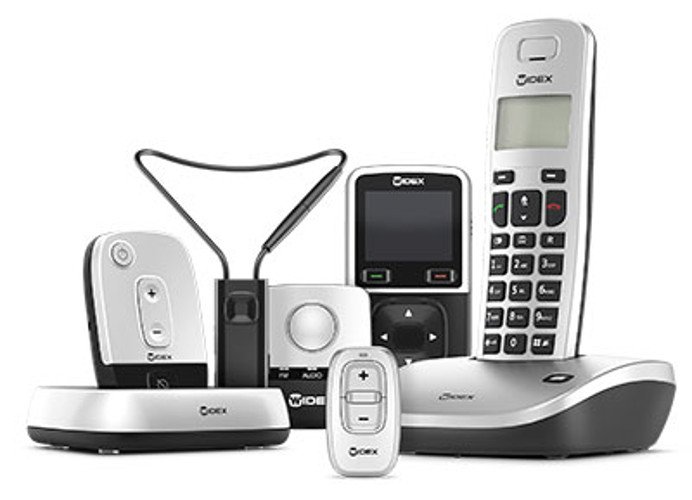
Wireless hearing aids also allowed us to connect to other devices, it allowed us to connect a user to their TV, their home phone and their mobile phone among other things. This allowed far better experiences for people with hearing loss, allowing them a deeper immersion in their day to day experiences. Immersion and connection drove the next wave of innovation, the connection to the smartphone.
Every hearing aid manufacturer has by now developed smartphone apps and connectivity to iPhones and Android phones. Up to now, most of the manufacturers connected to those phones through a streamer except for two. The first and most famous of course were GN Resound with their original Made For iPhone hearing aids the Linx. Resound and Starkey went for a direct connection with the smartphone, something that no one else had done. This direct connection opened up so many opportunities for them and some pretty cool features for users. In late 2016 two more manufacturers joined the direct route, Oticon with its Opn device and Widex with its Beyond Made For iPhone hearing aids device.Update August 6th 2017: It now appears that Phonak is about to enter the fray, although if the hints and rumours are true. It may not be just Made For iPhone, it could also be Made For Android.
Find My Damned Hearing Aids!!!!
One of the coolest new features for many was the find my hearing aids feature. Lost your hearing aids or hearing aid? Well, the app on the phone would help you find where it was. That is a pretty cool feature as anyone who has lost a hearing aid will tell you. But there was much more than that, customised programmes based on location, streaming of audio and phone calls, complete control over the features of the hearing aids and even some fine tuning ability for the user.
If you have ever lost a hearing aid, then find my hearing aid is a feature that was sent from God himself!
Great Stuff, But Not For Everyone
These innovations were really great stuff, but surprising as it is to me, not everyone wants them. Some hearing aid users just want a hearing aid that they put on and forget. New users tend to be afraid of the technology while experienced users want more power over their devices. Don’t get me wrong, these are generalisations of course, but relatively true. This is something that we have seen over the years, some of the innovations appeal to some of the users. This problem is compounded by how much the innovations appeal to the people who provide them, something I will touch on later.
The Latest Innovations in Hearing Aids
Okay, these things have led us to here, where we are today, they are also the basis for where I think we are going. Just recently two things have happened which are interesting for a tech nerd like me. Phonak has introduced rechargeable hearing aids and Oticon has introduced hearing aids that are connected to the internet of things. Two very different innovations but ones that point to the possible future of hearing aids.
Are rechargeable hearing aids about to go mainstream?
Rechargeable hearing aids have been around for a long time, Siemens and Hansaton have provided rechargeable hearing aids with some success for a long time. GN ReSound dabbled with the system with their Resound Pulse, something that they probably want to forget to be honest. It was a disaster.
The issue with rechargeable hearing aids has always been the amount of power available and the concern that a hearing aid user would not get a full day of use in particular if they use a wireless streamer. Recent technology changes have cracked that problem meaning that rechargeable hearing aids will be much more attractive to users. Because Phonak has gone down the route, I think we will see more of the manufacturers doing so, although that depends on power demands of new innovations as they appear.
Mind Controlled Hearing Aids
Update August 6th, 2017: In just the recent past there has been serious work undertaken in connecting the working of hearing aids to your consciousness. In essence, they hope that signals from the brain in relation to the focus of your attention can ensure that hearing aids actually concentrate on the voice you want to hear. The work is in its early stages, but it is fascinating. It is also a sign of a deeper integration between technology and our consciousness.
The Internet of Things
Oticon (One of the biggest hearing aid manufacturers in the world) has just introduced their new device the Opn. In a rather far-sighted way they have designed it to have access to the IFTTT (If This, Then That) network. It does so by connecting to the internet via the Oticon ON app on a smartphone. The IFTTT network is a network that we will hear more and more of over the next couple of years.
It is designed to allow you to set triggers, which they call recipes, whereby one action, automatically triggers another. For instance, you can set up an IFTTT recipe that ensures everything you post on Twitter is automatically posted on Facebook. It also has applications in the physical world; applications that will just grow as the internet of things (IOT) grow.
One such real-world action, for instance, is setting your heating to come on automatically once a certain outside temperature has been reached. The potential for recipes are endless and only curbed by the number of devices that are connected to the IOT. The case uses that Oticon has spoken of include a notification in your hearing aids being triggered by the doorbell being rung. Lights in your house or the coffee machine coming on in response to your hearing aids being turned on in the morning.
Amazing Vision
They have set up far more recipes than just those which allow automation of triggers for many things. I believe that this is an amazing vision, this is a far-reaching innovation that came out of left field. This type of thinking will allow a whole new future for hearing aids and the benefits they provide for users.
Oticon and IFTTT opens up whole new future for the benefits that hearing aids will provide for users
My one complaint is that I don’t think Oticon have gone far enough, I think if they focused on providing ear level sensors that tracked activity, pulse and blood oxygen levels they would have a killer device that changed hearing aids forever. If Oticon had integrated ear level sensors that monitored vitals, coupled with an accelerometer that could tell when someone has fallen.
They could set the hearing aids to trigger a real-time call for help. More than that, they could continuously monitor vital signs for health or fitness tracking. They could design an IFTTT recipe triggering weekly reports to be sent to anyone who the user wanted to have access to, like a physician. This type of feature set would change a hearing aid to a device that was focused on general health.
Fuel Cells For Hearing Aids
In recent news it appears that Fuel Cell hearing aids may well be close to ready for the market. The conversation around fuel cell powered hearing aids started in Denmark in 2009. It has blown hot and cold since then. Fuel cells are hydrogen-powered power sources because hydrogen needs to be contained in a pressurised container, most of the research has been undertaken on Methanol.
Methonal is Hydrogen-rich but it does not need a compressed container. In theory, you could recharge your hearing aids in the same way you charge a cigarette lighter. It could be done in thirty seconds and you would have up to three days of power.
Widex actually lodged a patent for a working concept in 2011 and a prototype was even manufactured. However, things went quiet again after that. In 2015 it was decided that the project would heat up again and there was a fundraising round. The work to finally bring the concept to market began in early 2016 and it appears that we may actually see the concept delivered to market in the near future. Stay Tuned. Update August 6th, 2017: Widex is delivering rechargeable hearing aids later this year using the ZPower silver zinc system. However, they have not given up on Fuel Cells and they hope to deliver them in 2018.
An Integrated Life
This type of wider thinking will allow hearing aids to be integrated into a wider way to somebody’s life, delivering benefits far more than the core function of hearing better. That is what technology is for, to make our life better, smart thinking and innovation can allow future hearing aids make people’s lives better in so many different ways.
Nobody gives a toss about your hearing aids and you people are sheep! Sheep I tell you!
Hearables and The Cultural Effect
Hearables exploded onto the scene a little over three years ago, however they have already made a huge impact. Culturally for the first time, ear-level devices are becoming an accepted norm. This will have a great effect on the cultural acceptability of hearing aids. The stigma of hearing aids is only in your own mind by the way, no one else cares a toss about the fact you wear them.
It is only you and your pre-conceived ideas that cause any issues. Believe me, a person walking around giving the wrong answers to questions and saying what? all the time looks far worse than someone who has chosen to wear hearing aids and remain active in their life. However, if you see more and more people using devices in their ears you won’t feel so bad about wearing your hearing aids. God love the human condition, we are like sheep, sheep I tell you.
Medical Use For Hearables
Hearables and their function should be giving the hearing aid industry clear ideas about the shape of things to come. They play music, track fitness and allow a deeper and easier connection to the devices we love. With the recent introduction of Jabra headsets and their collaboration with TrackerMD, hearables are finally entering into the medical tracking world.
It is envisioned that the collaboration will allow physicians monitor the real-time health and fitness of their Patients for many reasons. It will also allow physicians to collaborate with each other and other professionals involved in primary care.
A Medical Use Case For Hearing Aids
As I have already said, if Oticon had introduced sensors at the ear level we would be talking about a complete case use change for hearing aids. I believe that these types of innovations will change everything. They will raise hearing aids beyond what they are now to devices that will make your life easier in so many different ways.
There will be medical and fitness uses beyond what we even envisage today. It is possible to take an ECG through an ear level sensor. Perhaps in the future, your hearing aids will not just track vitals but also give you a weekly or even daily ECG.
Self Fitting Hearing Aids
Self-fitting hearing aids have been available for some time in Australia. A company called Blamey and Saunders have very successfully offered self-fitting hearing aids for some time now. The hearing aids are purchased online and a kit is sent out to help you fit them.
Self-fitting hearing aids have also become available in the US with the recent introduction of the iHear product line up. In fact iHear have the only FDA approved home hearing test kit in the States. So there is a demand for the products and it appears that demand is growing. The devices are fit by the user and then fine-tuned on an ongoing basis by the user. Reports in relation to the devices are pretty good, however, it is clear that this concept is only suitable for people who are able for it or confident to use it.
Self Fine Tuning of Hearing Devices
Self-fine tuning is a concept that has been around for a while. Several years ago Siemens introduced a system whereby the user could self-fine tune their hearing aids to a certain extent. The idea never really caught the imagination of users, however, I think that it is an idea that is becoming to have its time. With the release of the Widex Beyond hearing aids and app, Widex has given the power of self-fine tuning to users. It is limited in that the fine-tuning changes are both limited and general in nature. The fine tuning is undertaken on three handles, bass, mid and treble.
This type of fine tuning ability for users makes sense, users should have some control over their hearing aids, but only the control that they are comfortable with. I think that there is a most definitely a wider place for self-fine tuning and fitting hearing aids within the market. I also believe that they will become more popular over the next few years. Whether the mainstream hearing device manufacturers decide to go down this route, of course, is another thing.
The Future of Hearing Aids
So what will we see in the future, I don’t know, haha bet you weren’t expecting that! However, I will hazard an educated guess for you. I think that rechargeable hearing aids will eventually become mainstream, but it will take a while. Battery technology still needs to become better to meet the needs of people who like to take full advantage of their streaming capacity. If indeed Fuel Cell technology is proved worthy, I think it too will become mainstream. I believe we will see new hearing aid types being introduced and devices that offload some or all of their processing to the cloud via a smartphone connection.
I think that if the market continues to demand self-fine tuning and fitting, it will come to pass in a wider way. However, from all of my conversations with advocates of this type of technology, I think that there will still be some involvement of a professional. I think even if the self-fitting market grows, it will probably grow in tandem with the traditional market, I don’t think it will replace it.
Remote fine-tuning of your hearing aids by your professional will also grow. If you want changes made to the way your hearing aids work in the future. You won’t have to attend your professional’s office, they will be able to do it via the internet.
Hearing aids will come equipped with sensors for tracking vitals, Widex has registered a patent already for a hearing aid device with in-ear sensors. Others are probably researching this and will certainly introduce it. It simply makes sense, people who use hearing aids have changing needs, they are more active and health conscious as is most of society.
Those changing needs and wants will shape and direct the features that will be provided. It is simple, the market demands and a smart company and provider delivers. As I said providers will have to adapt and understand these technologies. Many of them don’t necessarily understand the tech and little understand the demand.
This is going to have to change, because the consumer, that’s you, will want what you want. It will be up to the provider to deliver it. The possibility for integration in your life and with all of the devices you use is only measured by our imagination. The future is so bright, we need to wear shades!
As you may know, we released a consumer guide for hearing aids on Amazon in paperback and Kindle recently. We will continue to update that book with outlines of newer technology offerings as they are introduced. When we update the book we will leave an update message on the page on our site.
If you like what you see, share it so others can benefit
Find An Independent Hearing Aid Centre in Your Area
Arrange a consultation with a trusted Independent hearing healthcare professional in your area
A Solution For Severe To Profound Hearing Loss From Phonak
Naida Venture Hearing Aids
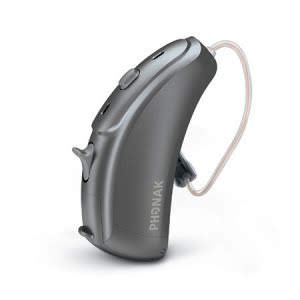
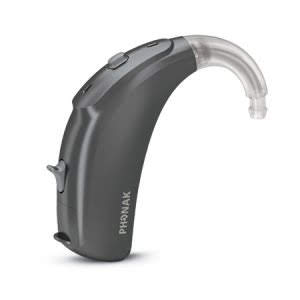
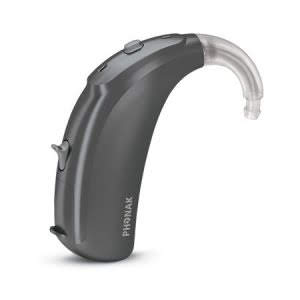
Phonak has a long history in, and is renowned for hearing device solutions for severe to profound hearing loss. They have just launched their latest addition at a launch event I attended in Dublin. Let’s meet the Naida Venture range .
Best Solutions For Profound Hearing Loss
So as I said, Phonak have just launched the latest addition to their now famous Naida range in the UK and Ireland. I think the Naida has been accepted almost universally as the best solution for profound hearing loss. Although there are many contenders for the throne including the Enzo2 from Resound and the Super from Widex. First things first, the full launch cycle isn’t finished and the devices won’t actually be available for order until the first of May. Not too long to wait though for what seems to be an outstanding solution for people with severe or profound hearing loss.
Venture Platform Based
The new addition is based on the Venture chipset and finally brings all of the benefits of that platform to people with severe and profound hearing loss. The Venture platform has been exceptionally well received and even long term Phonak users are blown away by the improvements that it has brought with it. The new Naida V range is available in four levels of technology which include the V90, V70, V50 and V30. A little bit of history here, the original Naida was first launched in 2007 and it quickly became the go to hearing aid for treating people with severe to profound hearing loss. I remember when it was first launched and the response to it when I first fitted it.
It really was a breakthrough device although we would expect that from a company who has a long history with hearing solutions for people with severe to profound hearing loss. The new range brings new styles with much smaller and more powerful devices than available in the older Naida Quest range. It also introduces some great updated features with a new SoundRecover strategy to deliver as much speech information as possible without causing distortion.
Matt Gilbert
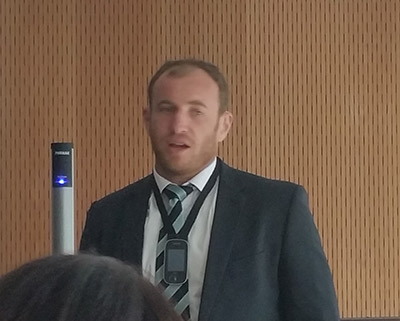
The launch event was attended by Matt Gilbert who I had actually never met before, he is an English rugby union footballer currently playing at Flanker and number eight for Worcester Warriors in the Aviva Premiership. Matt is the only deaf professional sportsman in England. Funnily enough, Matt is being looked after by our friends at Worcester Hearing Centre and was just recently in there to get new moulds and be fitted with the new Naida V range. In 2012 Matt was fitted with a Phonak Naida hearing device. Since then he has worked as a celebrity ambassador for Phonak, helping to raise awareness of hearing loss. He discussed his experiences with The Naida devices and his deafness, he also explained how the ancillary wireless devices had changed his life.
Difficult hearing loss
Matt has a left hand audiogram or profound hearing loss, he has little to no high frequency hearing. This type of loss is difficult to treat because you can not deliver amplification to areas that just don’t exist any more. In the case of Matt’s hearing loss we could not help him with the high frequency cues in speech with a tradional fit. He can’t receive the information,
With people like Matt, frequency compression or transposition comes into it’s own. With this strategy, we can move those high frequency cues down to an area where he still has hearing. This is why Naida using the SoundRecover strategy is the right fit for Matt and others like him. This type of hearing loss causes major issues with the things that we take for expected like using the phone and listening to TV. Even with a decent set of hearing aids, both of these situations can be problematic, that is why we need to look at an integrated solution.
With this type of loss, even the best hearing aids won’t do it all, you need an integrated solution to deliver better hearing in all situations
Integrated Solutions
Matt uses an integrated solution set, he has a com pilot which allows him to connect to his mobile phone and other bluetooth solutions and he uses the DECT Phone and the TV Link. He said that Phonak devices and Phonak’s wireless accessories like the com pilot, the DECT Phone and the TV Link offer him a fully integrated solution. Without it, he would not be able to use his mobile phone and watch television with his wife without subtitles. Something that he was unable to do before, he felt that this integrated solution based strategy really made the difference for him, giving him real freedom. A freedom that had been restricted by his hearing loss.
He can take his own mobile phone calls now, as opposed to having his wife do it for him. Matt also discussed using his hearing aids on the field when he was playing. He said that the robustness of the Naida gave him the confidence to use them on the field where they were bound to get knocked about a bit. He said generally there has been no issues and they have held up very well. He spoke about how he tried to protect his hearing aids from sweat and rain before they became water resistant. The best solution was a torn up plastic bag which he taped around the hearing aids. He is quite an inspiring figure who has not allowed his profound hearing loss get in his way.
The hearing aids
Naida V RIC
The Naida V RIC (Receiver in Canal) offers amazing power in a small package, it will deliver outstanding benefits for people with mild to severe hearing losses delivering power with discretion. The device which is a new form factor with a size 13 battery comes with three possible receiver options, the XS, the XP and the new X UP (for Ultra Power). The X UP option is a newly designed receiver which offers more output than the previous one. In essence the option will cover a more severe hearing loss.
With the introduction of a newly designed X UP receiver, the hearing aid will cover a hearing loss down to a flat 100 dB. This means that even people with a severe to profound hearing loss can avail of a very discreet solution without compromise in power or functionality. If this might be an attractive option for you, you need to be aware that there is some extra clean and care steps with a RIC device. As a RIC device, you will need to ensure that you take care of the receiver and follow a daily drying routine to ensure taht it does not fail from wax ingression or moisture build up.
Naida V SP
The new Naida V SP is 25% thinner than its predecessor, it is also a much smaller hearing aid. It runs on a size thirteen battery and can be fit with a power slim tube and tip which offers real discretion. The power slim tube can be fit with either acrylic or silicon custom tips. The device can also be fitted with a standard thick tube and mould configuration. The power slim tube has been re-designed by Phonak and it now sits lower on the top of the ear and hugs the face in a better way. This means that it is slightly more discreet than the last generation tubes.
The power output on the new SP has been increased and it now matches the power output of the older Naida Quest UP. This means that more people with severe to profound hearing loss can now avail of a more discreet option. The SP runs on a size thirteen battery which accounts for that smaller size, but the power management system that Phonak uses ensures that the battery drain is controlled. The device is a little bigger than the RIC but it is still a very small hearing aid. All in all it is a very discreet option which delivers a lot of power, something that many people with profound hearing loss really want.
Naida V UP
The new Naida V UP is again thinner and smaller than its predecessor with a new form factor. The power output on the hearing aid has been increased giving it even more performance for even the most profound hearing loss. It is powered by a 675 battery and can also be fitted with a power slim tube and custom tip. This is definitely one of the smallest 675 traditional type hearing aid solution for profound hearing loss. It will give people with profound hearing loss a more discreet solution.
Naida Features
Sound Recover 2
With a new version of Phonak’s sound Recover strategy the Naida offers more high frequency cues than ever before. This allows access to the nuances of sound that you may not be able to hear. It delivers more speech information without causing distortion.
Water resistant
The range is rated to IP68, which means it will survive immersion in one metre of water for sixty minutes without damage. Phonak are circumspect about calling it water resistant, but another manufacturer calls this level waterproof. One way or the other this range will quite happily get in the shower and the pool with you without having to worry about it failing.
More robust
The casing is made with a new glass fiber reinforced material, the Naída V is now 60% more robust than its predecessor which together with its resistance to water should really give you confidence it won’t fail you. Phonak know that this is important for people with profound hearing loss because without there hearing aids they are in a bind.
AutoSense
As part of the Venture platform the new Naida range benefits from Autosense and all of its features. This allows it to deliver the best possible experience in a range of sound environments.
Talking about integrated solutions
As we said earlier, with very difficult hearing losses we need to look at more than just hearing aids. For people with severe to profound hearing loss the strategy has always been integrated solutions. A couple of years ago Phonak launched the Roger devices. In line with the new Naida launch they have also launched some new Roger devices which we will discuss later.
The launch event and speaking to Matt about his experiences really brought home the need to think about a comprehensive solution for someone with hearing loss. We have spoken elsewhere about wireless hearing aids and wireless accessories and why we think they are the most amazing thing to happen to hearing aids. Hearing aids are just that, an aid to hearing. They do not correct hearing and can not deliver the hearing you have lost. However, a good hearing aid combined with a wireless accessory will give you the best opportunity to hear in every situation you need to.
It irritates me when I see talk about the rip off that hearing aids are, a conspiracy by a monopoly to keep prices high! But are they, is there any truth in the rip off claim? I want to talk about hearing aids, their prices, what goes into them and what you should expect for your money. By the end of this article, I hope you should be able to make up your own mind. Just to let you know in case you are a new reader, we are completely independent and I am infamous for saying what I believe to be true, not what suits others (has got me into a load of strife believe me). The second thing I would like you to consider is that I have no vested interests here, considering most of the readers of this site are from the States and the UK, I am unlikely to ever meet you, ever.
Hearing Aid Prices
The price of hearing aids tend to vary from place to place and country to country. However, more often than not the variation isn’t huge when you compare on a like for like basis. At face value, hearing aids seem exceptionally expensive. However, to understand hearing aid prices, you first really need to understand what goes into delivering a hearing aid that you are happy with.
Features You Don’t Need!!!!!!
This is complete balderdash, modern hearing aids come with set feature sets. those feature sets are particular to the hearing aid technology. Nobody and I mean nobody, sets their prices on additional features. It is complete rubbish. The prices vary on the technology level of the devices, do you need the highest technology available? Probably not, but I can’t tell you because I don’t know your lifestyle needs. The level of technology you need is based on what it needs to do for you in the sound situations you find yourself in.
The Price of A Hearing Aid Delivered
In essence there is a breakdown of costs that need to be considered within the price of a hearing aid. In fact the easiest way to understand it is to think of it as the cost of a hearing aid delivered. That is in fact the way hearing aids are priced. The price covers all of the expected visits it takes to ensure a hearing aid is correct and then the ongoing care of you and your hearing aids from that day forward.
Or, that is what most of the Profession offers. I have explained elsewhere on the site what I offer my customers and what is included in the price I charge in the article Buying Hearing Aids Online? Here is What You Need To Know. In essence it is several office visits during the first three months and then six monthly visits thereafter. That is a lot of my time and I base the price I charge on that time spent.
Do You Need That Time?
In my experience most people do, not just that, they actually appreciate the ongoing care. Firstly, hearing aids aren’t like glasses, you can’t just put them on and just get on with it. They simply don’t work like that. On top of that fact your hearing changes over time and your hearing aids need care, attention and re-programming. In essence we bundle all the costs upfront.
Purchasing any item that can cost up to three grand is a big decision, firstly there is a big financial outlay involved. In particular when it comes to hearing aids there is also the psychology that seems to be inherent in the decision. People’s response to hearing aids never fails to surprise me, but you aren’t old, it isn’t a sign of you losing it, it simply is. Hearing loss just happens, the best thing to do is deal with it. But I digress, a favourite rant, I apologise.
Other Factors To Consider
Most people focus on the price of the instruments, I can understand that because they are expensive. There are many other factors that you need to consider when you are thinking about buying hearing aids. But let’s focus on the price for a minute, the price of a hearing aid includes a lot of service, in fact years of it.
For years I have spoken about un-bundling prices so it is clearer exactly what you are paying for, not many have done it unfortunately which means that everyone tends to focus on the hearing aid. I think this in itself has allowed the pricing involved to be misrepresented as a rip off.
Hearing aid price breakdown
So what are you paying for? Generally and certainly in the UK and Ireland you are paying for the instrument itself and all of the care and support that you are expected to be given for the lifetime of the instrument. In essence that means:
The fitting of the hearing aid
Follow up fine tuning visits to ensure the aid is customised for you
Either six monthly or yearly follow up appointments to service the aid and ensure you are still doing fine.
The lifetime of a hearing aid can be up to about ten years, I know you have read four to five elsewhere, but that isn’t strictly true. The life cycle of hearing aid technology is four to five years. By that I mean, something happens in the technology every four or five years that is an amazing leap forward. Such a technological advancement that hearing aids from then on are exponentially better.
Hearing aids however will last far longer than that, but after eight it can become difficult to get it repaired if it fails. So you are going to attend a lot of half hour to hour visits during that time. That is exactly what you are paying for, time and professional expertise. When you have paid for it, don’t be embarrassed about taking it up. I think that my time is worth money, just like any other professional who offers service, when you have paid me for that time, I always make sure that you get it.
Again, the question for you might be do you need that much care and attention? I would say you probably will, but if you are an experienced user who feels that you might not, why don’t you discuss it with the professional in front of you. In my experience pricing isn’t some arbitrary thing, we set prices on the average journey, if you feel yours will not be average, discuss it with them.
Going For The Cheapest Price?
There can be a big difference in prices across different providers and it can be attractive to simply go for the cheapest option. However, before you do, you need to ask yourself “is it like for like?”. The cheapest price is not always the best option, you need to know all the facts surrounding that price and the equipment and service offered before you can make an educated decision. These are the questions you need to ask
What service will be offered?
What exactly are the hearing aids (Brand and Model)?
Are they the latest technology?
When you have answers to these questions, it is easier to make decisions.
White Label Hearing Aids
Some corporate providers across the world offer white label hearing aids, white label hearing aids are devices made by manufacturers with a special label. For instance, Specsavers in the UK has the Advance range, Hidden Hearing has their own range which is made by Oticon, in the US Costco has the Kirkland range which was made by Resound and is now made by Signia. Starkey does its own white label for its retailers.
I personally don’t like white label ranges, I understand the commercial reason why they are used but it makes them hard to analyse for the consumer. That is exactly why a white label is used, to make it difficult to do like for like comparison. It is easy for a Dispenser to say oh they are the same as such and such, more often than not, they may actually be, but how will you know? They may be made by the same manufacturer but how are you to know exactly what they are?
By now I hope you are beginning to see that things aren’t as simple as they may first seem. There is a lot of information you need to consider in the process. The info is both medical and technical in nature, medical when it comes to your hearing loss and technical when you are trying to understand any hearing aid technology that has been recommended.
There is a lot of choice in both types of hearing aid available, and the manufacturers who make them. It can be quite difficult for a consumer to understand it all and sort through what is important. A good Dispenser will help you on that journey, deciphering the gobbledygook. When they have done that, they will then ensure that you have the best experience possible with the hearing aids you have chosen.
In finishing and probably the most important thing I have to say is, make sure you know what you are buying and make sure it fits your needs. Make sure you completely understand the service delivered and do not be shy about demanding that service.
If you like what you see, share it so others can benefit
Most of the stuff we will talk about here was actually introduced in 2015, but they will be the top selling hearing aids in 2016. There has been some hearing devices launched in 2016 and we expect some more to be launched over the course of the year. Let’s take a look at the companies and hearing aid platforms that will probably dominate 2016.
Phonak & the Venture Range
Audeo, Bolero & Virto hearing aids
We have detailed much about the Venture range on this site, it is Phonak’s latest platform which was launched in a step by step release in 2015. The Venture range is available across all hearing aid types and at four hearing technology levels. All of the hearing aid models have been given a re-design and for the first time Phonak have introduced wireless CIC hearing aids.
New CICs
They didn’t settle for just that either, they have also introduced CICs with directional microphones. In fairness the devices are a little larger than the standard CIC, but and it is a big but, they aren’t huge and the extra size is probably worth it for the functionality.
CICs with directional microphones, a first for Phonak, a first for the industry
The technology in the Venture range is outstanding and Phonak have been careful to equip each of their technology levels with class leading hearing aid features. I would expect these hearing aids to be exceptionally popular this year, the feedback from consumers has been excellent so far and it looks likely that Phonak will only increase their reputation as the go to Premium hearing aid range.
A new super power aid from Phonak
Phonak is just about to introduce a replacement super power hearing aid for the Naida Quest. The new hearing aid will be based on the Venture chip, there is a bit of excitement around this launch. Phonak have been hinting at some ground breaking features for people with profound hearing loss. The Naida is probably accepted as the go to hearing device for people with profound hearing loss so any launch of a new one is usually hotly anticipated. I will be at the launch, so I will report back on what I find out.
Phonak did launch the new Naida Venture range and it is quite a step forward, smaller and more powerful than its predecessor it offers a host of outstanding features for people with profound hearing loss.
Rechargeable Hearing Aids
Phonak didn’t stop there, in September 2016 they launched the Belong range with a rechargeable option. Based on Lithium Ion battery technology they promise to give you twenty four hours of battery life on one three hour charge. This is the first time that Phonak have ventured into the rechargeable hearing aid market. Many believe it is a sign that rechargeable hearing aids are finally ready to go main stream.
Widex & the Unique Range
Unique 440, 330, 220 & 110
Widex have always been known as a premium hearing aid manufacturer, it is a title that they very much deserved. They have always done things a little differently than any one else within the hearing aid industry. In fact they are famous for it. There have been some major changes within the company over the last few years with a huge shake up at corporate management level. A new CEO was put in place who for the very first time was not a member of the families who own Widex.
With all of the changes that were happening, people across the industry (manufacturers) and the profession (hearing health professionals) were interested to see what would happen with their new release. It seems that they have stayed true to their roots. The Unique range is another fantastic hearing aid platform from Widex. The Unique range comes in their usual four technology levels, the 440, 330, 220 and 110. Like the other manufacturers they have retained many of their top level features across the range. However, their 110 hearing aid is definitely not class leading in it’s technology level.
Industry leading wind noise reduction
New Wind Reduction Feature
They have introduced a new wind reduction feature which they say is the best available. Widex do not make claims lightly, so if they say it is so, it probably is. Early feedback from consumers seems to back up the claim. However, that feature is only available in the top of the range 440.
Widex also introduced a new hearing aid to the Unique family, the Fashion Mini. It is a mini BTE, discrete but powerful and an ideal option for people who want the discretion of a RIC but can’t wear one.
In late 2016, Widex introduced a new Made For iPhone hearing aid range the Beyond. The device is based on their Fusion device and will be launched late 2016 early 2017.
GN Resound & The Linx2
Linx2 9, 7 & 5
GGN Resound were first to market with a Made For iPhone hearing aid and in our opinion delivered the best. They quickly followed it with The Linx2 which enlarged the range and for the first time offered custom hearing aids. It has been a while since they launched but we have included them here because they are still un-beaten in the Made For iPhone field.
The range is available in three levels of the technology, the 9, the 7 and finally the 5. Resound have really made sure that they kept their feature set really high across the technology levels. The 7 is almost as good as the 9, but there are clear reasons why the 9 is a better hearing aid. The same with the 5 and the 7. No matter what level of technology you buy here, you are getting an outstanding hearing aid.
Bluetooth connectivity, no streamer needed!
Simple connectivity that sets them apart
The aids connect to smart phones and tablets run by both Apple and Android softwares with ease. They deliver an outstanding integration with all of the apps that you use and the conversations you have with simple ease.
No streamer, just Bluetooth ready hearing aids
What really sets them apart though is that you need no in between device, no streamer. They simply connect via Bluetooth on your device.
This is not a definitive list but we think these are probably the best hearing aid ranges available at the minute for the reasons we have discussed. However, other manufacturers like Siemens, Unitron and Starkey all have hearing aids worthy of inclusion here. In another article we will cover the technology available across the market in an in-depth way.
We have general details about Hearing Aids, their types and technologies in our consumer hearing aid advice guide. It also details technology levels and features of hearing instruments in clear and easy to understand language.
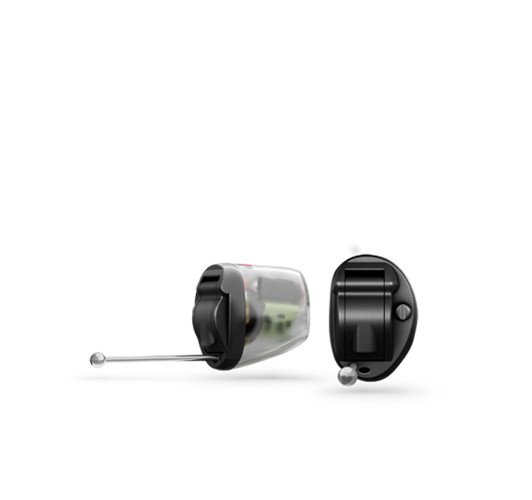
Invisible hearing devices have been around for a long time, however, they have recently become very popular again. Most of the big manufacturers have introduced invisible hearing aids in the last few years. These hearing instruments are called by different names SoundLens, Nano, IIC, invisible in canal or just plain invisible hearing aids. No matter the name, they all amount to pretty much the same thing, deep canal hearing aids.
Smallest Hearing Aids
For many new users of hearing aids the idea of invisible ones is very attractive. This is based on a needless sense of embarrassment at having a hearing loss. It is an age old hang up but considering how things have changed I don’t understand it. People always seem to want the smallest hearing aid possible. Treating your hearing loss should be seen as something empowering, it is you taking control. I don’t think that is something to be embarrassed about. However, that is a conversation for another time, let’s talk about invisible hearing aids and who makes them. All of the following hearing devices are available in several levels of hearing device technology.
Phonak
Phonak Venture Nano Invisible Hearing Aids
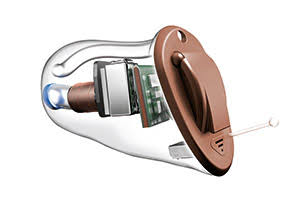
The Phonak Venture Nano is the latest Nano invisible hearing aid from Phonak. Phonak say that it is the perfect combination of hearing performance and minimum size and we would be inclined to agree with them. Phonak produce a custom crafted hearing aid to fit completely and deeply in your ear canal, using computer-aided design and the latest generation of advanced materials. Comfort is guaranteed while delivering the sound quality that Phonak is famous for.
The deep position in the ear canal allows the Phonak Nano to use the natural shape of the ear to funnel sound to the microphone which delivers excellent directional hearing, as well as virtual invisibility.
The Nano typically sits deep in the ear canal, the front of the hearing device is in permanent shadow because of the depth it sits at. It is deep enough into the ear canal to be to all intents and purposes an invisible hearing aid.
Who is the Phonak Nano Venture suitable for?
The Nano Venture is not suitable for everyone for two reasons. Firstly, the device will only fit certain shapes and dimensions of ear canal, if your ear canal is too narrow or has too tight a bend it might not be suitable. Other contra indications are things such as excessive waxy ear canals or perforated eardrums. If you face these issues, the Nano may not be the product for you. In these cases other discreet hearing aids may be more advisable to consider.
Outstanding features of the Phonak Nano include: ,
Perfect fit: each IIC hearing aid is custom made to ensure a perfect fit
Better localisation: tight fit means users can better determine where sounds are coming from
All-purpose use: can be worn in all listening situations
Durability: all components are contained in one unit making it extremely durable
More comfort: no joined parts mean there are no hard edges
Tired of Listening to Bla? We Got You Covered
Our buying guide, no Bla, just clear easy to understand info, we guarantee it will help you pick the right hearing aid for you.
Oticon
Oticon Invisible Hearing Aids
Would you like a hearing device that no one else can see? Oticon has designed their IIC range to be unnoticeable to everyone else, and unnoticeable to you, too. Up until now, the ultra-compact IIC has come at the price of reduced features and limited use cases. Not anymore. Oticon’s new IIC instruments with wireless technology make it possible to combine all the benefits of invisible hearing aids, outstanding listening performance with wireless access to communication and entertainment and the optional remote control.
An Invisible Solution
This is Oticon’s most invisible hearing solution. It is shaped to fit so snugly deep inside your ear that no one will see it, or even realise you are wearing it. It means that you can keep your hearing loss a secret, and enjoy the many benefits of modern hearing care, without any noticeable change to your appearance.
Not only is it invisible to everyone else, Oticon IIC is designed to fit seamlessly into your lifestyle, so that nothing gets in the way of your regular daily routines. It blends inconspicuously and completely into your lifestyle, so that you can continue to play an active part in life. The sound level adapts automatically as sounds and places change throughout the day, so you will always have the sound you need to participate on an equal footing with everyone else.
Oticon IIC will also have minimum impact on the rest of your lifestyle – fitted inside your ear, it will not affect your use of headsets or telephones, nor how you wear your glasses, or even how you do your hair. As it is placed deep inside the ear, Oticon IIC captures sound in the same way that your ears were designed to do. Based on Oticon’s premium hearing aid technology, Inium Sense, and available at three technology levels to suit all budgets, it gently preserves and amplifies sounds so that what you hear is always clear – and you will be able to participate confidently in all situations.
First Ever Wireless Invisible Hearing Aid
Up until now, the ultra-compact IIC has come at the price of reduced features and limited use cases. Not anymore. Oticon’s new IIC instruments with wireless technology make it possible to combine all the benefits of invisible hearing aids, outstanding listening performance, and wireless connectivity, what more could you want?
Starkey
Starkey SoundLens Synergy
Starkey introduced the SoundLens several years ago, in fact I believe it was the first of the current crop of invisible hearing aids. They to have been updating the technology within their invisible hearing aid offering. Recently the made the device even smaller and they added a second wireless invisible hearing aid to the line up.
Wireless Invisible Hearing Aid
The wireless version of the SoundLens is no bigger than the older SoundLens type, so it will be a discreet deep fitting hearing aid.
Signia
Insio Primax IIC
This is a late addition to the article, Siemens introduced the Insio Primax IIC this year as part of the Primax introduction. It is in fact the most powerful invisible hearing aid available covering hearing losses well into the severe range. It is available in three levels of technology the 7px, the 5px and the 3px.
Wireless Invisible Hearing Aid
The Insio Primax is also a wireless invisible hearing aid.
We have general details about Invisible Hearing Aids and other types of devices in our consumer hearing aid advice guide. It also details technology levels and features of hearing instruments in clear and easy to understand language.
If you like what you see, share it so others can benefit





 Itshearingaidknow