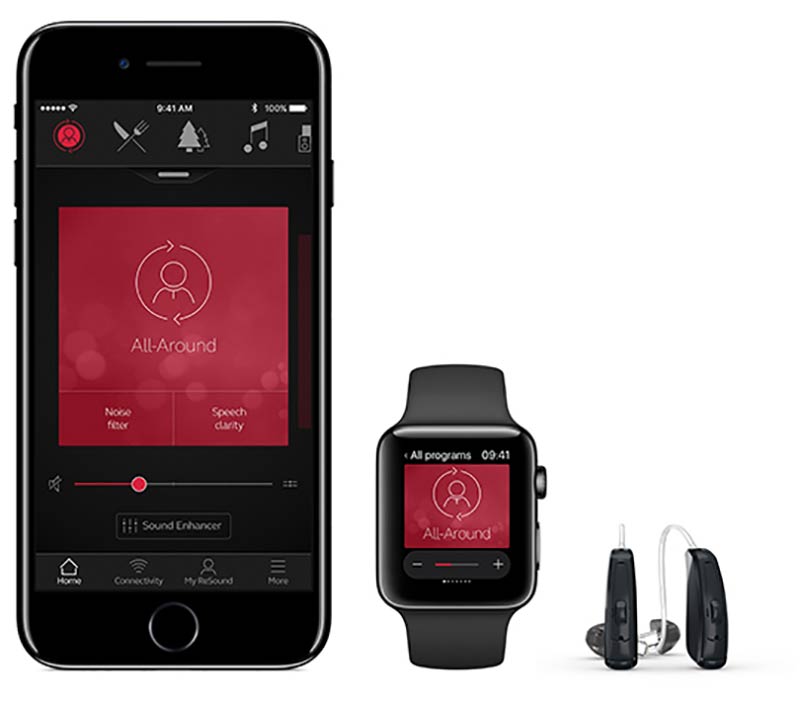
It is a question we get asked regularly, which hearing aids work with iPhones. Funnily enough, nearly every hearing aid on the market will work with an iPhone. You have to be careful though, just because a hearing aid has an iPhone app, doesn’t mean it is a Made For iPhone hearing aid. Many will not work without an intermediary streamer. If your question is, which hearing aids have a direct connection to the iPhone? The simple answer has to be any hearing aid that carries the Made For iPhone mark. Since I wrote this article there have been many changes and developments, so I decided it was long past time to update.
Just because a hearing aid has an iPhone app, doesn’t mean it is Made For iPhone!.
Made For iPhone & Made For Any Phone
The direct connection world has been shaken up a bit, Sonova, both Phonak and Unitron brands introduced the Made For Any Phone lines and it introduced a new concept in direct connectivity. More of that a little later, however, it has spurred one of the major brands to look at Made For Android again.
Resound and Google has announced a partnership to bring direct connection to Android phones to reality. The first hearing aid that will be able to do it will be the new LiNX Quattro. That is expected to happen in 2019 and it will again revolutionise direct connection.
Hearing Aids That are Compatible With iPhones
The current best hearing aids (as of January 2019) which work directly with iPhones are:
the Oticon Opn range
the Oticon Siya range
the Zerena range from Bernafon
the LiNX Quattro from Resound
the LiNX 3D range from Resound
the Enzo 3D range from Resound
The Evoke Fusion 2 range from Widex
the Beyond range from Widex
the Halo 2 range from Starkey
the Livio AI range from Starkey
the Pure 13 BT from Signia
the Nx range from Signia
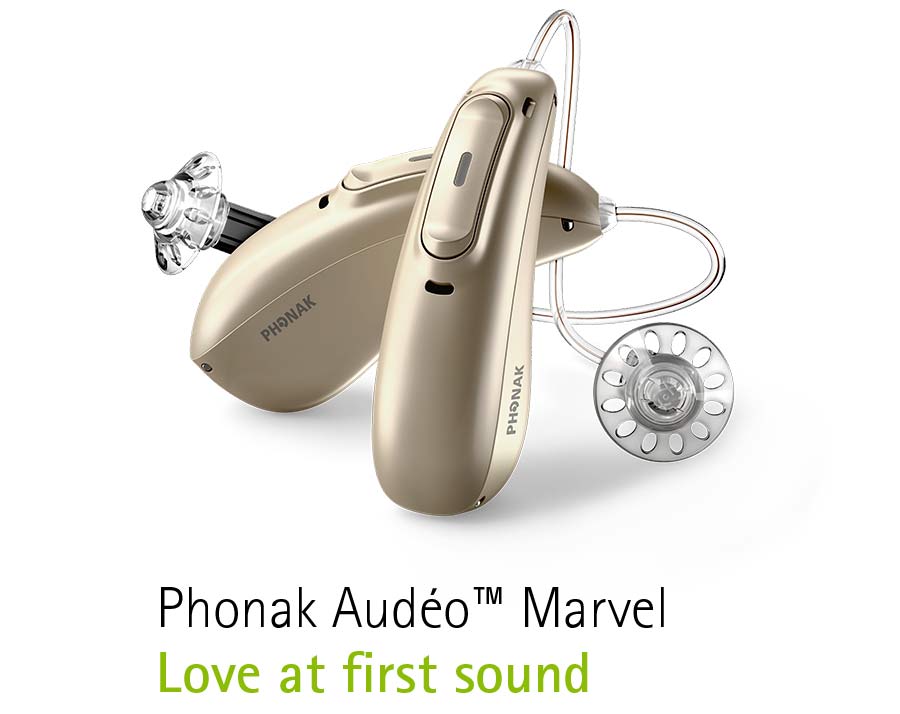
the Phonak Audeo Marvel range
The Phonak Audeo B-Direct (won’t stream audio)
the Unitron Moxi All (won’t stream audio)
They will all work with a direct connection to with iPhone 7 Plus, iPhone 7, iPhone SE, iPhone 6s Plus, iPhone 6s, iPhone 6 Plus, iPhone 6, iPhone 5s, iPhone 5c, iPhone 5, 9.7-inch iPad Pro, 12.9-inch iPad Pro, iPad Air 2, iPad Air, iPad (4th generation), iPad mini 4, iPad mini 3, iPad mini 2, iPad mini, and some of the iPod touch range.
Made For Any Phone
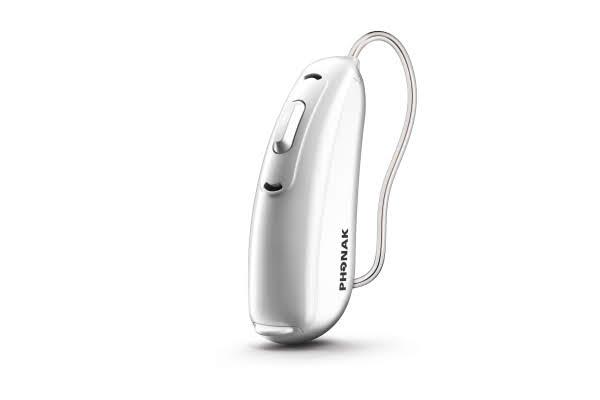
Phonak introduced a device in 2017 called the Audeo B-Direct. It is the first ever Made For Any Phone hearing aid. It is a revolutionary concept that changes wireless hearing aid connection to the mobile phone. The Audeo B-Direct connects to any Bluetooth® enabled mobile phone, directly without a streamer. It also is the only device to offer true hands-free calling. As it supports the classic Bluetooth protocol, it provides direct connectivity to cell phones – including AndroidTM, iPhone® and even classic cell phones – with no extra body-worn streaming device required. I have put a comparison chart at the end of the article which compares Made For Any Phone with Made For iPhone. This is their first ever Bluetooth hearing aid.
Phonak Marvel Hearing Aids
Phonak have updated their Made For Any Phone hearing aids with their new Marvel hearing aids range. It is a great step forward for them because it offers stereo streaming of audio and phone calls from any Bluetooth enabled device including mobile phones, computers and even TVs.
Bluetooth Enabled Hearing Aids
Every hearing aid brand has wireless enabled hearing aids that will connect to both iPhones and Android phones. However, they will only do so through an intermediary streamer device. For some people, this seems to be an intolerable solution. I don’t know why, I don’t mind streamers, especially multifunctional ones like the Oticon Connect Clip. In fact, I think wireless hearing aid accessories are outstanding and I recently wrote an article about them and why you should buy yourself one for Christmas. Anyway, nuff ranting here is the comparison chart I promised earlier
Feature Comparison
LiNX 3d
Audeo Marvel
Direct Wireless Connectivity To iPhone
Yes
Yes
Direct Wireless Connectivity To Android
No
Yes
Stream Phone Conversation
Yes
Yes
Answer Phone With Hearing Aid
No
Yes
Handsfree Calling
No
Yes
Phone Conversation in Both Ears
Yes
Yes
Streaming of Audio From Phone
Yes
Yes
Use iPhone as Remote Microphone
Yes
No
Find Lost Hearing Aid Feature
Yes
No
Remote Fine Tuning of Hearing Aids
Yes
Yes
Tinnitus Therapy Feature
Yes
Yes
If you like what you see, share it so others can benefit
Widex today announced that it has been named a CES® 2019 Best of Innovation Awards Honoree for WIDEX EVOKETM featuring WIDEX ENERGY CELL™ technology in the Fitness, Sports and Biotech product category. WIDEX EVOKE featuring WIDEX ENERGY CELL technology will debut at CES as the world’s first battery-free hearing aid at the Sands Expo Booth #43735. Available the summer of 2019, this new technology is built on the revolutionary WIDEX EVOKE platform to provide superior sound quality, while liberating users by leveraging the benefits of WIDEX ENERGY CELL technology.
Using what will be the world’s smallest commercially-available fuel cell, WIDEX EVOKE featuring WIDEX ENERGY CELL technology allows users to reenergize their hearing aids off the grid in just 20 seconds. It is significantly easier to handle than traditional hearing aids and never needs a battery change again.
“With WIDEX EVOKE featuring WIDEX ENERGY CELL technology, the world will finally get to see its first hearing aid powered by fuel cell technology. Most hearing aids today use batteries or battery chargers connected to power outlets. Our new hearing aid will require neither. This is exciting new technology that will be hassle free for the user while providing superior sound quality and app control that makes the hearing aid easy to manage in any setting.” Jeff Geigel, President, Widex USA.
This is another pretty amazing innovation coming from a well respected and innovative brand. They have been working on this system for many years and it is a pleasure to see their dedication rewarded. It truly is innovative, one simple charge of Methanol that takes 20 seconds will run your hearing aid for 24 hours. We will cover the system in more depth in the coming days.
The Press Release says, and I quote “GN announces hearing solutions that intuitively adapt to enhance the user’s daily life and hearing experience.” Which seems a bit odd, because that is pretty much what their hearing aids do already. It goes on to say “This innovative breakthrough technology is employing GN’s artificial intelligence (AI) solutions in tandem with Apple’s Siri virtual assistant.” So, without the gobbledygook marketing fluff, it appears that both Beltone and Resound is upgrading their latest ranges, maybe just the LiNX Quattro and the Beltone Amaze with both Artificial Intelligence systems and access to Siri on the iPhone. The artificial intelligence bit and the people who they are building it with really caught my attention though. It could mean huge things for hearing aids. The Press Release is unclear at best, but let’s break it down.
Artificial Intelligence
Artificial Intelligence or AI (as its known to the cool kids) is very much all the rage within many industries. AI can be used to make automatic systems better; it can also be used to find patterns in data on an automated basis that the human mind would find difficult. AI, true AI, is a huge deal, and it will change our world. It already has with systems like IBM’s Watson finding new drugs and cracking healthcare problems.
While many are talking about it in the hearing aid world, really what they are delivering is advanced machine learning, which is a little different from true AI. It will be interesting to see what the Resound system actually is. They have been working with some real heavyweights in AI to develop the system.
The Press Release says “The new offering follows years of investment in GN’s dedicated in-house AI research centre, investments in audEERING and extensive collaboration with other institutions and academic research institutes.” audEERING is a fascinating company that is steeped in Artificial Intelligence technology. One of their techniques, sensAI, is a system for detecting emotions from an audio signal.
A fascinating Press Release by Jabra (part of the GN Family) talks about how they are introducing AI within their active noise cancellation headphones. They say that they will be using AI to tune out specific types of noise. Using technology from audEERING, the Elite 85h can detect over 6,000 sound characteristics and filter out the noise more specifically
While the engineering challenges are different, it makes me wonder is that the road that GN Hearing is going to take. Noise reduction that could be powered by AI would be a fascinating step forward for hearing aids. I don’t think the technology is there yet, but could we see it in the future?
Maybe The Quattro Only?
The Press Release says “The new, life-enhancing AI technology is offered as an added benefit to the company’s latest product portfolio from ReSound and Beltone, and it will be reaching users in February 2019.” So it’s possible the new upgrade may only be for the Quattro, but don’t quote me on that, we should know a little later.
However, one thing that is clear is that this is just the introduction and continual upgrades will roll out as time goes by. They said, “A continuous stream of new AI features will become available through future software releases, thus enabling GN to always be at the forefront of innovation by updating existing hearing instruments with new features.”
Artificial Intelligence will change the hearing aid world forever, it will have a significant impact on how hearing aids work on a day to day basis. Widex was first with Machine Learning with their Evoke, others are introducing the tech. It will be interesting to see what Resound are doing, and probably more importantly how. Like us on Facebook below to keep abreast of our articles.
Update: Things have become a little clearer since the early Press Release. It appears the AI assistant will be part of an upgraded version of the Smart App which should hit the public soon. The Siri access will roll out at the same time. That means that the new upgrade will work with the Enzo 3D, the LiNX 3D, the LiNX Quattro, the Beltone Amaze, the Trust and the Boost hearing aids.
Opens Up Opportunites for Hearing Aids as Integrated Health Devices
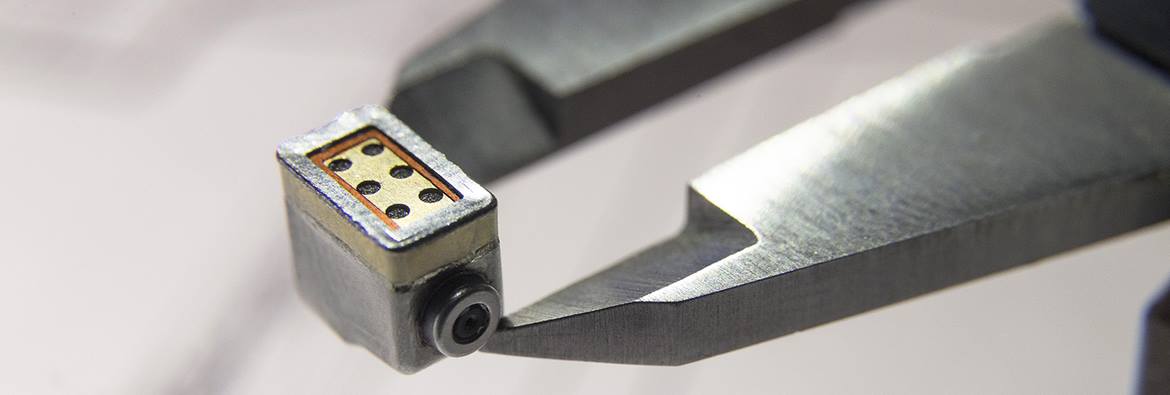
Valencell (produces the most accurate wearable biometric sensor systems in the world) and Sonion (a global leader in micro acoustics and micromechanics for hearing health and other ear-level devices) demonstrated the first ever hearing aid Receiver in Canal with an embedded biometric sensor at CES in Vegas. The breakthrough opens up vast opportunities for hearing aids to become integrated health monitoring devices. They say “BiometRIC receiver in canal is optimized for size and will measure heart rate, R-R interval, activity levels, energy expenditure, and will provide a platform for future innovations in hearing health devices. ” The biometric sensors offer comprehensive bio information and placing the sensor in the receiver (speaker) in the canal gives it perfect access to the best place to track that info. Let’s talk about what it offers, and what it might mean.
Key Vital Signs Measurement
The BiometRIC measures critical vital signs and activity levels, the company says that the data will help address the documented hearing loss comorbidities, such as cognitive impairment, diabetes, cardiovascular diseases, stroke, arthritis, and cancer. BiometRIC measures continuous motion-tolerant (impacts or motion does not affect readings) heart rate and motion-tolerant R-R interval (the time between beats of the heart) and provides activity levels such as step count, total steps, and calorie burn.
That makes it an ideal sensor to meet the more comprehensive health monitoring needs of both the healthy fit and people with underlying conditions. While the functionality right now is impressive enough, they say that BiometRIC will provide a platform for the two companies to deliver future innovations in hearing aids, such as measuring blood pressure and blood oxygenation. They also said that the platform would enable hearing aid makers to add new functionality based on the inertial sensor data such as fall detection.
A Massive Step Forward
This truly is a massive step forward, and it offers possibilities for hearing aid manufacturers that were just pipe dreams up to recently. Biometric sensors can help with early identification and management of many of the conditions that traditionally affect hearing aid users. If a hearing aid user is also suffering from heart issues, continuous vital signs monitoring from the BiometRIC device can be used to assess the user’s condition. It can give the user an extra level of confidence that their health is being monitored and it can enable more effective disease management.
For the so-called healthy fit hearing aid users, it means more functionality from the one device that they wear during their waking time. For hearing aid brands, it offers another layer of data and brand new data points that they can innovate around. Combined with the new breed of personal assistant AI that we hearing aid brands such as Resound and Oticon are delivering, the possibilities are truly endless. Imagination is the only limit to what they can do.
Don’t Get Caught With This Hearing Aid Rip Off, nanohearingaids.com
I was moved to write an article recently calling out nanohearingaids.com as the rip off that they are. I said then, that it isn’t often that we are moved to action against online hearing device retailers. Mainly because generally, they don’t actually set out to con the consumer. However, the actions of nanohearing.com forced us to action. Unfortunately, people are still being ripped off by them and they continue to make outrageous claims about shitty equipment (Irish technical term). In fact, they have gone further by setting up a series of spurious websites to support their lies. I decided that while I was writing this article, I would also take the time to update, and incorporate our advice about buying hearing aids online. Things have changed since the original article in 2017, so let’s talk about buying hearing aids online and Nano hearing aids.
Independent Hearing Aid Advice
At Hearing Aid Know, we pride ourselves on giving good, honest, Independent and non-biased hearing aid advice. We decided to get serious in early 2017 because we felt that there was a need for good non-technical explanations of hearing aids and their technologies. Not just that, we also felt that people needed to be able to understand the difference between Providers of hearing healthcare so they could make educated decisions about their care. We continue to be committed to that and the information you get from Hearing Aid Know is completely unbiased. We have no vested interests. The con from Nano hearing aids really, really irritates us. Not only are they ripping off consumers, but through bad advice and downright lies, they are putting them in danger.
Nano Hearing Aids
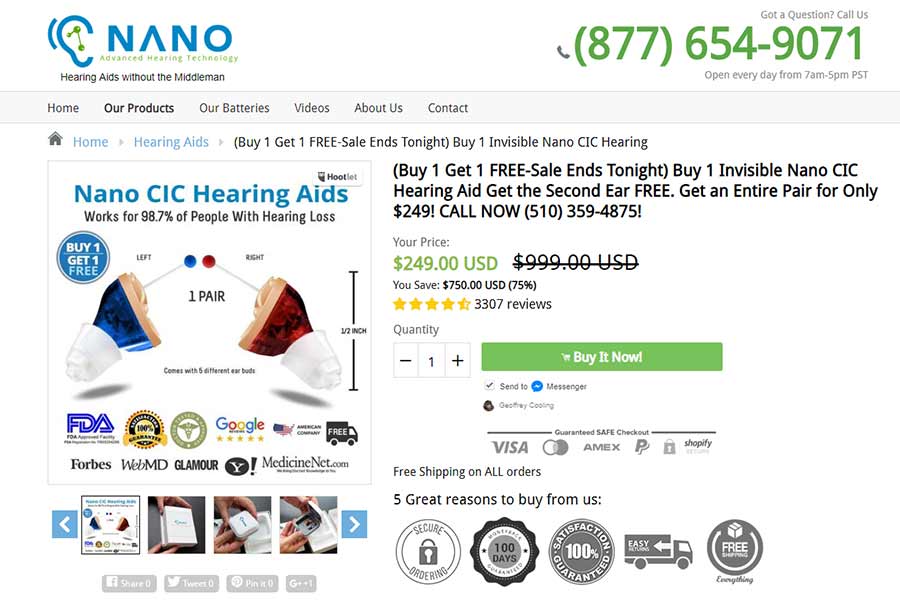
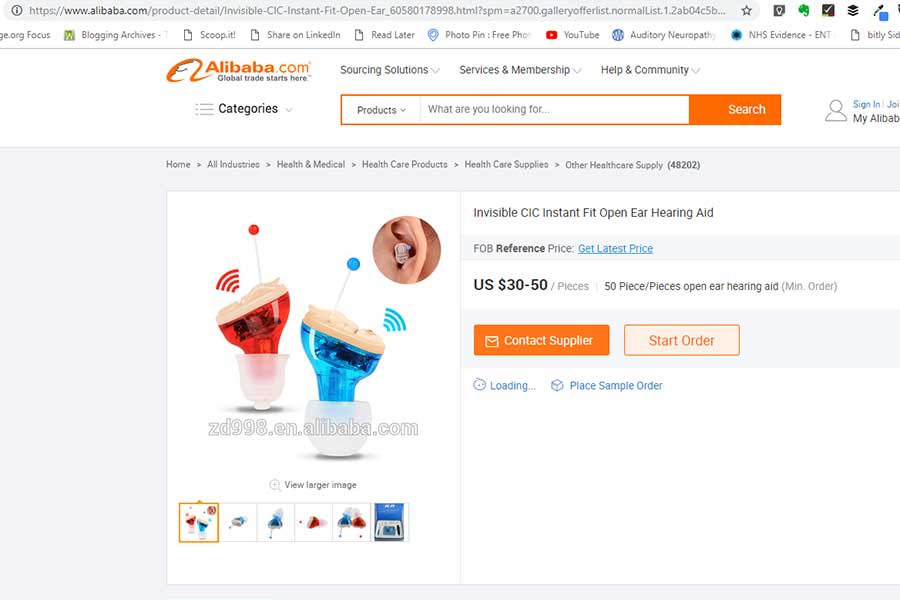
So the image above shows their most popular product, the Nano CIC hearing aids. What is really fascinating about these amazing advanced technology hearing aids at a fantastic price is that they look very similar to thirty dollar hearing aids available on Alibaba. Hmmmmmmm. Anyway, the nanohearingaids.com site is something to behold, with outrageous lies and claims. You can read all about that in our original article Hearing Aids Rip Off. In this article, I want to explain how they are using different spurious websites and fake reviews to support the sales of their rubbish.
Meet besthearingaidreviews.com
The people behind Nano have set up a site called besthearingaidsreviews.com, and it is as full of bullshit as nanohearingaids.com. If you take a cursory look at it, it seems to have been online since 2017. If you take a little deeper look, you realise that the entire site was published in January 2019. In fact, it was published solely to support nanohearingaids.com. They have used the website to include a huge amount of backlinks to the nanohearingaids.com site as well as fool unsuspecting consumers by pretending to be an independent hearing aid review site.
What About The Hearing Loss Association???
They were using the website http://hearinglossassociation.org/, I mean that site was really fooling people because they thought it was the Hearing Loss Association of America giving their recommendation. However, they have stopped using it and transferred all of the content to best hearing aids reviews. They also are masters are using fake reviews and using fake Facebook profiles to push their rubbish. In the video below you can see Cliff Olson run both the Nano and the Alibaba stuff through their paces. Funnily enough, they are so similar, they are almost inseparable!?!? Imagine!?!?
There is an excellent Facebook group devoted entirely to revealing their deceptive tactics, it can be found at https://www.facebook.com/nanohearingaids/. In this way, they hope to maintain this aura of trust in order that they can fool more consumers into buying their rubbish. It is rubbish folks, don’t buy this crap, if you really, really want to try it out, well then buy it for forty dollars on Alibaba. Let’s talk about online hearing aid sellers, who you should consider safe to buy hearing aids online from and how best to make that decision.
The Blamey and Saunders Standard
We support Independent Hearing Healthcare Providers on Hearing Aid Know, but funnily enough, we also support your right to buying online if you want to. It is very important that you understand that we don’t think that buying a hearing aid online is right for everyone. We have always said that we don’t think online sales of hearing aids are a bad thing when there is an infrastructure set up to cater for it. By that, we mean that the online sales are supported by a testing and fitting infrastructure either online or offline. We coined the term, the Blamey and Saunders standard to recognise online businesses that provide that infrastructure.
Blamey and Saunders in Australia deliver a system we would support as does iHear, Eargo and more recently Lively Hearing who we reported on recently. The first three companies have purposely set themselves up and designed their technology to be delivered online. Lively Hearing is using modern mainstream hearing aid technology to deliver decent hearing aids with strong backup aftercare. The crucial thing for us is that the after sales support is clearly there.
Buying A Hearing Aid Online
The sales of hearing devices online are not new, there are businesses around the world that sell hearing aids online direct to consumers. In fact, some of those businesses do an excellent job of it, in the main because they have that infrastructure in place to ensure the buyer’s success. Not only is the infrastructure in place, but the product is designed to be delivered in that way.
I have said in the past that hearing aids from the big brands that are not really designed to be sold in that manner. However, that has changed somewhat, many of the major hearing aid brands now offer telecare solutions. Which means that someone can look after you remotely. It still isn’t the full infrastructure needed to sell mainstream hearing aids online, however, it means that remote aftercare is now easy to deliver.
If you were to send in your audiogram to a company offering this service such as Lively Hearing, they could technically programme the hearing aids and send them out to you. Once you were wearing them, they could connect to them and make changes if need be. This isn’t by any means full service and aftercare, and as I said, it is not a suitable model for everyone. However, if you are tech savvy and you don’t mind fiddling with stuff, well then this might be an attractive model for you.
What You Need To Know When Buying Online
So here it is, this is what you need to consider when buying online, the first and most important thing is that hearing aids are not like glasses. You don’t just put them on and everything is wonderful. It simply doesn’t work like that. Many people will need strong aftercare to get the best out of their hearing aids. You need to be confident that the online retailer can give you that care and service and is committed to doing so.
It is both my experience and the experience of Steve that to get on well with hearing aids, many people need the involvement of a good hearing healthcare professional. Before now, our worry was that people may buy the hearing devices and then find it difficult to get a professional to help them. This has changed with the introduction of remote care technology. Telecare systems enable the delivery of that aftercare. So there are several things you really need to consider so you can make an educated choice before buying.
What You Need To Think About When Buying A Hearing Aid Online
Okay, firstly, only buy hearing aids online if you are the type of person that can manage. By that, I mean that you are tech-savvy, committed, with decent eyesight and dexterity. The second thing is that you should only buy hearing aids online if you have a simple hearing loss. Online purchase of hearing aids is not suitable for people with complex hearing loss.
If this is the first time around the hearing aid merry go round for you. You really need to see a professional before you do anything. Sometimes a hearing loss can be caused by problems other than simple hearing loss. Sometimes a hearing loss can be caused by tumours, sometimes a hearing loss can be caused by a simple earwax plug. When you are buying online, no one looks in your ear, on top of that, the online tests are incomplete and can miss conductive hearing losses. So I think it is really important that if you haven’t been seen by a professional, you should really think about doing that. Here are the pointers:
Hearing aids aren’t glasses, they don’t just work
You will need ongoing care, make sure that care is available
Get a professional and in-depth hearing test before you do anything
Completely investigate what that aftercare is, and how it is delivered
Completely investigate what the returns and warranty policy is from the business
Completely investigate how repairs are handled and what the costs of repairs are outside warranty
Only buy from an online seller that offers to programme the hearing aid to your hearing loss
Send them your latest audiogram so that the hearing aids can be programmed to your hearing loss
If you are buying mainstream brand hearing aids from a business like Lively Hearing there are some further things you need to think about. After your warranty period with Lively, you may want to engage with a local hearing care professional. If so, these are the things you need to think about.
How much will it cost you for a local business to take over your care?
How much will it cost for aftercare visits from a local business? (you will still need them)
How much will it cost for repairs to be handled by a local business?
Finally and probably the big question, will the extra costs of getting someone local to help you mean a net financial saving or loss for you?
Online Hearing Aid Sites
I have said it before, it is a rare occurrence that I resort to Irish technical terms on the blog. In the case of Nano, it is spurred by barely restrained fury. These people are ripping off people who need help, not just that, with bad advice and outrageous lies they may be endangering the lives of people. As I said before, some people are desperate enough to try it and they get taken, that is really what infuriates me.
We will support online hearing aid retailers when and where it makes sense for the consumer. We are on record that we support Blamey and Saunders in Australia and we have mentioned some other sites that we would support here. I have laid out in the past why that is so. If you are determined to buy online, and if you are a fit for that model, go to one of them, don’t get ripped off by nanohearingaids.com.
First date jitters can be really bad whether you are seventeen or seventy. If you are wearing hearing aids, it just adds to the complexity. Cassie Lomax, a regular contributor to Hearing Aid Know has come up with some tips to get you ready.
If you have just taken home your new hearing aid or had cochlear implant surgery, welcome to the club! There are around 11 million people in the UK affected by hearing loss, with 6.5 million of these aged 60 or over and around 3.7 million of working age. Studies have shown that these technologies can significantly improve hearing. Those with cochlear implants achieve an average of 80% sentence understanding, which allows them to have conversations with others in meetings, at restaurants, and at other social functions. Studies carried out on thousands of people in Germany, France and the UK, meanwhile, have shown that 77%, 84% and 70% of hearing aid wearers (respectively) are satisfied with their hearing aids, which they don for up to nine hours a day to relate to others at work and at home.
Hearing Aids Boost Your Chances of Romance
Research shows that those who wear hearing aids or opt for a cochlear implant report improvements in their work and personal relationships, which is great news for those on the dating scene. For one, having a hearing aid or implant increases the sense of safety and independence. These are crucial elements for those venturing forth into the exciting world of dating, sometimes with people one meets online or on a blind date. Hearing aids have a positive impact on one’s overall sense of wellbeing as well, which boosts one’s confidence when getting to know others.
You may be a little nervous about wearing your hearing aid for the first time on a date. The best way to quell jitters, of course, is to be prepared. Think of fun topics to bring up, read a little about perfect pairings of food and wine, and think of interesting questions to ask your date. Try to ensure you have plenty to ask, to show you are truly interested in getting to know them. When they ask you questions, feel free to be spontaneous and give your true opinions. Sincerity is appealing and you might as well begin your relationship with honesty.
Picking the Right Venue
Ambience is key when it comes to choosing the perfect spot for a first date. Most people still prefer to centre a date around food – and that often means coffee, lunch, or a dinner date, perhaps in a romantic, candlelit dinner in an al fresco setting. A restaurant that plays classical or soft jazzy music is preferable to one in which loud music or dancing is a focal point of entertainment. It might be a good idea to visit the venue beforehand to check out the table layout. If there is a piano or dancefloor but the restaurant is sizeable, for instance, book a table that is far enough from the source of music but that has a beautiful view and is comfortable and inviting.
Having a cochlear implant fitted or taking home a brand new hearing aid opens new worlds, especially when it comes to romance and getting to know people. By planning well for your date, quelling nerves with relaxation exercises and picking the right spot to meet, you are well on your way to building something that could be quite magical.
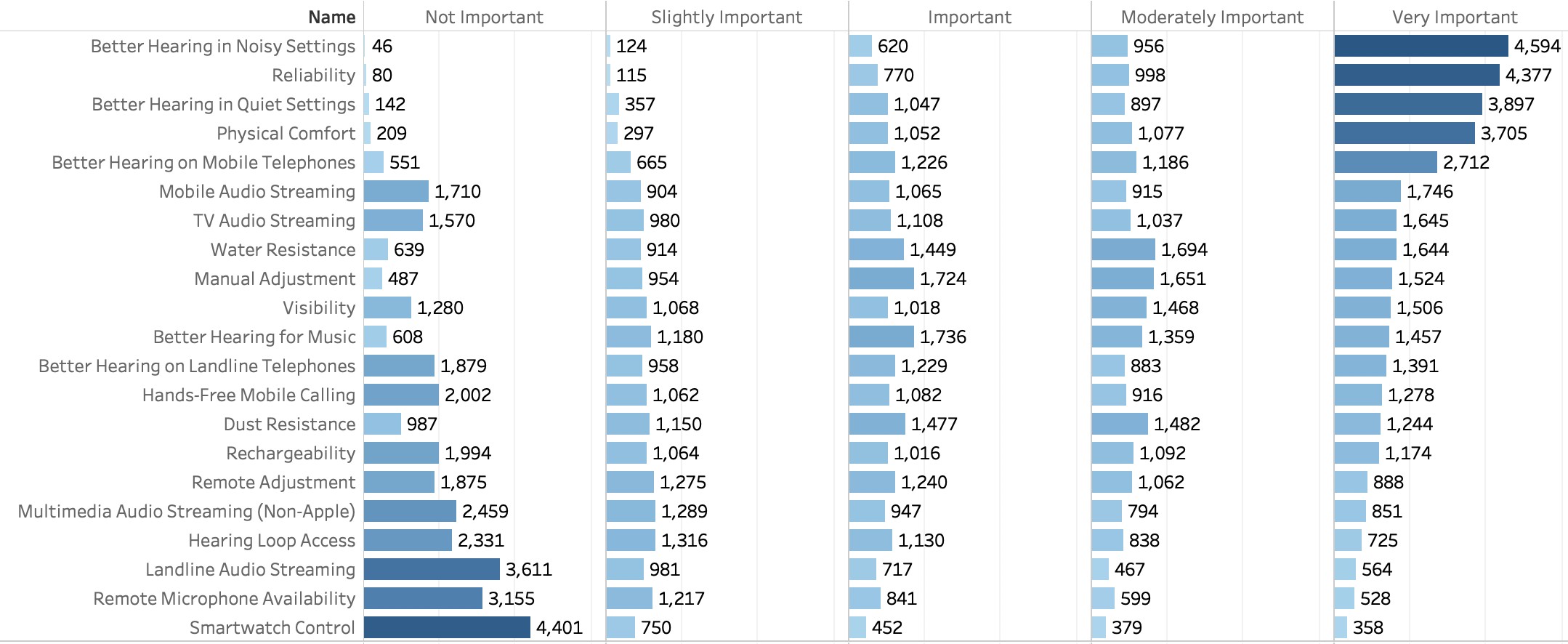
Hearing Tracker recently released an update of what people want from their hearing aids. 6,340 hearing aid consumers scored the needs, so that’s a pretty big cohort. I thought it worthwhile to go over it. There is an image of the data below; you can click on it to bring you to a much bigger picture that is easier to read. Let’s talk about hearing aid user needs and the features that meet them.
Hearing Better in Noise
Top of the list is the ability to hear better in noise; I don’t think that is a surprise to anyone as it is the one thing that everyone with hearing loss says. Just 6,300 people thought hearing in noise was necessary with the bulk saying it was imperative. If you want to hear better in noisy situations, you need to be realistic about the hearing aids you buy. You need upper mid-level or premium hearing aid technology. You might also need a remote mic. If those technology levels are out of your budget, then you need a remote microphone with lower level technology. Which leads me onto remote mics
Remote Microphones
While everyone wants to hear better in noise, nearly five out of ten think that remote microphones are not necessary. That is a diametrically opposed position; if you want to guarantee better hearing in noise, you need a remote microphone. The best remote microphones are available on the direct connection devices, so, you need to be thinking Made For iPhone hearing aids which are all direct connection. Direct connection means no intermediary streamer. So you can use the remote microphone directly, streaming your companion’s voice directly to your hearing aids. Funnily enough which brings me onto streaming.
Streaming Audio
Both mobile audio streaming and TV audio streaming were important for over seven out of ten people, while numbers for hands-free calls were slightly less but still crucial for over six out of ten people. Non-Apple multimedia streaming was important for around six out of ten people, and landline phone audio streaming was critical for just over four out of ten people. In general, it proves that Bluetooth connection and audio streaming is pretty essential to modern consumers. While talking about streaming, it is interesting to note that access to loop systems was crucial to around six out of ten people. This technology seems to grow in perception with consumers.
Important Features
Rechargeability was important for almost seven out of every ten, while reliability, water resistance and the ability for manual control were important for nearly everyone.
Hearing in Quiet
The ability to hear better in quiet situations was also hugely important to most of the cohort. That surprised me a little because most people say they understand fine in quiet in a one to one conversation. Generally, they don’t, but they don’t realise it. Which says that the cohort is enlightened and probably experienced.
Reading through the needs, it strikes me that there is not one single hearing aid available that meets them all. Yes, plenty of devices will meet the requirements with some compromises. For instance, you can have hands-free calls with many direct connection devices, but you will have to wear a phone clip of some sort. You can, of course, have hands-free calls with the new Phonak Marvel, but you can’t have a remote mic.
You can have direct multimedia streaming from non-apple phones only with the Marvel; soon, the Quattro will deliver direct streaming from Android. Like I said, compromises. The best thing is to work out what is important to you and how best to achieve it. Don’t necessarily focus on one feature, try to understand the options more holistically.
In the last article, I spoke about the Marvel and its quite amazing Bluetooth connectivity. The connectivity options with the Marvel are outstanding. Phonak’s choice of Bluetooth connectivity protocol was inspired. It is the leader of the class when it comes to connectivity, however, is there more than that to the Marvel? It seems that the profession has almost lost its collective mind with excitement over the devices. Is that warranted? I would have to answer yes, but with an addendum. Let me explain.
You Know I Love Lithium-ion Rechargeable, Right?
I have written elsewhere here that I recently realised that I love rechargeable hearing aids. In particular, lithium-ion rechargeable hearing aids. Steve has said, “Any product with a rechargeable battery is only useful if it lasts a decent amount of time between charges, annoys the hell out of me that I have to charge my phone twice a day.” I managed to use my Marvels for a full day without recharging in general. There were some exceptions.
I connected the Marvel direct to a Bluetooth enabled television, you know because I could. Don’t do it, just don’t, after a couple of hours my hearing aids died. Direct Bluetooth streaming from a television chews through the battery like a damned hungry hog. In fairness, many of you would probably never consider doing it, but I am here to tell you, don’t.
I also used the TV Streamer provided for the devices. The sound from the TV streamer is outstanding and it is a lot less power hungry. I didn’t test it to destruction as is my want, but I will in the near future as I want to do a comparison article and get a clear idea of how power hungry the new types of direct streamer are.
Get The Bigger Charger Case With a Power Pack
I said in the last article that I have the mini charger case. It is a lovely thing. However, you need to think about the larger case and a power pack. That will give you tremendous versatility, and if your hearing aids do die, you will be able to charge them on the go. Like I said, in general, I got a full day out of the rechargeable aids. However, I would have liked the extra assurance of being able to quickly and easily charge them up if I had to.
Hands-Free Calls
During the trial, I made and received many phone calls and the hands-free system is pretty cool. I still get a little tingle of excitement every time I reach up to push the button on the hearing aid to take a call. Although wandering around seemingly talking to yourself can lead to some pretty strange looks in shopping centres. I had a child ask me “are you one of the crazy people?” I so wanted to say yes hahahahahahahah. However, I settled for no I am on the phone and showing her the hearing aid. She seemed a bit disappointed.
I almost felt honour bound to twitch a couple of times and laugh maniacally, but I held off. During the trial, my experiences during phone calls were pretty good. I heard the caller very well in most cases except for dodgy connections. They seemed to hear me pretty well. In noisier situations or windy situations, it appeared that the caller had a little trouble hearing me. However, I heard them just fine. Overall, I was more than happy with my experience here.
During my testing, I had no dropouts or refusal to recognise or pair episodes. I had one issue of refusing to stream which I quickly solved by turning off and on the Bluetooth on my phone. There is no delay in streaming, when your phone rings, you hear the ring in your hearing aids. When you answer the call, you are straight into the call without stutter. When you finish the call, it just reverts to the programme you were in or the streamed audio you were playing.
Environmental Awareness
Phonak has ensured that the Marvel strikes a good balance between streamed audio and environmental sounds. You can hear the streamed audio well, but you are still aware of what is going on in the environment. Your hearing care professional can fine-tune the balance between them, and you can change it in the Remote app. I was happy with the Phonak pre-set and didn’t fiddle. That’s a good point when I trial hearing aids; I just fit them with the manufacturer defaults. I always do this so that I can get a clear idea of the tech before I change anything.
My Call-To-Text App
This is a shining example of modern thought in hearing aid development. The app transcribes phone calls into text, allowing you a better chance to have a phone conversation with strangers that make sense. I used the app a couple of times, and I was impressed with its functionality. It occasionally threw up some weird stuff especially when I was using common Irish technical terms. Overall though, great app and I can see the benefits it will provide for many people.
Remote App isn’t Great
Unfortunately, the Remote app from Phonak just doesn’t cut it. I mean it offers volume control, allows you to change programmes and allows you to alter the balance between streaming and environmental sound, but that is all it allows you to do. It doesn’t allow you to customise the sound or to change the focus of the hearing aids which I missed. I know I am a power user and not everyone wants this type of functionality. The thing is, in my experience, they don’t want it until they have it, then they really want it.
Great Sound in Everyday Environments
I like the sound of the Phonak Marvel, it isn’t quite what I am used to, but it is pretty decent. They sound excellent, perhaps a bit tinnier than I am used to, but that could have easily been the open tips I was wearing allowing more low-frequency sound escape. The devices worked well in all of the different sound situations I found myself in on a day to day basis.
The devices handle the noise versus speech equation very well. The clarity of speech is excellent in noisier situations. The Marvel delivers that clarity well while managing the sounds of plates banging, cutlery clattering or water running. Speech understanding is pretty solid, and in noisier situations, you can hear whom you are speaking to relatively well.
An Excellent Hearing Aid Option
In finishing, does the Marvel live up to the hype? I think it does. The Marvel is a really excellent hearing aid option. It has outstanding connectivity and offers truly unique features. I liked the day to day sound, and the streaming experience is amazing. There are two things that I take issue with, the first is the app, it doesn’t offer me enough in-depth power of the way I hear. Having said that, during the trial, I probably didn’t need to use the app that much.
The second is the charger, I think Phonak need to re-consider the standard charger and go down the route that other brands have gone. There is a lot more to the Marvel than just the connectivity, and I do think that there is a lot to be excited about. All round, these devices are pretty damned good, and I would have no issue with recommending them to anyone.
Excellent Hearing Aids, Impressive Sound Quality and I Love The Rechargeability
I have never worn a Phonak hearing aid before, odd but true. So when Phonak offered the opportunity to try the new Marvel, I was intrigued. I mean the Marvel is a pretty sexy hearing aid, good looks, rechargeability, notable Phonak features and direct connection to a considerable amount of equipment. I mean what’s not to love? As I said, never tried their stuff, so I was interested in how it would sound and work out for me. Let’s talk about the Phonak Audeo Marvel.
Where’s the damned Made For iPhone?
Their investors have scourged Phonak in recent years because of the lack of a Made For iPhone solution. So the introduction of the Made For Any Phone Audeo B-Direct was welcome. However, it was not received with overwhelming excitement.
The lack of stereo streaming from mobile phones ensured that the devices were not the dramatic success that many thought they would be. However, they were still fascinating devices offering a glimpse of both the possibilities and the route Phonak were taking. I am glad they stuck the course, because the Marvel, really is a marvel.
Rechargeable for convenience
I am using the Marvel rechargeable devices, and I was a little worried about battery life on the devices. Phonak have chosen a route to the connection that offers enormous possibilities but is quite a power hungry solution. I would say I am a power user; I like to stream much audio from my phone. I would listen to at least five hours of streamed audio a day, just from my phone. I was pleasantly surprised, during my trial period I never ran out of battery life.
Obviously, if you stream via Bluetooth a lot (for phone calls or music), then the battery does drain a bit quicker, but I still managed to get a whole day of use out of them, worry-free. There is an addendum here, I don’t watch television, so I never tested the battery life with TV streaming in mind. I will do so in the future and write up a separate article on it. The case the devices come in charges the hearing aids. However, unlike some of the other brands, the case does not hold extra charges, I think this is a mistake.
The chargers
I received my Marvels in the mini charging case. It is a pretty nice case, reminiscent of a clamshell. There is another larger case available which also acts a dryer unit. The larger case can be used with an add-on power pack that will allow charging on the go. I like the mini-charger, but if I were you, I would go for the larger charger and the power pack. It will give you far more versatility and peace of mind.
Recharging them aids
Recharging the devices could not be more straightforward: You take your hearing aids out of your ears and place them into the charging box, that’s it. No grief, no hassle, they simply slip into the slots. You will see a little green light flashing on each aid to indicate that it is charging. Taking them out has a knack though, do not try to pull them straight out! You lean them back toward the front of the case then lift them out. If you don’t, you will break your fingers trying to get them out.
Bluetooth streaming for phone calls, music and TV
Before I speak about the daily use of the device I want to speak about the much vaunted Bluetooth connection. I have used the Marvels with an iPhone 7, I have used them with a Samsung Galaxy S8, I have used them with an iPad and a Galaxy Tab, I have even used them with my laptop. So I can honestly say I have put them through their paces.
The connection to all of the devices was robust and pretty stable. While the literature talks about 30 feet, in the real world that is only thirty feet line of sight, when you add walls and floors, things get a little quirky. For normal use, the Marvel performed admirably well. I had uninterrupted audio streaming within normal parameters, and while I did have one incidence of issues, that is markedly less than any other Bluetooth enabled hearing aids I have ever tried.
Problems with Bluetooth are common, it isn’t a hearing aid brand issue, it’s just damned Bluetooth! The Marvel, however, seems to suffer from fewer issues which is interesting. As I said, I had one incident where the aids were connected but stubbornly refused to stream audio. As is the case whenever this happens I simply turned the Bluetooth off on my phone and then turned it on again. Problem solved. I didn’t suffer any of the usual issues of drop out.
A quick addition here, one of my professional colleagues pointed out that there are some documented issues with the connection between the Marvels and the iPhone X. For some reason, there is a lot of dropouts during phone calls.
There is one other thing, but it isn’t an issue as such. When you are using your phone, switching through apps or such like, there is a moment of silence in your hearing aids. It is the phone momentarily grabbing the Bluetooth connection. It isn’t a problem as such, it just happens.
The streaming sound
Phonak has made quite a lot of their new automatic streaming programmes, one for streaming speech and the other for streaming music. They both seem to work exceptionally well. Initially, I used open tips on the Marvel devices, even with open tips, the sound was pretty good. My audiobooks were clear and audible. The music I listened to was pretty full, perhaps a bit tinny, but not too bad. I changed the tips to the comfort tips that I normally use to get a clearer idea of the comparison.
The difference was amazing, it made the sound fuller and warmer giving the bass tones of music the extra boost they needed for enjoyment. Again, that is not to say that the sound with traditional open tips was not acceptable, it was. Unfortunately, the comfort tips are not made by Phonak and I was a little concerned that they may slide off the receiver tip and end up stuck in my ear canals. So I stopped using them. I only bring it up so that I am clear about the sound quality.
Taking phone calls
The Marvel is extraordinary because it provides completely hands-free phone calls. In fact, it is the only hearing device to do so with stereo sound. The Marvel handles phone calls very well, the phone rings in your ear and you simply press the button on the hearing aid to answer the call. The call audio was excellent at all times. There was occasional difficulty with the caller hearing me from time to time. Especially in noisier situations and occasionally in windier situations. Overall though, I was impressed with the phone experience.
Like I said, the phone call experience was excellent, especially when I used the speech to text app on my smartphone. The app works very well, transcribing the call so that you have the very best opportunity to understand what is being said by your phone call companion. It really is a fantastic use of technology, while I heard quite well on phone calls, having the text transcription to validate what I thought I heard was really good. This is a new concept, and it is brilliant thinking by the Phonak design team. I mean joined up thinking. You don’t have to hold the phone to make calls, so what can we do with it???? Whoever came up with this is a rock star or rock stars if it was a team, and I want them to know it.
The other app capabilities
There are in-depth remote fine-tuning capabilities with the Marvel and an excellent way to record your experiences on a day to day basis. I didn’t try them out. I thought it would be a little trite talking to myself as I fine-tuned remotely! Having said that, I think this is an interesting feature that offers real versatility of experience to users.
Independents Win Again, Scrivens Found Lacking, Hidden Pushes Too Hard & Cheap May Not be Value For Money.
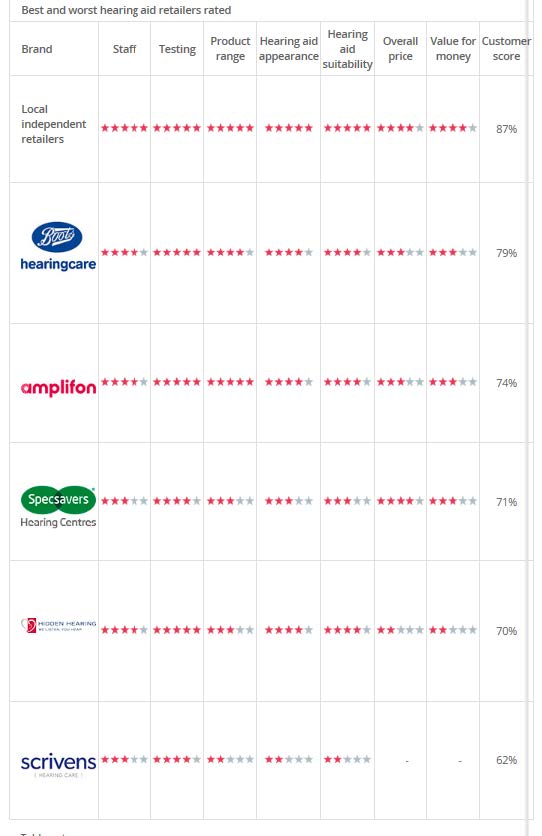
Which? has undertaken another series of surveys about hearing aids and their providers. In this the second article covering their findings, I want to speak about their Best Hearing Aid Providers 2018 article. Which? surveyed thousands of hearing aid users about their experiences asking questions that covered places that offer the best hearing tests and product choice, to those that deliver the best value for money. I will let you in on a secret, Independents won out, but you can see which other hearing aid providers scored best in the table below.
Why does it matter where you buy hearing aids from?
A hearing aid is a major investment, not just in monetary terms. That investment of time and money should result in a better life for you. It’s important that you choose a trusted, knowledgeable retailer to ensure you increase your chances of getting the best hearing aid for you. While Which? Feel that all hearing aids are pretty much the same, I wouldn’t ascribe to that view. That is probably an argument for another day. Having said that, I do agree with them when they say, “It’s the professional fit and service given by the provider that matters more”.
Hearing aids don’t just work, or at least not all of the time. It can take time to fit and adjust a hearing aid correctly so that it’s working to maximise your hearing. You need the support and aftercare of a decent professional to get the best out of your hearing aids. If you don’t get it, the hearing aids will often end up in a drawer forever. Most hearing aid users reported in the survey that they wear their aid/s every day (69%), with 13% wearing them three to six times a week. Interestingly enough, Which? Reported that the hearing aids providers were rated quite differently on the hearing aids themselves. Scrivens customers rated the store poor for the range of hearing aids offered, its appearance, comfort and suitability of the hearing aids for the individual. Elsewhere, Boots and Amplifon customers rated them good or excellent on all of these measures.
Best hearing aid providers
The survey results show that local independent hearing aid providers are rated most highly by customers. They reached an overall customer score of 87%. At the other end of the table was Scrivens, with 62%. Which? Reported that Independents excelled in pricing transparency and value for money. The survey respondents also gave independents the highest ratings in the categories covering professional and knowledgeable staff and the way they deal with questions and concerns.
Out of the national high street brands, Boots Hearing Care came top with an overall customer score of 79%. It received three-star or higher ratings for each of the 21 aspects of service that Which? quizzed its customers about. Boots got full five-star ratings for the quality of its hearing testing, follow-up care, privacy and clarity. Interestingly Scrivens fell down on its product offering – including a poor rating for the comfort of its hearing aids and how well they suit the individual.
Pressure sales
Interestingly, nearly a quarter (23%) of private hearing aid customers felt under some pressure to buy, and just over one in five (21%) felt that they were under pressure to select a more expensive option from a range of suggested products. This varied considerably between providers, with the biggest difference between Hidden Hearing and local independents.
How did hearing aid retailers differ?
It’s fascinating when you dig a little deeper into the survey, one thing that was interesting was that what you pay for hearing aids isn’t necessarily rated the same as value for money or transparency of price. For instance, Specsavers was rated good for price and price transparency but it was only rated average for value for money. So the survey seems to suggest that they are cheap and transparent but don’t deliver value for money no matter what they charge.
That’s a really interesting concept and I wish I could have delved deeper to identify why. I mean is it the service and aftercare, is it the efficacy of the aids? Why is cheap, not good value for money, did they feel that they would have to spend again to get better? I wish that Which? had asked questions about loyalty to the brands. If they did, they didn’t discuss them.
Customers rated independent hearing aid retailers excellent for transparency of price, and good on overall price and value. Hidden Hearing got spanked in those categories, customers rated the brand poor for price and value for money. It was rated average for price transparency, which is lower than the other brands rated (Hidden is the only high street brand that doesn’t put its hearing aid prices online).
Hearing aids cost?
According to the survey respondents, the average amount spent on a pair of hearing aids, was £2,475. The lowest average price paid by Which? members for a pair of hearing aids was with Scrivens at £1,583, but Scrivens also got the lowest customer satisfaction score, with 62%. Which seems to prove the old adage when you buy cheap, you pay dearly.
The highest average price paid for a pair of hearing aids with local independents was £3,217.74. Average prices paid at other chains for a pair of hearing aids were £2,657 at Amplifon. £2,882 at Hidden Hearing. £3,646 at Boots. and £1,767 at Specsavers.
In finishing, independent hearing aid providers are again rated top as providers. Other key lessons are that when it comes to hearing aid success and satisfaction, you get what you pay for and surprisingly, independents appear to be a little cheaper than Boots.


 Itshearingaidknow