In a recent report in the New Scientist it emerged that Google’s DeepMind and the University of Oxford are working on a lip-reading system powered by artificial intelligence. It was reported that the AI system already outperforms professional lip-readers by a huge margin, opening doors to exciting new opportunities in consumer technology for both the hard of hearing and wider consumers.
The two organizations applied a deep learning system to a large dataset of BBC TV programs. The AI was trained using 5,000 hours of video from six TV shows that aired between January 2010 and December 2015. After this initial learning period the system was then tested on live broadcasts between March and September 2016.
In a controlled test, the AI hugely outperformed professional lip readers. The professional correctly annotated just 12.4% of the words, compared to the new system which got 46.8% of all words correct. While that may seem low it is said to be more accurate than all other automated lip-reading systems. As the system continues to learn and evolve it is hoped that the per centage will increase.
Amazing use possibilities for the hard of hearing
This system could have amazing use cases for the hard of hearing. if the system can be designed and fit into small electronic devices it could easily be amazingly useful.
Hearing aids with speech recognition
This type of lip reading system theoretically could be used to improve hearing aids. They could make a big difference to the understanding of speech in noise by dubbing conversations in real-time. At some stage in the future and with the right research and development the system could be both learning and adaptive, only working when it was needed.
Lip reading glasses
Even if the system was not right for hearing aids, the introduction of the system to glasses with a small onboard display could be a god send for people with hearing loss. It could display a transcription of the ongoing conversation in real-time that would act as a prompt to accompany the amplification of speech by hearing aids.
As this technology grows, use cases will also grow. The evolution of this and other technology is really only limited by our imagination. The integration of such systems into hearing aid technology is something that will have to be considered by the manufacturers. Alternatively, don’t be surprised if we see a re-birth of a Google Glass type device delivered with this and other use cases in mind.
If you like what you see, share it so others can benefit
Some interesting hearing-related projects are turning up on Kickstarter – usually they are some kind of hearable or cheap sound amplifier but this one is a little different.
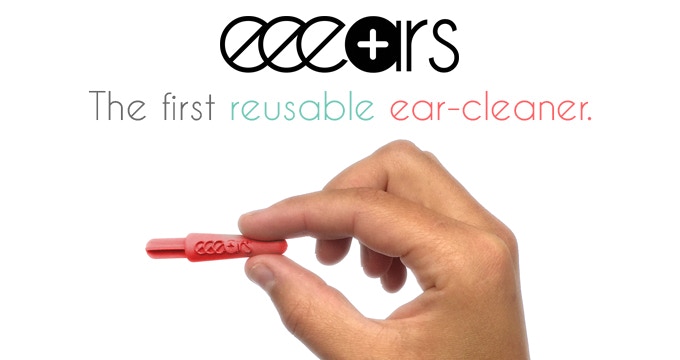
Eeears is a reusable ear cleaner and is billed as being a replacement for cotton buds/swabs. The people running the Kickstarter campaign are focusing on the product’s ability to reduce the huge amount of used cotton buds that goes in to landfill each year.
Eeears will be made from 100% soft and hypoallergenic silicone and, as you can see from the picture, they are reasonably short in length and have a ridged end. The idea is, as you turn the device in your ear the ridged end scoops out any wax or much from inside your ear.
Their Kickstarter page does mention briefly that they are safe as they are not long enough for someone to poke their eardrum with.
These devices are not on the market yet, so I haven’t actually tried one out, but they do look like being a safer way for people to clean their ears as well as being environmentally friendly. It will be interesting to see how well that ridged end works to remove debris, especially for people with earwax build up – people trying to remove a wax build up with cotton buds usually just end up pushing the wax further down in to their ear and making the problem worse, can Eeears act more like a scoop and remove it instead? Time will tell.
Hydrogen Peroxide in Ear, is it Safe? Ear wax Removal With Hydrogen Peroxide
I was asked recently about using Hydrogen Peroxide for softening impacted ear wax. I had heard about using it before and it was a safe process. Having said that, I met a lady many years ago who had destroyed her eardrum and her middle ear with a solution of Hydrogen Peroxide she had bought by mail order. So it is obvious that you need to be careful. So I decided to do some research on it, let’s look at what I found out and answer that burning question.
Can you use hydrogen peroxide for earwax removal?
The answer is yes you can, however, it comes with caveats, read on to find out how you can do it safely.
Is it safe to put hydrogen peroxide in your ear?
Again, the answer is yes, but I wouldn’t use it neat, it needs to be diluted.
Before we Start
If you experience pain, hearing loss, or discomfort in your ears. This could be caused by more than earwax buildup. If you experience sudden hearing loss in one ear this could be a sign of an underlying medical condition. This should be treated as a medical emergency, don’t hang around, don’t dither, get some medical advice quickly.
Wax is Good!
Ear wax is not a bad thing, your ears make it for a reason. Generally, most people just produce enough wax to protect the ear canal from water and infection. However, some people over produce ear wax, even if you aren’t one of them, sometimes, your ears may produce more wax than usual. The wax isn’t the problem, it only becomes a problem when it builds up enough to block the ear canal, or it becomes impacted against the eardrum.
When it does, you will need to take action, there are several things you can do, one of them is to use ear drops designed to soften the wax. There are many wax-removing eardrops or solutions available over the counter in pharmacists. While most of these solutions are often oil-based, some use hydrogen peroxide to soften the earwax. This, in theory, allows the wax to come out on its own.
The Research Says
Believe it or not, there is a body of research into ear drops for wax removal. Generally, while Hydrogen peroxide has been considered an effective ingredient in earwax removal (usually about 3% or 4% solution) since at least the forties, one 2013 study pushed for the use of distilled water only to soften earwax. That study found that distilled water worked most effectively at breaking up earwax when compared to water mixed with sodium bicarbonate or an oil-based solution. I was actually surprised by that, I would have thought that bicarbonate of soda would have done better, however, it seems distilled water is the better answer.
Looking For Ear Wax Removal in The UK or Ireland
Find An Earwax Removal Specialist in Your Area
How do ear wax removal drops work
Many ear wax removal solutions contain hydrogen peroxide. The hydrogen peroxide penetrates the wax and helps the break up of the wax as it bubbles up. This results in some of the wax being washed out of your ear and the rest becoming softer. However, a newer ear wax removal solution has entered the market called Earwax MD. It doesn’t use hydrogen peroxide at all
Why are Earwax MD ear wax removal drops so good
What Earwax MD claims to do is actually soften the earwax quicker or even dissolve earwax to make it easier to remove whether you do it at home or at a hearing care clinic. The science behind Earwax MD is pretty interesting, it uses sodium and potassium bicarbonates which interact with the long-chain fatty acids found in earwax. Those ingredients make the fatty acids absorb water easier.
The second major ingredient is glycolic acid which interacts with the skin cells in the earwax to loosen that dead skin and help break apart the earwax. The third main ingredient is glycerine which helps to drive water into the skin cells further softening and breaking apart the earwax. Basically, these three ingredients are the perfect recipe for softening your earwax. In many cases, a ten-minute application may well be enough to make the removal of the earwax a quick an easy experience.
The Problem With Ear Drops
So, in order for the hydrogen peroxide, or indeed any solution to do its job, it needs to be in contact with the wax. Hydrogen peroxide acts to break down the ear wax in a bubbling manner which results in the wax becoming softer. In order for that to happen, you need to lie down on your side and pour the stuff in. Then you have to continue to lie there for at least five minutes. That is the problem with ear drops, completely immobile for at least five to fifteen minutes.
How to Use Hydrogen Peroxide to Remove Ear Wax
Preparation
So, let’s look at using Hydrogen Peroxide, first off, you need a towel, a cloth or some tissues to catch the liquid when you are finished. For real ease, you could also do with an eye dropper to introduce the liquid to your ear canal. This is also probably better done with a companion as it may be difficult to do alone.
Step 1: You need to lie on your side with the problematic ear uppermost, have both the towel or cloth, the eyedropper and the solution of hydrogen peroxide within reach.
Step 2: Fill the eyedropper with about 10ml of the hydrogen peroxide solution and introduce it into your ear canal gently.
Almost as soon as the solution enters your ear canal you will hear popping and fizzing. That is the hydrogen peroxide solution working away in the ear canal. While you are lying there allowing the solution to work, the popping and fizzing should begin to fade.
Step 3: Lie there, yup, lie there for about twenty minutes.
Step 4: Place the towel or cloth to your ear, come to a sitting position and allow the solution to drain out. If the solution has been effective, it will probably bring out broken up ear wax as well. Repeat the procedure for the other ear if it too is affected.
Although, having said all of that, it does depend on what the instructions are, follow the directions on the package. You may actually need to administer the solution more than once per day or over the course of several days. Before you go blundering about with home ear wax removal methods like hydrogen peroxide there are some things you need to be aware of.
If you have had a perforated eardrum, you aren’t suitable for Ear Wax Drops
You need to follow the directions provided with the eardrops
If you think you have an ear injury, don’t use eardrops.
Do not go sticking anything in your ear
If you think the wax is pretty much lodged, see a professional
Confused About The Right Hearing Aid For You?
Our buying guide, easing the confusion with clear easy to understand info, we guarantee it will help you pick the right hearing aid for you.
Can Hydrogen Peroxide Damage Your Ears
Generally, the answer is no, however, that is dependent on using diluted hydrogen peroxide and following the instructions. There are home remedies where you can use hydrogen peroxide mixed with water to clean ear wax, just don’t do it! The proper solution needs to be 3 to 4% hydrogen peroxide, why bother trying to measure it out when you can just buy the drops over the counter.
Never use pure hydrogen peroxide in your ear, it will damage the ear canal and eardrum
If the solution of hydrogen peroxide is too strong, it will damage your ear. Back to the story at the beginning of this article, the lady who ruined her eardrum with hydrogen peroxide. Even if you use an over the counter solution, you may still have a reaction to it. it could make your skin tender. But there should be very little chance of it doing real damage.
Caution While Using Hydrogen Peroxide in Ear
Follow the damn instructions on the hydrogen peroxide eardrop package.
Make sure that you are using diluted hydrogen peroxide.
Don’t use the hydrogen peroxide ear drops if you have an ear injury (punctured eardrum, etc).
Don’t stick anything into your ear to “help” remove the wax.
Don’t use the solution any more than is stated on the bottle, It will just irritate your ears and may cause an infection.
Don’t use hydrogen peroxide if you have an ear infection.
If you can’t clean your ears in three days, consult a hearing healthcare professional for ear wax removal
Stop Sticking Stuff in Your Ears!
People feel the need to stick cotton buds, keys, hairpins and even paperclips in their ear. Don’t do it, just nope, all they will do is push the earwax further in the ear. Worse still, there is a good chance that you can damage the ear canal or eardrum. If you burst your eardrum, even if you give it a good poke, you will regret it, I am told the pain is horrifying.
If your ear drops aren’t working, you should get professional ear wax removal. Many hearing healthcare professionals offer different procedures to remove ear wax. They are all painless and relatively quick. Most people don’t have problems with ear wax build up, the wax is usually cleaned out of the ear by the natural process of migration. If that process is interfered with, then the problems start. Don’t put anything smaller than your elbow in your ear, and if you think you are having problems with ear wax build up, see a professional.
Looking For Ear Wax Removal in The UK or Ireland
Find An Earwax Removal Specialist in Your Area
If you like what you see, share it so others can benefit
From time to time at Know we like to feature articles from people around the hearing healthcare world. This is one such article from Robert Scott who works at Your Hearing in the States. The article is about something we are passionate about, protecting your hearing. Without further fanfare, I will hand you over to Robert:
Are we doing too much damage to our ears by overusing earphones? From daily use at the gym, to hours spent on gaming, we discover some interesting facts on how earphones can play their part in ear damage. At Yourhearing.com we’re always interested in how our ears can be affected by daily life and the technology we use without realising it’s contributing to poor ear care.
Millions of people around the world use earphones every day when they listen to music. On the way to work, travelling on public transportation, or even strolling through nature alone – we all use them at some point. However, evidence shows that we could be damaging our hearing when we use earphones, and that they should be used in moderation. Here’s a little more information on how they can damage hearing and the precautions you can take to prevent it.
Background Information
Earphones have become more commonly used in recent years, especially among children and teenagers. In fact, so many teenagers use them that one in five is suffering from some form of hearing loss as a result. This figure is up by 30% when compared to the 1980s and 1990s, all because they are becoming more widely used and accessible.
These numbers are quite worrying, especially when people who are so young are already being negatively affected by it. However, while earphones can cause damage to hearing, it is also possible to try and prevent it.
When is it Too Loud and Too Long?
Many people wonder how loud too loud is. When we look at modern audio devices, many of them are able to play music at up to 120 decibels, which is the same level as a rock concert. At this level of sound, it only takes an hour and fifteen minutes for hearing loss to begin.
As a result, it is generally suggested that if you cannot hear your surroundings, then the volume is likely too high and should be turned down. As a result, music players should not be listened to at more than 60% volume if you wish to prevent hearing loss.
Another question that is commonly asked is how long is too long? Many people don’t know the recommended time slot for listening to music through earphones each day. If you are listening at 60% volume, then you should only listen for around 60 minutes a day. This is also known as the 60/60 rule.
If, however, you want to listen to something at maximum volume, then you should not listen to it for more than five minutes per day at that level. The basic rule states that the louder the volume is, the shorter the period of time that you should be listening to the music.
Are You Suffering from Hearing Loss?
Of course, many people who learn about the negative effects earphones can have wanted to know if they are suffering from hearing loss. If you are concerned, you should visit your medical professional to discuss your concerns. In the meantime, here are some of the primary signs and symptoms:
Ringing, hissing, buzzing, or roaring in the ear multiple times a day
Difficulty understanding speech in a loud environment
Muffled sounds and feeling as though your ears are blocked
Needing to listen to the TV or radio at a higher volume than you used to
To Conclude
Hearing loss is a very real thing, but with the 60/60 rule, you can prevent it and still enjoy listening to music with your earphones. However, you can also opt for headphones that go over your ears or use bone vibrations for an even safer listening experience. Just remember to take everything in moderation, even listening to music.
If you like what you see, share it so others can benefit
The No Bullshit Guide To Why Hearing Aids Cost So Much
I get asked this question a lot, “They cost how much!?!? Why the hell do they cost that much?” So, I decided to give, in my own inimitable style, the Geoffrey Cooling no-bullshit guide to hearing aid costs. So here goes, hopefully, the answer to your question. It is a mix of the cost to me, and the fact that I got to eat. Let me explain.
Hearing Aid Costs
Okay, so I have to pay for the hearing aids, and they cost me money. The manufacturers set their prices based on many things, but primary among them is research and design. Hearing aids have become better products over the years primarily through a huge amount of research and design into everything from how the human ear works, how the brain handles sound and how best to deliver sound information to the brain.
While the costs of the actual components are cheap enough, the features that make them work are all based on research and design. In essence, those features are all software based, software development costs money. There are innovations in hardware as well, again R&D costs, even if the actual manufacturing of those new components is not hugely costly. Re-tooling a production line to produce new hearing aid types costs money.
We are talking billions of any of your favourite currency. The hearing aid brands continue to do this to ensure their hearing aids are at the cutting edge, to stay competitive in the market, and that you can hear better. They then charge me a price that ensures that they can undertake the research, pay the employees they need and make some profit. It really is as simple as that, contrary to some people who really should know better, there isn’t any gouging, it isn’t a conspiracy, there is no monopoly, it is what it is.
We are all in on the conspiracy!
Believe me, if there was, we in the profession would be the first people screaming it from the rooftops. Why would we entertain it? Unless of course, you think we are all in on it, it’s a global conspiracy by millions of professionals! Aye right, buy a hearing aid from me and I will give you a really nice tin foil hat to stop the CIA radio signals. Nuff said.
The Smartphone Argument
I have heard the Smartphone argument several times, how can hearing aids be so expensive when a Smartphone is such and such. The argument isn’t quite valid, first of all, most Smartphones are subsidised by your carrier and are far more expensive to buy sim free.
Secondly, Smartphones aren’t necessarily like for like. Smartphones are manufactured and sold in the hundreds of millions. Hearing aids aren’t. The economy of scale is not there, so manufacturing costs are correspondingly higher. Believe me or not, that’s the truth.
Confused About The Right Hearing Aid For You?
Our buying guide, easing the confusion with clear easy to understand info, we guarantee it will help you pick the right hearing aid for you.
I Like To Eat
You may have noticed from my photo, I like to eat, so do my family. We also like nice things, like a house to live in, electricity, heat etc etc. I won’t belabour the point but I have to live, this is a factor in my pricing of a hearing aid to you. Although it is a peripheral factor, the biggest factor in the cost I will charge you is based on the time I will spend ensuring that you get on with the hearing aid.
Time Spent
I need to spend time and energy to ensure that you get on well with the hearing aid you buy. That time will include an in-depth hearing test consultation, it will include a fitting of the hearing aids and several initial rehabilitation visits. After the initial visits, it will also include a recurring six-month appointment where I will clean and service the aids, check your ear canal health and probably undertake some fine-tuning.
On a yearly basis, I will check your hearing and make any changes to the hearing aid that I find needed. If the changes are large, I will see you about three weeks after the changes to assess how you are getting on. This service continues until the hearing aids fail irreparably. That tends to be a long time, generally a set of hearing aids are eight to ten years old before we can no longer get them repaired.
Time costs money
It is pretty simple, time costs money, my time costs money. You are going to get a lot of dedicated time from me. On top of that, I am a genius, well my Mother says I am special right! So it must be so. Well, perhaps not a genius, but at least a man with a fair bit of experience and dedication to what I do. So you are getting my time, experience and skill set. I put a price on that, I multiply that price by the amount of time I will spend with you and then come to a figure. That figure is what I charge you.
The Equation of Hearing Aid Costs
so, the equation of hearing aid costs is quite simple
Hearing aid cost + (How much my time is worth x how much time I spend with you)= Hearing Aid Price
Room to Manoeuvre
Is there room to manoeuvre? I don’t think there is if you want all of the services I provide. However, there may be room for price change if you do not want all of my time. If you want to forgo ongoing service and are willing to accept my rates for appointments, well then yes, I will reduce the price. However, it might be more costly to you, not cheaper.
More Costly?
I set the price based on the service levels that I find are best for people to get on well. I certainly don’t actually factor in every visit and I will often undertake earwax removal for free for existing customers. So you can believe me when I say that you are not actually getting charged for everything you will receive. You need to consider your needs, if you are an experienced user who has a fair idea about how well you will get on, well then you can weigh up what service visits you will need.
You can then make an educated decision on a negotiation for service. If you have no experience, well then you can’t, and generally, neither can we. It could turn out you need a lot of visits to get things right. It could also turn out that your hearing loss changes on a yearly basis and you need a yearly test and reprogramming of the hearing aids.
Debate In The Profession
There is a lot of debate in our profession about how we provide hearing aids. How we charge for our services and how we present costs. I think that discussion will be ongoing and may well change how hearing aids are priced. However, I don’t think that change will affect the real cost of what we do. Because time is money. Any questions, give us a shout on info@hearingaidknow.com
If you like what you see, share it so others can benefit
Signia have just introduced a new platform segment for emerging markets called Lotus. The hearing aids are designed to be fitted by people who may not necessarily have had training as Audiologists. In fact, they say that after a half hour training anyone should be able to fit the devices.
I want to be very clear, these aren’t OTC hearing aids, they are a solution for areas of the world where hearing care is difficult to access at best. Up to 90 percent of all hearing impaired people in many African, Asian and South American countries have no access to hearing aids. Signia developed the new product segment Lotus for these markets. However, it got me thinking (wife says that is never a good thing).
In essence, this hearing aid technology could be easily adopted for Over The Counter use. Basically if anyone can fit them after a half hour training session, that means you can too right? I would have to say yes.
Why Would Signia Do It First?
While Siemens Hearing Aids have been around for a very long time, Sivantos (the company who bought them) really have no hearing industry legacy. This has made them a very interesting company for me to watch. They have consistently brought out technology features that have a very different feel from the other hearing aid manufacturers. For instance, their tele-health solution which I spoke about in the article Sivantos Introduces Groundbreaking Hearing Aid Telehealth App.
In essence the app allows remote fine tuning and even remote fitting of hearing aids that have been provided by a professional who uses the system. It means that Patients don’t need to attend their Professional’s Practice for help. I mean it is a pretty ground breaking use of technology. No other hearing aid brand has done it.
I think that within other hearing aid brands there may have been some fear around introducing this type of tech. Fear of the reactions of Providers, Sivantos just seemed to think this is a great idea, let’s do it. Like I said, I think their lack of legacy is a good thing, they make decisions based on what will be good for users and Providers, not necessarily on how will providers react to this? I personally think that is a good way to do things.
In essence Sivantos have done pretty exceptional things with Siemens hearing aids since they took over. In the recent past, I have always felt that they are constantly on the cutting edge.
OTC, Good or Bad?
Listen, I don’t know whether OTC will be good or bad, I think that if there is involvement of traditional manufacturers in the OTC world, it might not be bad. I think I might be one of a small few Professionals that thinks like that though. I said in Are Over The Counter Hearing Aids The Answer, What Can The Consumer Expect? :
“I have talked to others within the business for some time about adopting low cost devices that were sold on an over the counter type basis. I would adopt these types of devices, I would insist that I did a work up on your hearing or you had a workup done by someone I trust (this is to protect both you and me). I would then sell you the device for you to do with it what you wanted. If you wanted support or help other than warranty issue I would charge you for it. I think that is fair, my time is worth money, you would not expect to attend any other professional for consultation for free, so why would you expect to do so with me? I think that this may well be the future model, I don’t think the traditional model will die quite yet, I think this new model will probably run in tandem with the traditional model.”
So I don’t see OTC hearing aids as a threat to my livelihood, in fact I believe that they may well help me deliver better hearing to more people. It also may encourage more people to test out amplification, which has to be a good thing for everyone.
So will Signia do it, I don’t know, I have not got a clue, nevertheless it is an interesting question. If in fact OTC hearing aids become legal in the States, I think of all of the hearing aid brands, perhaps Signia is the only one who might do it first.
If you like what you see, share it so others can benefit
Jacoti bvba today announced that it has been named a CES 2016 Innovation Awards Honoree for Jacoti Hearing Suite. Products entered in this prestigious program are judged by a preeminent panel of independent industrial designers, independent engineers and members of the trade media to honor outstanding design and engineering in cutting edge consumer electronics products across 27 product categories.
JacotiHearingSuite is a set of cloud-enabled mobile applications that grants anyone – from people with normal hearing to those with profound hearing losses – ubiquitous hearing support with reliability and capabilities far beyond existing and expensive hearing aids and assistive listening devices. Consumer Electronics manufacturers can license the IP-protected technologies that drive the JacotiHearingSuite (8 international patents, granted or pending). All Jacoti applications make use of off-the-shelf consumer hardware.
“We are thrilled that the CES Innovation Awards have honored the advanced hearing compensation and enhancement technology in Jacoti Hearing Suite which enables hearing without barriers,” said Jacques Kinsbergen, CEO of Jacoti bvba.
Jacoti believes that hearing loss compensation and personalization of audio should be a fundamental part of all audio-enabled computing devices. Hearing loss is both a medical condition and a consumer challenge. Therefore, it needs consumer-driven and consumer-oriented solutions.
Jacoti Hearing Suite consists of the following interconnectable hearing applications:
Jacoti Hearing Center is a revolutionary, patented self-test hearing application that provides clinically reliable results in real-life environments.
Jacoti ListenApp® is the first medically certified hearing aid application.
Jacoti Lola® Classroom is a flexible and affordable assistive listening solution for classrooms, meeting rooms and lecture halls. It provides extremely low-latency multi-peer audio streaming over consumer-grade Wi-Fi. Jacoti Lola makes ubiquitous hearing assistance practical anywhere and by anyone who has difficulties understanding speech in a noisy environment including students with hearing loss, children with learning disabilities, or even students with normal hearing.
myJacoti is a web service that allows users to store their audio profiles in the cloud, share them across devices, and connect to a remote Hearing Expert for remote fitting assistance.
Jacoti Hearing Suite is a concrete solution that is on the forefront of the shift from a product-based to a user-centered services model in hearing health. In a recent report on untreated mild to moderate age-related hearing loss, the President’s Council of Advisors on Science and Technology (PCAST) foresees:
“…many opportunities for both incremental and disruptive improvements in assistive hearing technologies, none of which should be intrinsically expensive in a competitive market. In the near future, people could check their hearing using automated hearing tests available on-line or through common smart devices. Interfaces between smart devices and users could allow adaptive self-fitting by devices in response to user needs.”
Jacoti Hearing Suite will be displayed at CES Unveiled (CES unveiled is part of CES) and Jacoti bvba will be exhibiting at CES 2016, which runs January 6-9, 2016, in Las Vegas, Nevada.
About Jacoti
Jacoti bvba is a privately held hearing technology company with offices in Wevelgem, Belgium and in Barcelona, Spain. Jacoti’s mission is to bring advanced hearing technology in reach of large populations with a special focus on children during their education.
I had an interesting conversation with someone from Widex recently in relation to the new Widex Beyond Made For iPhone hearing aid. It was in relation to the tri radio set up they had decided upon for the device. I have said before it made sense for them to keep the WidexLink radio on board and I said as much. Although I was thinking about backward compatibility. He said a really interesting thing, he said yes it would have meant losing the inter ear features when streaming if we didn’t. It struck me that he was of course right, then it struck me if that meant that the others were losing inter ear features when streaming.
Important features
Wireless hearing aids were a groundbreaking move forward in hearing aid technology. While the new accessory devices that became available make a real difference to people with hearing loss, it is actually the wireless communication between the hearing aids that has made such a huge difference.
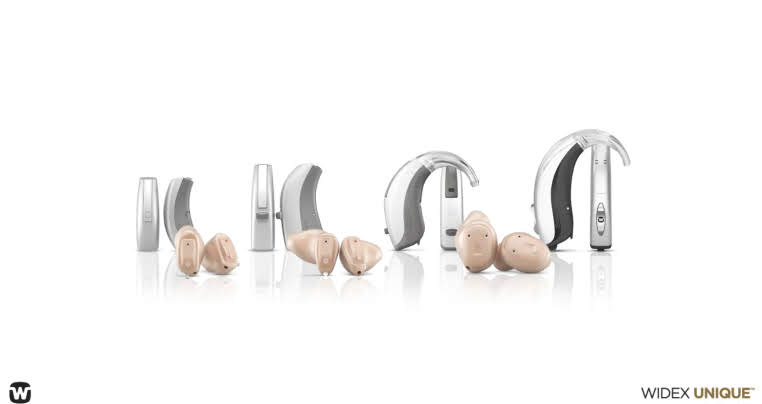
The interear features are important for the efficacy of the hearing aids especially in difficult situations. In the top of the range Widex devices the biggest benefit to the user is the fact that the devices act in unison as one system in so many ways. They can only do so when communicating with each other. Let’s talk about those features in a Widex aid, specifically the Unique which is what the Widex Beyond is based on, and what they do.
Interear features
Sound Classes
Widex introduced Sound classes for the first time ever in the Unique range of hearing aids. Sound classes are different pre-sets that are designed to deal with very different sound environments. They are automatically applied when they hearing devices classify a change in sound environment. In the 440 and 330 range they are inter ear, which simply means that the hearing devices act in unison to decide what to do and when.
Compression
Compression is quite a technical feature to explain, in essence it is how the hearing aids manipulate and amplify sound. Widex has delivered inter ear compression in all of their technology levels in the Unique. Interear Compression is one of the reasons that Widex hearing aids work so well and sound so natural, in essence the hearing aids work together to decide how the sound is delivered to you.
This allows them to deliver the sound to you in the most natural way possible, preserving the auditory cues in their most natural state. This allows your brain to sort it out in the best way possible. In essence, the sound is presented to your brain in a natural way, allowing the brain to do what it does best. This was actually the biggest break through delivered by wireless hearing aids and why I think wireless devices which offer it are superior to everything else.
Noise Reduction
In both the 440 and 330 from Widex the noise reduction strategy is applied in an interear fashion. It means that the hearing aids make a decision about how noise reduction is applied in a systemic way taking full account of the sound environment. This has to be the most effective way to deal with noise.
There are other interear features available on Widex devices but I think these are the most important. These features are what make wireless hearing aids far superior than non wireless hearing aids. Each manufacturer has different inter ear features that do different things. They all combine to provide the very best listening experience for the user. However, if those interear features are compromised by the act of streaming it means that the hearing devices are hobbled in a way.
While this might not neceessarily seem important for most streaming activities like listening to music or played audio from a phone. It does matter if you are using your phone as a remote microphone, in fact in this stype of situation you want all the help you can get. That is why you are using the remote microphone. So it would seem counter productive to hobble the hearing devices by disabling the interear features.
I don’t know if that is the case with the other hearing device manufacturers, however, I plan to ask them and update this post with their answers. If that is the case though, it would mean that the Widex Beyond is the best Made For iPhone hearing aid ever.
If you like what you see, share it so others can benefit
I have noticed more than a few times on the web older hearing aid technology being marked as obsolete, do not buy. I don’t necessarily agree, I understand why they are marked obsolete and it is a great service for the consumer, however, the do not buy statement, I don’t necessarily agree with, let’s talk about buying older hearing aid technology.
Educated Purchase
We always want to give good, fair and balanced advice about buying hearing aids here. We believe in giving consumers the tools and knowledge to make good educated decisions on purchasing hearing aids. I applaud all of the websites who point out that certain hearing aids have been replaced or are now out of date.
But, even if a hearing aid is out of date or has been replaced, it doesn’t mean it is a bad purchase. I mean if you weigh up the pros and cons, understand implicitly that you are buying older technology and most important of all are getting a fantastic price, then how bad can that be?
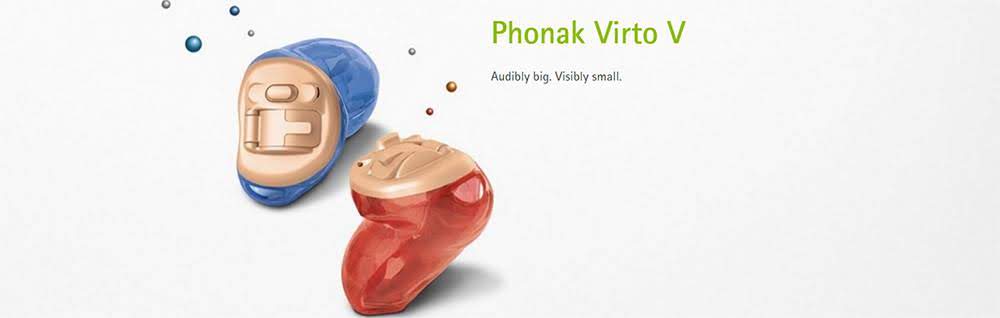
Take the Phonak Virto Venture hearing aids for instance. The Virto V has just been replaced by the Virto Belong range. I think many will probably offer a special discount offer on the Virto V range in the next couple of months. The Virto V90 was and is an exceptional hearing aid range which offers high-quality sound and an outstanding ability to hear in even complex sound situations. Yes, its last years and the Belong is even better, but it doesn’t reduce the fact that the Venture was good stuff.
High-End Technology is High-End Technology
High end or premium hearing aid technology is where it is at in order that you get the very best opportunity to hear better in even the most complex situations. However, for many, it is financially onerous or even out of reach. If you can buy the last generation high-end technology for half the price, that is an excellent opportunity. It is important though that you do your research, firstly, is it the last generation and what are the general reviews about it.
Tired of Listening to Bla? We Got You Covered
Our buying guide, no Bla, just clear easy to understand info, we guarantee it will help you pick the right hearing aid for you.
Life Cycle of Hearing Aid Technology
The life cycle of hearing technology tends to be four to five years. By that, I mean every four years hearing aid technology changes as to be almost unrecognisable from before. Some technology comes along that dramatically changes how they work. Several years ago it was the introduction of binaural or combined compression.
Every year or two we see something new, and it is genuinely new, however, it is usually an upgrade on what has gone before as opposed to a dynamic leap forward. Is it new? Yes. Is it an improvement? Yes. Will it help you hear better? Yes. Should you run out and buy it? Not necessarily, especially if you are wearing top of the range hearing aids from the last generation.
Don’t get me wrong, the new stuff is better, you will notice a difference, but that doesn’t mean the old platform is ready for the bin. Be smart about your purchase, educate yourself and then armed with the knowledge make a decision on whether the older technology will deliver for you. If you think it will buy it at the better price when it is offered and when you get the opportunity, but only if the offer makes financial sense and is made honestly.
If you like what you see, share it so others can benefit
You know it is nice sometimes to recognise the work of others. Especially when their selflessness has spurred them to help others. So I came across a great story about Nancy Gilbertson and I felt I had to salute her and her work. So who is Nancy? Glad You Asked That. Well we saw her story in the article Her Journey Through Hearing Loss
Nancy suffered irreversible hearing loss in one ear after surgery. Ironically, the surgery was to correct her hearing. To add insult to injury, not just did she lose hearing in one ear, medication affected the hearing in the other ear. She was told she would be deaf by 35. She says:
“That was a death sentence to me because I am a people person,” she said. “I’m sure I can speak for almost anybody that we get to be very good actors and actresses and we can hide it quite well.”
Nancy said that at the time there was no support groups, there was no one that she could speak to about her sense of loss. Nor was there anyone to speak to about experiences with hearing loss. She herself has experienced the emotions that go along with hearing loss, the denial, the depression, the fear.
Nancy was attending meetings of the Fox Valley chapter of the Hearing Loss Association of America, but she felt there was an aspect missing from the meetings so she helped form HOPE (Hearing Other People’s Experiences) in 2015.
HOPE is a place where people can share experiences and information. The group also supports family members of people with hearing loss. Last year Gilbertson also started a HOPE Chest, which is stocked with many communication devices to help others hear. Attendees of the group can borrow the devices to help in their decisions on what to use to help them hear better.
We think this is an outstanding idea, part of the underlying fear in hearing loss is not knowing what to expect. Having questions that are unanswered. The idea of groups like Nancy’s is to give answers to all the questions from people who have real experiences of the problems. Nancy was spurred by her own hearing loss, while working through the emotions of it she decided that she should and could help others. Myself and Steve have differing experiences but we are driven by similar feelings. So Nancy Gilberston, we salute you.
If you like what you see, share it so others can benefit



 Itshearingaidknow