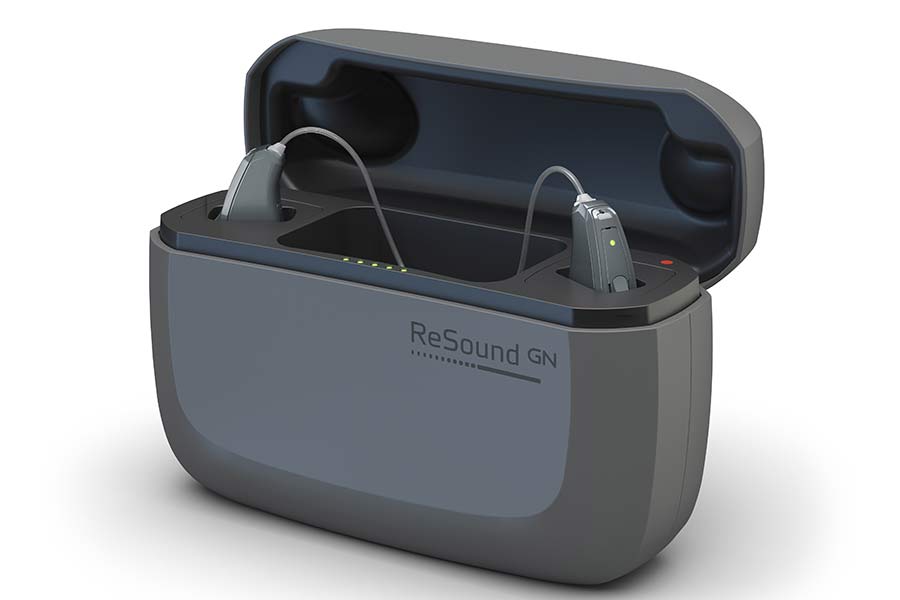
Can’t wait for the LiNX Quattro? Well here is your chance to get early access. Resound has given early access to the LiNX Quattro to some of the Premium hearing care centres in the UK and Ireland and you can book a demonstration on Hearing Aid Know.
Premier Independent Hearing Centres
As we said, Resound has given early access to some of the premium hearing aid centres across the UK and Ireland. That means if you live near one of the centres you can get an early demonstration of the new technology. According to early reports from people using them, they are pretty good hearing aids. The specs look good and the new strategies Resound is using look really excellent.
Starkey held their annual Expo event in Las Vegas recently, they take customers from around the world and treat them to three days off education, innovation and announcements about new products. As usual, this year was replete with all of those. One of the things that caught my eye was their announcement of a brand new rechargeable hearing aids model to their Muse IQ range.
Meet The Muse IQr
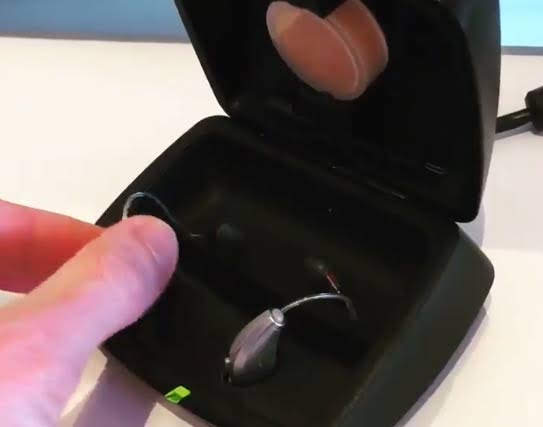
The device is a called the Muse IQr and it is based on their pretty attractive RIC. We don’t know much about the device right now but we do know it is based on a Lithium-Ion rechargeable power pack. This is a diversion from their approach so far. Their initial rechargeable hearing aid offering was based on the ZPower Silver-Zinc rechargeable hearing aid system. I said when the device was introduced that I thought it might be a stop-gap because they had been working on a wireless rechargeable system in collaboration with an Israeli company. But hey, it seems I was wrong but right? You can see the Muse IQr in the flesh as they say in the video below.
Here's a first look at the Muse iQ lithium ion rechargeable RICs. You can see how small magnets pull the devices into place for easy use. #StarkeyExpopic.twitter.com/zzAL9xhLyZ
As you can see from the picture above the devices have been made easy to charge by the advent of guiding magnets which allow easy insertion of the aids into the charger. Another thoughtful addition is a holder for a drying tab, if you are buying RICs, you need to be drying them. Including a simple holder in the recharging case for a drying tab is a nice bit of thought from the designers.
As we hear more about these new rechargeable hearing aids, we will let you know.
If you like what you see, share it so others can benefit
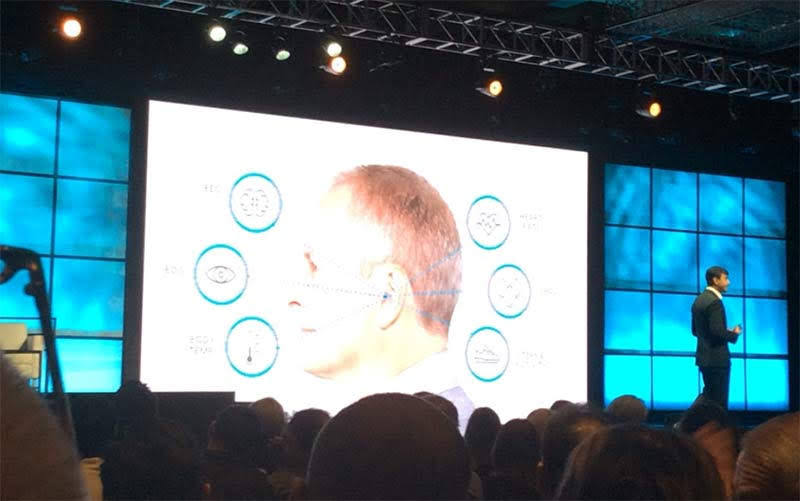
Starkey also teased new hearing aids to be introduced this year that will change both the functionality and use case for hearing aids forever. They announced that hearing aids would be introduced this year that would have onboard inertial sensors that would be used to track activity and detect falls. Not just that, they also said that when and if a fall occurs, the hearing aids would report it.
Sensor Sets and Hearing Aids
I have written many articles about the introduction of sensor sets to hearing aids and the massive change that it would make to my profession and to users. Most of those articles have been firmly aimed at professional circles as opposed to consumers. Last year I delved a little into the idea in the article Hearing Aids, What’s The Future?. I am really excited that one of the hearing aid brands has decided that their future includes the vision of a connected user, a vision where hearing aids are a device with a deeper use case.
Younger Hearing Aid Users
I have witnessed the average age of the people I treat drop dramatically in the last decade. Not just that, my Patients are more active, with a healthier outlook. Hell, have my Patients wear Fitbits and do more exercise than I do. Although in fairness, that ain’t hard. I believe that hearing aids can go far beyond just helping you hear better. I believe that as the technology becomes available and the hearing aid brands become braver and more innovative, that the devices we now know as hearing aids will become multifunctional devices that have a deeper place in user’s lives.
Helping Older People Stay at Home
I have also said that I think that sensor enabled hearing aids will help to keep older adults at home for longer. The Western World has an ageing population and we are living longer in general, those two facts have placed severe pressure on health systems. There are systems available that use biosensors to monitor older people in their own home. It allows family members and carers to keep elderly relatives under surveillance at home.
It does so through smart connected devices in the home and sensor sets that are worn by the elderly. It can tell carers if the relative is standing up or lying down, it will inform them of their pulse and temperature. The system can incorporate extra features depending on the person’s needs. These include sensors on doors, beds and cupboards. It also connects to a variety of medical sensors, either on the person’s body or on other devices, which can transmit details of pressure, weight, blood sugar levels, temperature and even oxygen in the bloodstream.
The cost of elderly care is outrageous, you could stay in a five-star hotel with meals for the price of a semi-decent care home. The costs are just rising, they aren’t getting any cheaper. While care homes are increasing their standards and some are attractive places to be, they aren’t home. It is also well known that the longer we keep an elderly person in their own home the better it is for them and the happier they are.
Hearing Aids as The Centre of Your Health
Hearing aids are in fact, an ideal place to mount such sensors, the ear canal can be tapped for a huge amount of biological information. Information such as blood oxygen level, pulse, blood sugar level, even brain wave signals. If we couple those sensor sets with inertial sensors we can easily detect movement. I think it makes perfect sense to do so, I think it will expand the use case of hearing aids and ensure that they deliver more value to users over and above just hearing better. Although, I do believe the gift of hearing better is life changing to someone with hearing loss.
Apparently, Starkey Think it as Well
So, apparently, Starkey think it is as well because they have set themselves on the path to be the first ever hearing aid brand to incorporate inertial sensors. Those inertial sensors will be used to track activity and detect falls, if a fall is detected, the hearing aids will alert people that it has occurred. Not just that, there is also talk about instant language translation as well. I mean how fricking cool is that? There is no word about pulse or blood oxygen levels, but inertial sensors are a really good start.
Dr. Achin Bhowmik: Coming later this year – the world’s first hearing aid with inertial sensors that will track physical activity, detect and report falls and provide natural user satisfaction. Remote programming will also be available for @starkeyhearing products #StarkeyExpopic.twitter.com/zoPqICeJGJ
These Definitely Aren’t Your Grandfather’s Hearing Aids
That slogan has been floating around the hearing profession for some time, but do you know what, these definitely are not going to be anything like your Grandfather’s hearing aids. I look forward to finding out more and as I do, so will you, keep tuned folks, the future is coming.
If you like what you see, share it so others can benefit
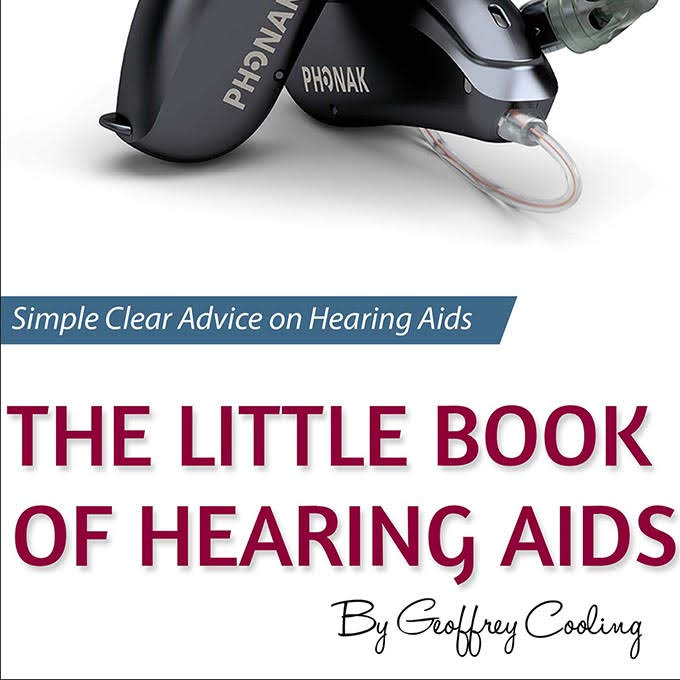
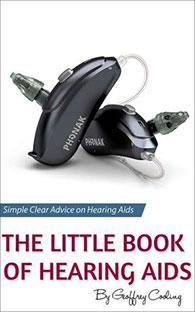
We have finally released the updated and expanded edition of the Little Book of Hearing Aids for 2018. This is the only hearing aid book you will ever need to buy. I updated the information in relation to hearing aids and the people who provide them discussing online hearing aid retailers in an in-depth manner for the first time. I also expanded upon the things you need to think about when you are buying hearing aids and why the latest rechargeable hearing aids are worth your consideration.
So What’s in The Book?
As I said, I expanded upon the providers and what you need to know about them. I also updated the what you need to think about section and the manufacturer’s section. On top of that, I expanded the Rechargeable hearing aids section detailing what’s available and giving the pros and cons. Here is the table of contents:
Let’s Talk Providers of Hearing Aids
Big Corporates
Independent Hearing Healthcare
Online Hearing Aid Sales.
What You Need To Think About When Buying A Hearing Aid
What Happens at The Hearing Test
Bring Someone To The Test
Choosing The Right Hearing Aids
Fitting and Following Up
The Advent of Telecare
Understanding Hearing Aid Pricing
Hearing Aid Manufacturers
Widex
Phonak
Starkey
Signia
GN Resound
Hearing Aid Types
Receiver in Canal Hearing Aids
In The Ear Hearing Aids
Behind The Ear Hearing Aids
Wireless Hearing Aids, Bluetooth Hearing Aids, What’s The Difference?
Rechargeable Hearing Aids
Hearing Aid Technology Hearing Aid Features, What Do They Do? Over The Counter Hearing Aids, What Will They Mean Cleaning & Caring For Your Hearing Aids
Available in e-book and paperback
If you like what you see, share it so others can benefit
We had a recent contact from a lovely lady about using a Bluetooth streamer with a set of NHS provided Oticon Zest Plus hearing aids. So we decided to do some research. Turns out it is a little confusing, while some people said they were happily using the Connectline streamer from Oticon with their NHS provided Zests, others said that it couldn’t be done. So, as is our want, we investigated further and had a chat with Oticon. We found out was that the answer is yes, but no but maybe. Some Zests won’t connect to a streamer, however, you may still be able to sort out streaming to the hearing aids. Let’s look at how. Let’s talk about streaming to Zest aids.
Two Zests, Not One
Unfortunately, the reason for the confusion is that there were two Oticon Zest types of hearing aids provided to the NHS. The older one which is called Zest is not compatible with the ConnectLine streamer. The newer one which is called Zest Plus or Zest C is compatible with the ConnectLine streamer.
If you have a Zest Plus hearing aid from the NHS, you should have no problems with using a ConnectLine Streamer and any of the other ConnectLine accessories to stream audio to your hearing aids. If you have the older Zest, you can’t use the streamers, but all is not lost.
Streaming to The Older Zest
All is not lost though, if your older Zest has a telecoil programme, or if it is suitable for an FM boot, you can still sort out streaming to the hearing aids. There are many commercially available telecoil streamers available and we actually wrote an article a while ago about cobbling together a system. You can read the article “Bluetooth Streaming or Compatibility With NHS or Old Hearing Aids“, but come back when you finish and I will cover some of the options for the Zest in particular.
Telecoil Programme
First, you need to make sure you have a telecoil programme or ask your NHS department to put one on. Make sure you inquire about the availability of a telecoil programme before you buy a telecoil transmitter. Don’t waste money unless you know you can use it. If you have a telecoil programme or you definitely can get one, start considering the next products.
The Widex T-Dex
The T-DEX from Widex is a hands-free, wireless neck loop for use with any hearing aids with a telecoil. Doesn’t have to be a Widex aid, but it can still use some really solid technology and sound quality from Widex. The device allows you to easily connect with Bluetooth mobile phones. The T-DEX comes with a built-in rechargeable battery, as well as a charging cord.
Because it amplifies the sound from the mobile phone, the T-DEX is perfect in situations where there is a lot of background noise. And its hands-free operation means that it is easy to talk on the phone while driving for example.
Of course for it to work, you have to have a t-coil programme activated on your hearing aids, if you do, it is pretty simple. Simply place the T-DEX around the neck and activate it. The sound is transmitted wirelessly to the hearing aids so you can hear and converse directly. Calls can be easily answered and ended by means of a single push button. You can listen to music and other audio on your phone or another compatible device with a Bluetooth connection. When the T-Dex is connected to the device, start playing the audio using the controls of the device.
HearIt Mobile
HearIt Mobile from Phonic Ear is a user-friendly, wireless neck loop for use with Bluetooth mobile phones not unlike the Widex T-Dex. Its a hands-free solution with superior sound quality that wirelessly transmits the sound from your mobile telephone to your hearing aid (with telecoil). The HearIt Mobile has an integrated neck loop that allows you to hear your conversations or streaming audio directly via a hearing aid.
As with the T-Dex, You can listen to music and other audio on your phone or another compatible device with a Bluetooth connection. When the T-Dex is connected to the device, start playing the audio using the controls of the device. In fairness, the device looks very similar to the Widex T-Dex and perhaps Phonic-Ear is the company who makes the T-Dex under licence.
FM Compatible
Many of the NHS Zest devices are FM compatible so you could use an FM system to stream audio. Considering the cost of those systems though, it might be overkill. In order to use FM, you would have to buy an FM Boot for your hearing aid and then purchase an FM transmitter and compatible ear level receiver. Something like the Roger Pen and Roger Receiver and an Oticon Direct Connection Boot.
As I said, if you just want it to stream audio, it is probably overkill. However, if you wanted it for all of the benefits it provides and you think you really need them, well then it is something worth considering. Of course, you could also consider some of the cheap but effective Bluetooth hearing aids now on the market.
I have spoken about hearing aid funding in the UK before on Know. In this article, I want to focus on the Access To Work scheme offered by the UK Government. The scheme is designed to ensure that people with disabilities have access to work through funding for equipment or services. When many people hear about the scheme they automatically think wheelchairs. While that may be a part of what is funded, it is certainly not all of it. Many don’t realise that the scheme can also fund hearing aid equipment that is needed to allow people with hearing loss have access to work and if in work already, to stay there. Let’s talk about Access To Work.
Disabled?
Horrible word disabled, lots of stigma and nasty connotations. Many people with hearing loss don’t think of themselves as disabled. However, in the context of the meaning of the word, we are. We have a disability (hearing loss) which gives us a handicap (oh my god I said that word!!!!!). While I don’t feel disabled and I know Steve, who has a much worse hearing loss than I, does not feel disabled. We both in fact are, our hearing loss means that we have difficulties over and above people with normal hearing.
That is, in fact, the textbook definition of disability, so, if you have a hearing loss, you are disabled, get over it (Geoff making friends and influencing people, hahahahaha). In the UK, If you’re disabled or have a physical or mental health condition that makes it hard for you to do your job, you have the right to
talk to your employer about changes they must make in your workplace
apply for Access to Work if you need extra help
Getting help from Access to Work
Basically, the government wants employers to make reasonable arrangement to ensure you can work, however, If the help you need at work isn’t covered by “reasonable adjustments”, you may be able to get funding help from Access to Work.
The Requirements?
Most importantly, you need to have a paid job or be about to start or return to one. You also need to have a disability or health condition (physical or mental) that makes it hard for you to do parts of your job or get to and from work. You must be 16 or over and finally, you need to live in England, Scotland or Wales. Northern Ireland is covered by a different system which in essence does the same thing.
Funding Available?
Basically, you’ll be offered support based on your needs, which may include a grant to help cover the costs of practical support in the workplace. The Access to Work grant can pay for things like:
special equipment, adaptations or support worker services to help you do things like answer the phone or go to meetings
help to get to and from work
This is where it is interesting to people with hearing loss, even if you have NHS or private hearing aids, you can be entitled to funding for additional add-on devices that will make your life easier. You might not get a grant if you already get certain benefits. However, if you get a grant, the money doesn’t have to be paid back and won’t affect your other benefits.
Equipment That Will be Considered
While you might have NHS hearing aids, the Access To Work scheme will pay for any additional equipment you may need to ensure you can work. For instance, the scheme can be used to fund wireless devices like the Roger system from Phonak which includes the Roger Pen, clip-on remote mics and desktop microphones. These devices are excellent to deliver better speech understanding in different situations, the very types of situations you may find yourself struggling in at work.
Every hearing aid brand provides additional wireless accessories that can be exceptionally useful to you during your workday. Phone streamers, remote microphones and audio streamers, all of which can help you in the difficult situations you find yourself in. These are costly enough devices, however, the Access To Work Scheme is set up with exactly these types of aids in mind.
If you like what you see, share it so others can benefit
I read something interesting the other day about motorbike riders. They can risk permanent hearing loss simply by riding fast. I don’t mean outrageously fast, just fast, who knew? I certainly didn’t and I would imagine motorbike riders didn’t either. The information was released in a study undertaken by the German Automobile Association and it is interesting reading.
Times, Speeds, Hearing Loss
The study stated that motorcyclists are at risk of permanently damaging their hearing after just 15 minutes of riding at 62mph, seven minutes at 74mph or three minutes at 87mph. Those aren’t outrageous speeds and many motorcyclists would easily be riding at those speeds for long distances in particular if a motorway journey was part of their commute. Interestingly enough, the problem isn’t the noise of the bike, it’s the noise of the wind whipping by their heads.
Wind Noise at Speed
The study, carried has shown that riding a motorbike at 62mph typically generates a wind noise of 95dB. If you were working in that noise level unprotected, you would be allowed to work there for no more than 15 minutes. That’s right, exposure to 95dB of noise can permanently damage hearing after a quarter of an hour. Most motorbike drivers would probably spend at least 15 minutes of their daily commute at around 60mph.
Motorway speeds are even less forgiving, at 74mph, the wind noise can be expected to reach 98dB. Again, exposure to 98dB of noise can be expected to damage your hearing after just seven minutes of exposure. A particularly interesting one was that that riding at 87mph could cause permanent damage to your hearing after just three minutes.
Of course, no Irish or UK motorcyclists would break the law by riding at nearly ninety miles an hour (see, I kept a straight face there!). However, the Germans tested this because of the lack of speed restrictions on some of their Autobahns.
Noise-Induced Hearing Loss
In essence, the danger here is noise-induced hearing loss (NIHL) from the exposure to the wind noise. This type of hearing loss is particularly insidious and difficult to self-diagnose. The problem with NIHL is that people who suffer it can have an exceptionally keen hearing for some sounds or frequencies while having limited access to some sounds and frequencies.
It usually causes most issues with the clarity of sound, generally, you can hear the voice very well, you just haven’t got a clue what it is saying. Because of this, people with NIHL go for the longest time thinking that the problem is other people mumbling, not an issue with their hearing.
Protection is Better Than Cure
When it comes to hearing loss, protection is a thousand times better than cure. Be warned, if you like to ride, you really need to think about well-fitted earplugs. There are many on the market and most hearing professionals can get custom ones made for you relatively inexpensively. It will be money well spent because your hearing really is priceless. That’s something we often don’t realise it until it is gone.
If you like what you see, share it so others can benefit
Surprisingly, coffee may have a beneficial effect on tinnitus, but it might be a good idea to give it a miss after a concert
This is the very first article from Kathy Gallo, a new contributor to the blog. Kathy is a fellow coffee lover and she is a regular writer about the dark arts of perfect coffee. She had noticed some research on coffee and health effects recently, specifically coffee and its effect on tinnitus and hearing health. So she decided to write us an article about it. It’s an interesting read and in fact, completely reversed my accepted thinking on coffee and tinnitus. Have a read, it is worth it.
Drinking coffee was once considered something of a vice almost akin to smoking that we should try to cut down or give up. However, in recent years, research has increasingly revealed that, on the contrary, coffee – and especially caffeine – is full of health benefits.
We now know that coffee can increase our concentration, improve our performance in sport, help fight against certain cancers and help prevent Parkinson’s disease and Alzheimer’s disease. There are many more – the list goes on.
What about the effect of the beverage on hearing? Well, we have good news for coffee lovers and bad. Let’s have a look at both.
First, the good news
While very little research has been carried out on the effects of coffee on hearing, one study published in the American Journal of Medicine looked at a group of 65,085 women over an 18 year period. The study sought to investigate whether there was any link between caffeine consumption and the onset of tinnitus, a chronic and sometimes debilitating ringing in the ears. As the report mentions, there has long been a suspected connection.
The results were clear: the regular consumption of higher doses of caffeine was shown to have a correlation with a lower likelihood of developing the condition.
Coffee may protect you from the onset of tinnitus
Specifically, compared to those who consumed less than 150mg per day, the subjects who consumed 450-599mg per day were found to have a 15% decrease in the likelihood of developing the condition. For those consuming 600mg per day, the figure was a 21% lower likelihood.
The source of the caffeine in the study was not specifically coffee and also included cola drinks, tea and chocolate, all common sources of caffeine. However, of these, the caffeine content of coffee is the highest. As a rough estimate, we can say that a regular caffeinated coffee contains around 80-150mg of caffeine, meaning to reach the 600mg category, you would need to be consuming up to six or more cups per day.
While the generally accepted guideline for safe caffeine consumption is usually quoted as around 400mg per day, at least as far as the risk of developing tinnitus is concerned, even higher levels would appear to be beneficial. This is only one study and the subjects were all female. More research is required, but from these findings at least, coffee consumption would appear to have positive effects rather than negative ones on our aural health.
The news is not all good for coffee lovers concerned about their hearing, however. The results from another very limited study might suggest we need to pay attention to our caffeine consumption, at least under very specific conditions.
The study in question was carried out between July 2013 and March 2014, this time not on human subjects but on 24 female guinea pigs.
When our ears are exposed to loud noise, either just once, as with an explosion, or over a period of time, as when we listen to music too loud, we may suffer from noise-induced hearing loss. The study sought to establish whether caffeine has any role to play in this.
Most of us are familiar with what happens when our ears are exposed to a loud noise: we suffer a temporary partial hearing loss that may last a few hours or up to two or three days.
This temporary hearing loss is known as a “temporary threshold shift” (TTS). Afterwards, our hearing usually returns to normal.
The cause might be fireworks, a gunshot, a concert or a loud nightclub; exposure to such a noise is referred to technically as an “acoustic overstimulation event” (AOSE). Specifically, the researchers set out to investigate whether caffeine affects our ability to recover from TTSs caused by AOSEs.
The guinea pigs were divided into three groups. One group was given a dose of caffeine, the second group was exposed to AOSEs, while the third was exposed to AOSEs and was then subsequently administered doses of caffeine.
The results again were clear – and perhaps quite shocking. Unsurprisingly, the guinea pigs that received only caffeine displayed no TTS. The guinea pigs that were exposed to the AOSE suffered TTS but later fully recovered their hearing.
However, the third group suffered a loss of hearing from which they never fully recovered. This might suggest that the consumption of caffeine after an AOSE could potentially lead to TTS becoming a permanent hearing loss.
A couple of caveats
Before you go emptying your bags of coffee beans into the garbage, there are a couple of points to remember. First, the study was carried out on a small group of female guinea pigs, and the results would not necessarily be reproduced in humans or even a bigger group of guinea pigs. A much larger study on the effects on humans would be required before we can confidently say the effect is the same.
Secondly, the guinea pigs were exposed to noise levels of 110dB, roughly the equivalent of a loud concert, for extended periods. This is much higher than recommended safe listening levels and much more than we are usually subjected to in our daily lives.
The takeaway
What we can take away from this study is that there is a possibility that caffeine consumption after exposure to an AOSE may lead to TTS becoming permanent in humans.
This doesn’t mean that we should all give up drinking coffee, it just means that it might be prudent to avoid consuming caffeine, either in tea, coffee or in any other form, if we think we may be suffering the effects of TTS. In short, however much you need your coffee fix after the concert you went to last night, you might think twice before reaching for your coffee maker the next morning – just to be on the safe side.
Coffee and caffeine may be harmful to hearing – under very specific circumstances
To conclude, we can say that, while research into the effects of coffee and caffeine on hearing is very limited, one study shows that caffeine appears to help combat the onset of tinnitus.
In the very specific situation of having been exposed to an AOSE, another study found some evidence to suggest that caffeine may lead to a permanent hearing loss. If you think you are suffering from TTS, it is probably best to avoid caffeine until your hearing has fully returned.
Claiming Compensation for Noise-Induced Hearing Loss
Luke Glassford submitted an article to us on Industrial Deafness a short while ago. During our conversations, I asked him to submit another article based on the process of claiming compensation for Noise-Induced Hearing Loss. Someone had asked us about it in the past and we had no idea of the process. So, I thought it would be of value to us and our readers to have an outline. Without further blah, I will hand you over to Luke.
According to recent figures released by the Health and Safety Executive (HSE), an estimated 20,000 UK workers are suffering from industrial deafness – also known as Noise-Induced Hearing Loss or occupational deafness. The HSE’s data shows that the highest rates of work-related deafness occur in the construction, manufacturing, extraction and energy industries – job roles that typically require long and frequent exposure to excessive noise in the workplace.
If you suffer problems with your hearing due to noise in the workplace, then you could be entitled to claim compensation. Below we will outline what you need to make a successful claim and how the compensation award is calculated. To find out more about industrial deafness, read our recent guide: Industrial Deafness, Causes & Symptoms
There are three main stages to the claims process:
Getting a diagnosis
Demonstrating the cause
Establishing liability (who is at fault)
Getting a diagnosis
Industrial deafness is what is called a ‘latency’ disease, in that it can take years for the symptoms to fully reveal themselves after the initial damage is caused. Because of this, many people who notice hearing loss assume the symptoms are merely a sign of ageing rather than a result of damage caused by excessive noise at a previous job.If you were exposed to excessive noise in your previous employment, then it doesn’t necessarily mean this was the cause of your hearing loss – but you should certainly visit your GP and tell them of your concerns. You may then be referred to a hearing specialist so you can be officially diagnosed with industrial deafness.
Demonstrating the cause
Once it has been established that your hearing loss is due to work-related noise, the next step is to demonstrate precisely what caused it. This doesn’t mean identifying exactly what noises caused the damage; it means finding out why you were exposed to potentially damaging noise for an extended period.
The most common cause of industrial deafness is the lack of adequate ear protectors being used, or the lack of training either being provided by the employer or protocols not being followed by the employee. Which takes us to the next stage – establishing whose negligence caused the damage and who is, therefore, liable for the claim.
Establishing liability
A successful compensation claim depends on proving that the negligence of someone else was the cause of your condition. In cases of industrial deafness, this means being able to prove that your employer was negligent in some way. As per the Health and Safety at Work Act, all employers have a legal ‘duty of care’ to take all reasonable actions to ensure their employees are safe in the workplace.
There are now also much stricter rules in place regarding noise, with the Control of Noise at Work Regulations 2005 laying down guidelines to make sure workers are protected from excessive noise in the workplace. To comply with these regulations, all employers must carry out regular risk assessments to check the levels of noise their employees are subjected to.
Procedures to then manage the risk of hearing damage must be put in place to protect the well-being of employees, such as providing ear protection or limiting the number of time employees are required to work near loud machinery. Employers are required to make all reasonable efforts to manage the level of noise at work and keep it below the legal limit of 80 – 85 decibels. Examples of steps they could take include:
Using quieter machinery in the workplace
Installing barriers and absorbent materials
Reducing the amount of time employees work near loud machines
Providing personal protective equipment (PPE), e.g. earplugs
Employers should also provide training to their staff which educates them about the risks of excessive noise, and what procedures have been put in place to limit this. If your employer has failed in their legal duty to take reasonable steps to reduce the risk of you suffering from industrial deafness – and this negligence can be proved – then you could be entitled to claim compensation.
Calculating your compensation payout
To determine how much compensation you could be entitled to if your claim is successful, several factors will need to be taken into account. For example, the severity of your hearing loss (whether it is temporary or permanent, whether you have a long-lasting condition like tinnitus, whether it affects one or both ears etc.) will have a major bearing on how much compensation you are awarded.
Also, the effect your hearing loss has had on your day to day life will also be taken into account. If it has affected your social life, your ability to work or your mental wellbeing, for example. Also, if you have incurred any financial costs such as medical treatment or hearing aids, then this will be taken into account.
As compensation payouts depend on so many individual factors that are unique to each claimant, it is not possible to provide an accurate estimate of how much your potential claim could be worth. However, the Judicial College does supply some general guidelines that are used by the Courts to determine the worth of claims.
Regarding industrial deafness, these guideline payouts range from around £6,000 – £10,000 for slight hearing loss and ‘occasional tinnitus’ all the way up to £100,000+ for complete deafness in both ears and loss of speech. These figures should only be used as a guideline figure; it is possible that your claim could be worth significantly less or significantly more depending on your circumstances.
Assisting Your Hearing Aids to Deliver Better Hearing in Complex Situations
As the Coca-Cola advert says, Holidays are coming, Holidays are coming. While you are rushing around thinking about presents for others, have a thought for yourself. While an iPad might be nice, what about something that can help you hear better in the tricky situations you still have issues in? Let’s talk about situations and solutions.
The Damn Noise!
The damn noise, even with the best hearing aids in the world noise situations can be a problem. But hey, there can be a fix for that. Meet the remote microphone, probably one of the best solutions to increase your ability to hear in noisy or complex situations. What’s even better, every hearing aid brand has one and they are not outrageously expensive.
Remote Microphones
In noisy situations like restaurants, you have many speakers and sound coming from different directions, wireless microphones can help you to understand and become involved in the conversation. In larger group conversations, like work meetings or social get-togethers like Dinner Parties, wireless microphones can offer you improved understanding. In lectures or presentations, when the device is clipped onto a speaker’s clothing or worn around the neck, wireless microphones allow you to understand better from afar.
At present, there are two overall types of remote microphones, one type will stream audio directly to your hearing aids without any other device. The other type needs an intermediary device to do the job. I will deal with the standalone devices and their manufacturers first.
The Oticon Connect Clip
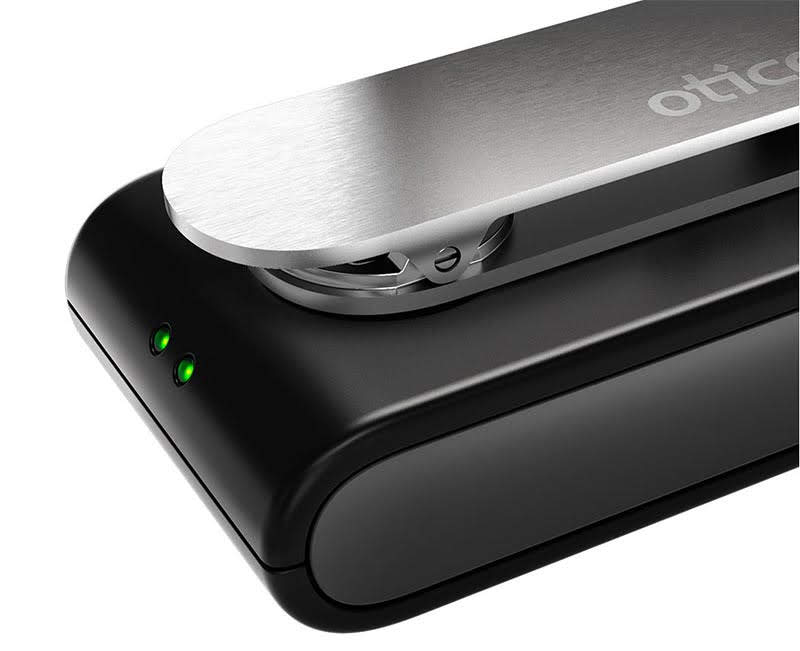
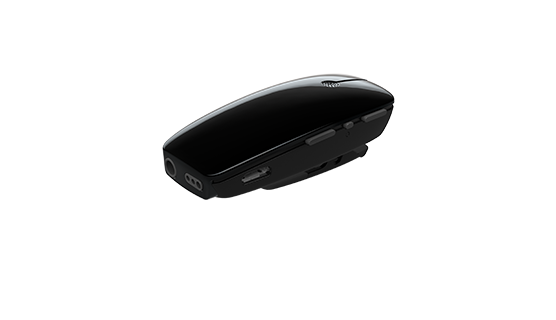
This is a recent addition by Oticon and it is a pretty excellent device. Not just a remote microphone, it also acts a remote control and a mobile phone streamer. That’s a lot of bang for your buck if you own Oticon Opn hearing aids. The beauty of the device is that it connects directly to your hearing aids, no intermediary device. So that is help in noisy situations, stream audio and music from any Bluetooth enabled phone and a discreet and svelte remote control for your hearing aids, damn, what’s not to like right?
Resound Remote Microphones
Resound Multi Mic
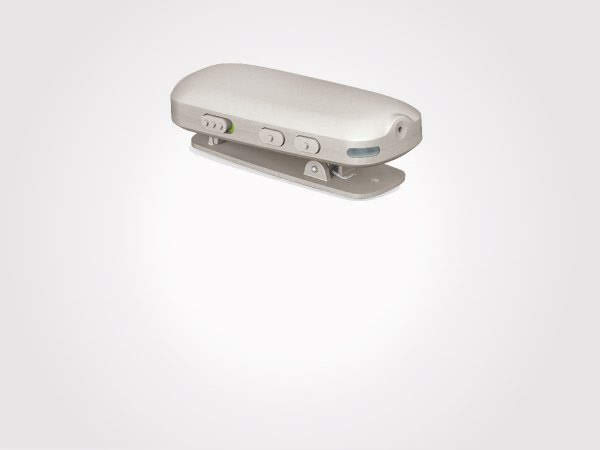
The Resound Multi Mic remote microphone offers a small, flexible solution to let you hear remote speakers without having to wear an extra device around your neck. It also offers real help in a noisy environment with its intelligent microphone array. Place the ReSound Multi Mic horizontally on a level surface, such as the table, and it automatically switches to a mode optimized to pick up the voices of multiple speakers.
This is an ideal solution to give you a real boost in complex sound environments if you wear hearing aids from Resound. For one-on-one situations, simply clip the device on to the clothing of the person you want to talk to and enjoy the conversation, even in background noise. The table microphone feature makes it possible to hear what everyone around you is saying. The Multi Mic also connects to loop and FM systems (with an FM receiver) and has a mini-jack input for streaming audio from virtually any device with a headphones output.
Resound Micro Mic
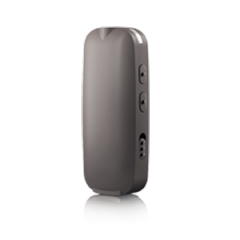
The ReSound Micro Mic remote microphone lets you hear from a distance up to 80 feet away* without having to wear an extra device around your neck. The device itself is about the size of a matchbox, so it is very discreet. You simply hand the device to the person whose voice you want to hear. They can clip it on their clothes or wear it around their neck on a lanyard. The device is really handy for those tougher sound situations, like hearing the person across from you in a restaurant or the people sitting in the back seat of your car, their voice will be streamed right to your hearing aid. This way you can feel confident that you won’t miss out on what is being said when you’re out with family or friends.
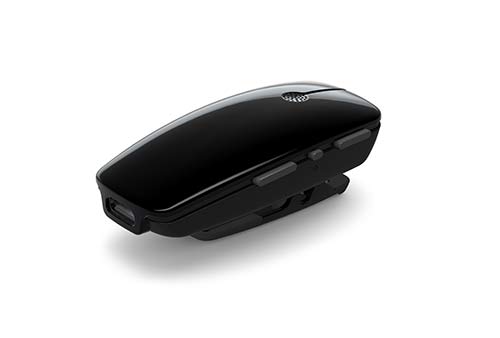
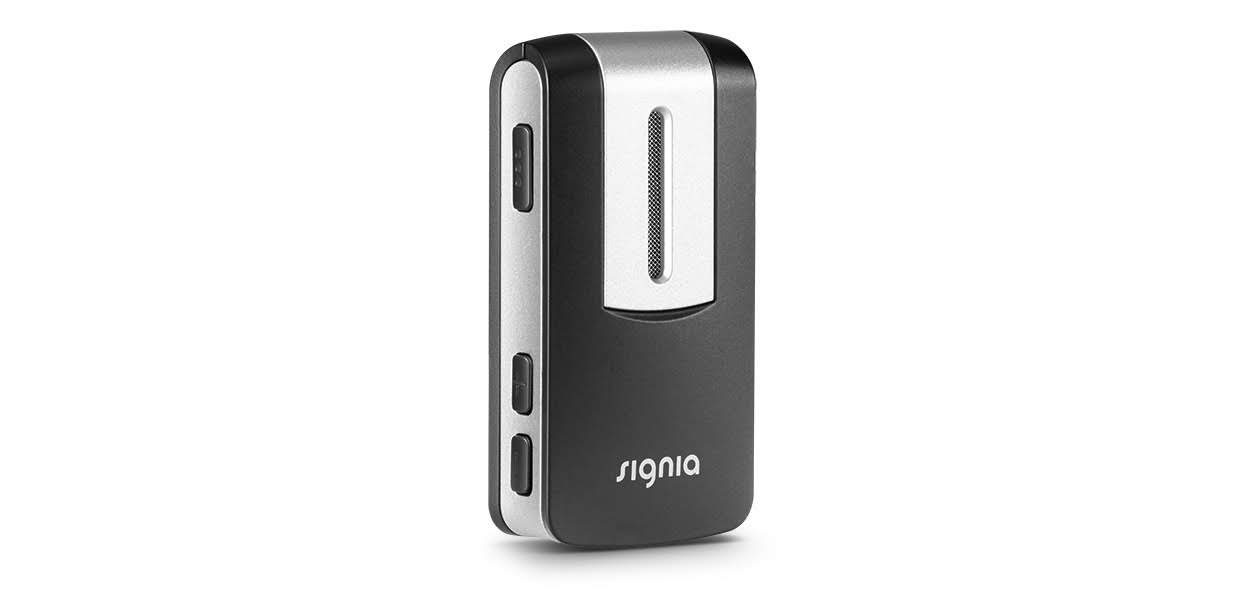
Signia StreamLine Mic
This is a pretty cool device, like the Oticon ConnectClip it is a multifunctional device. It acts as both a streamer for mobile phones and a remote mic. Unfortunately, the new StreamLine Mic won’t be available until early 2018 and it is only compatible with Signia’s latest Nx hearing aids. The device provides full hands-free audio streaming of phone calls and music with any Bluetooth smartphone as well as being an outstanding remote microphone. This device will be standalone, so no need for a second device.
Confused About The Right Hearing Aid For You?
Our buying guide, easing the confusion with clear easy to understand info, we guarantee it will help you pick the right hearing aid for you.
Widex Remote Mic
Widex introduced a pretty stylish remote mic in late 2016, the device works similarly to the ones we have discussed so far with one exception. To use the Widex remote mic, you also have to use their Com Dex streamer . So in essence, you need two devices, not one. That is the case pretty much with all of the hearing aid manufacturers outside of Resound and Oticon.
The COM-DEX itself is a streaming device which allows you to connect to any Bluetooth enabled mobile phone. As I said, the COM-DEX Remote Mic is a stylish and discreet solution. It will allow you to hear conversations in complex environments easily. COM-DEX Remote Mic is the answer to difficult one-to-one conversations in noisy restaurants, at dinner parties, in the car or in situations such as lectures.
Phonak RemoteMic
Phonak have a really svelte remote mic device which I personally have had some great success with. Unfortunately, Phonak devices also need to use a neck streamer which means you need two devices. You can use their ComPilot which is a slightly larger streamer or their ComPilot Air which is pretty small and much more attractive.
The small and light Phonak RemoteMic is an easy to use solution for noisy situations and one-to-one conversations over distance, for example in a lecture. Like the others, you just clip the device onto the speaker’s clothing and it transmits the speaker’s voice directly to both hearing aids. through either their ComPilot device or a ComPilot Air device. Phonak say the transmit distance is up to 20 meters (66 ft).
Unitron Remote Mic
The uMic is a personal wireless microphone system which lets you hear your companions more easily in complex listening environments. You simply attach the uMic to the person you wish to hear using the built-in clip or lanyard loop. The device streams audio directly to both hearing instruments, through their streamers uDirect 3, uDirect 2 or the really pretty uStream.
Again, it means two devices, the microphone and a streamer. However, the two devices offer you real value, a streamer which will allow you handsfree calls and streaming audio and a device that will help you in complex sound environments.
So, to now I have dealt with remote mics, really cool devices, but there are also streaming devices and TV streamers to be considered. I will talk about them next. Listen, treat yourself, get out there and get yourself a device to make your life easier.
TV Streamers
Generally, most people get on pretty well with the TV, however, sometimes some people need a boost. Each of the hearing aid brands offers TV streamers to help out. The TV streamers connect wirelessly to your hearing aids, streaming the audio directly to your ears. You can even turn the TV volume down, you will hear the audio, even if no one else does. Again there are two types of TV transmitters now, ones that stream direct and others that stream through an intermediary device.
ReSound TV Streamer 2
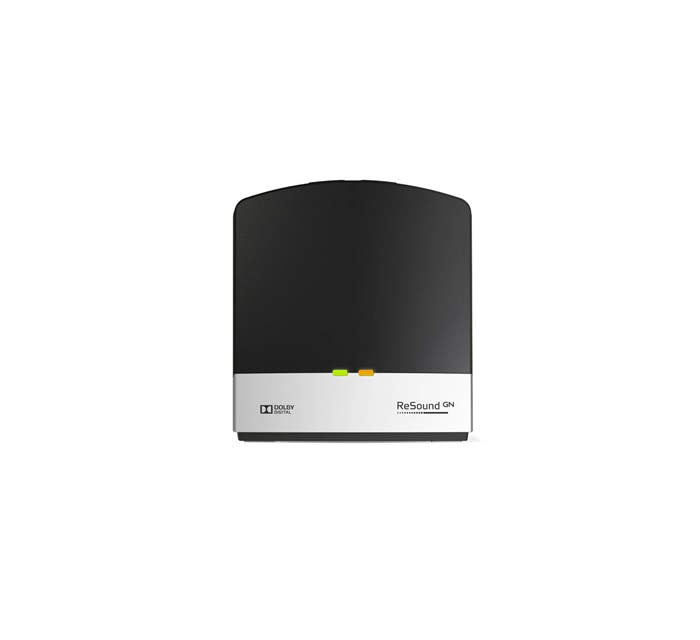
The ReSound TV Streamer 2 basically turns your hearing aids into wireless headphones. The range is up to 7 meters. All ReSound Smart Hearing aids and TV models are compatible with the ReSound TV Streamer 2. It can be also be used for your stereo or computer as well. The beauty of this type of system is there is no intermediary device. So you don’t need anything around your neck, it just streams directly to your hearing aids.
Phonak TV Connector
Phonak have just introduced a new Made For Any phone Bluetooth enabled hearing aid. In any way, if you have bought a set of these you should treat yourself to the TV Connector, which uses their proprietary AirStreamTM technology. It is designed to be a state-of-the-art compact multimedia hub that seamlessly connects you to your favourite TV programming. It’s a plug and play solution that automatically turns a pair of Audéo B-Direct hearing aids into wireless TV headphones. The TV Connector can also connect and transmit to multiple sets of Audéo B-Direct hearing aids simultaneously. That’s a pretty good solution for couples with hearing loss. This device will only work with the Audeo B-Direct.
Signia StreamLine TV Transmitter
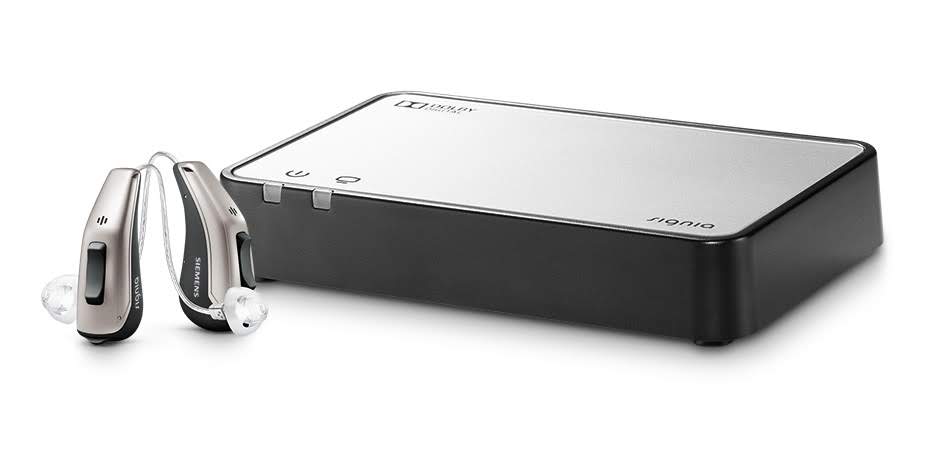
Signia introduced the StreamLine TV transmitter, alongside the Pure® 13 BT which was their first ever Made For iPhone hearing aid. The device delivers high-quality stereo sound – streamed from your TV or connected audio source via Bluetooth® LE – directly to your hearing aids. Pairing the hearing aids with the StreamLine TV transmitter is as easy as placing the hearing aids on top of the transmitter box to allow the auto-pairing process to complete. The device is compatible with the Pure 13 BT Px and all of the new Signia NX devices. If you own any of them, you should really think about getting yourself a StreamLine TV transmitter.
SurfLink Media
The SurfLink Media accessory allows multiple Starkey hearing aid users to wirelessly connect their hearing aids to a TV or other audio or media device. That means that several people in the same house can listen to the streamed audio. As with many other devices of this nature, connecting to the device allows you to listen at the volume level you are most comfortable with, without bothering others in the room.
The device will connect both to a TV or a stereo system and stream sound directly from those devices to your ears. This allows you to adjust the volume of the sound through your hearing aids while never changing the volume of the TV or stereo you are listening to. It is a completely automatic system, once you set it up it just works.
Once the streamer is turned on, when you come into its field of transmission, you automatically hear the streamed audio without you having to do anything. If you had different streamers set up in different rooms you will automatically change over to the different audio being streamed as you went from room to room. Its seamless, automatic and easy to use.
Widex TV Dex
The TV-DEX works with all of Widex’s wireless hearing aids, so if you have a set of wireless-enabled Clear, Dream or Unique hearing aids the TV-DEX will work for you. The sound quality from the streaming system used by Widex is outstanding so you will enjoy distortion-free wireless transmission of TV sound directly to your hearing aid via the remote unit.
The system will work with two audio inputs which you can switch between with the remote unit. You can also adjust the sound volume of the streaming audio via the remote and turn off your hearing aid microphones in the room off function. Unfortunately, you need to have the remote either hanging around your neck or quite close to you as it is the intermediary device.
Phonak TVLink II
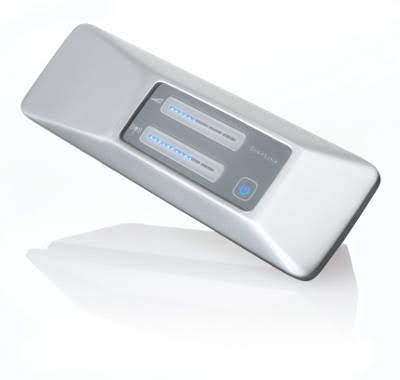
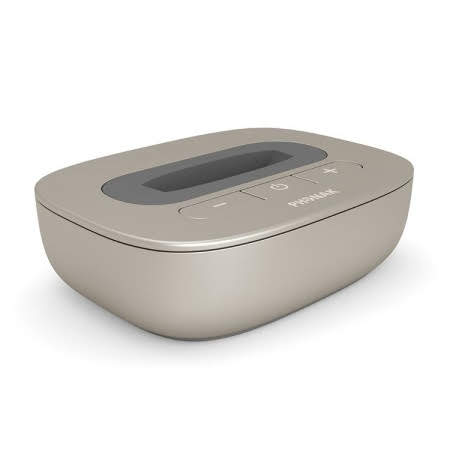
The Phonak TVLink turns Phonak hearing aids into a wireless TV or music headset with stereo sound. Unfortunately, like the TV-DEX, this Phonak system needs the base station and a streaming device that hangs around the neck. The TVLink II base station offers digital audio inputs, a dedicated pairing button and a charging slot that is also compatible with
the ComPilot Air II. The Phonak TVLink II base station is the interface to TV and other audio sources. Used with Phonak ComPilot II or ComPilot Air II, it turns any Phonak wireless hearing aids into a headset with a range of up to 30 meters (100 ft). The ComPilot devices are sold separately but they can also be used for mobile phone streaming or streaming from FM transmitter devices.
If you like what you see, share it so others can benefit





 Itshearingaidknow