Noise-Induced Hearing Loss (NIHL) What You Need to Know
Noise-Induced Hearing Loss used to be a serious problem, however, the incidence of it has reduced somewhat. The thing is, that NIHL or Industrial Deafness is preventable. In this article, Luke Glassford, who has a lot of experience handling claims for NIHL discusses the problem. I have also asked him to undertake a follow-up article to describe how a claims process is undertaken. First off, here is the first article in this series.
Also known as ‘occupational deafness’ and ‘noise-induced hearing loss’ (NIHL), industrial deafness refers to hearing loss as a result of being exposed to high levels of noise for an extended period of time in the workplace. Industrial deafness can sometimes be a temporary condition, although there are many cases where the hearing loss is permanent. If the symptoms of industrial deafness are noticed and treated early enough, then the chance of the hearing loss becoming permanent are greatly reduced.
As well as temporary and permanent hearing loss, there are two other conditions that are classed as types of industrial deafness – tinnitus and acoustic trauma.
Temporary hearing loss
This is caused when someone is exposed to loud noise for a period of time, for example, while working in a factory with loud machinery.
If you notice your hearing is becoming affected, then the best thing to do is take yourself away from the noisy environment. In some cases, it can take up to 16 hours for your hearing to return to normal, as long as you are in a quiet environment.
Permanent hearing loss
Permanent hearing loss can occur when an individual is regularly subjected to a high level of noise for a long duration of time without wearing adequate ear protection.
This level of hearing damage is caused by the hair cells within the ears deteriorating over time because of the constant noise.
Tinnitus
Approximately 15% of people will experience some form of tinnitus at some point in their life, which is caused by long-term exposure to high levels of noise.
For many of us, the tinnitus symptoms subside after a few hours (e.g. you may experience a buzzing or humming in your ears after a live concert), but for some the symptoms are permanent.
The symptoms of tinnitus include a buzzing, ringing, humming or whistling noise in one or both ears, and sufferers often feel that the sounds are coming from an external source.
Acoustic trauma
Also sometimes referred to as ‘acoustic shock’, acoustic trauma occurs when an individual is exposed to an extremely loud, one-off noise such as an explosion or a gunshot.
In terms of industrial deafness, acoustic trauma is a particular risk for those who work on the telephone a lot using a headset. Sudden and unexpected feedback noises, loud fax machine tones or telephone signals can all cause acoustic trauma, which can lead to irreparable damage such as a perforated eardrum.
Occupations with a high risk of industrial deafness
There are certain jobs that pose a higher risk of suffering industrial deafness, such as:
Construction workers
Engineers
Factory workers
Jobs in the music industry
There are also certain tools and machinery used in the workplace that are more likely to cause industrial deafness:
Bench grinders
Break pad grinders
Cold cutting circular saws
Concrete vibrators
Hammer mills
Hydraulic power packs
Multi-headed grinder
Pedestal grinder
Pneumatic transfer systems
Sand burners
Industrial deafness symptoms
The common symptoms of all four of the different types of industrial deafness (temporary and permanent hearing loss, tinnitus and acoustic trauma) include:
Lack of hearing in one or both ears
Missing part or full sentences in conversations
Struggling to hear speech when there is background noise
Having to turn the television or radio up to a particularly high volume
Hearing a constant ringing, buzzing, whistling, hissing or droning sound in one or both ears (this usually refers to tinnitus)
How to prevent industrial deafness
The Control of Noise at Work Regulations 2005 is in place to protect employees from being exposed to high levels of noise at work. All employers have a duty of care to follow the guidelines laid out by the Regulations to make sure their employees are not at risk of developing any form of hearing damage while at work.
The Regulations include different ‘action levels’ for different levels of noise in the workplace. If the noise is 80db then employers are duty bound to provide training and information to their employees regarding the risks, as well as providing sufficient hearing protection.
The guidelines state that noise in the workplace should never exceed an average of 87db.
There are actions that both employers and employees can take to reduce the risk of industrial deafness, such as:
Employers:
Make sure the legal limits on noise exposure are never exceeded
Ensure that noise level risk assessments are carried out thoroughly, correctly and regularly
Provide employees with sufficient information and training regarding noise levels in the workplace
Provide employees with adequate hearing protection equipment and ensure that they are worn correctly and at all times
Take sufficient action to minimise the level of noise in the workplace where possible (e.g. using silencers on equipment)
Employees:
Make sure hearing protection is used correctly and at the right times (for example, ear defenders, ear plugs, semi-aural insets)
Ensure you are correctly trained to use equipment in the workplace
Make sure that all hearing protection is correctly maintained
Do not stay in areas with high levels of noise for periods of time which are longer than necessary
Unfortunately, for some people hearing aids will never be enough to help them hear in every situation. No matter what level of hearing aid technology they buy, they will still have problems, sometimes even in moderately noisy situations. A recent conversation with a US colleague spurred me on to begin writing about this issue. I hope that this introduction will be just the first element of a section on Know devoted to what you can do when hearing aids are not enough. Firstly what I want to do is discuss speech discrimination and why people may have these problems, then I want to very quickly touch on strategies that may help. As I said, this is just the beginning and I will expand this out into a full section that I hope will provide good info on what you can do if you face this problem.
Modern Hearing Aids
Hearing aids like the Oticon Opn and the new LiNX Quattro try to deliver the cleanest and most natural sound to you in order that you get the best possible chance at hearing what is being said. Unfortunately, sometimes that just isn’t enough.
Why Would Hearing Aids Not Help?
There are two reasons why a set of hearing aids might not help you in certain situations, the first reason is that the level of technology you have bought was never designed to help you in that noisy environment. The second reason is a bit deeper than that and it involves what is going on in your mechanism of hearing and possibly your auditory cortex. Unfortunately, sometimes no matter what we do with the technology, your ability to understand speech in noisy situations may still be problematic.
Hearing aid technology has moved on so much that it is easy for us as professionals to lose sight of the fact that for some people, they won’t work everywhere. I mean I get excited about hearing aid technology as it evolves and I really see the treatment benefits that the evolution of technology brings.
However, I need to remember that the revolution in hearing aid technology really only delivers big benefits to most of the people who need it, not all. In a general run of the mill hearing loss, a good set of hearing aids will work exceptionally well. Depending on the level of technology purchased, they will work well almost everywhere.
However, if you suffer from a hearing loss which is further compounded by a speech discrimination issue, well then even the finest hearing aids may not be enough for you. Let’s talk about speech discrimination and why it matters to the outcomes that you will experience with hearing aids.
Speech Discrimination Score?
We measure your ability to hear sounds and that allows us to understand your hearing loss. However, it doesn’t give us an indication of your ability to understand speech. In order that we understand your speech discrimination, we measure how well you understand what you hear when speech is loud enough to hear comfortably.
We measure speech discrimination in per cent terms, so if your discrimination scores are 100%, you understand every word that you hear. However, if your speech discrimination is 0%, you can’t understand a single word that is spoken, no matter how loud it is. It isn’t very often that we see 0% scores from anybody with a normal, general run of the mill loss.
While hearing loss is a function of damage to your hearing mechanism (outer ear, middle ear and inner ear). Speech discrimination difficulties may not be. We believe that speech discrimination issues can be caused by damage to the outer and inner hair cells in the inner ear. However, there may be central auditory issues at play as well. In essence, the brain may not be sorting out the information as it should.
Generally, speech discrimination problems and hearing loss go hand in hand. However, even somebody with a severe hearing loss may have speech discrimination of 70 or 80%. Which at its basic level means that they understand four out of every five words if presented at the right volume.
Hearing loss levels are not a good indication of speech discrimination. Two people may have exactly the same hearing loss (unlikely but you know an example right) but have two completely different speech discrimination scores. The key to me blathering on here is this if you have a hearing loss and your discrimination is good (80% or higher), typically you will find hearing aids will work pretty damn well for you in most sound environments.
However, if your discrimination is very poor, well then hearing aids will not deliver everything that you need to hear better in complex situations (noisy ones). The more complex the situation, the more difficulty you will have. While wearing top of the range hearing aids will give you a little boost, they will still not deliver everything that you need. So what is the answer to an infuriating problem?
Assistive Listening Devices
If your ability to discriminate speech dives in noisier situations, even when wearing a set of hearing aids, well then you need strategies to help give you an edge. While there are coping mechanisms that may help and we will discuss them in detail later on. The one thing that should dramatically improve things, or at least give enough help for you to work out what is going on, is some sort of assistive listening device.
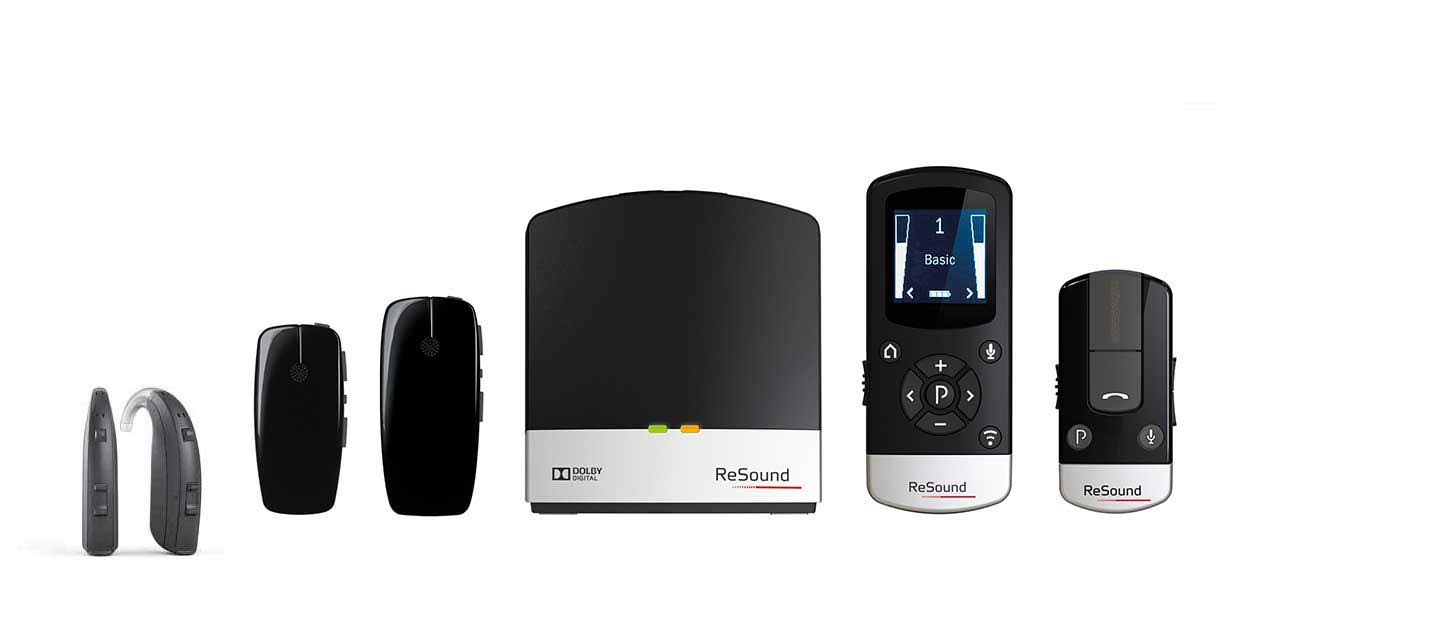
The picture above shows a set of Resound Enzo 3D hearing aids with the wireless accessories that Resound provide. The two devices beside the hearing aids in the pic are remote mics, the device in the middle is a TV Streamer and finally, the last two are a remote and a mobile phone streamer. Each device offers something different and they are designed to help you understand better in different situations.
Every hearing aid brand offers a similar range or similar products. Some are specific to one situation or need, some of the latest ones are really multi-functional offering different functionalities in one device. I want to just focus on one device right now because I want to give you just one example of how a device can change your life for the better.
The Multi Mic
The second of the remote mics and the larger of the two is called a multi-mic. The device is both a remote microphone (for a partner to wear) and an intelligent desktop microphone (place it on a table and it helps pick up a group conversation). However, Resound was not happy with just that and they also included a line in (attach any audio source to the mic with a cable) and a telecoil receiver (connect wirelessly to loop systems). So you can see when I say multi-functional I mean it.
If you are in a noisy situation with just one person, they can wear the multi-mic and you will hear their voice clearly directly in your hearing aids. If you are in a noisy situation and you are with a small group, you can lay the multi-mic down on the table in front of you and it will help pick up the voices of your companions and stream them directly into your hearing aids. The device is intelligent, knows it is laying on a table and changes how its microphones work to better catch the voices of the group.
In this way, the device helps to deliver the best and cleanest signal to your ears, giving you the optimum opportunity to work out what is being said. The telecoil addition is inspired, all public buildings in Ireland and the UK have loop systems, nearly all churches have one, most banks, post offices, theatres, concert halls and cinemas. the loop wirelessly transmits relevant audio and the telecoil picks up that transmission and streams it directly to your hearing aids.
It means that you can wear a discreet pair of hearing aids with no telecoil, but still have access to what is an excellent system through the multi-mic. The line in speaks for itself, you plug your audio from the television or your music player and it is streamed directly to your hearing aids. The functionality of these types of devices gives you the best chance to hear enough to work out what is going on.
Personal Experience With Connect Clip
I have had some personal experience with remote mics, I first used the Soundclip-A from Bernafon and I was blown away. I then used the Connect Clip from Oticon and again was really impressed with the functionality (in essence they are the same device). Recently, I got a hold of a Resound Multi-Mic and with my limited use of it have been thoroughly impressed.
If you have speech discrimination issues that are particularly exacerbated by noise, well then this type of technology should be a given for you. As I said, this is an introduction and I hope to expand it out into a full blown section on the website. Remember though, this is a labour of love and Steve and I need to work as well, so give it time.
We set up this site to ensure that there was an independent site on the web that would give honest, impartial information and advice to people with hearing loss about their condition and the equipment used to correct it. We see our job as a translator of techno-jargon and a slicer of marketing fluff. We regularly review products here based on our experience. Manufacturers offer us no reward, nor would we accept it. We also regularly take submitted reviews from other users, because we think that their voice is just as valid as ours. Unfortunately, we published a review recently called Now Hear This, A Review of Five In The Ear Hearing Aids and it was complete bullshit. Let me tell you how we know, and what Barry Nance was up to. Just a quick update here, I have been contacted by Signia, they just wanted to make it clear that they had no involvement with the review or Barry Nance, they just seem to have been caught up in it.
Barry Was Trying To Extort Phonak
It turns out that Barry was trying to get a free pair of Virto B-Titanium 90 hearing aids from Phonak. However, Phonak wasn’t biting, mainly because the offer was, that if they gave him the hearing aids, they would win the review hands down!!!!!
Paid Reviews are Bad
While Phonak like good reviews, they aren’t really interested in paying for them. Because they know that paid reviews or rewarded reviews are complete and utter bullshit (Irish technical term).
Well Connected
At Hearing Aid Know, we are well connected, not like in a, we can get you whacked way, more like in a, everybody in the hearing aid industry knows us kind of way. So, it wasn’t long before someone contacted us and let us know the full story.
Barry contacted Phonak and asked for a set of Virto Titanium B-9os for a review when it became a little obvious that it probably wasn’t going to work out, he spelled it out for them. Give me the Titaniums and you will win the review process hands down, if you don’t we will thrash the Phonak product and the Signia product will get top billing. And as we all know, that is exactly what happened.
Barry, You are a F#@$wit (Irish Technical Term)
Yup Barry, you are and here is why, people use this site for honest, independent advice, not bullshit from a f@#$wit with a monetary agenda. Submitting your crap to this site and allowing us to print it involves us in your duplicity, something that we don’t like. You see guys like you are why we can’t have nice things.
Still Taking Good Honest Reviews
At Hearing Aid Know, we will still be taking good honest reviews from users, however, I would hope that this experience doesn’t happen again. More than that I hope it stands out as a warning to other f@#$wits who would try to play us.
Sorry and we hope That it Never Happens Again
To the readers of this site, because you are the people that we are concerned about, not the manufacturers, not even the Professionals so much. We truly want you to be able to trust everything that you read on this site. We hope that this never happens again and we apologise.
If you like what you see, share it so others can benefit
As has been our custom over the last couple of years, we thought it was about time that we started detailing the best hearing aids available for 2018. This article, like the ones that have preceded it, will be a living document that is constantly updated. Already this year we have seen some exciting announcements about new hearing aid technology from Starkey. Elsewhere on the blog, I have discussed hearing aid innovations in 2018 that I think will change everything. Here though, I think my job is to keep you abreast of the very latest and best hearing aids available from the big hearing aid brands.
This article will change as time goes by and more stuff is introduced this year. Initially, I will detail the latest platforms available from each manufacturer. Then, as announcements are made about new introductions they will be added to the top of the article. So, here we go, let’s take a look at the top rated hearing aids for 2018.
Top Rated Hearing Aids
Phonak
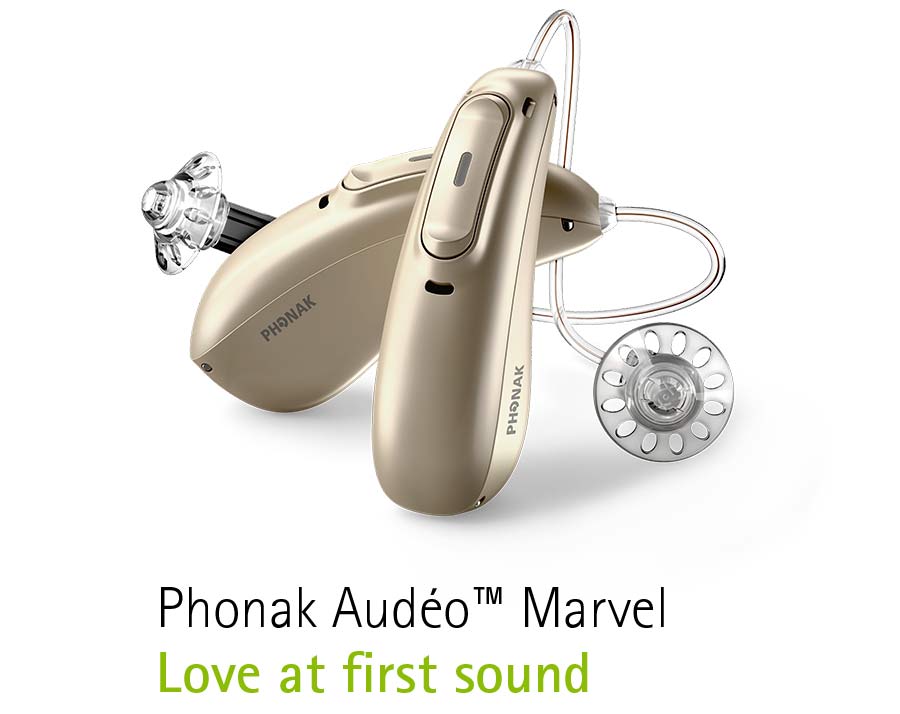
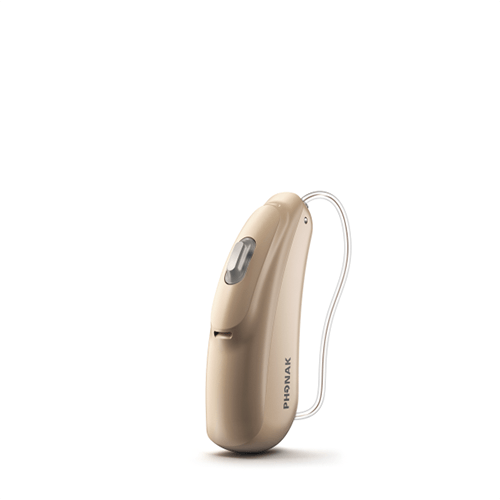
Audeo Marvel Hearing Aids
Made For Any Phone Hearing Aids
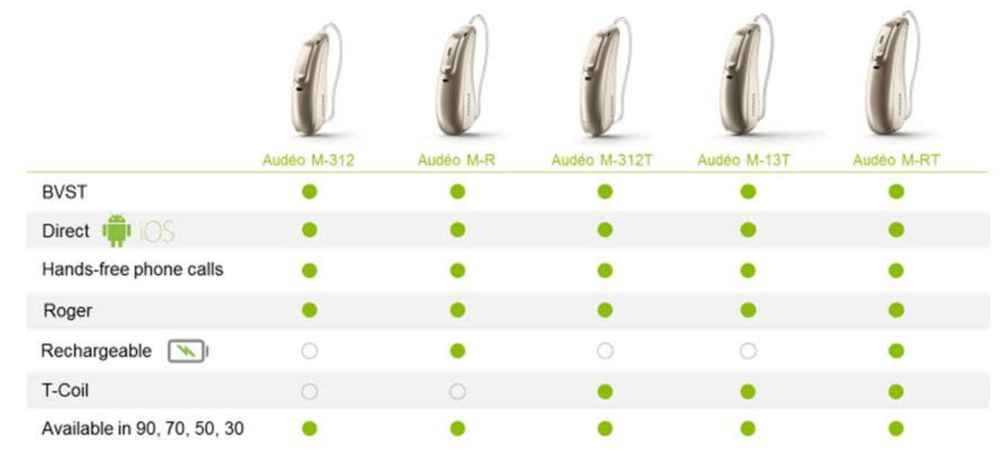
Phonak introduced Marvel to the world at EUHA 2018 and it is a pretty amazing hearing aid range. The Marvel isn’t just a Made For iPhone, it is a Made For Any Phone hearing aid. It is a true Bluetooth hearing aid in all that the concept is. Initially, the new Marvel range will be available in the Audeo type which is Phonak’s Receiver In Canal style of hearing aids. However, they will expand the range as time passes. Their initial offering is a Lithium-Ion powered rechargeable hearing aid version and a traditional size 312 Zinc-Air version. My advice would be to go for the rechargeable version because I think these things are going to be power hungry.
While Phonak had introduced the concept of Made For Any Phone with the Audeo B-Direct, that device was a compromise. It connected to phones but only allowed you to hear the call in one ear. It also didn’t stream audio from your phone. The Marvel hearing device is a hugely multi-functional and feature-rich hearing aid which streams audio to both ears. There is actually a huge amount to talk about with the Marvel platform, almost so much that you wonder where to start. The Marvel contains probably every single one of the current headline features in the hearing aid world, and they have even thrown in some new ones, here’s the quick list:
Stereo Bluetooth streaming: Stereo streaming from any Bluetooth enabled device, that means iPhone, iPad, laptops, computers, Macs, Android phones, Windows phones, hell any Bluetooth-enabled phone.
Real Hands-free calling in stereo: Like the Audeo B-direct, the Marvel offers true hands-free calling from Bluetooth-enabled phones and VOIP services like Skype, except, to both hearing aids.
TV Streaming: Marvel can stream directly from Bluetooth-enabled TVs, and can also stream from the Phonak TV Connector accessory.
Rechargeability: They say both Marvel rechargeables will deliver a full day of hearing aid use from a single charge.
Remote adjustments: Marvel hearing aids can be adjusted remotely by your hearing expert.
New App Eco-System: Brand new apps to make life easier and engage the consumer in the process.
RogerDirect: This is really fascinating, for the first time, users will be able to stream from Roger devices directly to their hearing aids.
Full Phonak Feature Set: Unlike the Audeo B-direct, the Marvel devices will not be hobbled, they will offer full and up to date inter-ear features.
Four Levels of Technology
The Audeo Marvel will be available in four levels of technology when they are released. It appears that only the Audeo M-R and the Audeo M-312 will be released initially but we are unsure of the release date. From what I can see, the rechargeable hearing aid model will be available at all four levels of technology which is good. Originally it was only available in the top three of the Belong range.
Phonak Marvel Hearing Aids, Truly Love At First Sound!
Are You Tired of Struggling to Hear, Looking For A Reliable Rechargeable Hearing Aid That Will Connect You To Your Life?
The all-new Phonak Marvel provides great hearing performance, multi-functionality, direct connectivity, and so much more.
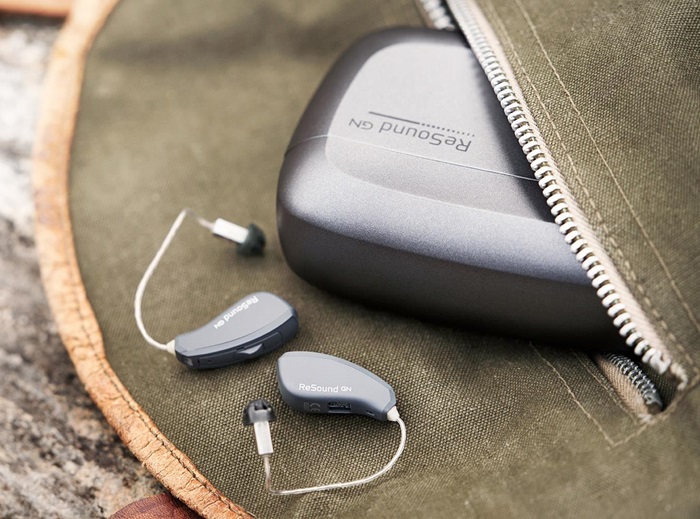
Resound LiNX Quattro
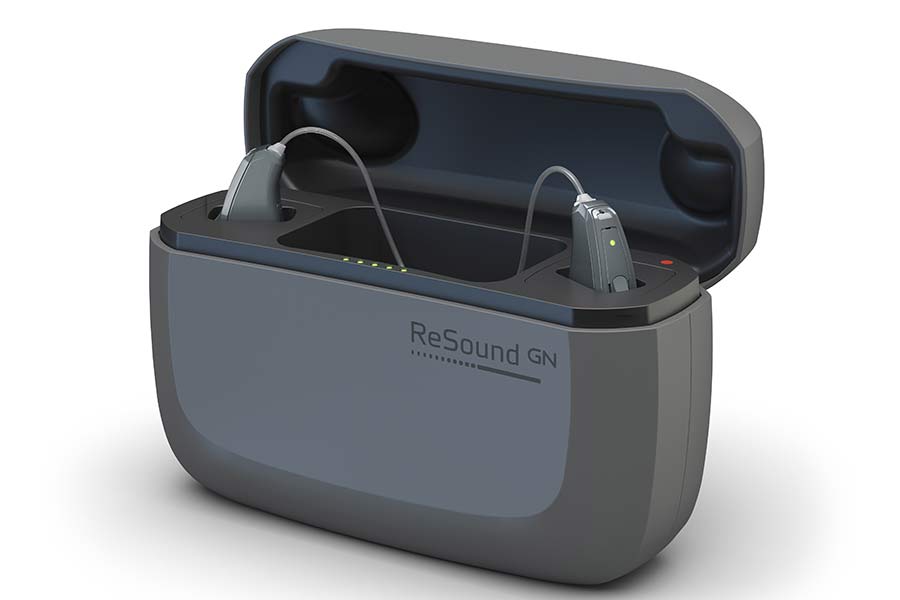
Resound are introducing a new hearing device that they are calling a premium plus device. The devices should be available in September and they look more than interesting. The Quattro range is made up of two different hearing aids, a rechargeable Receiver In Canal and a standard powered RIC. The rechargeable RIC is a Lithium-Ion powered hearing aid and it offers amazing performance for its size. They say it will deliver 24 hours of use even if you are streaming for 50% of the time.
If you don’t stream, it will provide 30 hours of use, in essence for most users that is two days. The rechargeable device comes in its own charger case which provides an extra three charges. So if you go away for a long weekend and forget your plug, you should have no problems. It is a completely new chipset for Resound and they have done an amazing amount of re-design in their software and features.
Starkey Livio AI
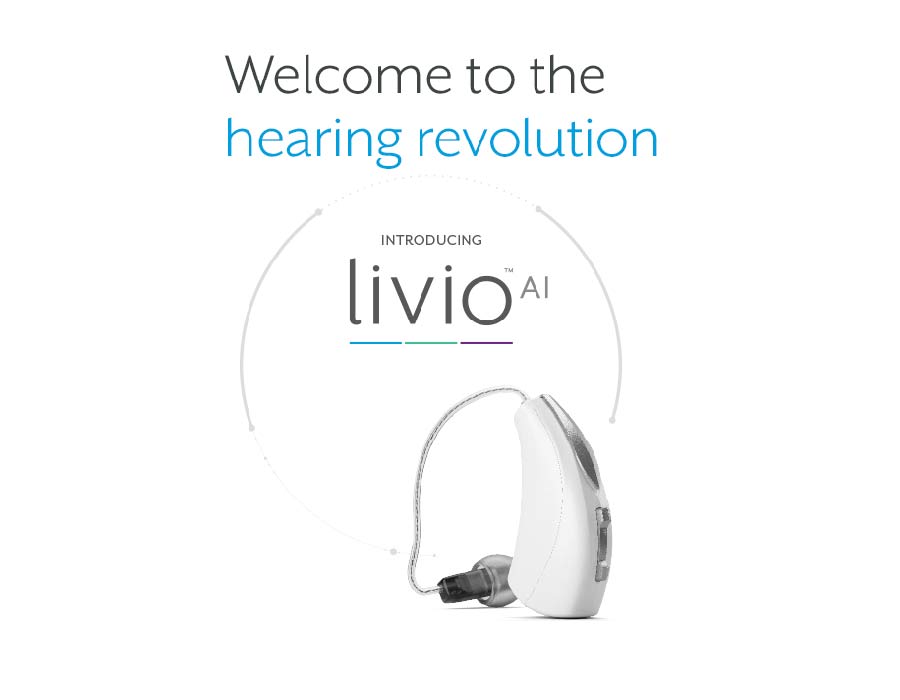
The much anticipated Livio AI from Starkey has now been launched and there has been a huge buzz about them in the tech world. We will see how that buzz transfers to consumers over the next couple of months. I think that the premise of the Livio AI opens up an entirely new use case for hearing aids and may well make the devices far more attractive to new consumers.
I think they point the way towards the future of hearing aids as an integrated health device. It will be very interesting to see how consumers receive them. I think they will be well received by both older users and younger users, while many think older users aren’t as techy, there are still features here that will excite them.
I think younger users will be excited by the entire package and what it represents. The premise of the devices represents a great leap forward for hearing aid technology in general. Starkey says, welcome to the revolution, and for once, that actually isn’t quite marketing fluff.
The Big News A Hearing Aid That’s a Health Tracker and More
The Livio AI is truly a multifunctional device that combines features from wireless headsets, fitness trackers and health apps, and finally, language translation programs. All of that, and it appears to be a very interesting hearing aid as well. The keys to all of this are a brand new chipset, an embedded sensor on the chipset and 2.4Ghz communication between the hearing aid and a smartphone. This allows the monitoring of movement and a deeper instantaneous communication between the hearing aids and a smartphone which has been leveraged to deliver real user benefits.
Signia Styletto
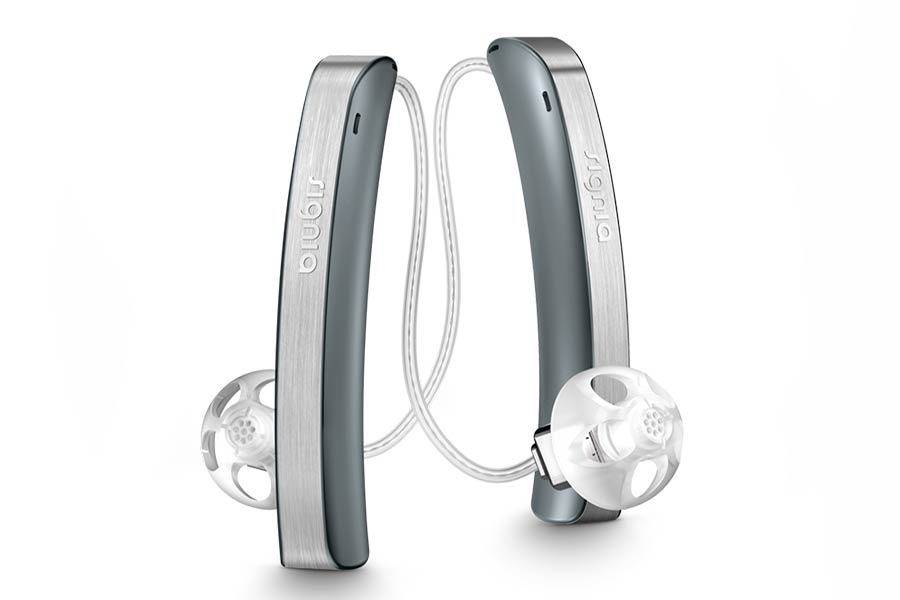
Signia is introducing a new Lithium-ion rechargeable hearing aid they are calling the Styletto (pronounced Style-Etto). The devices are a break from the nor with a completely new form factor design. Signia decided to design something that would be very different from anything else and they have succeeded. They are very different from anything that has come before.
A New Form Factor
Firstly, the new devices will be available on the Nx platform and they will be available in the three levels of technology. They will also have the Own Voice feature that has been pretty successful for Signia. The devices will be suitable for mild to moderate hearing losses mainly. They will not be Made For iPhone enabled, however, they will have the Signia wireless protocol. As you can see the devices are unlike anything that is currently available.
Bernafon Zerena Custom Made For iPhone Hearing Aids
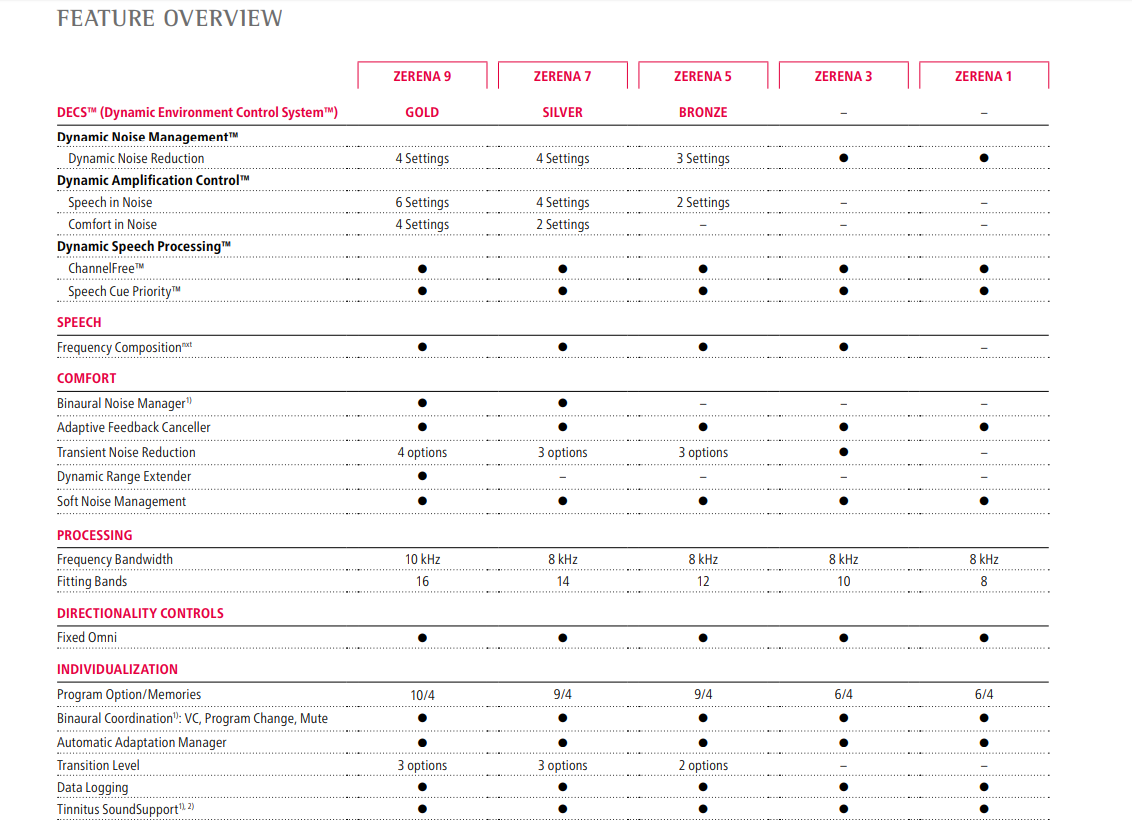
Initially and like Oticon, Bernafon offered the Zerena in behind the ear type devices only. I have worn a set for a while now and I have to say I have been impressed with them. Now they are ready to release their In The Ear range and they have started to publicise the devices. They have also introduced two new lower-end technology levels to the Zerena platform the Zerena 3 and the Zerena 1. You can see the feature overviews below, click on the image to show a larger image for easier reading.
Five Zerena Custom Hearing Aid Types
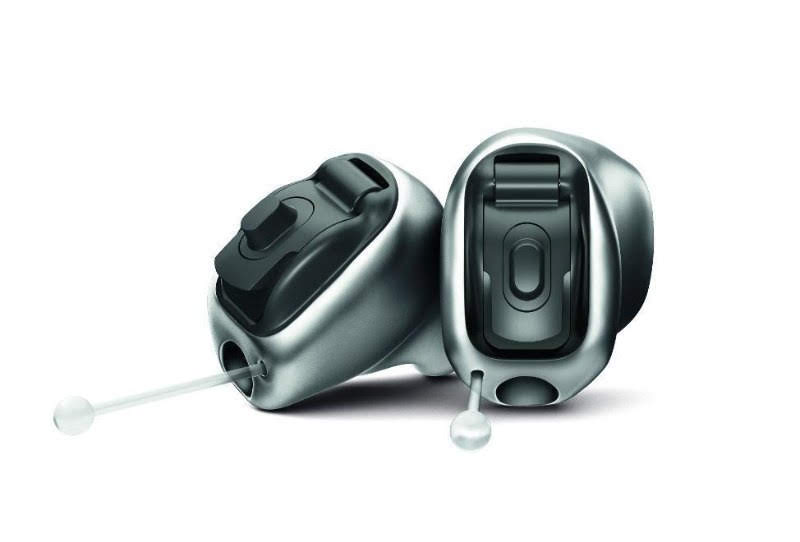
The new Zerena customs will be available in five different In The Ear models at five different technology levels. That’s an IIC. a CIC, an ITC, a Half Shell ITE and a Full Shell ITE. The last three in that list will be Made For iPhone hearing aids which will make many people happy. It makes Bernafon the joint second hearing aid brand with Oticon to offer Made For iPhone custom hearing aids.
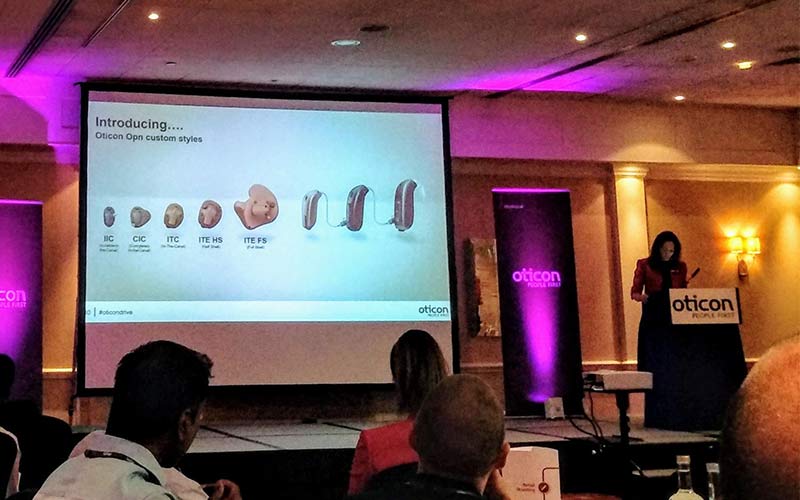
Oticon has just announced the introduction of Opn custom hearing aid types at one of their big events. They say that they will be launched in quarter four this year. The launch will complete the Opn range which will then consist of a complete range of hearing aid types.
Custom Made For iPhone Hearing Aids
Most of the new Opn custom hearing aids will be Made For iPhone enabled which means direct streaming to most Apple devices. Oticon is just the second brand to introduce in the ear hearing aids that are Made For iPhone enabled.
Oticon is keeping the details of the custom range very tight at this stage, however, we do know what styles will be offered. As we get a clearer idea about the full details, we will update this piece. The Opn customs will be available from full shell all the way down to invisible in the canal. However, they will not all be Made For iPhone which is pretty much in line with what is on offer from the only other brand in this market sector. The line up is as follows:
ITE Full Shell (Made For iPhone)
ITE Half Shell (Made For iPhone)
ITC In The Canal (Made For iPhone)
CIC Completely In Canal (Not Made For iPhone but is wireless)
IIC Invisible In Canal (Not Made For iPhone, not wireless)
Bernafon Zerena 9
Bernafon is a brand that we have just begun to take notice off. They are a Swiss brand that have been around for a long time, however, for a couple of reasons I explained in the article Bernafon and why I was wrong about them we have begun to become interested in what they are doing. I have actually been wearing a set of the Zerena 9 MiniRITEs and using them with their remote mic.
Made For iPhone Hearing Aids
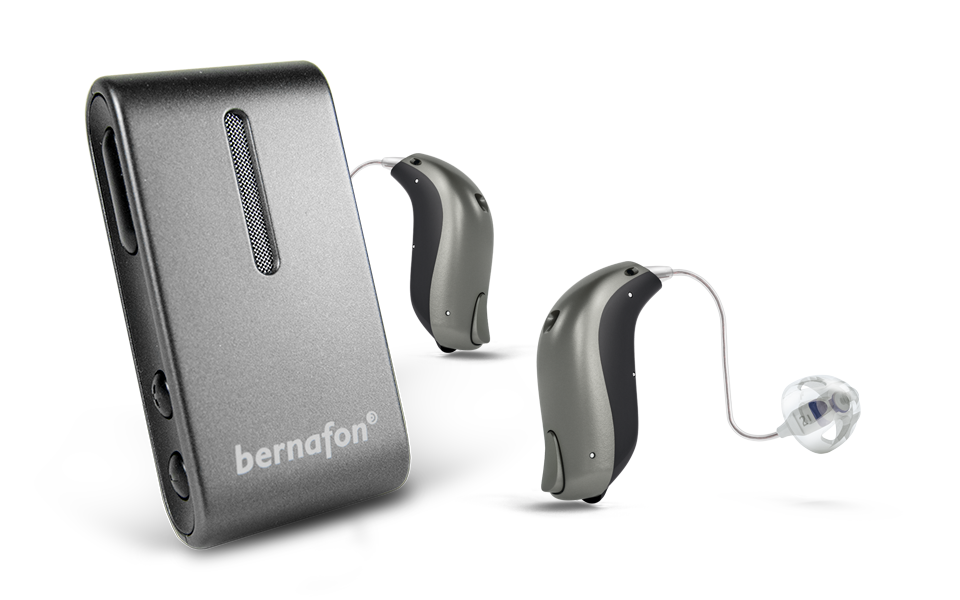
The Zerena 9 range are all Made For iPhone enabled which allows direct connection to Apple products. The Zerena will also connect to a host of wireless accessories, one of which is the Soundclip-A. The device is a small and attractive multi-functional accessory that acts as a streamer for audio from Android phones, a remote control and finally a remote microphone for use in difficult sound situations.
The Models
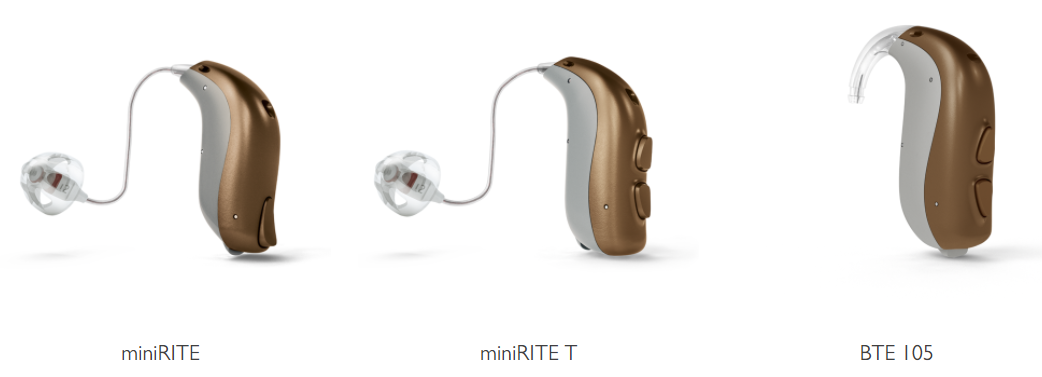
There are three models available in the range at the moment and one of them has a rechargeable option. The custom in the ear hearing aids from this range are to be released this year some time. No word on whether they will be Made For iPhone though.
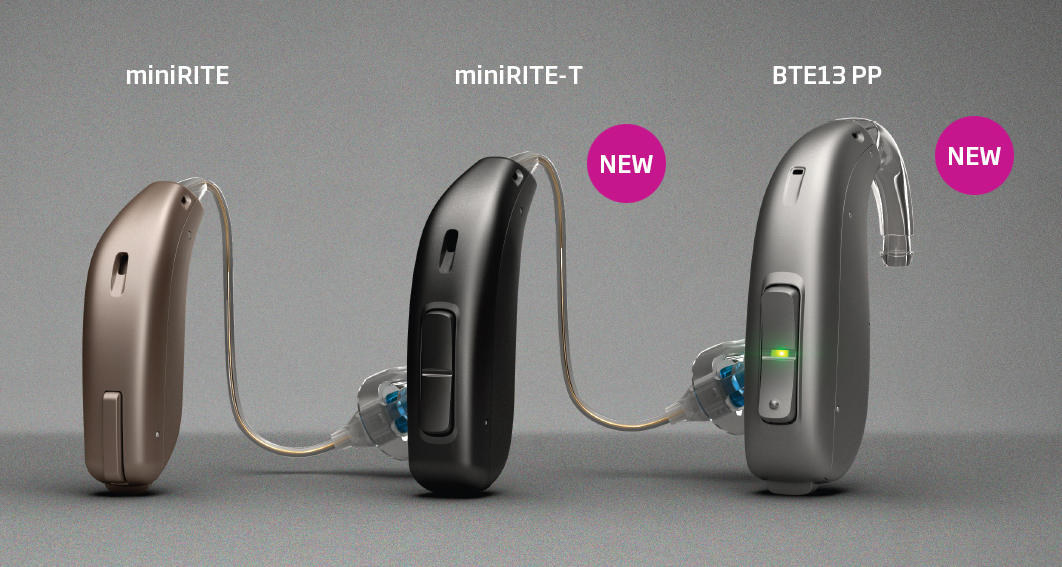
miniRITE Hearing Aid
The minRITE is a small receiver in the ear hearing aid that is suitable for hearing losses from the mild to severe. It can use four different speakers which means it is suitable for most hearing losses. As with the rest of the range, it has twin radios, one which is a Bluetooth radio and the other which is a proprietary Bernafon radio. The Bluetooth radio makes these hearing aids Made For iPhone, the proprietary radio is used for communication between the hearing aids which ensures settings and features are co-ordinated and act in a more effective manner. The hearing aid works on a 312 battery and it comes with a programme button.
miniRITE Rechargeable Hearing Aid
The minRITE rechargeable hearing aid is exactly the same as the miniRITE with the exception of rechargeability. It uses a ZPower silver Zinc rechargeable system which delivers a full day of use on an overnight charge. The ZPower system is such that if you forget to charge your hearing aids or if something happens, you can switch to normal hearing aid batteries without any issues.
miniRITE T Hearing Aid
The minRITE T is again small receiver in the ear hearing aid that is suitable for hearing losses from the mild to severe. It can also use four different speakers which means it is suitable for most hearing losses. This hearing aid has three radios, one which is a Bluetooth radio, the proprietary Bernafon radio and a Tele-coil. The Bluetooth radio makes these hearing aids Made For iPhone, the proprietary radio is used for communication between the hearing aids which ensures settings and features are co-ordinated and act in a more effective manner and the Tele-coil receives broadcasts from a loop system (very handy). The hearing aid works on a 312 battery and it comes with a multi-functional button that also acts as a volume control.
BTE 105
The BTE 105 is a traditional behind the ear hearing aid that is suitable for hearing losses from the mild to severe. It can be used with a slim tube or a traditional tube and mould. This hearing aid has three radios, one which is a Bluetooth radio, the proprietary Bernafon radio and a Tele-coil. The Bluetooth radio makes these hearing aids Made For iPhone, the proprietary radio is used for communication between the hearing aids which ensures settings and features are co-ordinated and act in a more effective manner and the Tele-coil receives broadcasts from a loop system (very handy). The hearing aid works on a 13 battery and it comes with a multi-functional button that also acts as a volume control.
In general, I have been really happy with the hearing aids and absolutely ecstatic with the Soundclip-A and I would recommend them to you.
Unitron Moxi All
In late February Unitron announced the introduction of the Moxi All, new Made For Any Phone hearing aid on the Tempus platform. The hearing aid is very interesting, not only is it a Made For All, it is also a rechargeable hearing aid. I think that this move by Unitron is a little stroke of genius, the Bluetooth protocol that is used to provide the connection to any Bluetooth enabled mobile phone is quite power hungry. Using a rechargeable system to power the aids means that users won’t have any issues with power consumption and short-lived traditional hearing aid batteries.
A Headset Approach
The main pro here apart from the fact that it will connect to any phone is that the Moxi All will act just like a Bluetooth headset. They have been designed to allow you to both answer and refuse phone calls with a touch of the button on the hearing aids. They will also act to stream the call to the aids and to stream your voice back to the caller. Simply put, as with the Audeo B-Direct, you won’t need to touch your phone, it could be twenty feet away and you can still take a call and speak to the caller without ever needing to look for it.
No Streaming Music From Your Phone
Unfortunately, the Moxi All will not allow you to stream music or audiobooks from your phone. While for some this won’t be an issue, for others it might. Otherwise, the Moxi All looks like a really solid device that will be available at a range of price points.
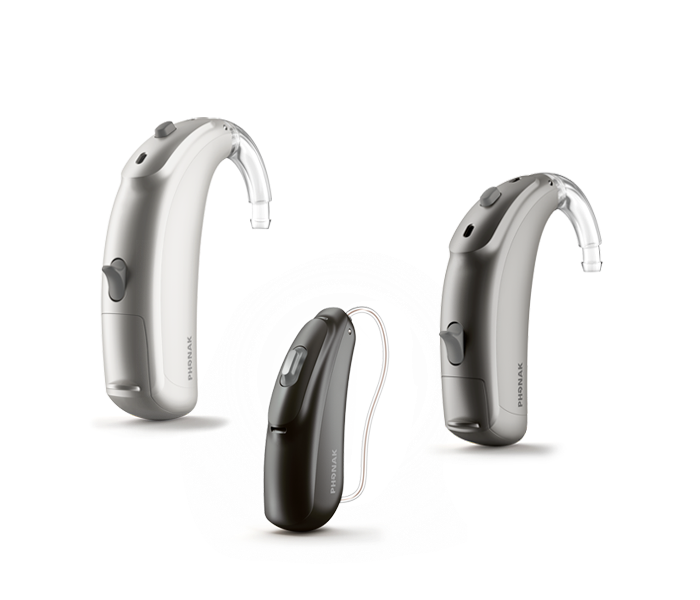
In February, Phonak introduced the Naida Belong hearing aid range. The much-awaited upgrade of their hearing aid range for profound hearing loss. I have heard elsewhere the Naida described as a Dynasty. I thought to myself that is a good description. The new range comes in three models, two traditional BTE devices and a rechargeable Reciever In Canal model. That is the first ever rechargeable hearing aid in this niche offering. The Naida has been the go-to hearing aid for people with severe to profound hearing loss for many years. This latest upgrade looks sure to ensure that remains so.
Three Models, Four Levels of Tech, All The Latest Features
There are three hearing aid models, two of them come across the four levels of tech while the Rechargeable Naida is only available in the top three levels. They have all of the latest features from the Belong range but offer a new proprietary fitting formula called Adaptive Phonak Digital Contrast. Phonak say that the new formula offers real benefits to some people who have real difficulty with hearing speech sounds. In essence, the formula should really contrast the consonant sounds from the vowel sounds in speech to allow better understanding.
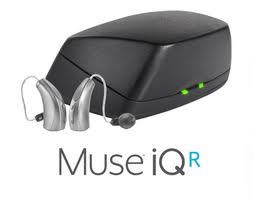
In january, Starkey announced the introduction of a new addition to their Muse iQ range of hearing aids. They said that they were introducing a brand new rechargeable hearing aid to the range and that it would be available from February.
First Rechargeable CROS Hearing Aid
We have spoken about the Veterans Hearing Fund before here, they are built on Starkey’s latest Synergy® platform and Acuity™ OS operating system. They are a Lithium-Ion based rechargeable hearing aid device and they will offer 30 hours of use with streaming, full-day charging in less than three hours, a portable charging case for rapid 15-minute and “weekend” charges, a telecoil and finally, a CROS rechargeable system for individuals with a single-sided hearing loss.
20% Longer, The Smallest, First CROS
Starkey says that the aids have 20% more power than their competitors offering longer run time than anyone else. They also say that the Muse iQR is the smallest rechargeable hearing aid on the market, whether that is the smallest Lithium-Ion rechargeable or just the smallest rechargeable, I am unsure. This is also the first rechargeable CROS device suitable for people with single-sided deafness.
Signia Nx Hearing Aids
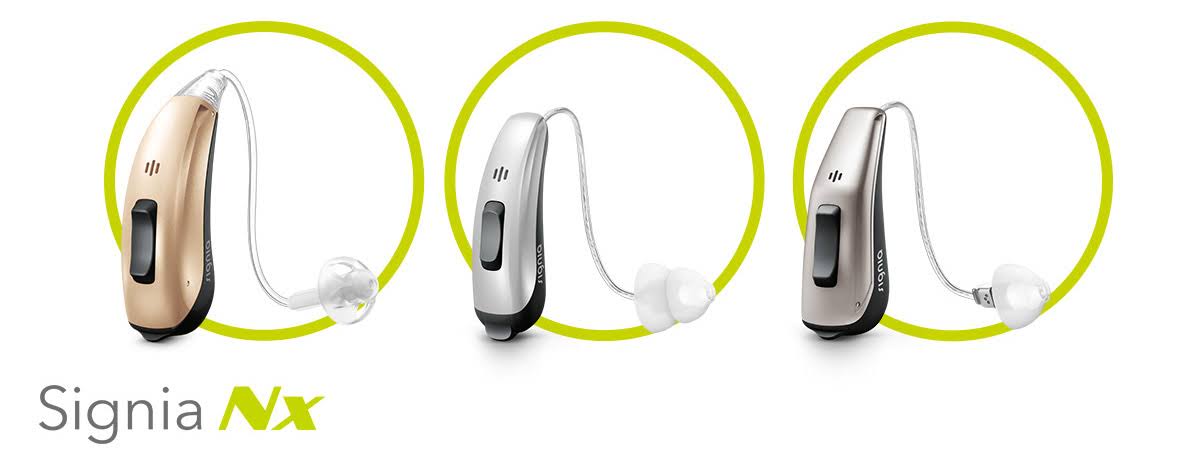
Signia introduced their new hearing aid platform the Nx in late 2018. The latest platform from Signia has three hearing aid models at three levels of technology. They are all behind the ear type models with two RICs and one traditional BTE, they are all also Made For iPhone hearing aids. Signia is just introducing a multi-functional streamer that will allow streaming from Android phones.
Three Models, Three Levels of Tech
As I said, there are three models initially available across three levels of technology. As is the norm with their tech levels naming system, the levels are the premium 7, the mid-range 5 and the entry level 3. The models themselves are two Receiver In Canal devices and a BTE. Unfortunately, they have not released either a rechargeable version of this new technology nor have they introduced custom in the ear devices.
Signa Px Hearing Aids
The Primax from Signia is still available and it offers a full range of hearing aid types. However, it is an older hearing aid platform and while an excellent offering, If I were you, I would choose the Nx every time. It is a superior offering and it provides the very best features and technology that Signia has to offer.
Telecare
The Nx also offers the most in-depth remote care system available on the market right now. It allows real-time updates of your hearing aids while you are talking to your professional via video call. No one else is offering this yet.
Accompanying App
Signia has also offered an accompanying app called myControl which gives the user deeper control over the hearing aids. The app might not be for everyone, however, it will be a welcome addition for those that like the idea.
Tired of Listening to Bla? We Got You Covered
Our buying guide, no Bla, just clear easy to understand info, we guarantee it will help you pick the right hearing aid for you.
Oticon Opn Hearing Aids
Oticon has slowly introduced the Opn range to the market over the last year and it now stands at three models, one of which is a rechargeable hearing aid. Again, this is a Made For iPhone hearing aid range and they have introduced a cool little multi-functional streamer called the Connect-Clip which allows streaming from Android phones. When Oticon introduced this range, it was obvious from what they were saying that it was different than anything they had introduced before.
They have spoken about the old closed world of hearing aids and how the new devices will open your world. Having worn them, I think they are different from anything that has come before. The directionality system that Oticon uses with the Opn is fantastic and it offers excellent performance in noisy situations. Their Open Sound Navigator system really seems to offer a different experience than any I have ever tried. I think it will take experienced users a little time to get used, new users will know no better.
Three Levels of Technology
The range currently comes in three levels of technology, the premium Opn 1, the mid-level Opn 2 and the entry level Opn 3. The devices are also suitable for multiple hearing losses from mild all the way to severe to profound. As I think you can guess, the Opn range has no custom in the ear hearing aids available. I believe they are coming in 2018.
Accompanying App
Oticon has also offered an accompanying app called the Oticon On app which gives the user deeper control over the hearing aids. Again, apps might not be for everyone, however, it will be a welcome addition for those that like the idea of having more power over the hearing.
There are custom hearing aids available on the older platform from Oticon, but as I have said already if I was you, I would simply swallow my pride and go for one of the new Opns. You will not be sorry.
Resound 3D Hearing Aids
In 2017 GN Resound introduced their latest Made For iPhone hearing aid platform 3D. They first introduced the LiNX 3D range which is a full line up of hearing aids including RIC, BTE and ITE hearing aid models. I have worn the devices and been exceptionally impressed with them. They quickly followed with the launch of their Enzo 3D range which is aimed at people with severe to profound hearing loss. The Enzo 3D has two power BTE models to choose from.
Telecare
The 3D also offers an in-depth remote care system, it will allow you to request changes from your app and your professional can make changes and send them back to your hearing aid. Your professional can make really in-depth changes to your hearing aids and it could be used as a real-time system. However, it isn’t as functional as the Signia system.
Resound Enzo 3D Super Power Made For iPhone Hearing Aid Range
Resound introduced their Made For iPhone Super Power range the Enzo 3D in 2017. The technology within the range is based on their fantastic LiNX 3D range and they will offer all of the features and the benefits of that platform including the latest features and their telecare system.
Resound Enzo 3D Hearing Aids
They have updated the Enzo Made For iPhone (MFI) hearing aids with their new 3D platform which brings the benefits of that system to people with severe and profound hearing loss. Those benefits include better spatial awareness and much better speech understanding in noise. With Made for iPhone® technology, you can stream phone calls, music and more from your iPhone, iPad® or iPod touch® directly to your hearing aids. If you have an Android or any Bluetooth-enabled phone, you can still stream calls, music and more with a discreet ReSound Phone Clip+ wireless accessory.
Vibrant and crystal clear sound
Like the LiNX 3D range from ReSound, Enzo 3D hearing aids come with the superior sound quality of Surround Sound by ReSound. They work together, continuously exchanging data about your sound environment for optimized performance. There are two hearing aid models available in three levels of technology, the top of the range 9, the 7 and the 5.
Resound
LiNX 3D Hearing Aids
GN Resound finally updated it’s Made For iPhone hearing aids by introducing the new LiNX 3D hearing Aid range in 2017. The new range is just that, a full line up of models (twelve) including a rechargeable RIC hearing aid, in three levels of technology. Both I and Steve (Co-Writer here) have worn them and I have to say that both of us like them a lot.
The App, Resound Smart 3D
The accompanying app for both the Enzo and the LiNX 3D ranges allows you personalise your hearing experience in a deeper way. It has been re-designed to be more intuitive and easier to use and it offers real control. While this might not be for everyone, for those who want it, it will enrich their experience.
You can read more about the LiNX 3D models in our article LiNX 3D, The Models & Features You Can Expect From The Latest GN Resound Made For iPhone Range and you can take a fuller look at the plain language explanations of the features at The LiNX 3D, The Latest Made For iPhone Hearing Aid Technology.
Confused About The Right Hearing Aid For You?
Our buying guide, easing the confusion with clear easy to understand info, we guarantee it will help you pick the right hearing aid for you.
Phonak Belong Hearing Aids
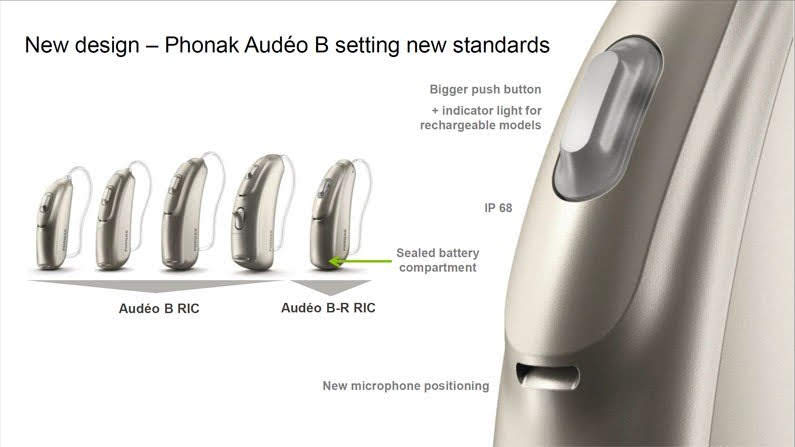
Phonak introduced the full Belong range last year, it is their latest hearing aid platform and it replaces the Venture range. The Belong range is a full line of hearing aids with RICs, BTEs and ITEs. It includes two types of rechargeable hearing aids, a rechargeable RIC and a rechargeable BTE. It is also the only hearing aid platform with a titanium hearing aid and a Made For Any Phone hearing aid. The Belong range is available in four levels of technology the B90, the B70, the B50 and the entry level B30, and they have all been well received. Let’s take a look at them.
Audeo Belong Range
Audeo Belong Hearing Aids
The Audeo is the name Phonak uses as the designation for their Reciever In Canal hearing aids. The range was originally made up of five hearing aids which included a Lithium-Ion powered rechargeable hearing aid. With the addition of the newer Audeo Belong-Direct, the new Made For Any Phone hearing aid it is now six. While the Audeo range is available across four levels of technology, the rechargeable and the Made For Any Phone devices are only available across the top three levels of technology.
Virto Belong Hearing Aids
Virto is the name that Phonak uses to designate their in the ear hearing aids. The range is made up of seven custom hearing aids if you include the Virto B Titanium. The devices are available across the four levels of technology with the exception of the Titanium which is only available in the top two levels of technology.
Bolero Belong Hearing Aids
Bolero is the name that Phonak uses as a designation for their behind the ear hearing aids. The Bolero range is a full model line up with four models. They include the B-M, the B-P, the B-SP, and the rechargeable B-PR. The Bolero range is available across four levels of technology, however, the rechargeable Bolero is only available across the top three levels of technology.
As I said, the Belong range has been well received and I have found it to be excellent. I have one or two customers using Audeo B50 hearing aids and I am exceptionally impressed with their function.
If you like what you see, share it so others can benefit
I kept meaning to write this article and kept forgetting as other stuff turned up. I have had some experience over the last few months with the Audeo B-50. A couple of my Patients have chosen it as their aid of choice within their budget. The B-50 is a lower mid-level technology hearing aid which I would generally expect to help you hear better in situations like small groups and some mildly noisy situations. It seems though, in the case of most of the people I have fitted with the devices, they are getting help beyond those expectations. Let me explain.
High-Frequency Hearing Loss
The three customers I have based this article on all have a high-frequency hearing loss with a bit of a steep drop. I often err towards Phonak with this type of hearing loss because they seem to manage it so well. I discussed their options with them and explained why I thought Phonak might be the hearing aid brand for them. They agreed with my recommendation and decided to try out Phonak Audeo devices.
Lower Mid Technology Level
In all of the cases, the users decided that lower middle technology was were their budget was at. I always try to ensure that I manage the expectations of customers when it comes to hearing aid technology. I am always very honest about the limitations of technology levels, because that is what is right for the customer but also for me as well.
I try not to put the customer off, but at the same time, I don’t want them to expect that the level of technology that suits their budget will be beneficial in every situation if it will not be. Generally, lower mid-level tech is good for situations such as around the house, small family groups, listening to the TV, talking on the phone and general out and about situations.
Moderate Noise
In general, this level of tech only helps in moderately noisy situations and only then, when the user uses some coping techniques that I speak to them about such as turning their back to the bulk of the noise, making sure that their companions are in front of them and facing them when speaking and finally trying to ensure that they are seated in a well-lit area so that they can see the faces clearly.
Better Than Expected
The three customers have reported better than expected results in noisy situations which is a pleasant surprise. While the situations they have been in were not raucously wild, they were noisy. All three have reported a good ability to hear their companions using the hearing aids and the coping techniques. In fact, they have reported results so good that I thought I should write about it.
The Shopping Centre
One, in particular, struck me, the Customer was in a local shopping centre at quite a busy time. That is a pretty hostile environment, high ceilings, some reverberation and the usual squak of a fair few people. He said that he got on really well and was able to converse with his wife easily. He said that he was careful about trying to use the coping techniques.
A Pretty Smart Wife
His wife is also pretty turned on, she always gets his attention before speaking to him which gives him more than half a chance at hearing what she is saying which is great.However, even with all of this, I was still pretty impressed with the hearing aids function.
Like I said, I have been impressed with the function of these hearing aids. If you are in the market for lower mid-level technology, well then see if you can get a trial of them, make up your own mind. This article has kind of spurred me on, at some stage, I must write an article about coping strategies to be used when you have hearing loss. At the minute, Steve wrote a good article a couple of years ago about how he copes with hearing loss.
If you like what you see, share it so others can benefit
On foot of the Irish hearing aid funding article I did yesterday, I was asked about UK hearing aid funding or grants. So guess what? I decided to write an article on that, imagine? Anyway, enough of my sense of humour, I knew there are several forms of funding for hearing aids in the UK specifically for different groups including the Veterans Hearing Fund. However, on researching it, I found some more. Let’s go over what is available.
What Hearing Aid Funding is Available
There are three main hearing aid funding schemes in the United Kingdom, they are:
Access To Work
Veterans Hearing Fund
Disabled Students’ Allowance
Access to Work
If you are 16 or over, live in England, Scotland or Wales and have a disability or another condition that affects your ability to work you may be eligible to get help from Access to Work. An Access to Work grant can pay for practical support if you have a disability, health or mental health condition to help you:
start working
stay in work
move into self-employment or start a business
The grant is not for business start-up costs.How much you get depends on your circumstances. The money doesn’t have to be paid back and will not affect your other benefits.
To get an Access to Work grant you must:
have a disability, health condition or mental health condition that affects your ability to work
be 16 or over
live in England, Scotland or Wales – there’s a different system in Northern Ireland
A higher education student living in England can apply for a Disabled Students’ Allowance (DSA) if they have a disability, including a:
Long-term health condition
Mental health condition
Specific learning difficulty
DSAs are paid on top of other student finance and they can help pay the extra cost that a student incurs because of their disability. You apply for a DSA through Student Finance England. There are different forms depending on whether you are also applying for other Student Finance.
To apply for the Veterans Hearing Fund you must be serving, or have served, in the Armed Forces. The Veterans Hearing Fund (VHF) provides support to veterans who acquired hearing loss during Service. It is open to those who have a wellbeing need that cannot be met through statutory services (such as the NHS).
The VHF may fund hearing aids, peripherals (accessories) or therapies (e.g., lip reading). In order for the Legion to determine whether a hearing loss was acquired during Service, veterans who would like to apply to the programme must submit the following documents:
A copy of their Service medical records, which must include audiometry data.
If you have hearing loss because you were exposed to noise, or because you had an accident, at work, you could be eligible for Industrial Injuries Disablement Benefit, depending on your individual circumstances. Industrial Injuries Disablement Benefit (IIDB) is a benefit for people who’ve become disabled or ill as a result of their job, or an approved employment training scheme or course.
The benefit is non-contributory, which means it doesn’t matter how many national insurance contributions you’ve made. It’s also not means-tested, which means you can claim it regardless of any income or savings you have. You can receive IIDB even if you’re still working.
Whilst not directly related to the funding of hearing aids, nevertheless, it is a nice benefit that may be available. If you are registered deaf or use hearing aids, you and your travelling companion could get a third off rail travel and be eligible for free or discounted travel on local public transport. The entitlement to free or discounted travel on local public transport is dependent on your level of hearing loss and how it affects your day-to-day life.
You can contact your local council for advice and information about how to apply. You may also qualify for a Disabled Person’s Railcard if you live in England, Scotland or Wales and are registered deaf or use hearing aids. A one-year card costs £20, but it ensures that you’ll get one third off most adult rail fares at any time of the day for travel on the National Rail network in Great Britain.
If you’re travelling with a companion, they’ll also get one third off their rail fare, To find out more and to apply online, visit the Disabled Persons Railcard website
If you like what you see, share it so others can benefit
Excellent Hearing Aids and the Soundclip-A is a Revelation
After my recent experience with the man from Bernafon I decided the least I could do was give the hearing aids a try. So I have been wearing a pair of the Zerena 9 MiniRITEs for the last two weeks. I have to say the hearing aids have proven to be very versatile, offering me a pretty good experience in every situation I have found myself in. You would expect that I mean these are pretty good technology from a long-standing brand. What has been a revelation though is the Soundclip-A. The multi-functional accessory that in my experience offers amazing benefits. Let’s talk about the Zernena.
Overall Sound Quality
The overall sound quality of the Zerena is excellent, the aids deliver a nice sharp sound on first fit that seemed to be just about right for me. They delivered real clarity and that high-frequency zing I have come to expect from my hearing aids. The sound experience is pretty natural, or at least as natural as I have come to expect. There is a difference to the way speech is presented from everyone else.
However, it isn’t distracting, it isn’t immensely obvious, it just is. It can be hard to describe sound sometimes, the Zerenas sound different, but it is hard to define exactly how. Speech is realy clear and it is slightly different than how speech sounds through other hearing aids. How so, is hard to define. Streaming audio is excellent, I used an iPhone 8 just to test the direct set-up and was pretty impressed with the sound quality.
I had no more dropouts than I expected with the set-up, however, I didn’t use it for long. I am an Android man at heart so I connected my Galaxy S8 to the Soundclip-A that had been provided for just that eventuality. Streaming audio through the Soundclip was impressive, a nice full sound from music and clear conversation from phone calls. In fact, the Soundclip was pretty amazing all around, but I will come to that a little later.
Everyday Situations
The Zerena has an automatic programme and doesn’t use sound settings or situation parameters. Their thoughts are that the world can’t be broken into sound situations because it is dynamic. They think that the hearing aids should be as well. This used to be the core belief of many of the hearing aid brands however, many have switched to situation parameters, I often wonder was it because it is fashionable?
Anyway, enough navel-gazing, the automatic programme works well and as you move through different sound situations the hearing aids react seamlessly. As with most modern hearing aids, there is no obvious change or switch, they just work. I found myself in several typical situations, in quiet, one to one conversations, group conversations, a noisy shopping centre, a busy urban situation, a noisy cafe, in the car and down the pub.
The Zerenas just delivered without fuss or fanfare. As I moved from situation to situation the features worked seamlessly without audible changes in the sound. They delivered speech clarity consistently even in tougher sound environments.
In The Car and Outdoors
As you may know, I like to have the window open in the car when driving, no matter how cold it is. What it means is that wind rushes through and across that open window. The many hearing aids I have worn have handled this in different ways, some better than others. The Zerenas seem to handle it pretty well, the wind sounded no louder than it should and I was able to listen to my audio books and take calls without issue. Outdoors was pretty much the same, I didn’t really have many issues with wind noise but I wasn’t really in any large open spaces with them.
Performance in Noisy Situations
was in a few noisy situations during the trial and the hearing aids performed admirably well. They delivered the ability to understand speech clearly in most of the situations I found myself in. I took a Patient of mine to a local cafe when we were testing some changes I had made to his hearing aids. Happily enough he liked the changes and I found my own ability to hear to be pretty good.
The cafe was pretty busy with several groups have a good old Irish chat, so it was a pretty complex sound environment. In general, the noise in the background was kept in the background. I tried the Soundclip-A as a remote mic in the cafe just to see what it added. Well holy crap, it was a revelation, I was thinking why haven’t I used one of these before??????
The Soundclip-A
The Soundclip-A (can I just call it the soundclip from now on) is a multi-functional wireless accessory. It is used for sound streaming to both ears and offers connectivity with all smartphones with Bluetooth® from 2010 onwards. It allows you to use Zerena hearing instruments as stereo headphones. It can also be used as a remote/partner microphone and as a remote control. That’s a lot of function for one relatively cheap device.
I had been using it for streaming all along but I hadn’t really played around with the remote mic function. I turned it on in the cafe not really expecting that much, but it actually blew me away. I could hear the guy I was with clearly, his voice was the dominant sound while the background almost seemed to have dropped a few notches. The results were impressive, so impressive that I really wondered why I hadn’t tried this before.
Streaming Audio
The Zerena devices have twin radios onboard, like the Oticon Opn, the Signia Nx and the Widex Beyond, they are able to deliver their ear to ear features even while they are receiving streaming audio from an iPhone. As I have said before elsewhere, it means the hearing aids aren’t hobbled in any way while you are streaming audio.
The audio is pretty good, my music was excellent, full and clear, and phone calls, music and audiobooks were excellent. In fairness to you the reader though, I didn’t use it directly to iPhone for any meaningful amount of time so I would never say I put it through its paces. I was really happy with the soundclip and my Android phone thank you very much.
In finishing, really good set of aids from a hearing aid brand I feel guilty about ignoring. You have to buy the Soundclip-A, it is so worth every penny and more.
Andy Green Hearingcare in Sheffield has joined the No Wax Ear Wax Removal Network. He provides ear wax removal in his clinic at JC Bird’s Opticians on Surrey Street Sheffield. He also offers ear wax removal in your own home across Sheffield, Rotherham, Chesterfield, Dronfield, Worksop & Barnsley. Let’s talk about our latest partner.
Over Twelve Years Experience
Andy Green is a HCPC registered hearing aid dispenser with over twelve years of experience. He has worked in both the public sector in the NHS and the private sector. Between 2011 and 2018 he worked for Boots in Sheffield before deciding to go out on his own.
Hearing Aids & Hearing Care
He provides hearing aids from the big manufacturers including Phonak and Oticon and a host of hearing care services including hearing tests and noise protection.
Microsuction Ear Wax Removal
Andy charges £40 for one ear and £60 for both if you come to his clinic, however, he also offers ear wax removal in your own home at around £80. So if you are looking for ear wax removal in Sheffield, give him a call on 0114 270 1423 or 0800 246 5946.
Recently a study caught my eye in relation to Sudden Sensorineural Hearing Loss (SSHL). We have written quite a bit about the problem and have had articles from people who have suffered from it. It interests me greatly because it seems so prevalent, whereas when I first started in practice, I hardly ever heard about it. Anyway, the study is named “Sudden sensorineural hearing loss in children and adolescents: Clinical characteristics and age-related prognosis“. Typical double Dutch from the medical world but basically it looked at the recovery rates in younger Children and Adolescents from SSHL and how they differed. Let’s take a look.
Two Groups
First off, all of there were 67 people in the study had been diagnosed with SSHL. They were divided into two groups, the Children’s group which was made up of children aged between 4 and 12 years old. The Adolescent group which was made up of adolescents between the ages of 12 and 19 years old. All of the people in the study were treated with a 14-day course of systemic steroids with no variance between the groups.
Poorer Recovery Rate in Younger Children
The recovery rate among the adolescent’s group was for some reason higher than the recovery rate of children. The study found that the children’s group had a lower recovery rate than patients in the adolescent group.
Definition of Recovery
In the study, recovery was defined as either complete recovery or partial recovery. Complete recovery was defined as a final hearing level less than 25 dB (which is essentially regarded as normal). Partial recovery was a final hearing from 25 to 45 dB (mild to moderate hearing loss) with a hearing recovery gain lower than 15 dB.
The total hearing recovery rate for all participants was 55.2%, with 35.8% having a complete recovery and 19.4% having a partial recovery. However, when you dig down the Children’s group had a complete recovery rate of 22.7% and a partial recovery rate of 13.6%.
Which when taken together, means a hearing recovery rate of 36.3%. The adolescent group fared far better with a complete recovery rate of 42.2% and a partial recovery rate of 22.2%. Which then taken together means the adolescent group had a total hearing recovery rate of 64.4%.
No Insight into Variances
The study offers no insight into why there was a poorer recovery rate in younger children. It did note something of real interest though the presence of tinnitus in a Patient with SSHL was significantly associated with hearing recovery. It also revealed that a low initial hearing threshold, high speech discrimination score, and descending type of audiogram were also positively associated with hearing recovery.
The study was limited in nature with only 67 people involved, however, it does raise questions about varying prognosis through age groups. Hopefully, further study will be undertaken to firstly validate this study and secondly begin to answer some of the reasons why outcomes appear to be poorer for younger children.
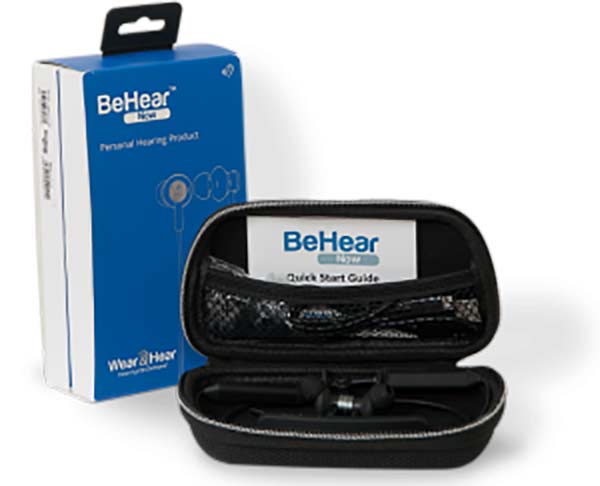
I got a chance back in June to play with the Beta test version of the BeHear Now Bluetooth Headset. At the time I said that the BeHear had some bugs, but when they iron them out, I thought that they would be an amazing piece of kit. Well, they have, and they are. The BeHear Now is a pretty good solution for people with hearing loss who aren’t ready to move forward to hearing aids. Let’s talk about the BeHear.
What Are They?
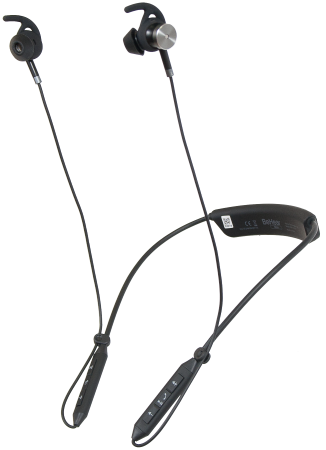
The BeHear Now devices fall within the new Hearables concept. The device is a Bluetooth enabled stereo headset that provides an audio enhancement that you can customise to your hearing needs. That enhancement works with phone calls, audio play, and ambient hearing. The device can be set up to reflect your specific hearing ability which will deliver exactly what you need to hear calls, music and even the speech of someone nearby.
Helping Comprehension
The ListenThrough™ sound enhancement feature of BeHear allows you to clearly hear the sounds around you. It works whether you are listening to streamed audio or not and it suppresses ambient noise while allowing speech and other important sounds, to pass through to your ears. They say “Smart filters in BeHear keep ambient noise out and important sounds in, so you stay connected to the real world”.
The BeHear Now also has a really amazing feature called EasyListen™ that helps to improve your hearing comprehension. While you are talking on the phone or listening to voicemail, the EasyListen™ technology slows down speech to improve intelligibility and it works surprisingly well.
Even though it is slowing down the speech, it doesn’t feel abnormal. It just works really well. On phone calls there doesn’t seem to be any obvious disconnect, the caller doesn’t appear to notice any unusual pauses in the conversation and you get a better chance to hear what is being said.
The BeHear Now device itself is quite sturdy and well built with two in-line remote controls, one for the typical Bluetooth features and the other to control the personal amplification features. The buds themselves have magnetic plates on the outside that ensures the earbuds clamp together in front of your chest when not in your ear.
Test Your Own Hearing
The BeHear Now App comes with a simple to use but quite in-depth, self-administered hearing assessment. The free to download Smartphone application is available on both Google Play and the App Store. The app is easy to use and pretty intuitive, it gives you the opportunity to run a simple or more advanced hearing assessment that will test your ability to hear sounds. Go for the more advanced one, it adds a few frequencies of hearing and it will allow a more personal fit. The assessment is really easy and it is basically a pure tone air conduction test done through the headset using a volume slider for each frequency on the app. Basically, slide the volume slider until the sound is barely audible.
An Audiogram!
I said before that I was surprised at the end of the test procedure to be presented with an audiogram. I have tested my hearing with the best of equipment and the audiogram produced by the BeHear delivered more or less the same results. However, this isn’t a full hearing test, it is an assessment of your ability to hear through air conduction only. A diagnostic hearing test will also include bone conduction testing at a minimum. However, it is probably good enough for a set of earphones.
What Does The Assessment Add?
When you have taken the assessment, the device automatically adjusts voice and audio input controls to suit your hearing levels. It also creates various profiles based on the listening environment (indoors/outdoors, crowded and live music). While the presets are pretty good, the app also allows you to fine tune these profiles in real time any time you feel the need. That is a lot of power to hear better.
Situational Devices
I said it in the original article, these types of devices are really situational devices, they are good for certain situational problems. They are not devices that you would or should wear all the time. However, if you are just looking for help with certain situations, well then devices might be for you. Alternatively, if you have consistent problems and you want to get an idea of what amplification will do for you, these devices will help with that. However, if you have problems hearing that is consistent across your day, well then you really need to consider wearing hearing aids.
My Experience
The finished version does not seem to have any of the bugs I found in the beta version. They delivered amazingly crisp sound across all applications. Phone calls were excellent, especially with the slow down feature, music was crisp and really full, ambient sound was sharp and clear. The noise reduction feature which you can change the level of in the app was pretty good. It basically attacked steady-state noise by turning it down (a bass cut really) but it worked.
The devices are light around the neck and wearing them in my ears caused no issue other than occlusion which you would expect with full earbuds. When you wish to take them out the earbuds hang in front of you and the magnetic plates on the outside of them clamp together to keep them neat. The in-line remotes work as advertised with the amplification remote allowing you to cycle through the different listening profiles etc. Takes a little time to build up touch memory, but once you have, the remotes work really well.
The music experience is excellent, streamed music really was a pleasure to listen to. Streamed audio, in general, was excellent. The software-based problems I faced with the beta version are gone. The devices worked as advertised, the ambient noise feature worked without issue. You still get a little cut in sound when you click into an app on your phone but it is short (milliseconds) and manageable
An Absolutely Fantastic Device
In finishing, I think the finished version are outstanding devices that do what they say. You can’t say better than that. As I said, these are situational devices, ideal and relatively cheap devices to give you a helping hand in particular situations. However, if you think you need to wear them all day, well then you need to start looking at hearing aids.






 Itshearingaidknow