What breed of dog makes the best hearing dog?

I’d always assumed that bigger breeds of dog were used as Hearing Dogs, probably because our own dog (a west highland terrier) is a law unto himself and when I’m out walking him it always seems like the bigger dogs are better behaved.

According to the Hearing Dogs For Deaf People charity the best hearing dogs are Poodles. Apparently they are one of the more intelligent breeds and, “they love to learn and as a result usually excel in their obedience and sound-work training“.

Hearing Dogs For The Deaf are running a blog about Chance, their newest canine recruit, and his trainer Tom. You can follow Chance’s progress from the first day of training on their site.

Buying a hearing aid like buying a TV?

Should buying a hearing aid be like buying a TV or buying a pair of glasses?

When you buy a new TV you can go into your local electronic store and try out a bunch of different models and pick the one you like. You get hands-on with the TV before you part with your money and you can see the differences between them side-by-side. Some people will know the different brands of TV, which ones are better, their strengths and weaknesses, they probably have a favourite brand that they are loyal to.

When you buy a new pair of glasses you get your eyes tested, pick some frames that you like and have the lenses fitted. You might have some choices to make about the lenses – thinner for extra money etc – but it’s mostly a case of you get what the optician is fitting you with.

So where should hearing aid sales be?

At the moment they are sold like glasses. You have your hearing test and you get a recommendation or two from your audiologist and that’s about that. You can pick a colour and a style (BTE, ITC, etc) but not a lot more. I’m guessing that 99% of people buying hearing aids go with their audiologist’s recommendation – there aren’t many that will know the difference between different aids or the brand names that are available.

Don’t get me wrong, I’m not saying that the audiologist’s recommendation is a bad thing. They are working based on the experiences of other customers with the same hearing loss and requirements. So a lot of the time it probably works out and the buyer is happy with their purchase. But could they have got something better?

I’ve said before that I think there are better way to trial hearing aids. I really do believe that having the software from each hearing aid available for the user to try out hands-on and side-by-side will give them a better chance of getting the right hearing aids for them. This would be moving hearing aid sales more towards the TV selling model. It would be a good thing.

I’d love to hear your comments on this. I’d be interested to know if buyers are happy with the way they buy hearing aids at the moment and whether audiologists think they could do something a bit different.

Do you think we’ll ever see the day when people are brand loyal to Phonak, Starkey or Oticon as well as Apple and Sony? Could we ever see a Phonak store opening on high streets? We want to make buying hearing aids an easier process. So we have written an article on the main site that answers a lot of questions about buying hearing aids such as When Do You Need Hearing Aids?
Hearing Families by Dr Efrat Schorr

I just stumbled upon hearingfamilies.com via Twitter and I thought I’d share the link with you. Here’s a bit from Dr Schorr’s about page:

My name is Efrat Schorr and I am a developmental psychologist who specializes in the unique social and emotional development of children with hearing loss.

I received a PhD at the University of Maryland in this field in 2005. My research on the social and emotional development of children with cochlear implants was supported by a grant from the National Institutes of Health (NIH). My work to highlight the importance of social and emotional development has been published in hearing and language journals.

I am the mother of 5 children, aged 14, 12, 8, 5, and 2. Thanks to my oldest child – my son Moshe – who has a hearing loss since birth, I have had the opportunity to live many of the issues that I discuss on this site. Most of the great ideas I have had about the development of children with hearing loss went nowhere at home (I call it “the school of life”!) or at least usually did not work out as I had planned! So many strategies that are discussed here are tried and true.

Earplug sales soar at World Cup

The gossip Web site TMZ.com is reporting that in response to the rampant use of vuvuzela horns during World Cup soccer matches, earplug sales have exploded since the group stage matches began in South Africa last week. 

TMZ has said it spoke with to two major earplug suppliers based in South Africa — Ear Plugs Online and Sheppard Medical — and each are boasting increases in sales.

A rep for EPO told TMZ their sales are up 121% — having sold more than 10,000 sets of plugs and counting.  Sheppard Medical said they’ve moved more than 400,000 sets since kickoff, a 20% increase.

Both companies said they wouldn’t be surprised if they each sold over one million sets by the end of the World Cup.

SOURCE: TMZ via Hearing Review.

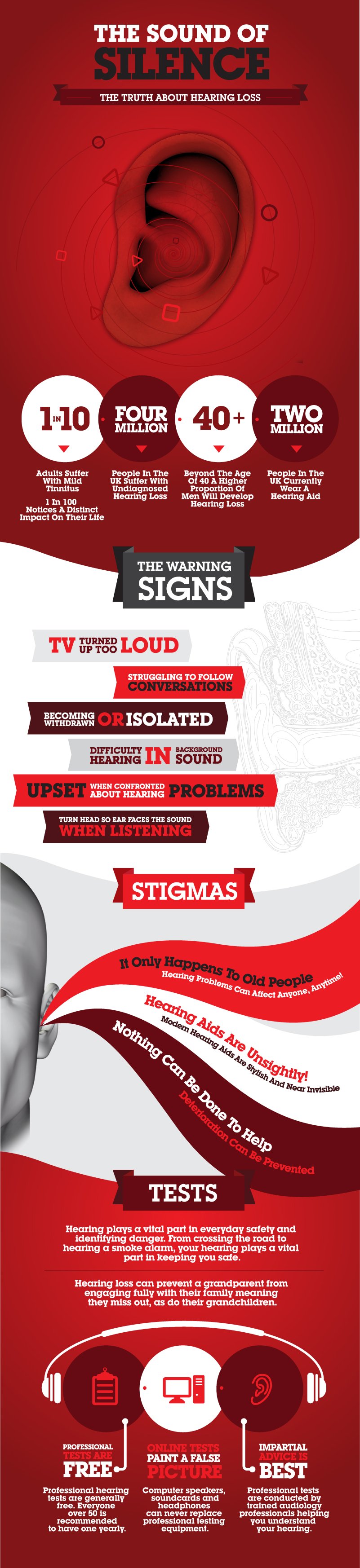
Infographic about hearing loss from Amplifon

Amplifon have produced a very nice infographic about hearing loss. From their site:

Admitting you have hearing loss can be very difficult. Nobody wants to admit they are getting older, but with up to 4 million people in the UK suffering in silence, everyone has a part to play when it comes breaking the stigma associated with hearing problems.

The first step in helping a loved one or yourself is education, so we have put together this visual infographic to help everyone understand more about hearing problems from the facts to the stigmas, to the solutions. We believe that armed with this knowledge you can play a valuable part in ensuring hearing problems are resolved early, and as a family.

Hearing loss infographic

Finding the right audiologist as important as getting the right hearing aid

I get quite a few emails from people asking which hearing aid is best but no-one has ever asked which audiologist is best. I think the second question is just as important as the first, maybe even more so.

When you buy a hearing aid you are paying for the audiologists time as well as for the hearing aid itself. The time costs more than the piece of plastic you will put in your ear and what’s really important for you is that once you’ve been fitted with your new hearing aid you are very likely to be needing a fair bit of that time to make adjustments to the new sounds you are hearing.

You could buy the most expensive hearing aid in the world and get little benefit from it if you don’t have an audiologist who’s prepared to take the time to alter it to your own personal needs. All modern digital aids have a vast array of settings and can be programmed to sound completely differently for each person. Of course, your audiologist needs to programme it to compensate for your hearing loss, but even after that your aid can be made to sound as differently as you want it to be.

Don’t be afraid to use as much of that time that you’ve paid for. You might get lucky and walk out after your first fitting and live happily ever after with your new aids – I’ve never done that, not once. Getting used to wearing a new aid can be tough and takes time, especially with your first pair – and when I say it takes time, I’m talking weeks or months, not hours or days.

A few guidelines for picking the right audiologist

  • Make sure they ask you about yourself before they recommend a hearing aid. They should be asking about the kind of environments you are normally in, what you want to hear better, what kind of things you are having trouble hearing at the moment, how you feel about wearing aids, what you are prepared to wear. That kind of stuff.
  • Make sure they explain your hearing test results to you so that you know how bad you hearing loss is. I always like to get a copy of my test results.
  • Ask lots of questions and be happy with the answers.
  • You might have a particular aid recommended to you – find out why that one is being recommended and which others are also suitable for you. Seems unlikely that there would only be one suitable for you so find out about them all.
  • Make sure you like them! You are going to be making more visits so you have to get on.
  • Find out what the after-sales service is, how often they are available and at what times, and how often are they expecting to see you after your fitting?
  • Make sure they are listening to what you are asking for. They have the knowledge and the expertise to give you the best chance to hear but they don’t know what you are hearing – tell them what’s working for you and what isn’t and make sure they take that into account.

Really, you’ve just got to feel comfortable that you are getting the information and guidance that you need to start getting the most from your new hearing aid.

How loud is the vuvuzela and how likely is it to damage your hearing?

The vuvuzela is the noise weapon of choice for fans at the 2010 World Cup in South Africa.

The long, plastic, trumpet-shaped vuvuzela was found to emit an ear-piercing noise of 127 decibel — louder than a lawnmower (90 decibels) and a chainsaw (100 decibels).

You only need to expose your ears to this level of noise for a few minutes to run the risk of some damage to your hearing. Just a few minutes, and the fans are blasting these things for the entire game, from start to finish – that’s 90 minutes of extreme noise.

The Hear The World organisation tested the vuvuzela in a sound proofed room and compared it to alongside other popular instruments used be sports fans, it was the loudest.

  1. Vuvuzela: 127dB
  2. Air-horn: 123.6dB
  3. Samba drum: 122.2dB
  4. Referee whistle: 121.8dB
  5. Two fans singing: 121.6dB
  6. Gas horn: 121.4dB
  7. Cowbell: 114.9dB
  8. Wooden rattle: 108.2dB
  9. Inflatable fan-sticks: 99.1dB

Remember, the vuvuzela is so loud that you only need to be in earshot someone blasting on one for a few minutes to risk damaging your ears. If you are attending a World Cup game then get yourself some ear plugs or other hearing protection.

How long did it take for you to be happy with the way your hearing aids sound?

Some questions for you, dear reader. I’d love to get some responses to this, I get lots of viewers but rarely any commenters, would love to know what you think!

1. Are you happy with the way your hearing aids sound?

2. If so, how long did it take for the dispenser/audiologist to set your hearing aids up so that you were happy with them? Did they have to re-programme your aids at all to get them how you wanted them?

3. Did you buy the first pair of hearing aids you tried?

4. If you are not happy with the sound, what do you think went wrong and what could be done to make them right for you?

Thanks!

Why I use subtitles even though I don’t really need to

Always using subtitles

I always use subtitles when I’m watching a TV show or a movie. I don’t really need to, I have a moderate-severe bilateral hearing loss and I could turn the TV up enough so that I could hear it.

I mostly watch TV when my wife and daughter have gone to bed so obviously I don’t want the TV blaring out and waking them up, that’s one reason why I always use subtitles, the other reason is:

After a hard day of: straining to hear stuff, trying to stay in the conversation, asking people to repeat themselves, bluffing and guessing what’s been said, just saying yeah when I’ve no idea what they said, reading lips, trying to work out who is talking and trying to work out how loud I’m talking. It’s nice to not have the hassle for a little while.

It’s nice to have some peace and quiet. No stress, no worries about missing anything, the words are right there for me to read without any effort at all.