Let’s talk the pros of Made For iPhone Hearing Devices
Made For iPhone (MFI) hearing solution technology is exceptionally popular. Since GN Resound delivered the original LiNX platform, they have captured the imagination of users. Their popularity has ensured that nearly every major hearing aid brand has one, or is in the process of delivering them. So why would you want them, who are they suitable for and what can they deliver for you?
So, MFI has continued to evolve since the LiNX; Resound is on its third generation of MFI, Starkey is on it’s second while the rest are on their first. Resound was the only provider that offers custom hearing aids, but now, Signia, Oticon and Bernafon offer them too. But only the larger customs are MFI. The evolution of the technology has included the introduction of a new Bluetooth protocol that isn’t as power hungry, and the hearing aid manufacturers have collaborated with Apple to strengthen the relationship between Apple devices and hearings aids.
Improved Apple Software
Apple continues to develop its proprietary hearing aid accessibility software and compatibility with many types of hearing aids. You can access basic controls of any connected hearing aids from the Apple software, however, for the broader feature set, you will need to go to the hearing aid brand’s accompanying app. So, the software is better. Generally, the features offered are better and the connection in many cases is reliable, but what does that mean and who are the devices most suitable for? Pretty much anyone, to be honest, don’t let the technology scare you. Once you have a handle on it, it will change your life.
Honestly, these hearing aids can change your life
Active lifestyle? Like to listen to music or audio-books?
So, do you have an active lifestyle? Do you like to run, exercise or take long and glorious walks? What about long drives or relaxing with an audio-book? Maybe you like to listen to music? If you do, the Made For iPhone hearing aids are a godsend. The connection from the iPhone direct to the hearing aids means that you get crystal clear audio without the need for a streamer device. That means fewer devices to carry, charge and handle.
No Streamer!
A streamer is a neck-worn device that is used to bounce signals from a phone or connected device to a set of hearing aids. The neck worn streamer is usually an excellent piece of technology and offers outstanding audio. However, it’s another device you have to worry about. With MFI, there is no streamer, so it is just you, your run, your iPhone and your hearing aids, oh and Blondie on full tilt, whoop whoop!
Hahahaha, forgive me, but there is a lot to be said for the freedom of one less device. However, the streamer option is pretty functional, might be a nuisance, but very useful. Made for iPhone technologies eliminate the need for this extra device by syncing the aids directly to an iPhone. The key here though is that it is Made For iPhone, the clue is in the name, if you aren’t an Apple fanboy, you will need a streamer to connect to your Android phone.
Use a mobile phone again, with ease!
My business partner Steve has a severe hearing loss; he never liked speaking on the phone. He didn’t do land-line let alone a mobile phone. Bluetooth hearing aids have changed his life, and that is no exaggeration. Many people with hearing loss have real problems with talking on mobile phones. The Made for iPhone hearing technology provides a person with a hearing loss the ability to use an iPhone the same way as a person without a hearing loss. I know that many people with hearing loss have to turn the call volume up to the highest, or even use the speaker phone feature. With MFI, you answer the call, and the voice appears in your hearing aids!
So many features available with the Made For iPhone
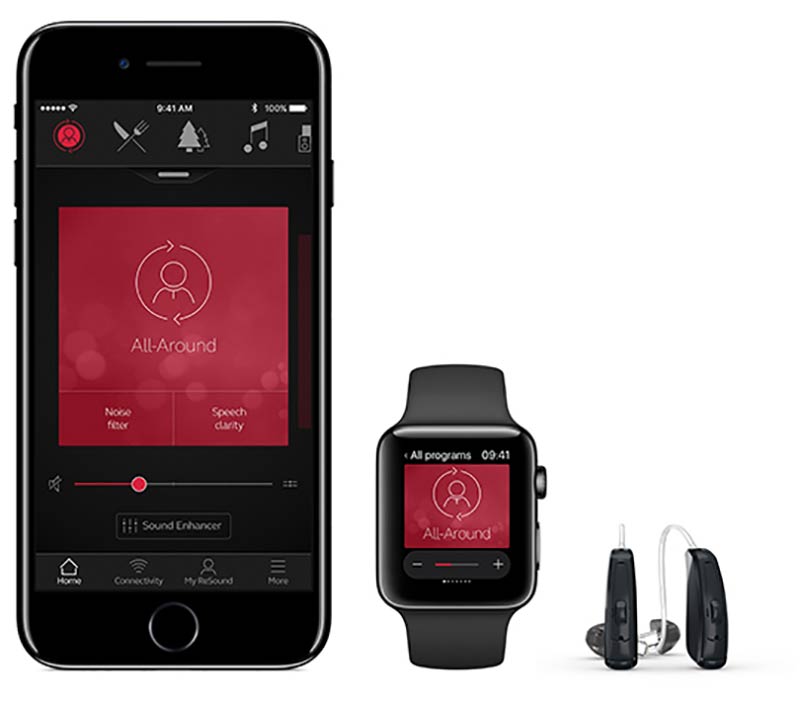
Like I said earlier, the deepening connection between ios (apple software) and the hearing aid technology means that there are a lot of significant features available. The pairing of the iPhone allows the hearing aid user to change the volume; check battery life; pair and connect audio from an iOS device to an aid, and switch from different programme presets to pick up speech in specific situations better. The iPhone also offers an easy-to-use feature where the microphone of the iPhone can pick up the person speaking and transfer it instantly to the hearing aids. All you have to do is turn the feature on and move the phone microphone closer to the speaker.
More Control
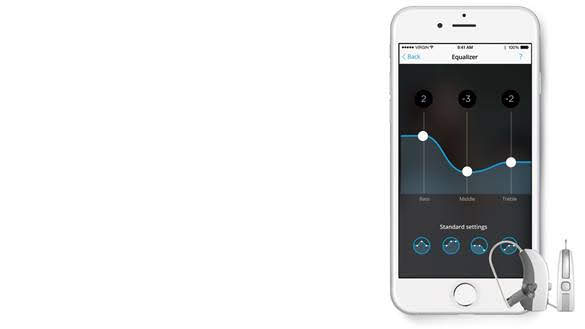
Each of the hearing aid brands offers more in-depth control over the hearing aids with their MFI app. Easily changing programmes, adjusting the sound and making features more or less aggressive are just some of the things that you can do. All of this control allows you a better experience if you want it. If you don’t, don’t worry about it, the automation within the hearing aids will continue to do its job.
Seamless automatic changes to your hearing aid
One of the exciting features with Made For iPhone hearing aids is Geotagging. Geotagging allows you to set a specific programme customisation for a particular physical location. What it means is that the hearing aids will automatically change to the settings you have set for the place you are in. That’s real power for the user, set up the perfect setting for a particular location and then it just automatically happens based on the location settings of the phone. How cool is that?
Find my damned hearing aids!
Yup, people lose their hearing aids all the time, more than irritating. They cost a lot of money, they are small, and it can be damned hard to remember exactly where you have been. If you have lost the hearing aids within the range of Bluetooth, the smartphone application from the hearing aid manufacturer can help locate them. Even if the hearing aid batteries are dead, the phone has stored the last GPS coordinates of where they were last paired with the phone to help locate them. The system is easy to use and will give you pretty decent location information to aid you finding them.
“Hey, here is my iPhone controlled hearing aids!” said no geriatric ever
Usually pretty damned discreet
Most of the Made For iPhone hearing aids are discreet, even the behind the ear types. So if discretion is what you are after, they are pretty good options. But more than that, they are cutting edge tech, so honestly, how old are you going to look? “Hey, here is my iPhone controlled hearing aids!” said no geriatric ever. I jest, but, if you are caught in that worried about looking old spiral, (you really shouldn’t be, honestly, I am 47, and I wear hearing aids, Steve is younger, age has no relevance) how cool is cutting edge tech like Made For iPhone?
Cutting edge tech
Recently there have been great changes within the Made For iPhone hearing aid sphere. Resound have introduced an in-depth remote assistance feature for their MFI hearing aids. Signia have decided to take advantage of the sensors in the iPhone to ensure that the hearing aids know what you are doing and deliver a better experience. Widex are delivering complete hearing aid firmware upgrades directly through their app. The tech is on the cutting edge and really is only limited by the imagination of the engineers.
It is cutting edge tech, but you know what? Don’t be afraid of it. It is easy to use and it delivers so much. Any learning curve that there is, is worth every minute. You know, the biggest obstacle between you and technology, is often the voices in your head. “You won’t be able”, You can’t”, balderdash, dive in, get your professional to show you how to make these babies hum. You will be glad you did. There is nothing like burbling at the Grandchildren on Facetime and being able to hear them burble back, take it from someone who knows.
If you like what you see, share it so others can benefit
Find An Independent Hearing Aid Centre in Your Area
Arrange a consultation with a trusted Independent hearing healthcare professional in your area
Update: I am afraid I lied to you in the original article, although in my defence it was because someone else gave me bad information. I have now corrected the article. Unitron don’t in fact use Binaural Compression. In point of fact, how they do localisation is both different and fascinating, at least for us nerds. The Article has been updated to reflect the mistake and clarify the technology used.
I finally got to play with the latest Unitron Tempus hearing aids recently and I have to say they impressed me a great deal. I have been wearing Unitron North Moxi Fit Pros for over a year now. I have always been pretty happy with the help that they delivered me in noisier situations. So I was interested to see what the Tempus would offer over and above the North. I have to say Unitron didn’t disappoint, the aids performed exceptionally well with multiple noise sources and the spatial awareness was outstanding.
Understanding Depth & Space
During the demonstration, the reps from Unitron did some spatial awareness and depth of space exercises. In essence spatial awareness in this context is an awareness of where a sound is coming from in your environment. The depth factor is an understanding of how far the sound is away from you and how the sound changes as it moves towards or away from you. The Tempus delivered quite amazing levels of both.
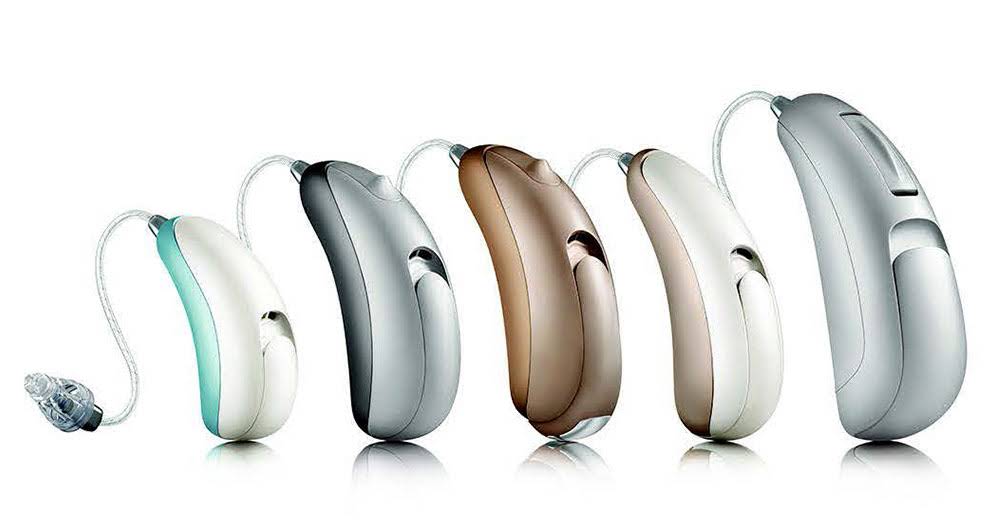
The Moxi Tempus Range
Why is it important?
I am glad you asked me that! These two auditory cues are important to you because it is a replication of how you naturally hear. Providing you these natural cues in the way you would normally hear them allows your brain the best information possible. The brain is quite an astonishing bit of kit. Give it all the right information and it will do its thing exceptionally well. What was always missing from hearing aids was the delivery of sound in a natural way. Unitron is not the first to do this, however, this is the first time that Unitron have done it so comprehensively.
How do they do it Geoff?
Well, they do it by preserving all of the auditory cues that exist. They do that by a feature that has become to be known as Binaural Compression. Update: No they don’t I am a fibber, they do it using inputs through the microphones and a feature they call Speech Locator. Widex was the first to deliver true Binaural Compression with the Clear device back in 2009. Their Binaural Compression feature is now on its third generation and to be honest with you I haven’t worn Widex hearing aids in a long time so I don’t really know how this compares. I shall try and dig up a pair and let you know.
Sorry I digress, back to the feature. The feature works by ensuring that two hearing aids communicate constantly. They pass huge volumes of sound information between each other and collectively make a decision about how sound is presented to you. This is all done instantaneously and in the highest level of technology, it will affect almost every setting and feature. It is this astonishing power that allows the aids to preserve the natural cues. Ensuring that you get the best representation of natural sound available while also using the power of the directionality features and the noise management feature.
Update: Ignore the last paragraph, here is actually how they do it. The compression used in Unitron hearing aids does not react as much to the amount of change in the input level as it does to the rate of change in the input level. As such, both hearing aids are usually very well synchronised without the need of binaural communication. But even more important than that is the fact that they manage their Spatial Awareness technology completely differently than any other hearing aid brand.
Since the Era they have used their feature the Speech Locator to determine the direction of speech in any background noise or crowd listening environment. In Tempus for example, they know with extremely high accuracy whether speech is coming from the front, right, left or behind in background noise. Historically, all hearing aids use gain models which assume the speech is coming from the front because there was no other choice.
But the Speech Locator can determine where speech is coming from and Unitron use this to adaptively change the gain model of the hearing aids on both sides of the head from microphones at the top of the ear to more accurately reflect the real ear transfer function to the eardrum that the person would normally perceive without hearing aids on.
Combine this with the new microphone technology they have introduced which also adaptively changes on the basis of the direction of speech, and you get Spatial Awareness.
So, Unitron are delivering the all of the benefits of Binaural Compression without the physical data connection between hearing aids. To be really honest with you, that is pretty amazing and I would not believe it, unless I had experienced it. In my mind, it actually makes the hearing aids better, but that is just a nerdy thing, as a consumer all you really need to know is they rock! I remember when the concept was first presented to me in 2009, I remember thinking that hearing aids would never be the same again. It was an exponential leap forward and is probably most responsible for the huge leap in satisfaction with hearing aids. Of course having them fitted and verified properly probably helps as well.
Even better clarity in noise
Anyway, the Tempus delivered even better clarity in noise over and above the Norths I wear. I was able to listen to the demonstration twice, once through the Tempus and the second time with my Norths on. I could definitely see the difference in noise. Speech was clearer and noise less of an issue with the Tempus. I mean the noise was still there, but I really could understand clearly where the noise was. More importantly, I could tell where the speaker I was interested in was. It meant that I could focus much easier on their voice. Pretty impressive stuff really.
This level of spatial awareness is only available in the new Tempus Pro range. So to get the full effect of the localisation and depth you need to go high. However, there are lesser but worthy versions of it in the 800 and 700 range. The difference between them is that at the Pro level the features are dynamic which basically means constantly changing in relation to input. The two lower ranges are far less dynamic.
Pretty Damn Good
So, I thought the aids were pretty damn good to be honest with you, lovely clean sound (as I would expect). Amazing localisation and depth of sound and pretty damn good in noise. If you have any questions give me a shout. The should be available across the world right now. I know for certain that it is available in the USA, the United Kingdom and since last Monday in Ireland.
Flex:trial them babies!
Unitron should be making Flex:trial versions of the Tempus available as we speak. The Flex:trial system is a unique Unitron technology, it allows us to programme up a set of test aids to the technology level that you wish to trial. When combined with another feature they offer called Log it all, it allows us (the Professional) to get a clear view of your lifestyle needs based on real world information. So go see your local Professional, ask for a trial of the aids and see for yourself!
Just in case anyone has any sneaky suspicions and to clear it up, Unitron gave us no money or incentives for this or any other endorsement. Of course if they are feeling generous I need a new Tesla Motor Car???????
If you like what you see, share it so others can benefit
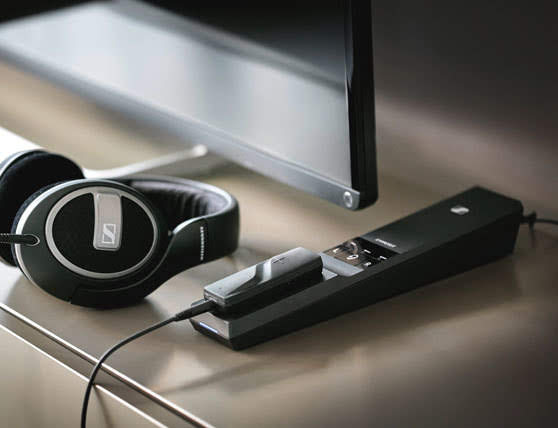
A Few months ago we talked about different strategies for dealing with TV audio issues if you were having problems. As I said before, I see many people with quite mild hearing losses that have some problems in some situations. The problems, or the hearing loss don’t really necessitate hearing aids, however, they are problems nonetheless. We spoke about how the Sennheiser RS 5000 system could help in the article “Can’t Hear The TV, When Hearing Aids Aren’t The Answer“. Today I would like to take a look at a similar, if different offering from Sennheiser, the Flex 5000 digital wireless system.
Sennheiser
Flex 5000 Digital Wireless Audio System
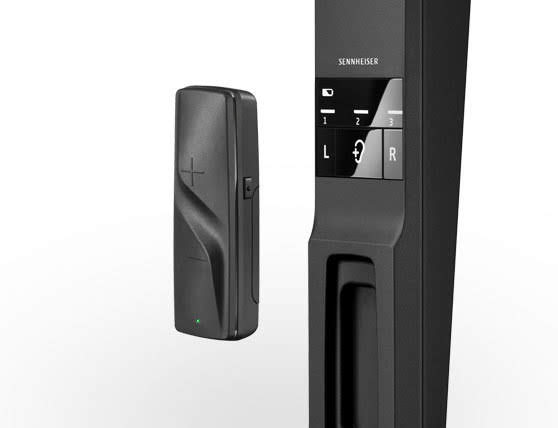
The Flex 5000 system consists of a base station transmitter which is also a charger unit for the wireless clip on receiver. The base station can connect to your TV or other audio source and the wireless receiver sits onto it to charge. Like it’s brother the RS 5000, it is a particularly smart piece of kit that Sennheiser have designed to help people who have difficulty hearing the TV clearly.
Hear Dialogue, Not Background Music
As with the RS, the unit uses a new TV Speech Intelligibility feature to deliver better clarity for people with mild hearing loss. The feature works by making speech easier to understand. They have designed it to dynamically reduce that irritating background audio that interferes with the spoken word. The system is easy to set up and use and offers outstanding audio quality.
Easy To Set Up, Easy To Use, Fantastic Audio Quality
What’s in the box:
Wireless Clip On Receiver Unit with built-in Li-Pol rechargeable battery
MX 475 Earphones
Docking station
Power supply unit with country adapters for EU, UK, US and AUS TV
Connection cable for 3,5mm headphone audio out
TV Optical cable for digital audio out
Instruction manual
Setting it up
The set up is pretty easy, plug the base station into a wall socket and connect your TV to it. You have a choice of connections included and it will connect with both digital and analog TV outputs. I used both the analog connection with the included 3.5mm cable and the digital audio connection. Both connections delivered pretty outstanding audio quality. I used several inputs including the TV, my stereo system and even my Android phone.
The Receiver Unit
The clip on receiver unit is light weight and allows the connection of any headphones. While the included MX475 earphones were pretty good, I connected a set of Sennheiser headphones I have to the unit. This is the beauty of the Flex, you can connect any headphones to it.
The receiver allows you to hear the transmitted audio within a range of up to 30 m. I tested it out walking around the house, into the front and back garden and got no audio drop out. As with the RS 5000 it will also deliver up to 12 hours of playing time.
The receiver is ultralight. it has an auto off function and when not in use, it just switches itself off. You can also adjust the volume of sound on the receiver and change your hearing profiles.
3 hearing profiles and balancing the sound
The Flex 5000 offers three hearing profiles to choose from, which deliver clearest speech and a great music. You can also adjust the left and right volume separately for a pleasant and balanced sound. As with the RS I looked at, I think this is a great feature for someone who has an asymetrical hearing loss.
My Experience on Test
So first of all, it was easy to set up and I had it up and running in a couple of minutes. It is light and comfortable and I wore it for hours without any issues.
Hearing profile one
This profile boosts low frequency sounds and takes the edge slightly off high frequencies. This profile is a great one for music listening, gave me plenty of bass and a full sound.
Hearing Profile two
They have set this listening profile to boost high frequencies quite strongly. It delivers brilliance in sound providing exceptional clarity. In speech situations it delivers clear high frequency speech sounds. In music, it gives music real crispness, this is an exceptionally good profile for people with mild high frequency hearing loss. It will deliver the speech input they need and correct music somewhat for them.
Hearing profile three
This profile lowers low frequency sounds, acting in a similar way to a noise reduction system. This reduces the chance of low frequency sounds masking the high frequencies. This allows high frequency sound to be clear.
As with my earlier experience with the RS 5000, I was happy with the profiles and they did exactly what they said. I listened to some music without any of the hearing profiles and was impressed with the sound quality. Although you would expect that from a brand like Sennheiser. Hearing profile one really delivered a nice music experience. the bass was great while the treble sounds remained clear. Although my wife is not happy with my rendition of Queen’s “Don’t Stop Me Now”. Apparently I sound like a bag of cats in serious distress. The two hearing profiles also delivered. I used hearing profile one during a couple of TV programmes that were primarily speech based. It ensured that speech was crisp and clear even when heavily accented.
I used both hearing profile two and three during a couple of films and TV shows.
To be honest I was happy with both. But, I could see where hearing profile three lowered the background sound allowing speech to be clearer. It did so without making the sound un-natural in anyway which was also great.
Great Solution for people with mild hearing loss
People with mild hearing loss still have problems with audio. While a set of hearing aids may not be a solution, they could still do with some help. I think the Flex 5000 and the RS 5000 are great devices for people with mild hearing loss looking for a solution for the TV. You can listen to your TV programmes at your own volume without interfering with anyone else and they are a financially manageable solution to your main problem. In finishing, this is definitely another device that I will add to my growing list to discuss with people who have mild hearing loss and problems with the TV. The Flex 5000 can be purchased on Amazon for as little as £179 and the RS 5000 can be bought for £229.
If you like what you see, share it so others can benefit
Find An Independent Hearing Aid Centre in Your Area
Arrange a consultation with a trusted Independent hearing healthcare professional in your area
Hearing aids and ear wax buildups go hand in hand, like jelly and ice cream, but not nearly as nice. But why? What causes the ear wax build-up and why is it so much of a problem? Let’s talk about hearing aids and ear wax, but first, let’s talk about the natural process of ear cleaning.
Ear Wax Migratory Process
Ear wax is generally not a problem for most of us, it is simply expelled from the ear in a natural process called the migratory process. Basically, the skin of the ear canal grows outwards from the centre of the eardrum towards the outer ear. As this happens, it brings the ear wax with it and it just basically falls out.
Interfering With The Natural Process
Sometimes, something interferes with this natural process, more often than not, it is the person shoving something like an earbud in their ear. This interferes with the migratory process and ear wax begins to build up. When it builds up enough, it occludes the ear canal and you will need to have it removed.
Unfortunately, Hearing Aids Interfere With The normal ear wax Migratory Process
Hearing Aids Can Cause Ear Wax Build Up
Yes, you probably guessed it from the last paragraph, putting hearing aids in your ears can also affect the ear wax migratory process. So, unfortunately, in many cases, hearing aids go right along with ear wax build-up. That’s why many hearing healthcare professionals offer their Patients ear wax removal as part of their package when they buy hearing aids.
Important to Get Ear Wax Removed
It is important when you are wearing hearing aids that you get ear wax build ups removed semi-regularly. How regularly depends on you. Some people hardly produce ear wax, others seem to over produce it. The real problem is that hearing aids do not like ear wax, ear wax can cause a host of problems for hearing aids.
Ear Wax Kills Hearing Aids
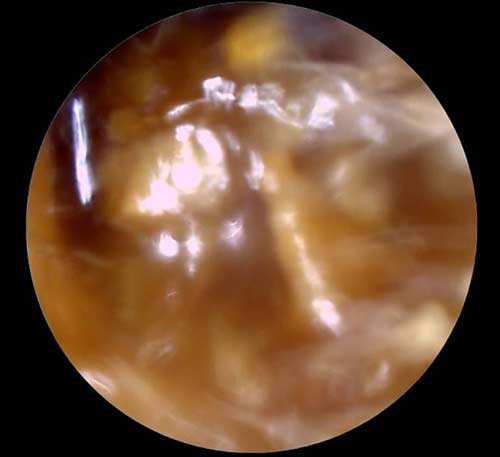
The biggest problem is that ear wax can get into the speaker part of hearing aids and kill them. In fact, ear wax is one of the leading causes of hearing aid failure. It is probably the biggest reason for hearing aid repairs. Hearing aid electronics do not like ear wax and never the twain should meet. That is why any hearing aid that has the speaker placed in your ear canal has a wax guard. In order to protect your hearing aids, you need to follow a process to protect them.
Hearing Aid Clean and Care
It is important that you follow a hearing aid clean and care process to ensure you protect your investment. The process involves drying and cleaning your hearing aids. In essence, you should wipe your hearing aids with a clean dry cloth to remove oil and ear wax. You should take careful note of your wax filter and change it when needed. You should invest in a drying kit, simple kits will cost you not much more than a tenner, and they will ensure your hearing aids keep going for longer.
Change Your Wax Guards
If you want to keep your hearing aids in tip-top shape, make sure you change your wax guards when you need to. The wax guard is the only thing that keeps wax out of the speaker of your hearing aid. Usually, they do a fantastic job, however, if you leave it too long between changes the wax guard can fail and allow ear wax past.
Make a visual inspection of your wax filter, if it is packed with wax, use the brush that came with your cleaning kit on it to try and dislodge it. This is better done in the morning because usually the ear wax will have dried overnight and will be easier to dislodge. If you can’t get it all out, well then it is time to change the wax guard.
Ear Wax Build-Up Causes Hearing Aid Whistling
Ear wax build-up in the ear canal can also cause a hearing aid to whistle or squeal. Although ear wax isn’t the only reason a hearing aid squeals, it is one of the biggest causes. Having the ear wax removed will usually solve the problem.
So, ear wax and hearing aids go together, however, you need to make sure that you stay on top of it. Your hearing health professional should be seeing you on a regular basis to check your ear health among other things. You need to make sure that you attend your appointments, doing so ensures that your professional can stay on top of your ear wax and that your hearing aids continue to work effectively. It pays off in real money terms, the better the ongoing care, the less chance your hearing aids will fail.
If you like what you see, share it so others can benefit
Not before time, Resound Announces New Product Launch
It seems like I have been waiting for this forever, Resound have announced the launch of their new product finally. The word was we would see it at the end of April and the word was right. The official launch in the United Kingdom is at the end of April and we will learn more about the devices then. However, the press release has some tantalizing details. Unfortunately it doesn’t mention any health tracking capabilities, which I was excited about the possibility of. However, what it does talk about is good enough, let’s dive into the official announcement.
Resound are now firmly seen as one of the very best hearing aid brands . So, they have announced what they are calling the revolutionary ReSound LiNX 3D™. They say that it will take Smart Hearing to new levels to enable people with hearing loss to hear more, do more and be more anywhere in life. So that is the hyperbole over, let’s take a look at what we know about the advances.
A New Hearing Care Experience
Tele health has been a major factor recently in the hearing aid world, Signia in particular have gone all out with it with some success. With the launch of the new platform GN Resound is bringing tele health to GN products for the first time ever. In essence, they think that it will bring convenience and efficiency for both you the user and the professional that fits them. I would tend to agree, but it depends on the amount of power that a tele health system offers.
They say that their new hearing care solution offers remote fine-tuning and remote hearing aid updates enabled by GN’s proprietary and secure cloud solution. What is interesting here is that they say the hearing care professional can make all fine-tunings remotely to provide a better hearing experience for the user and it delivers complete remote fine-tuning capabilities that allows users to stay in touch with their hearing care professional wherever they are, receiving hearing care and getting new settings via the cloud without having to schedule and travel for a clinic appointment.
This would indicate to me that the fine tuning capability must be pretty powerful and all encompassing. They also said that only after an initial fit in the clinic, the user can request assistance for any fine-tuning of their settings wherever they are. Of course to deliver all of this, there has to be an app that allows communication between the User and the professional which also facilitates the fine tuning capabilities.
ReSound LiNX 3D is the only device with complete remote fine-tuning capabilities that allows users to stay in touch with their hearing care professional wherever they are, receiving hearing care and getting new settings via the cloud without having to schedule and travel for a clinic appointment.
That App I was Talking About
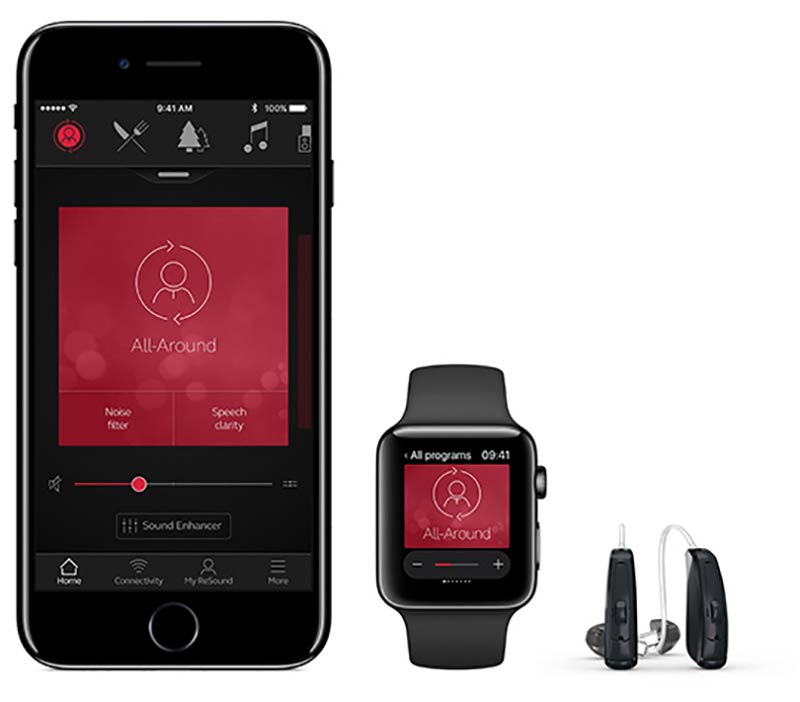
A new app will allow users to easily personalize and control their sound at any time on-the-go directly from a smartphone (iPhone, Apple Watch and selected Android models). The app empowers users to take even more control of their hearing experience through a built-in guidance and coaching feature, and gives users direct access to their hearing care professional for efficient optimization without the need for an appointment in a clinic.
Sound Quality Improvements
All of the manufacturers lately have gone mad with percentages, Resound is no different. They have updated their 2.4 GHz wireless technology (on it’s fifth version) and their binaural directionality (3rd version). This is in fact an underlying part of the naming of the devices, LiNX 3D. They say that the upgrades will deliver clear, natural sound, exceptional speech understanding and the best sense of where sounds are coming from. It will deliver what they are calling 360-degree audibility and awareness in quiet and speech-only situations, improved hearing in noise when speech is in the front and optimized audibility of surrounding sounds. Hence 3D. the figures on improvement are:
is up to 50% better at identifying speech across various environments
enables users to hear up to 80% more of the sounds around them, and
enables users to understand up to 40% more speech in noise
Exciting Times
The capabilities they are talking about are pretty exciting, I mean full control remote fine tuning is a bit of a dream for me. It would mean that I could get real time feedback from a user while fine tuning is undertaken remotely. Something which means real benefit for users and more importantly convenience.
Like I said, no word on integrated health tracking but it was just a dream of mine. Maybe next time? The launch to the UK and Irish market is at the end of April, when the full details come out, we will let you know. You can read the full GN statement below.
Announcing ReSound LiNX 3D™: GN Pioneers a New Hearing Care Experience
Today, GN Hearing unveiled the revolutionary ReSound LiNX 3D™, taking Smart Hearing to new levels to enable people with hearing loss to hear more, do more and be more anywhere in life.
GN Hearing’s comprehensive ecosystem seamlessly connects hearing aids, all wireless accessories and smartphone apps to make everything work together. With the introduction of ReSound LiNX 3D and the ReSound Smart Fit™ software, an entirely new hearing care experience is made possible. These breakthroughs are developed with audiological insights and the latest advancements in technology to bring more convenience and efficiency than ever before.
The new hearing care solution offers remote fine-tuning and remote hearing aid updates enabled by GN’s proprietary and secure cloud solution. After an initial fit in the clinic, the user can request assistance for any fine-tuning of their settings wherever they are. The hearing care professional can make all fine-tunings remotely to provide a better hearing experience for the user.
The new ReSound LiNX 3D and the corresponding Beltone Trust™ hearing aids and the new cloud integration offer unprecedented benefits to hearing aid users and to hearing care professionals across three key dimensions:
Sound Quality – hear more than you ever thought possible
With ReSound LiNX 3D – GN Hearing’s 5th generation 2.4 GHz wireless technology and 3rd generation binaural directionality – hearing aid users will experience excellent sound quality and will hear more than they ever thought possible. ReSound LiNX 3D delivers clear, natural sound, exceptional speech understanding and the best sense of where sounds are coming from. Users will experience 360-degree audibility and awareness in quiet and speech-only situations, improved hearing in noise when speech is in the front and optimized audibility of surrounding sounds.
Studies* show that compared to premium hearing aids from competitive brands, ReSound LiNX 3D:
is up to 50% better at identifying speech across various environments
enables users to hear up to 80% more of the sounds around them, and
enables users to understand up to 40% more speech in noise
An enhanced fitting experience
Together with audiologists, GN Hearing has developed a more efficient and intuitive fitting software, which simplifies the process where the hearing care professional fits and adjusts the hearing aid to the user. This faster and more convenient wireless fitting will save time for both the user and the hearing care professional. This gives hearing care professionals more time for valuable user counselling. Also, a new app allows users to easily personalize and control their sound at any time on-the-go directly from a smartphone (iPhone, Apple Watch and selected Android models). The app empowers users to take even more control of their hearing experience through a built-in guidance and coaching feature, and gives users direct access to their hearing care professional for efficient optimization without the need for an appointment in a clinic.
Hearing care wherever you are
ReSound LiNX 3D is the only device with complete remote fine-tuning capabilities that allows users to stay in touch with their hearing care professional wherever they are, receiving hearing care and getting new settings via the cloud without having to schedule and travel for a clinic appointment. The unique cloud integration enables hearing care professionals to stay connected with users no matter where they are. Users will be able to share feedback about any hearing difficulty as the situation occurs, rather than trying to remember how to describe it during an adjustment visit to the clinic. Hearing care professionals will have the freedom to offer follow-up services remotely – saving time for both hearing care professionals and users, and creating opportunities for even higher user satisfaction.
“GN Hearing is thrilled to introduce a quantum leap in sound technologies that will enable users to hear more than they ever thought possible. We are excited to deliver completely new dimensions in hearing care that all leads to a better hearing experience for the user and empowers the hearing care professional to better serve their clients. ReSound LiNX 3D transforms the hearing care industry, meets the modern user’s high demands for superb sound quality and fulfils our company purpose of making life sound better,” said Anders Hedegaard, CEO of GN Hearing.
ReSound LiNX 3D – and the corresponding Beltone Trust™ – will launch in all primary markets around the world with a full product family in the Top and Plus performance levels. GN Hearing’s 2017 guidance already included the ReSound LiNX 3D launch.
If you like what you see, share it so others can benefit
So you probably recognise the situation, you are sitting there minding your own business and then someone turns to you and says your hearing aid is whistling. The shock and horror sets in. Or, you lean in to hug someone you love and suddenly there is an ear-splitting squeal. While this was a once a normal part of wearing a hearing aid, it isn’t really any longer. Modern hearing aids should not generally whistle, however, there are times that it may still happen. Let’s talk about feedback, what it is, how it happens and what may be causing it. Welcome to the world of hearing aid feedback.
What is Feedback
The whistling or squealing noise that is sometimes emitted from hearing aids is called auditory feedback or just, feedback. Hearing aid feedback is always a seal problem, no I don’t mean fluffy ocean-going animals I mean seal as in tight. It is caused by amplified sound that leaves your ear and finds its way back into the microphone.
From there, the sound is re-amplified by the hearing aid system which causes that annoying whistle. It is exactly the same effect caused by people with microphones on stage going to close to the speakers. The problem can occur when you put your hand up to your ear, when you’re hugging someone, while you’re inserting or removing your hearing aid, when you wear a hat, a headscarf or when you sit in an enveloping chair.
Occasional hearing aid feedback is perfectly normal and you should be able to stop it by making sure your hearing aid is in your ear properly. However, if you are experiencing feedback often there may be something else wrong with your hearing aid. If you hear whistling when you move your jaw to chew or talk or turn your head you should visit your hearing professional.
Hearing Aid Feedback Managers
Most modern hearing aids have very good feedback managers which ensures that for much of the time whistling is a thing of the past. Both Phonak and Starkey are recognised as offering the very best Feedback Management systems. However, there is always a however right! Sometimes even modern hearing aids might whistle. Before I explain why I want to explain why modern hearing aids whistle less.
In modern hearing aids the feedback management system, a hearing aid feature that you can read about here, is set during the fitting. The Professional can see the chances of feedback happening and whether or not there is enough amplification before feedback to suit your hearing loss. At that stage, if there isn’t enough amplification they will change the fitting in your ear, be it a tip or a mould.
Once that is done satisfactorily, there should be no possibility of feedback unless something changes. Usually, that means a physical change, which brings me onto.
Why Do Hearing Aids Squeal?
As I said, there has been some physical change to the setup of the hearing aid or the fit in your ear. Here are some of the reasons for a whistling hearing aid:
Not in Properly: Put Your Damn Hearing aid tip in your ear people! More often than not, when I see feedback issues it is because Users are not placing the tip of the hearing aid (on RICs and Thin Tube BTEs) deep enough in their canal. Sometimes, Users aren’t getting their moulds into their ear properly when they are wearing BTEs, I have even seen Users put theirs In The Ear hearing aids upside down or in the wrong ears. The fix is simply getting them in the right ears and make sure they are in properly.
Bad Mould Fit: Sometimes with moulds the ear has changed over the years which means they just don’t fit properly anymore. An ill-fitting ear mould can allow too much sound to leak out making the hearing aids whistle. If this is the case, you need to see your professional to get a new ear mould.
A Build Up of Wax: A buildup of earwax in your ear canal means that more of the sound being presented by the hearing aid bounces or leaks out of the ear. The increase in the sound being forced back out of the ear changes the set feedback path, the feature can’t cope and you get a high-pitched whistle. The only answer to this one is to get the earwax removed.
Turning Up The Volume: This is less of a problem than it once was as feedback management systems are smarter and better than they ever were. However, sometimes turning up the volume on your hearing aids will increase the sound being forced back out of the ear which changes the set feedback path, the feature can’t cope and you get a high-pitched whistle. Turn down the volume and talk to your professional about why you needed to turn it up so high.
A Cap or a Scarf: Sometimes wearing a cap or covering the hearing aids with a scarf can change the feedback path and make the hearing aids whistle. Giving someone a hug has a similar effect and may result in a short whistle. This can be a little inescapable with some types of fittings such as open fit. However, it should be at a minimum.
A Split in The Tube: Any split in the tube that joins a Behind The Ear hearing aid to the ear will cause whistling. There are two types of tube, a thicker traditional type, and the slim tube. The traditional plastic tube that joins some hearing aids to the ear mould can harden, shrink and split. The new slim tubes can become worn with use and split. The answer is simply to replace the tube.
That isn’t a full list, but it is certainly a list of the usual suspects as they say. On occasion, I have seen hearing aids feedback for no other reason than something has gone wrong with them. That is rare though, more often than not, it is a problem with the physical seal with the ear.
If you like what you see, share it so others can benefit
While hearing aids are getting better and better, the true treatment many would chase is a cure for hearing loss. There have been many people working towards the magic answer for hearing loss for many years. There have been many successful steps towards that goal, but the cure still eludes us. In this article, Cassie Lomax talks about hearing loss, its effects and the latest studies in the search for a permanent solution to hearing loss. Over to Cassie.
There are 11 million people in the UK with hearing loss. This figure is expected to climb to 15.6 million by 2035. Roughly 900,000 people are affected with moderate to severe hearing impairment. The prevalence of hearing loss increases as an individual age with 40% of those over 50 years affected rising to 71% for people 70 years old and above (Action on Hearing Loss). For Brits dealing with deafness, the use of hearing aids has been the most effective treatment. However, research has been ongoing in the last century and the University College London scientists are working on clinical trials that could restore hearing amongst deaf people.
Hearing Loss is a Public Health and Social Concern
Hearing impairment has many consequences on those touched by the condition. Hearing loss causes depression, anxiety, and emotional distress. Research also indicates that severe hearing loss over a 10-year period can increase the risk of dementia by 5 times (Rosenberg, 2017). There are also hidden disadvantages of hearing loss with 70% of respondents saying that their impairment prevented them from doing their job properly or reach their full potential (Hidden Disadvantage Report). On the other hand, 35% of employers do not feel confident in hiring a person with a hearing loss according to a 2017 YouGov poll commissioned by Action on Hearing Loss.
The Use of Hearing Aids Improves Lives
To date, hearing aids are the most successful treatment method for an impairment. Evidence also suggests that the risk of loneliness is reduced when a hearing piece is worn. The risk of dementia is lowered as well when hearing aids are fitted. Hearing pieces are warning devices for the elderly alerting them to dangers such as the sound of traffic or machines in operation. Unfortunately, more people could benefit from hearing devices because, at present, only 40% of those with the handicap have them (Action on Hearing Loss).
Trial Injections May Alter the Lives of Deaf People Drastically
Two medical clinical trials (UK and US) were started a few months back to find revolutionary medicines that could help people with a hearing loss. Both kinds of research involve jabbing subjects with experimental medication in the ear to repair damaged cells. Scientists believe that the drug can promote the growth of new ‘hair cells’ deep in the ear. A healthy ear has good sensory cells that look like tiny hairs. The hair transforms the sounds that enter through the cochlea into electrical impulses that move from the aural nerve to the brain. Hair cells are damaged by ageing, sound pollution, and infection. Until these experiments, it was believed that these ‘hairs’ were impossible to regenerate.
These clinical trials, if successful, can provide drastic relief to people with a hearing loss. The risk of dementia, depression, falls and accidents are reduced considerably. Hearing restoration can improve the quality of human life and well-being dramatically.
If you like what you see, share it so others can benefit
The latest Made For iPhone hearing aid range is a full line platform with custom hearing aids, receiver in canal hearing aids and behind the ear hearing aids. In essence they have the right one for you no matter what style you are looking for. However, going for custom devices means a trade off, more discretion, but less features. Let’s take a look at each device model in the LiNX 3D range and what it can offer. The features mentioned here are dependent on the technology level you choose.
I purposely have not gone into detail about the features on this article, however, I will elsewhere on the site. You can see a quick run down of the features that are really driving the excitement around these hearing aids at The Linx 3D, The Latest Made For iPhone Hearing Aid Technology where I give an explanation of the new features.
Experience The LiNX 3D For Yourself, Visit Your Local Hearing Professional
Arrange a consultation with a trusted Independent hearing healthcare professional in your area
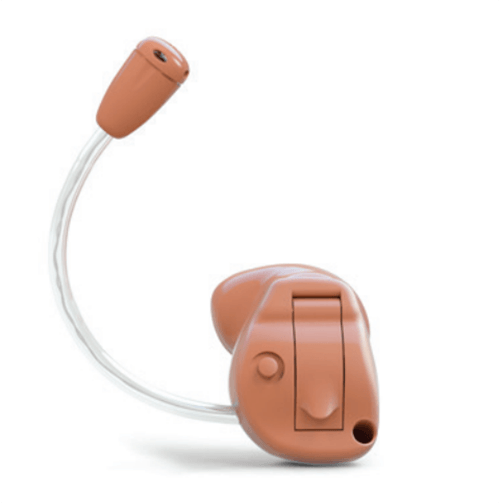
Resound LiNX 3D LTMIH-S (Microphone In Helix hearing aid)
The LTMIH-S is the smallest of the microphone in helix custom hearing aids. Because it is so small you will lose some of the benefits of the technology. However, that is always the trade off for discretion. The device is available with four levels of receiver power, LP, MP, HP and UP which means it can cover a lot of hearing loss, in fact from mild all the way to severe to profound. Again, the size of receiver available is based on the size of your ear canal. If your canal is too small, you won’t be able to avail of the higher power receivers.
The functional features of this model are as follows, it can have a push button, volume control, the devices all have smart start which gives you a couple of seconds to get it in your ear before it comes on. But you lose out on the direct audio streaming, no ear to ear communication, and no wireless accessories. The aid takes a size 10 battery.
By choosing discretion you do lose out on a lot of features and benefit. Firstly, there is no telecoil, something that many like. You also miss out on the new Resound smart 3D app and the remote assistance. You lose all the directionality functions because you only have one mic, no Wind Guard and you lose all the wireless functions. That is a lot of benefit gone, because you wanted it small, really think about this, because honestly, no one cares that you are wearing a hearing aid.
Feature Set
The feature set of the device is the same across receiver sizes and is as follows.
Up to 17 channels of compression depending on tech level
Environmental Classifier
Environmental Optimizer II
Noise Tracker II
Expansion
Sound Shaper
Low Frequency Boost (only with the HP Receiver)
DFS Ultra III with Music Mode
Auto DFS
Acceptance Manager
Amplification Strategies (WDRC, Semi-linear, Linear only on HP receiver aids)
Tinnitus Sound Generator
Resound LiNX 3D LTMIH (Microphone In Helix Hearing Aid)
The LTMIH is the larger of the microphone in helix custom hearing aids. Like it’s smaller brother the LTMIH-S, because it is so small you will lose some of the benefits of the technology. However, that is always the trade off for discretion. The device is available with four levels of receiver power, LP, MP, HP and UP which means it can cover a lot of hearing loss, in fact from mild all the way to severe to profound. Again, the size of receiver available is based on the size of your ear canal. If your canal is too small, you won’t be able to avail of the higher power receivers.
The functional features of this model are as follows, it can have a push button, volume control, the devices all have smart start which gives you a couple of seconds to get it in your ear before it comes on. However, you will get the direct audio streaming, ear to ear communication, and wireless accessories. More importantly, you will get access to the Smart 3D app and all the benefits that it delivers to your experience. There is a telecoil on-board, however it is only available with the MP HP and UP receiver versions. You will still lose all the directional benefits though as they only come with one mic. The battery size on these models can be 312 or size 13.
Feature Set
The feature set of the device is the same across receiver sizes and is as follows.
Up to 17 channels of compression depending on tech level
Environmental Classifier
Binaural Environmental Optimizer II
Noise Tracker II
Expansion
Sound Shaper
Low Frequency Boost (only with the HP Receiver)
DFS Ultra III with Music Mode
Auto DFS
Acceptance Manager
Amplification Strategies (WDRC, Semi-linear, Linear only on HP receiver aids)
Tinnitus Sound Generator
Ear To Ear Communication
Direct Audio Streaming (Made For iPhone)
Compatible with all Resound Wireless Accessories like the Micro Mic, Multi Mic etc.
Resound Control App (if you have a Phone Clip+)
Resound Smart 3D App
Compatible with Resound Remote Assist
Will take remote hearing aid updates
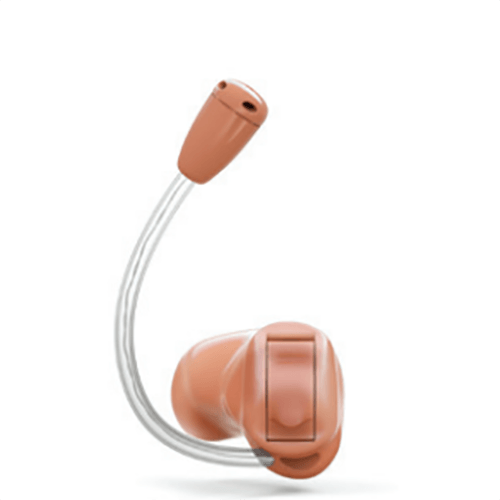
Resound LiNX 3D LTIIC (Invisible In Canal Hearing Aid)
The LTIIC is the smallest of the LiNX 3D custom hearing aids. Because it is so small you will lose some of the benefits of the technology. However, that is always the trade off for discretion. The device is available with only one level of receiver power, the LP. It will only cover hearing losses to a max 70 dB in the low frequencies and 85 dB in the high frequencies. The suitability for this device is also based on the size of your ear canal. If your canal is too small, you won’t be able to avail of it.
It can not have a push button or volume control, but the devices all have smart start which gives you a couple of seconds to get it in your ear before it comes on. But you lose out on the direct audio streaming, no ear to ear communication, and no wireless accessories. The battery size on this aid is size 10.
By choosing discretion you do lose out on a lot of features and benefit. Firstly, there is no telecoil, something that many like. You also miss out on the new Resound smart 3D app and the remote assistance. You lose all the directionality functions because you only have one mic, no Wind Guard and you lose all the wireless functions. That is a lot of benefit gone, because you wanted it small, really think about this, because honestly, no one cares that you are wearing a hearing aid.
Feature Set
The feature set of the device is the same across receiver sizes and is as follows.
Up to 17 channels of compression depending on tech level
Environmental Classifier
Environmental Optimizer II
Noise Tracker II
Expansion
Sound Shaper
DFS Ultra III with Music Mode
Auto DFS
Acceptance Manager
Tinnitus Sound Generator
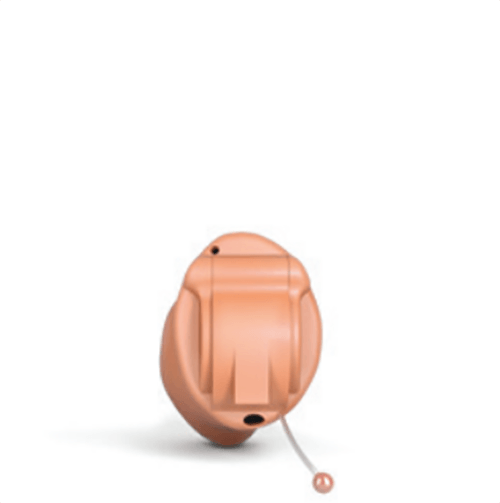
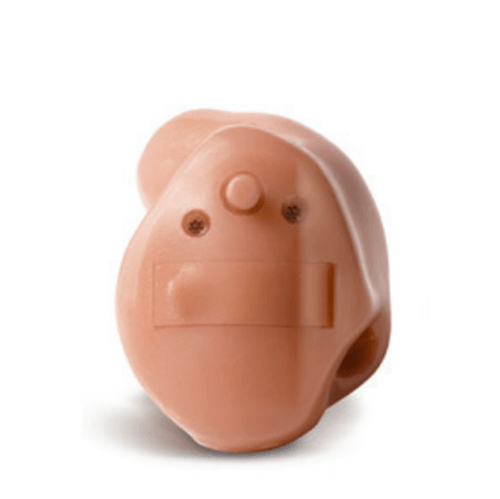
Resound LiNX 3D LTCIC (Completely in Canal)
The LTCIC is a discrete cic device, because it is so small you will lose some of the benefits of the technology. However, that is always the trade off for discretion. The device is available with four levels of receiver power, LP, MP, HP and UP which means it can cover a lot of hearing loss, in fact from mild all the way to severe to profound. Again, the size of receiver available is based on the size of your ear canal. If your canal is too small, you won’t be able to avail of the higher power receivers.
The functional features of this model are as follows, it can have a push button, volume control, the devices all have smart start which gives you a couple of seconds to get it in your ear before it comes on. But you lose out on the direct audio streaming, no ear to ear communication, and no wireless accessories. The battery size on this aid is size 10.
By choosing discretion you do lose out on a lot of features and benefit. Firstly, there is no telecoil, something that many like. You also miss out on the new Resound smart 3D app and the remote assistance. You lose all the directionality functions because you only have one mic, no Wind Guard and you lose all the wireless functions. That is a lot of benefit gone, because you wanted it small, really think about this, because honestly, no one cares that you are wearing a hearing aid.
Feature Set
The feature set of the device is the same across receiver sizes and is as follows.
Up to 17 channels of compression depending on tech level
Environmental Classifier
Environmental Optimizer II
Noise Tracker II
Expansion
Sound Shaper
Low Frequency Boost (only with the HP Receiver)
DFS Ultra III with Music Mode
Auto DFS
Acceptance Manager
Amplification Strategies (WDRC, Semi-linear, Linear only on HP receiver aids)
Tinnitus Sound Generator
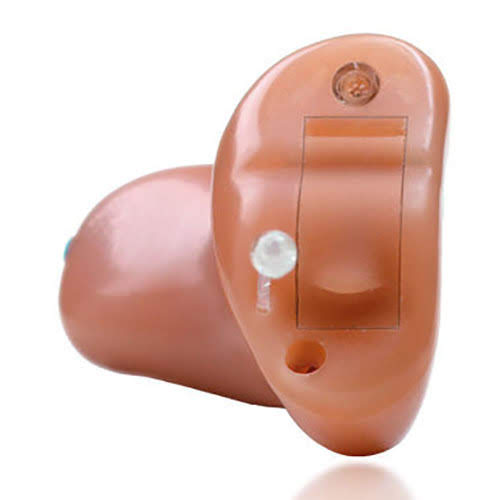
Resound LiNX 3D LTITC (In The Canal)
The LTITC is an in the canal hearing aid which is slightly larger than a CIC. Like it’s smaller brother the LTCIC, because it is so small you will lose some of the benefits of the technology. For instance, there is no ear to ear communication which means you lose some of that fabulous spatial awareness and binaural directionality. However, that is always the trade off for discretion. The device is available with four levels of receiver power, LP, MP, HP and UP which means it can cover a lot of hearing loss, in fact from mild all the way to severe to profound. Again, the size of receiver available is based on the size of your ear canal. If your canal is too small, you won’t be able to avail of the higher power receivers.
The functional features of this model are as follows, it can have a push button, volume control, the devices all have smart start which gives you a couple of seconds to get it in your ear before it comes on. However, you will get the direct audio streaming, ear to ear communication, and wireless accessories. More importantly, you will get access to the Smart 3D app and all the benefits that it delivers to your experience. There is a telecoil on-board, however it is only available with the MP HP and UP receiver versions. The battery size on this aid is 312.
Feature Set
The feature set of the device is the same across receiver sizes and is as follows.
Up to 17 channels of compression depending on tech level
Directional Mix Processor
Adjustable Directional Mix
Natural Directionality II
Soft Switching
Autoscope Adaptive Directionality
Environmental Classifier
Environmental Optimizer II
Noise Tracker II
Expansion
Sound Shaper
Low Frequency Boost (only with the HP Receiver)
DFS Ultra III with Music Mode
Auto DFS
Acceptance Manager
Amplification Strategies (WDRC, Semi-linear, Linear only on HP receiver aids)
Tinnitus Sound Generator
Direct Audio Streaming (Made For iPhone)
Compatible with all Resound Wireless Accessories like the Micro Mic, Multi Mic etc.
Resound Control App (if you have a Phone Clip+)
Resound Smart 3D App
Compatible with Resound Remote Assist
Will take remote hearing aid updates
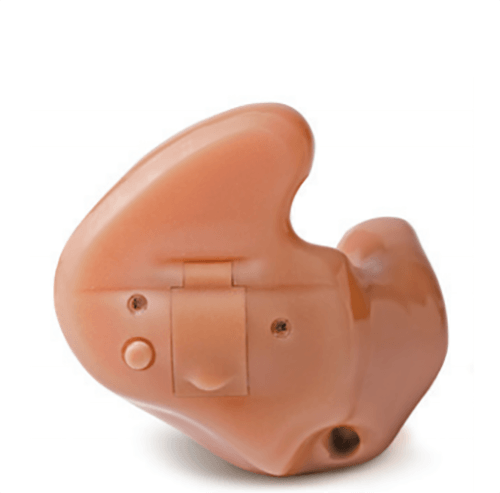
Resound LiNX 3D LTITE (In The Ear)
The LTITE is an in the ear or full shell hearing aid which is the largest Resound Custom. For instance, there is no ear to ear communication which means you lose some of that fabulous spatial awareness and binaural directionality. However, that is always the trade off for discretion. The device is available with four levels of receiver power, LP, MP, HP and UP which means it can cover a lot of hearing loss, in fact from mild all the way to severe to profound. Again, the size of receiver available is based on the size of your ear canal. If your canal is too small, you won’t be able to avail of the higher power receivers.
The functional features of this model are as follows, it can have a push button, volume control, the devices all have smart start which gives you a couple of seconds to get it in your ear before it comes on. However, you will get the direct audio streaming, ear to ear communication, and wireless accessories. More importantly, you will get access to the Smart 3D app and all the benefits that it delivers to your experience. There is a telecoil on-board, however it is only available with the MP HP and UP receiver versions. These hearing aids use a size 13 battery.
Feature Set
The feature set of the device is the same across receiver sizes and is as follows.
Up to 17 channels of compression depending on tech level
Binaural Directionality
Directional Mix Processor
Adjustable Directional Mix
Natural Directionality II
Synchronised Soft Switching
Autoscope Adaptive Directionality
Environmental Classifier
Binaural Environmental Optimizer II
Noise Tracker II
Expansion
Sound Shaper
Low Frequency Boost (only with the HP Receiver)
DFS Ultra III with Music Mode
Auto DFS
Acceptance Manager
Amplification Strategies (WDRC, Semi-linear, Linear only on HP receiver aids)
Tinnitus Sound Generator
Ear To Ear Communication
Direct Audio Streaming (Made For iPhone)
Compatible with all Resound Wireless Accessories like the Micro Mic, Multi Mic etc.
Resound Control App (if you have a Phone Clip+)
Resound Smart 3D App
Compatible with Resound Remote Assist
Will take remote hearing aid updates
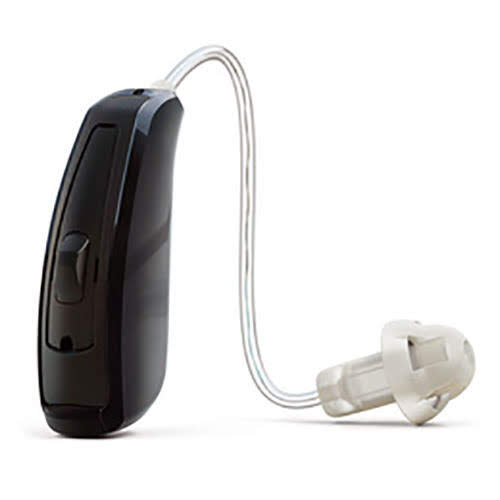
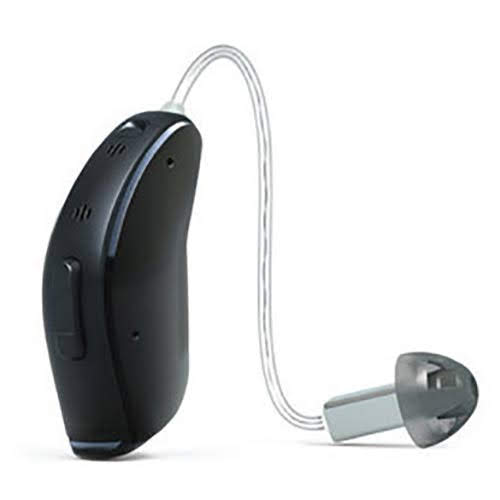
Resound LiNX 3D LT61 RIC (Receiver In Canal)
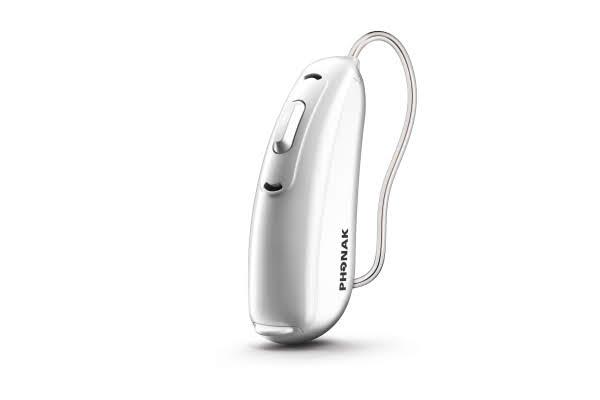
The LT61 is a small receiver in the ear hearing aid, because of the size, there is no telecoil onboard. The device is available with four levels of receiver power, LP, MP, HP and UP which means it can cover a lot of hearing loss, in fact from mild all the way to severe to profound.
The functional features of this model are as follows, it can have a push button, volume control, the devices all have smart start which gives you a couple of seconds to get it in your ear before it comes on. However, you will get the direct audio streaming, ear to ear communication, and wireless accessories. More importantly, you will get access to the Smart 3D app and all the benefits that it delivers to your experience. These aids take a size 312 battery.
Feature Set
The feature set of the device is the same across receiver sizes and is as follows.
Up to 17 channels of compression depending on tech level
Environmental Classifier
Binaural Directionality III
Spatial Sense
Directional Mix Processor
Adjustable Directional Mix
Natural Directionality II
Synchronised Soft Switching
Autoscope Adaptive Directionality
Binaural Environmental Optimizer II
Noise Tracker II
Expansion
Sound Shaper
Low Frequency Boost (only with the HP Receiver)
DFS Ultra III with Music Mode
Auto DFS
Acceptance Manager
Amplification Strategies (WDRC, Semi-linear, Linear only on HP receiver aids)
Tinnitus Sound Generator
Ear To Ear Communication
Direct Audio Streaming (Made For iPhone)
Compatible with all Resound Wireless Accessories like the Micro Mic, Multi Mic etc.
Resound Control App (if you have a Phone Clip+)
Resound Smart 3D App
Compatible with Resound Remote Assist
Will take remote hearing aid updates
Resound LiNX 3D LT62 RIC (Receiver In Canal)
The LT62 is a small receiver in the ear hearing aid, with a telecoil onboard. The device is available with four levels of receiver power, LP, MP, HP and UP which means it can cover a lot of hearing loss, in fact from mild all the way to severe to profound.
The functional features of this model are as follows, it can have a push button, volume control, the devices all have smart start which gives you a couple of seconds to get it in your ear before it comes on. However, you will get the direct audio streaming, ear to ear communication, and wireless accessories. More importantly, you will get access to the Smart 3D app and all the benefits that it delivers to your experience. These aids take a size 13 battery.
Feature Set
The feature set of the device is the same across receiver sizes and is as follows.
Up to 17 channels of compression depending on tech level
Environmental Classifier
Binaural Directionality III
Spatial Sense
Directional Mix Processor
Adjustable Directional Mix
Natural Directionality II
Synchronised Soft Switching
Autoscope Adaptive Directionality
Binaural Environmental Optimizer II
Noise Tracker II
Expansion
Sound Shaper
Low Frequency Boost (only with the HP Receiver)
DFS Ultra III with Music Mode
Auto DFS
Acceptance Manager
Amplification Strategies (WDRC, Semi-linear, Linear only on HP receiver aids)
Tinnitus Sound Generator
Ear To Ear Communication
Direct Audio Streaming (Made For iPhone)
Compatible with all Resound Wireless Accessories like the Micro Mic, Multi Mic etc.
Resound Control App (if you have a Phone Clip+)
Resound Smart 3D App
Compatible with Resound Remote Assist
Will take remote hearing aid updates
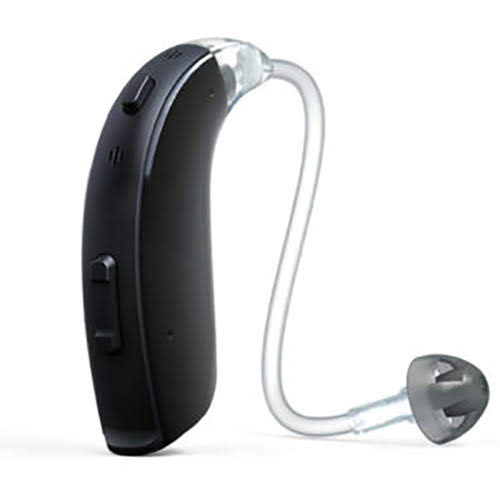
Resound LiNX 3D LT67 BTE (Behind The Ear)
The LT67 is the smallest of the behind the ear hearing aids from Resound. It can be fit with either a thin tube or a traditional tube and mould. It has a telecoil onboard. The device is suitable for hearing losses from mild to moderate severe.
The functional features of this model are as follows, it can have a push button, volume control, the devices all have smart start which gives you a couple of seconds to get it in your ear before it comes on. However, you will get the direct audio streaming, ear to ear communication, and wireless accessories. More importantly, you will get access to the Smart 3D app and all the benefits that it delivers to your experience. These aids take a size 312 battery.
Feature Set
The feature set of the device is the same across receiver sizes and is as follows.
Up to 17 channels of compression depending on tech level
Environmental Classifier
Binaural Directionality III
Spatial Sense
Directional Mix Processor
Adjustable Directional Mix
Natural Directionality II
Synchronised Soft Switching
Autoscope Adaptive Directionality
Binaural Environmental Optimiser II
Noise Tracker II
Expansion
Sound Shaper
DFS Ultra III with Music Mode
Auto DFS
Acceptance Manager
Tinnitus Sound Generator
Ear To Ear Communication
Direct Audio Streaming (Made For iPhone)
Compatible with all Resound Wireless Accessories like the Micro Mic, Multi Mic etc.
Resound Control App (if you have a Phone Clip+)
Resound Smart 3D App
Compatible with Resound Remote Assist
Will take remote hearing aid updates
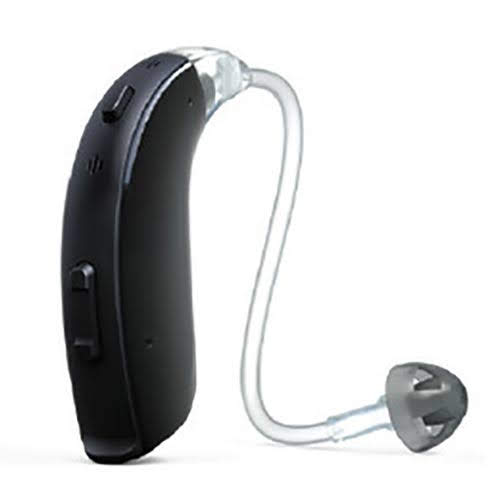
Resound LiNX 3D LT77 BTE (Behind The Ear)
The LT77 is the mid size behind the ear hearing aids from Resound. It can be fit with either a thin tube or a traditional tube and mould. It has a telecoil onboard. The device is suitable for hearing losses from mild to severe.
The functional features of this model are as follows, it can have a push button, volume control, the devices all have smart start which gives you a couple of seconds to get it in your ear before it comes on. However, you will get the direct audio streaming, ear to ear communication, and wireless accessories. More importantly, you will get access to the Smart 3D app and all the benefits that it delivers to your experience. This device takes a size 13 battery.
Feature Set
The feature set of the device is the same across receiver sizes and is as follows.
Up to 17 channels of compression depending on tech level
Environmental Classifier
Binaural Directionality III
Spatial Sense
Directional Mix Processor
Adjustable Directional Mix
Natural Directionality II
Synchronised Soft Switching
Autoscope Adaptive Directionality
Binaural Environmental Optimizer II
Noise Tracker II
Expansion
Sound Shaper
DFS Ultra III with Music Mode
Auto DFS
Acceptance Manager
Tinnitus Sound Generator
Ear To Ear Communication
Direct Audio Streaming (Made For iPhone)
Compatible with all Resound Wireless Accessories like the Micro Mic, Multi Mic etc.
Resound Control App (if you have a Phone Clip+)
Resound Smart 3D App
Compatible with Resound Remote Assist
Will take remote hearing aid updates
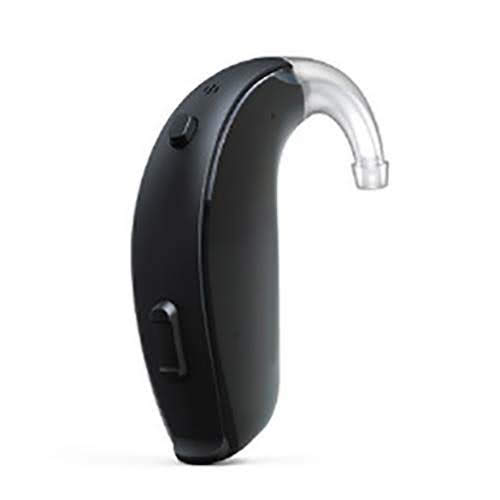
Resound LiNX 3D LT88 BTE (Behind The Ear)
The LT88 is the largest and most powerful of the LiNX 3D behind the ear hearing aids from Resound. It can be fit with either a thin tube or a traditional tube and mould. It has a telecoil onboard. The device is suitable for hearing losses from moderate to severe.
The functional features of this model are as follows, it can have a push button, volume control, the devices all have smart start which gives you a couple of seconds to get it in your ear before it comes on. However, you will get the direct audio streaming, ear to ear communication, and wireless accessories. More importantly, you will get access to the Smart 3D app and all the benefits that it delivers to your experience. This device takes a size 13 battery.
Feature Set
The feature set of the device is the same across receiver sizes and is as follows.
Up to 17 channels of compression depending on tech level
So it’s finally launched, it will be available to buy in the UK and Ireland from next week. So what’s so special about it? Well I have to say there are a couple of things that have piqued my interest in these hearing aids. The first, was really the feedback that Steve, the co writer of this site was giving. Steve has been wearing the hearing aids for a couple of weeks and he has been effusive with his praise. I won’t steal his thunder though, he will be writing a couple of articles about that next week. For now, I want to explore the platform, what it is and what it offers.
It is up to 50% better at identifying speech across various environments
It enables users to hear up to 80% more of the sounds around them, and
It enables users to understand up to 40% more speech in noise
Experience The LiNX 3D For Yourself, Visit Your Local Hearing Professional
Arrange a consultation with a trusted Independent hearing healthcare professional in your area
So those are pretty interesting stats, but what is driving them, what’s different and how does it deliver? Let’s take a look at the underlying tech.
Binaural Directionality III
Yes they do love their feature names, this is their latest directionality strategy and is a further upgrade to what they have been doing. It involves continuous information exchange between the hearing aids which allows the optimal directionality in the hearing aids for the situation you are in.
The Important Bit
It simply allows you to focus on the sounds that are important to you, however, it also allows you to be aware of your surroundings. Some thing that is important so that your natural ability to hear in noise is activated. Steve is mightily impressed with this.
Spatial Sense
This combines and preserves natural cues so that the brain has the optimal information for localisation of sound and spatial awareness.
The Important Bit
Put simple, your localisation of sounds is important, because it is one of the major elements in your ability to listen to the sound you want while ignoring the sound you don’t.
Binaural Environmental Optimizer II
Try saying that quick seven times in a row! This feature allows the hearing aid s to work together to analyse the listening environment you are in. It then automatically adjusts the features and amplification to deliver the best experience for you.
The Important Bit
Knowing what the sound situation is accurately is really important, so this identifies the situation with high accuracy and then manages the feature set of the hearing aids to deliver the very best hearing for you. This feature and its accuracy is imperative for the function of the aids. Resound are quoting really high accuracy and Steve seems to concur.
Noise Tracker II
This is a unique noise reduction system that works on the basis of spectral subtraction. It reduces unwanted noise without affecting the speech signal.
The Important Bit
The really important bit here is that it seems to do what they are saying. It is excellent on any noise that is steady state (which means recurring similarlily) like engine noise, background hum of any kind. Steve has seen some excellent benefits in noisy situations in particular in his car.
DFS Ultra II With Music Mode
A high precision feedback system that allows the cancellation of feedback with extreme accuracy. The Music mode is a slower acting system which allows better handling of music.
The Important Bit
Feedback is probably one of the most annoying things for users. The feedback system allows the amplification that you need without causing that damned irritating whistling. Having a system which also has a music mode means that your appreciation of music will be better. Sometimes music can sound like feedback, a music mode allows the system a little more time to make sure it isn’t and do nothing. That means less distortion for you.
Resound Assist
Drum roll please…… Resound Assist is the really big news for both Providers and Users. I don’t want to detract from the hearing aids, they are excellent. However, there is so much more around this release than just the hearing aids.
Resound Assist will allow your provider to adjust your hearing aids remotely. That means if you want adjustments on the go, they can be provided without you having to attend the clinic. The system is really easy to use and is quite intuitive.
This might not be for everyone, but this feature will be a god send for the people who love it. It will allow them complete freedom over their experience, over their customer experience.
The App, Resound Smart 3D
The accompanying app also allows you personalise your hearing experience in a deeper way. It has been re-designed to be more intuitive and easier to use and it offers real control. Again, this might not be for everyone, but for those who want it, it will enrich their experience. Again, this has to be seen as an excellent thing.
We will begin discussing the products over the next few days, I will be covering the technical details including the models that are available, Steve will be giving a series of reviews of the hearing aids in action. So stay tuned as it were.
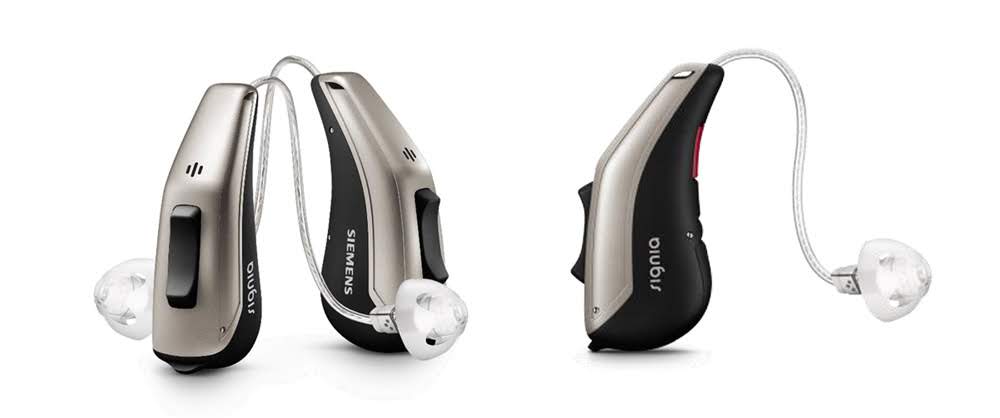
Signia (formerly Siemens) introduced the Signia Pure® 13 BT today, and it is their first ever Made-For-iPhone (MFi) hearing aid. They say that it delivers uncompromising sound, industry-leading connectivity, and revolutionary remote hearing care, along with great battery life. Wearers will be fully connected to their environment, each other, their iPhone® and to their hearing care professional. The devices will be introduced in May this year and will be available in the usual three levels of technology.
The Pure 13 BT represents a few firsts for the industry, the world’s first telehealth-supported hearing aid with iPhone audio streaming capabilities, the first hearing aid to use iPhone motion sensors to improve hearing in certain situations and the first hearing aid to provide both “high-definition binaural hearing” and Bluetooth® audio streaming (from a connected device). The devices will be powered by a size 13 battery which is good news for users, the 13 battery combined with the low energy use should mean less battery changes.
“World’s first high definition binaural better-than-normal hearing and direct streaming”
The Signia Pure® 13 BT will stream audio directly from iPhone, iPad, and iPod Touch devices via Bluetooth® low energy (LE). This will enables high fidelity stereo streaming with reduced energy consumption.]As with Widex, Signia have also retained their own wireless radio on the devices, which means that when you are streaming audio, you don’t lose the benefit of the ear 2 ear communication. This is important for the user, Signia’s ear-to-ear (e2e™) wireless system is used to provide better spatial awareness and speech understanding. Something that most users would not want to be without.
Motion Detection
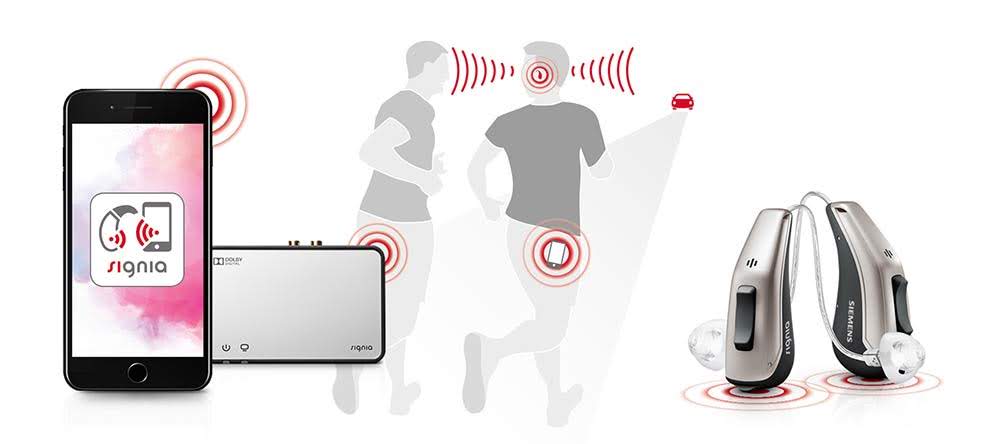
This is really a fascinating innovation and a real sign of the expanded concepts around hearing aids and their users. People frequently move while they are speaking, and Signia think that their hearing aids should react dynamically and adjust to their changing listening situation. Up until now, the data needed for this was missing. The Pure® 13 BT is the first hearing aid to utilize the iPhone motion sensors to deliver input that allows adjustments in sound processing based on your activities. Signia say that the devices understand when a user is in motion and for the first time ever this data will allow them to deliver optimal hearing in that situation.
Essentially when a wearer is walking, running or driving, the hearing aids understand they are in motion, and will automatically adjust to better hear a conversation partner at their side or from the back while maintaining awareness of environmental sounds like sirens, approaching vehicles, or pedestrians. Signia claims that motion detection will make their environmental classification system even more robust, by adding a valuable data point. I can not fault them here, it is an outstanding idea and a sign of real innovation.
A Bluetooth TV Transmitter
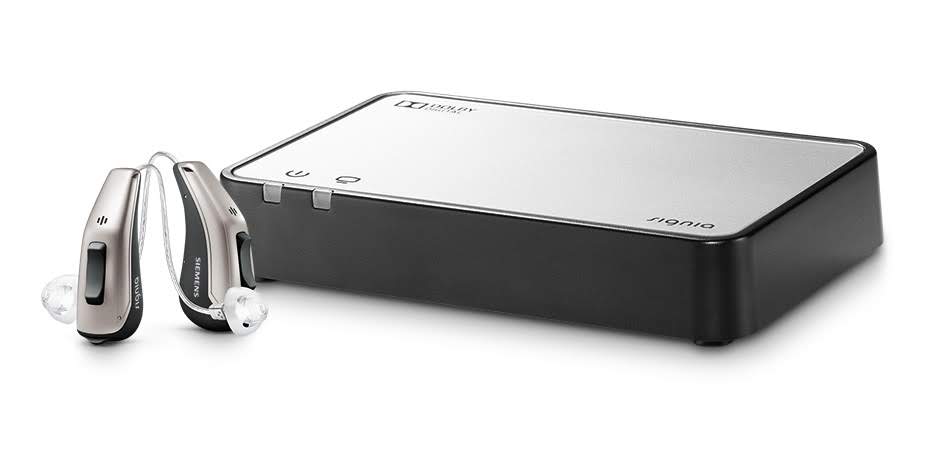
Signia has also introduced the StreamLine TV transmitter, which delivers high-quality stereo sound – streamed from your TV or connected audio source via Bluetooth® LE – directly to your hearing aids. Apparently pairing the hearing aids with the StreamLine TV transmitter is as easy as placing the hearing aids on top of the transmitter box to allow the auto-pairing process to complete.
Companion App
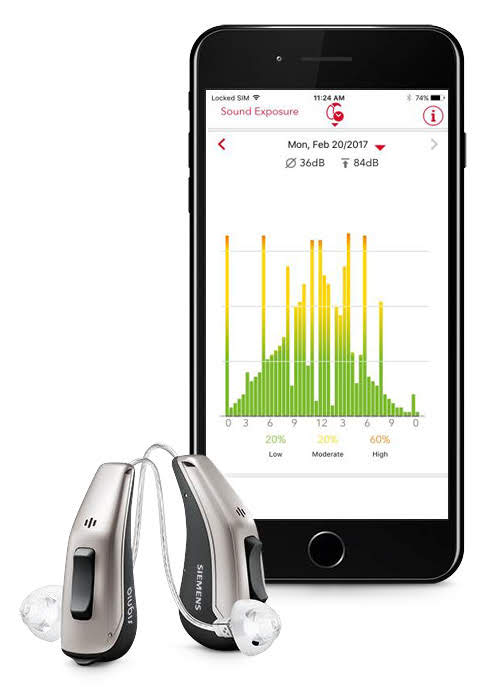
The new myControl™ App is made specifically for Pure 13 BT hearing aids. It offers a range of advantages beyond direct streaming of audio. It acts as a remote control for quick and easy changes to settings like volume and programs, and delivers advanced adjustment options to the user for personalization of sound. Similar to a fitness tracker, the myControl App helps wearers look after their hearing health by identifying when they are being exposed to potentially harmful noise in their daily lives.
The new app will allow you to make personalized adjustments to programs, volume, microphone directionality, and treble/bass, during audio streaming. Pure 13 BT hearing aids will help users look after their hearing health. Similar to a fitness tracker, they create a personal sound profile over time based on noise exposure, so you can protect your hearing health. The app tracks your daily noise exposure, and displays the information in an easily readable way. This is an interesting little datum point, it will allow you to understand what levels of noise you are exposing yourself to on a daily basis allowing you to understand the possibilities of damaging your hearing through noise exposure.
Telecare 2.0
The Pure® 13 BT is the first Signia hearing aid to utilize TeleCare 2.0. This upgrade introduces additional capabilities such as advanced data logging, secure end-to-end encrypted data transfer, and improved remote hearing aid adjustments. The professional can now adjust your hearing aids remotely across four frequency bands (previously only gain and tone control were available to providers). The user will interact with your provider via the Signia myHearing App, which is available for both iPhone and Android smartphones.
If you like what you see, share it so others can benefit




 Itshearingaidknow