Delivering Outstanding Hearing Care The Best Hearing Aids in Nottingham
We are very happy to welcome Correct hearing in Nottingham to the Hearing Aid Know network of premium Independent hearing aid centres. Correct Hearing is a family run business who have a long history of providing best in class hearing care and the very best hearing aids in Nottingham. Let’s meet the team.
The business is managed by Sarah and Ian Vokes, Sarah is a Director and Audiologist at the Correct Hearing. Sarah has extensive experience both personal and professional with hearing loss. During her teenage years a bout of meningitis left her with a unilateral (one sided) hearing loss. So she fully understands the impact and difficulties that arise from hearing loss.
In fact it was that hearing loss that spurred her to study Audiology. She studied at Nottingham School of Audiology where she was awarded a BAAT and went on to work within the NHS. She built up her skills and specialities to include multiple disciplines including tinnitus care and paediatric testing (children’s audiology). Sarah moved from the NHS to a large National hearing aid company before deciding to establish Correct Hearing in 2009.
A Bespoke Hearing Aid Service Without Constraints
Sarah wanted to provide a more relaxed and bespoke service for people with a hearing loss without the constraints that exist within a National business. And so, Correct Hearing was born. Sarah has been involved with the Audiology Profession for many years and is dedicated to delivering best Practice hearing care. She is also dedicated to improving the lot of both people with hearing loss and the Profession she belongs to. She is an active member and has recently been elected the President of the British Association of Hearing Aid Audiologists (BSHAA).
Hearing Aids Nottingham
Sarah is committed to providing the very best hearing aids from the biggest hearing aid brands. She will only use the latest hearing aid technology because she believes that is what offers the best outcomes for her customers. As an Independent hearing aid centre she has access to all of the big six hearing aid manufacturers like Phonak, Resound, Widex, Signia, Starkey and Oticon. Their pricing structure offers outstanding value and runs from £395 to £1600 and beyond based on the technology level of the hearing aids. That’s the very best hearing aids at each level and dedicated aftercare to ensure full success.
Microsuction Ear Wax Removal
They also offer ear wax removal at the location and they say that microsuction ear wax removal is by far the most popular method of ear cleaning. They can also undertake irrigation ear wax removal. Like others, Sarah says that when the methods are explained in detail, most people choose micro suction, no mess, no fuss. They offer the service for £50 for one ear and £80 for two.
Hearing Tests
They of course offer full and comprehensive hearing tests, undertaking audiological work ups to aid diagnosis and to deliver enough information for in-depth treatment recommendations. Sarah is also qualified to undertake Children’s hearing tests, something that is relatively rare in Private Practice.
Home Vist Hearing Tests Nottinghamshire, Lincolnshire and Derbyshire
Correct Hearing also offer a free home visit service for people with mobility difficulties. If you are unable to visit them at their hearing aid store in Nottingham, they will by request arrange a home visit hearing assessment in the comfort of your own home. They have fully portable equipment for assessing your hearing and the ability to demonstrate the latest digital technology in your own surroundings.
I have known Sarah for many years having often met her at educational events and BSHAA events. She is committed, hard working and has always impressed me with her passion for the profession and the people we care for. If you are looking for hearing aids or hearing care in Nottingham, I couldn’t recommend Sarah Vokes and Correct Hearing enough as a place for you to start.
If you like what you see, share it so others can benefit
Find An Independent Hearing Aid Centre in Your Area
Arrange a consultation with a trusted Independent hearing healthcare professional in your area
One of the very first things that I did when my left ear suddenly stopped working was to hold the landline receiver to my ear to see if I could hear the dial tone. I couldn’t. Early on, this was my rudimentary way of isolating each ear to try to work out what on Earth had just happened and over time became the way in which I would test whether there had been any improvement. Cue the day, some 6-8 weeks later, when suddenly I could hear the tone at an almost normal level. I was elated and thought that my hearing problems were perhaps at an end.
Not The Recovery I Hoped For
Sadly, although even a small improvement is certainly something to be celebrated, it turned out that being able to hear a dial tone was not the recovery that I’d hoped for and here lies the big misunderstanding that I had about hearing loss that I think many others have too – particularly those who do not have difficulty hearing themselves.
Just Turn it Up Right?
Before I had hearing problems I’d presumed that the world just seemed either a little or a lot quieter for those with hearing loss and that a sound boost from a hearing aid would largely sort that out. As it turns out instead of the sound being turned down, as if on a TV, what actually happens is that you lose frequencies and each frequency can be lost or retained to a rather different degree to the next and some may even stay intact altogether.
This causes confusion because instead of everything being quieter, only some sounds are (much) quieter, so if you shout at someone with a hearing loss similar to mine where I’ve lost much of my high and mid-frequencies, I’m still going to wince at the volume because the booming bass frequencies are still intact and yet I still might not understand exactly what has been said.
Guilty as Charged
What makes this newly-found understanding of hearing loss worse is that I’ve been guilty of rolling my eyes at elderly relatives who, I felt, clearly hadn’t grasped that full cinematic surround sound was just a click of a hearing aid button away if only they’d learned how to use it properly. Equally, and perhaps by way of retribution, I’ve been on the receiving end of an 8-year-old challenge my assertion that I hadn’t heard her with, “You’re fine! You’re wearing your hearing aid!!” at a volume which I got the general gist regardless of which frequencies I’d lost.
What is of course difficult to understand for an 8-year old, and adults too, is that with the right wind (or preferably without any wind!), with perfect acoustics, no traffic noise and a relatively low-pitch conversational level I can hear you just fine, but when all those enemies of the hard-of-hearing come together, when you’re not on my right side and when you’re animated and speaking at me in a much higher pitch, then sadly at times, I really have no clue at all.
Walking a mile in the shoes of those with hearing loss has hopefully made me a more understanding and knowledgeable individual. I try to explain to anyone who will listen how hearing loss works in the vague hope that some understanding trickles through, though I suspect like most things until it happens to you, it’s very difficult to imagine.
If you like what you see, share it so others can benefit
Widex has indicated that they will release a new firmware update this week that should put to bed the issues that the Beyond Fusion 2 is having with iPhone connectivity. The best thing for users is that the update will be delivered to their phone through the unique firmware update feature that Widex introduced with their app. So they won’t have to attend their professionals, just accept the firmware update when it appears. They have said that it will strengthen the connection between the aids and the phone.
As we reported a few days ago in the article Beyond Fusion, Not So Made For iPhone, Widex is having issues with iPhone connection. However, they have acknowledged the problem and have been working to deal with it. The message passed to me in relation to it goes like this “Widex will be releasing a new firmware update later this week. This firmware update is designed to further enhance the synchrony between the iPhone and BEYOND hearing aids for improved streaming connectivity. Specifically, the BEYOND firmware update will strengthen the communication between the iPhone and the BEYOND to avoid loss of connection. Patients will also see enhancements in the volume display and levels when alternating between the Apple native app and the BEYOND app as well as improved DEX functionality with the BEYOND app.“
Complex and Irritating
The communication between any hearing aid and an iPhone is a complex procedure. Bluetooth is an inherently unstable wireless communication protocol that sometimes has a mind of its own. Although it is much better than it once was, it still can be irritating sometimes. Hopefully, this firmware update will reduce the issues to the acceptable norm.
DEX Functionality
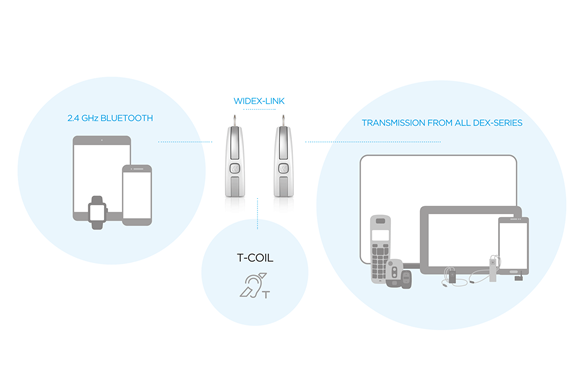
It is interesting to see the DEX system mentioned, for me, I would probably be happier to use the Com DEX with an iPhone. I mean the Widex Link system is outstanding, it is still the best wireless communication protocol out there for audio quality. I know that the direct to iPhone is attractive for many users but I really don’t understand the issues around wearing a streamer. Especially something as small and discreet as the Com DEX?
Firmware Update Direct To Your Phone
The Widex system is pretty cool, I mean they are the only manufacturer to deliver firmware updates direct to the phone. This ensures that they can continuously enhance features directly to the Beyond without you having to attend the office for these important updates. This saves time and allows them to deal with issues as they arise.
Update To IOS
A further update to IOS is expected soon that should deal with other issues that have been caused by Apple’s own Bluetooth protocols. Hopefully, that will put to bed all of the problems for both Widex and Oticon.
If you like what you see, share it so others can benefit
Find An Independent Hearing Aid Centre in Your Area
Can Ear Wax Removal Cause (Insert Relevant Term Here)?
We have had a fair few questions about earwax removal and its effects. So I thought it was a good idea for us to write an article that answered as many questions as possible. So here goes, this as always isn’t a definitive list of questions answered, but if you have any others, just contact us and we will do our best to answer. The questions and answers here are relevant to both micro-suction earwax removal and irrigation ear wax removal.
Are ear wax removal drops safe?
I suppose it depends, if you are talking about the earwax drops you buy in a chemist, well then the answer is yes. The companies that manufacture the oil take great care to ensure that it is inert. In essence, they boil the oil to make sure that there are no living organisms in it that may make a home in your ear. If you are making your own with olive oil or almond oil, boil it first, then let it cool and bottle it. Likewise, over the counter ear drop solutions with hydrogen peroxide are carefully controlled. They are usually no more than 2 to 3% hydrogen peroxide.
Are ear wax removal kits safe?
If you are talking about the ones you can buy in a chemist, I would have to say yes, however, follow the instructions carefully. If there is a bulb syringe type device with it, be careful of how much pressure you use on it. This method of removing wax can be dangerous, if you introduce the water to your ear canal under too much pressure, you can burst your eardrum. Very painful, very messy and will damage your hearing. So be careful how hard you squeeze the bulb syringe, harder is most definitely not better!
Are ear wax removal candles (Hopi Candles) safe?
The answer to that is a resounding no, not only are they not safe, they actually don’t help to remove earwax. Honestly, just don’t do it, people who offer these ear candles make ridiculous claims about them with no hard scientific backing. Put simply, they don’t work.
Do ear wax removal drops work?
Generally, oil-based ear wax removal drops simply soften the ear wax that is in the canal. While this may lead to the ear wax making its own way out of the canal, more often than not, it won’t. Hydrogen peroxide based drops are different, hydrogen peroxide should begin to break up the ear wax in the canal. When you allow the hydrogen peroxide mixture to drain out of the ear canal, it should bring some of the ear wax with it. Having said that, it may not remove all of it.
Is ear wax removal safe?
Depends on what you are asking about, for instance, are Hopi Ear Candles safe or is ear syringing safe? The answer is no, they certainly aren’t. However, if you are asking is micro-suction earwax removal, manual earwax removal or irrigation ear wax removal undertaken by a professional safe? Well then the answer is yes, they are safe procedures when undertaken by a professional.
Is home ear wax removal safe?
Yes, no, maybe? This is a difficult question to answer, it depends on what you are going to do. If you plan on shoving an implement deep in your ear canal in an effort to remove wax, well then I would say HELL NO! If you are planning to use hydrogen peroxide mix followed by irrigation with a bulb syringe, well then I would say maybe. If you are going to try to remove ear wax at home, get a kit in a chemist and follow the instructions carefully.
Can earwax removal help an ear infection?
This is a tricky one, yes it could, but it needs to be undertaken by a professional and it needs to be done with micro suction. Let me explain, sometimes with an ear infection, there is effusion, basically, sticky fluid which may end up in the ear canal if the eardrum perforates. Removal of this infected material can only be good for you. An ENT (Ear Nose and Throat Specialist) may decide to remove this from your ear canal to promote healing. If that decision is made, the stuff will be sucked out using micro suction.
Can earwax removal cause tinnitus?
Yes and no, ear wax removal procedures may exacerbate existing tinnitus or it may cause some tinnitus, however, both effects are short-lived and will subside. So no, ear wax removal methods cannot cause long-term tinnitus.
Can ear wax be removed with hydrogen peroxide?
Hydrogen peroxide can be used for home earwax removal, however, you need to be very careful. The solution of hydrogen peroxide should not be any more than 2 to 3%.
Can earwax removal help tinnitus?
Yes, it can, ear wax can occlude the ear canal which can cause the perception of tinnitus or make existing tinnitus even worse. So removing that ear wax will help to relieve tinnitus in these cases.
Can earwax removal cause bleeding?
In general, irrigation earwax removal (done with a special pumped water machine) would not cause bleeding, or at least never in my experience. However, I have heard of cases where the ear canal was pinched during micro-suction which caused a small bleed. I have also heard of the canal being grazed during manual earwax removal which again may cause a bleed. So, the answer is yes, but in general, it is a small problem which will not cause any discomfort.
Can earwax removal cause hearing loss?
I had never heard this one until recently, however, earwax removal undertaken by a professional may cause a slight temporary hearing loss, but only in very rare cases. The temporary loss is called a temporary threshold shift and it may happen in response to noise within the ear canal while the earwax is being removed. If you are mad enough to try to remove earwax yourself, well then you could certainly give yourself a more permanent hearing loss by bursting your eardrum or even damaging the bones in your middle ear, Don’t do it.
Can earwax removal cause damage?
This one is a bit general really, however, I think any medical procedure has the possibility of going wrong. Having said that, in my experience, I have never seen or heard of any damage done to a Patient’s ear during an ear wax removal procedure undertaken by a professional. Earwax removal undertaken by someone who doesn’t really know what they are doing is a different matter, I revert to my previous statement, just don’t do it.
Can earwax removal cause vertigo?
Vertigo is actually severe and chronic dizziness, so no, earwax removal shouldn’t cause vertigo, however, ear wax removal by irrigation may cause some dizziness. Sometimes when water is introduced to the ear canal it can cause dizziness, particularly if the water is cold.
Can earwax removal cause dizziness?
Yes, it can, irrigation earwax removal undertaken with water that is too cold can cause dizziness. In fact, during balance testing, we use cold water against the eardrum to induce dizziness. That is why we are very careful to ensure that the water we use to remove earwax is at a very precise temperature.
Can earwax removal cure tinnitus?
Yes, it can, but only if the earwax buildup has caused the tinnitus in the first place.
Can earwax removal improve hearing?
Again, yes it can, but it will only reverse the hearing loss that was caused by the earwax buildup in the first place.
Does ear wax removal hurt?
Earwax removal undertaken by a professional really shouldn’t, it might cause some discomfort, especially irrigation because your ear canal is full of water, however, it should not cause real pain. If it does, something has probably gone wrong.
Does ear wax removal work?
Yes, it is very effective, not really sure where this one came from, to be honest. Again the caveat is going to a professional. Although in fairness, I have seen people arrive at my clinic who have allegedly had earwax removed a couple of months before that simply couldn’t have. When earwax is old it is black and hard.
I have had people turn up with black hard earwax in their ears who had earwax removed a couple of months before. The job was not done correctly, it simply couldn’t have been or black hard earwax would not be in their ear canals.
Which ear wax removal is the best?
That’s a hard question, many people like micro-suction and it is most definitely the fashionable procedure right now. However, I personally like irrigation, mainly because it washes everything out. With micro-suction, there may be some wax near the eardrum or on the canal wall left.
However, having said all of that, if you have ever had a perforation of your eardrum, you are probably better off going for micro-suction. The last thing you want is water in your ear canal if there is any chance that you might have an active perforation in your eardrum.
How does ear wax removal work?
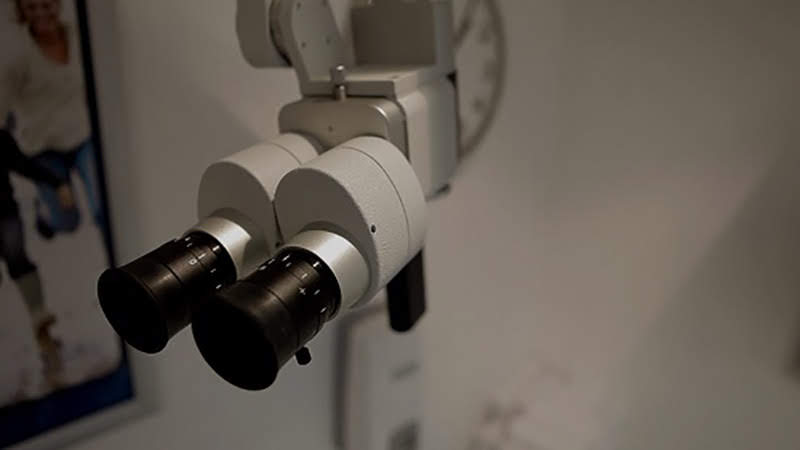
Microsuction ear wax removal is undertaken using a specialist medical suction pump attached to a very thin cannula (probe). The professional will use either an ENT Microscope with a light source or a set of surgical loupes with a light source to see into your ear canal. They will introduce the cannula to your ear canal and gently suck the wax out. The procedure normally doesn’t take that long, although it depends on the amount of ear wax in there.
Irrigation ear wax removal is undertaken with a specialist medical water pump. This type of procedure has replaced syringing because it is much safer. The water pump pressure is controlled so that there can never be too much water pressure in the ear canal. The professional will use a headlight to illuminate your ear canal and then introduce the washing probe to your ear. They will then begin spraying the water into your ear canal. The water is aimed at the top of your ear canal and slightly towards the eardrum. This slowly washes away the ear wax and it is caught in a tank as it washes out.
As I said, this isn’t a full question and answer article, but I think it covers most of the questions about earwax we get asked, If you have any question that I haven’t covered, get in touch with us at info at hearingaidknow.com.
Looking For Ear Wax Removal in The UK or Ireland
Find An Earwax Removal Specialist in Your Area
If you like what you see, share it so others can benefit
Researcher Larry Trussell, a professor of otolaryngology, and Lead author Zheng-Quan Tang, Ph.D., a senior postdoctoral fellow in Trussell’s lab, noted that a review of existing scientific literature indicated that many patients reported an increase in tinnitus soon after they began taking common SSRI anti-depressants (selective serotonin reuptake inhibitors).
Hyperactive brain cells perceived as sound
Tinnitus is most often associated with hearing loss, but there have been reports for many years that people who take anti-depressants that affect serotonin levels develop tinnitus. The study found evidence that nerve cells in the part of the brain called the dorsal cochlear nucleus, or DCN, became hyperactive when exposed to serotonin.
In essence, if Doctors are treating someone with Tinnitus for associated anxiety, the very medicine they give may make the problem worse. For others without pre-existing Tinnitus, they may well develop it. For most though, the sound of their Tinnitus will fade when they stop taking the medication. Researchers hope that they can find a way to deactivate the effect of serotonin on tinnitus, limiting its severity.
Don’t Stop Your Meds!
We talked to our friend Alan Hopkirk, a Tinnitus Expert in Glasgow, he said “Anyone who takes anti-depressants should talk to their doctors before stopping the medication over concerns of tinnitus. The main takeaway here is that you shouldn’t become more anxious if your Tinnitus gets worse or you suddenly develop Tinnitus when taking anti-depressants”.
I have treated Tinnitus many times in my own Practice, it can be a really debilitating problem. More often than not, treating an underlying hearing loss is enough to make the Tinnitus fade. Sometimes though, we need to use aligned therapies like sound therapy and cognitive behavioural therapy.
Tinnitus can be treated
The key thing here is that Tinnitus more often than not can be treated, you can get relief from your Tinnitus. There may not yet be a cure, but there is often effective treatment for Tinnitus.
If you like what you see, share it so others can benefit
I thought it was time for us to have a chat about the lies you tell yourself. You know the ones you tell yourself about why you don’t wear hearing aids.
Strap yourself in though, I have not got a huge reputation for mollycoddling. But don’t worry. We will explore honest answers to pretty spurious statements.
As Oticon say, Open Up Your World, or more likely, take the damn blinkers off.
My Hearing Loss isn’t Severe Enough
Hell no! your wife is about to strangle your ass if she has to repeat herself one more time she will happily kick you until your unconscious!
Even A Mild Hearing Loss
Apart from all of that, even a mild hearing loss needs to be treated. In fact, recent evidence that has come to light in relation to untreated hearing loss and cognitive decline frightened me so much I started wearing my hearing aids all the time.
Hearing Loss & Cognitive Decline
Let me explain, we as professionals were always worried about the wider effect of hearing loss on general health and emotional well being. In the last few years though, evidence has come to light that connects untreated hearing loss to more rapid cognitive decline and possibly dementia.
The evidence has made us as professionals change our own thoughts about intervention in hearing loss. We are now recommending hearing aids even for mild hearing losses that we may not have before.
So, it’s pretty simple, if you have a hearing loss at all, you should really think about treating it with hearing aids if they are appropriate.
Yes, that’s right, they are strange at the beginning. You have never worn something in your ear all day before. Why in hell would they not be uncomfortable or foreign? That feeling will fade with a little time. If it hasn’t faded within a week you may need to be re-sized, generally, it is a simple process. Stop using excuses because you don’t like the idea of wearing hearing aids. Time to get over yourself, which brings us onto.
I Would be Embarrassed to Wear a Hearing Aid
So, I understand that actually, I don’t feel it, but I do understand it. For me it is a simple equation, need hearing aids, get them. I really don’t give a toss what other people think, in fact, I am probably famous for it. But, I do understand that other people don’t see it as that simple for them. They see having to wear a hearing aid as some sort of statement on them, the ageing process and their worth.
Truly, is it more embarrassing to be in control of your own ability to communicate or to stumble through life trying to bluff something while everyone knows you have a problem?
That’s all arse (Irish technical term) complete and utter arse. A hearing loss is not a statement on you, on who you are, on how old you are, it simply is. No more and no less. It is a problem that is causing you real issues. Not doing something about a hearing loss that is affecting your life is a statement on you.
Truly, is it more embarrassing to be in control of your own ability to communicate or to stumble through life trying to bluff something while everyone knows you have a problem? Because believe me, everyone knows you have a problem.
Confused About The Right Hearing Aid For You?
Our buying guide, easing the confusion with clear easy to understand info, we guarantee it will help you pick the right hearing aid for you.
Exactly What You Are Missing
Let’s think about this, what are you missing, what are you losing out on by not dealing with your hearing loss? The whispered words of a loved one, the simple joy of a particularly moving piece of music, the words of your Grandchildren, the joy of easy social contact.
The Joy of Easy Communication
How much do you miss the joy of easy communication, getting the joke first time, instead of them having to repeat themselves? The frustration of having to ask someone “what did they say?” The sitting in a room of people you love while being almost completely isolated. The simple joy of easy conversation.
You know the next time you are tired and worn out from the effort needed to just listen? You know that feeling of stress, that feeling of being overwhelmed? You know the simmering strife in your home life because the people you love are at their wits end? Well, most of that can be easily dealt with by using hearing aids.
Damn it, Reclaim Your Life!
Reclaim your life, it is as simple as that, are you ready to pack up and die? Well if you aren’t, get on with living.
I do not want to admit a hearing loss in public
Why? I go back to my last statement, everyone knows you have a hearing loss. Believe me, they knew long before you really did. So what are you really worried about? You are worried about being embarrassed, but believe me and you know it well. You will be more embarrassed by getting everything wrong, asking people to repeat themselves and generally looking like you are doddering a bit.
Yup, doddering! Let me ask you this, which looks older and a little senile? A person who seems to be constantly forgetful, who asks others several times to repeat themselves, gives the wrong answers to questions, constantly confuses words and constantly goes on about how people didn’t mumble so much in my day.
Or, someone who takes control of their ability to communicate, lives an active social life and is generally happier with their lives? Think about that, I know what the right answer is and so do you.
Hearing Aids Do Not Work in Noisy Environments
Yes, they do, especially if you buy the right level of technology for you. Simply put, if you want to hear well in complex sound situations you need to think about the top two levels of technology. Does that mean that the bottom two levels of technology won’t help you? No, it doesn’t, they will help you a great deal, especially if you use something like a remote mic to give you an extra bit of help.
Hearing aids will work to give you the sound cues you need to understand what is being said. Will they allow you to hear everything in a really noisy situation? Maybe not, but you have to realise that even people with perfect hearing have problems in noise sometimes. Be realistic about what you should hear, be more realistic about your expectations of the hearing aids you buy as well.
I Have More Serious Priorities
Actually, you probably don’t, back to what I was talking about earlier. Our new understanding of the effects of hearing loss on general health and cognitive function makes treating hearing loss a priority. As I said, we have changed how we think and we are recommending the treatment of even mild hearing loss. I do understand that there may be other things going on in your life, things that make it difficult to consider your ability to hear as a priority for you. But your ability to hear is your ability to communicate with ease. That has an effect on all the different parts of your life.
They don’t Restore Your Hearing to Normal
I am afraid nothing can restore your hearing to normal, but hearing aids do a damn good job at giving you normal levels of hearing. They are the difference between hearing what is being said and saying what? all the time.
I Hear Well Enough in Most Situations
Yes, about that, nope. Ask your long-suffering family about that. One of the things I hear often is that I hear well in one to one situations. Generally, people with hearing loss do okay in one to one situations where their companion is facing them and the face is well lit. With no competing noise and full view of the person’s face, they get on okay.
However, we do a simple speech test with many people, words presented at normal speech levels. Of course, there are no visual references so they are relying on the hearing only. When they have gotten three out of five or six out of ten words wrong, they suddenly realise they aren’t doing as well as they thought they were.
Hearing loss isn’t a statement on who you are, not getting proper treatment for it and trying to bluff is.
Damn it be a grown up
Yup, enough prevaricating, enough lying to yourself, enough excuses. You owe it to yourself and your ongoing health and happiness. Hell, you owe it to your long-suffering family. Time to put your big boy or big girl pants on. This is too important to hide behind bull, believe me when I say it. Hearing loss isn’t a statement on who you are, not getting proper treatment for it and trying to bluff is.
If you like what you see, share it so others can benefit
For years, Widex has helped people with tinnitus via the ZEN program, which is available in most Widex hearing aids. In a clinical trial of the effectiveness of Zen, it was found that approximately 75% of people using it had a marked decrease in the impact of their tinnitus within two months. Now Widex has released a Widex Zen app for smartphones to deliver Zen to a wider base.
Prevalence of tinnitus
Research from the American Tinnitus Association shows that over 50 million Americans experience some form of tinnitus. Roughly 90% of tinnitus cases occur with an underlying hearing loss, and 16 million people seek medical attention, according to the Hearing Health Foundation. Widex introduced Zen many years ago and over time developed the WZT (Widex Zen Therapy) program which is a tool for professionals to assist customers with tinnitus reduce the impact of the sound in their head.
The effectiveness of Zen
Zen has proven quite effective in the relief of tinnitus, although, like other effective sound therapies, it only works in about 80% of cases give or take. The most effective use of Zen is undertaken with the strategy loaded on your hearing aids and the committed help of a professional. But, how are you to know that you will be one of the 80%?
The Zen App
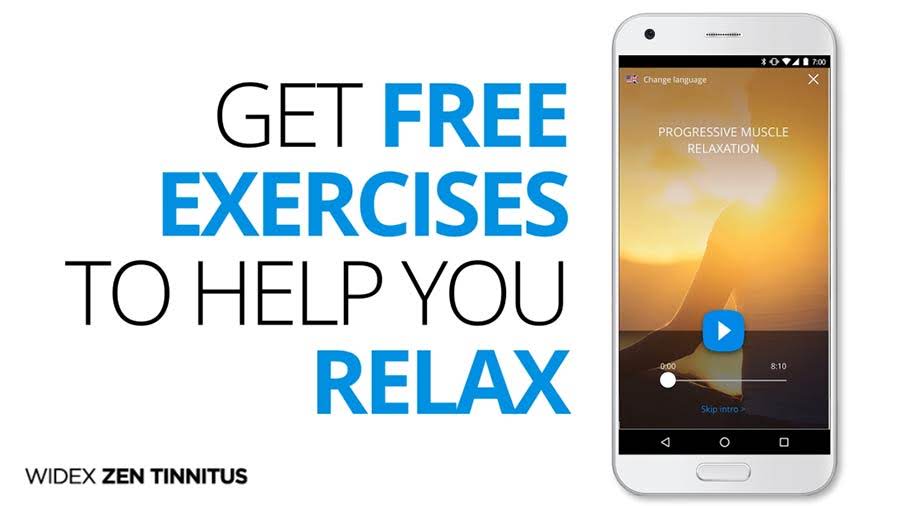
Widex has introduced a new app that will help you to make up your mind, it should also help you with some relief of your tinnitus. Widex say that this app includes a wide range of relaxing and soothing sounds including relaxation and sleep exercises. So we decided to take a look at it.
The App is free to download on Google Play and The App Store, the app is relatively intuitive and easy to use. It provides you with a player with preloaded sounds which include Zen sounds. The Zen sounds presented on the playlist are intended to provide a relaxing sound background for people to listen to in quiet.
Sound Therapy on your Smartphone
Widex have designed the app to be used as a complimentary sound therapy tool in a tinnitus treatment program. The idea is simple, you listen to the Zen sounds in quiet perhaps at the end of a long day or as a refuge during the day. The sounds are intended to provide a relaxing sound background for those who suffer from tinnitus.
The app also provides you with access to educational tools, which are intended to increase your awareness about how to live with your tinnitus . The information covers the basics of tinnitus as well as relaxation exercises that can help.
Intended for Hearing Aids, but can be used alone
The app is intended to be used with Widex hearing aids (either with streaming capability or via a COM-DEX or UNI-DEX). However, you can use it with an set of headphones or wireless headphones if you wish. Widex advise that you listen to the selected sound for at least 2-4 hours a day, at a soft level.
They say that it is important that you choose a sound that you find is pleasant, to help you shift your focus away from your tinnitus. Listen to the sound while you are in quiet surroundings doing other things: reading, relaxing, working, etc.
Sleep Timer
One pretty cool feature is the sleep timer, many people find it quite difficult to get to sleep with the sound of their tinnitus ringing in their head. You can set the app to countdown specific levels of time and turn off after it hits it. So you can be distracted by the soothing sounds and get on with your falling asleep and the app will automatically turn off.
The ‘Widex Zen, Tinnitus Management’ App can help you relax. With a selection of Zen music and relaxation exercises. It isn’t a replacement for tinnitus therapy or a committed professional, or indeed even for a set of well fitted hearing aids with the Zen protocol on them. However, it is a good introduction to the benefits of Zen, why don’t you give it a go? Download it for free on the App Store & Google Play
If you like what you see, share it so others can benefit
Find An Independent Hearing Aid Centre in Your Area
It was about 2003, I was working in Oxford city centre and was walking into town at lunch with a friend. On the way back to the office I was talking away about something or other and, whilst still talking, I turned to my friend and saw he had a really weird look on his face, kind of half embarrassment and half WTF, so I carried on talking anyway. As we walked on I noticed a few other people turning to look at us. I wasn’t sure what was going on but it was strange.
We got back into the office and my friend was all, “uh…….mate, why were you shouting your head off out there?”.
It had been windy out and my hearing aids were doing a reasonable job of blocking the noise out but were also making everything else quieter, so I really was shouting my way down Oxford high street and I thought I was talking normally.
Confused About The Right Hearing Aid For You?
Our buying guide, easing the confusion with clear easy to understand info, we guarantee it will help you pick the right hearing aid for you.
I’ve been pretty careful about wind noise since then!
Wind noise is a real problem for hearing aid wearers, it sounds exactly like the noise when you blow hard into a microphone because that is exactly what is happening: the wind is blowing hard on the aid’s microphone. Depending on what hearing aids you have this can be a very loud noise that more or less makes your aids unusable on windy days. Back in 2003, and for some years afterwards, the roar of wind noise on the microphone was enough to give me a headache pretty quickly.
So how can you reduce the wind noise problem and hear better on windy days?
Wear a hat
Yep, pretty simple fix. A hat pulled down over your ears is going to protect your hearing aids from a lot of the wind.
Ear Gear is also great for keeping sweat and other moisture out of your hearing aids.
I have been wearing Ear Gear for a few months, I use them when I am out running to stop my sweat getting into my aids and also to cut out wind noise as I am moving (not moving all that fast but hey).
Ear Gear is around $25 for a pair and is completely worth it in my opinion.
Upgrade your hearing aids
A slightly more expensive option! Modern hearing aids do a great job of reducing wind noise whilst still allowing you to hear speech clearly. When I talked earlier about the incident in Oxford, my old hearing aids were blocking out a lot of wind noise for me but also blocking out everything else – modern hearing aids do a better job of only blocking out the wind noise but leaving other sounds intact. You can still hear a lot of wind coming through the mic, they don’t block it out completely, but voices are still understandable over the top.
I like to think about and have written about the future of hearing aids and I was navel-gazing during the week. I have been thinking about the widening of the use case of hearing aids. Hearing aids help you hear, but the purpose is to help you communicate. My thoughts strayed to how that ability to communicate could be widened. It also occurred to me that you wear your hearing aids all day, why couldn’t that fact be used to make your life better? Let’s navel gaze together.
Wake Up, Hearing Aids, Get Moving
A busy day ahead, hit the floor of the bedroom running as you do. Put my hearing aids on and they turned on my radio downstairs, notified my coffee machine to start brewing, the lights in the bathroom and kitchen to turn on.
Bob Gave Me My Day
I call him Bob, don’t know why, but hey, you got to call him something right? Bob, the virtual assistant in my hearing aids gave me a rundown of my day, first appointment in Dublin 15 at 09:30. Meeting Tom and Stacey, current travel time 30 minutes. Plenty of time to become human.
Bob and Shirley
Bob tells me that Shirley has sent an activity report, “Shirley” is what my Mother calls her assistant. We have been worried about Mam, she needs to go into a home, but she isn’t having it. The hearing aids we got her are designed to carefully track her ongoing health, movement, temperature and pulse rate.
Shirley is set up to notify us all if there might be a problem, she is also set up to send us daily reports on activity. Shirley will notify us immediately if Mam takes a fall or isn’t moving around much so that one of the family can head over to see what is happening.
Traffic Snarl
Sitting down to my coffee Bob tells me the M50 is a disaster, what’s new? I need to leave now to make the appointment and he has given me a new route. Not too familiar with the route but Bob gives me turn by turn guidance so I get there without a hitch.
Meeting Run Down
Bob gives me a quick rundown of the LinkedIn profiles of Tom and Stacey, telling me Stacey has just been promoted. The meeting goes well with Bob chirping in towards the end to tell me my blood sugar is a bit low. Well Bob, if you hadn’t interrupted breakfast it wouldn’t be.
With the meeting finished I ask Bob for the nearest cafe, he finds the best reviewed one nearby and gives me turn by turn guidance. He also informs me that an email has just come in and my next appointment is cancelled. He then tells me that swearing is impolite.
Confused About The Right Hearing Aid For You?
Our buying guide, easing the confusion with clear easy to understand info, we guarantee it will help you pick the right hearing aid for you.
You Are Really Fat!
While walking from the car to the cafe he tells me I am a fat bloke who doesn’t get enough exercise. Sorry, I paraphrase, what he says is that I have just taken 1000 steps so far today and on current projections will miss my target. Same thing really.
He informs me that my resting pulse rate has increased over the last four weeks and my activity levels have fallen. So back to the gym for the fat lad. I ask Bob to call Richard on his mobile, hands-free calls directly from Bob are pretty sweet, I can’t remember the last time I used a phone for anything?
With the call over, I get Bob to read my emails to me and dictate responses. As usual, he edits out the curses, helping me hear, making my day easy and making me civilised! Wonders will never cease.
End of The Day
I tell Bob that I am going home and he uses IFTT to turn on the heating and start the coffee pot again. As I drive up to the driveway Bob turns on the front light so I can get my damn key in the door. Bob says he can open the door using the electronic catch release applet on IFTT but hey, I like keys!
As I enter I ask Bob to turn the kitchen TV on and start the oven. Dump my stuff in the hall grab some coffee and take a seat. Bob announces to me that he has grabbed the latest marketing podcast I listen to so I tell him to play it.
Relaxing with coffee, a podcast and Bob, what more could a body ask for?
Futuristic? Not Really
Sound futuristic? It actually isn’t, there are many services right now that will allow you to go through your day in this manner, of course, they aren’t centred in and controlled by a hearing aid, but what’s to stop us? In fact, Oticon introduced IFTTT integration with their latest hearing aids.
So technically, having your hearing aids turn on your lights, radio and coffee pot is available to you right this minute. Here is what I said when they were first launched.
Oticon and IFTTT opens up whole new future for the benefits that hearing aids will provide for users
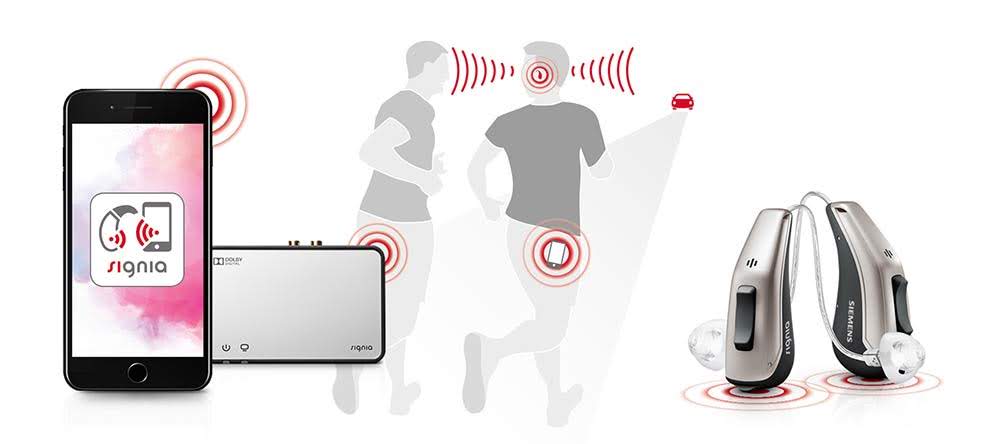
Right now, Signia takes information from accelerometers to change how their hearing aids are working, why couldn’t we integrate that sensor with a hearing aid to always have access to movement data? It would ensure that we knew if an elderly relative was moving around enough. More importantly, it would tell us if they had fallen.
Turning Your Hearing Aid Into a Phone
Where do we go from here, what’s possible and what’s probable? Mobile phone chipsets are getting smaller and lighter, memory is also getting smaller, lighter and cheaper. Bolting on, or overlaying Android over one of our DSP OSs is possible, if not probable just right now.
But as things change and with concerted R&D, that will change. The movement of mobile phone software and app integration is towards making the phone the central source of all personal information and daily updates.
Integrating that type of system in an ear level always on device would make life easier for the people who wear hearing aids. Back to what I have said before, hearing aids are really about communication, that is the heart of what they do.
Yes, they correct hearing loss but they do so to aid communication. I think that all of us in the hearing aid business are beginning to understand that better.
If you like what you see, share it so others can benefit
Job interviews are nerve-wracking experiences at the best of times, a hearing impairment is going to add an extra level of worry to that. So when would you disclose to a potential employer that you are hard of hearing?
121 Captions recently did an excellent article on this, which got me thinking about what I do myself and why.
I mention my hearing loss on my résumé/CV, which is kind of easy for me to do because my CV includes Hearing Aid Know and Audiology Engine.
I can understand people being nervous about mentioning hearing loss upfront as it could be a reason for people to not call you in for an interview. If I was applying for a specific job I would look on the company’s website to see if they mention that they are an “equal opportunities employer” or somesuch, that would be a clear signal to me to put my hearing problem in writing upfront. If they don’t then I probably still would mention it on the CV anyway.
I guess it depends on how bad your hearing loss is, how well you do with hearing aids (assuming you wear them), ask yourself an honest question: how likely is it that your hearing loss is going to be noticed and/or cause a problem at work?
I’ve always worked in offices and most of them are open-plan these days, which are very difficult environments to hear in if I didn’t disclose my hearing loss to people it would be VERY obvious to them very quickly, better to get it out in the open as quickly as possible in my opinion.
Confused About The Right Hearing Aid For You?
Our buying guide, easing the confusion with clear easy to understand info, we guarantee it will help you pick the right hearing aid for you.
But going back to the interview, they are high-pressure and nerve-wracking. I’ve been an interviewer as well as an interviewee and one thing I have noticed from some of the other people interviewing candidates alongside me is that people tend to pick up on the smallest things about the interviewee, things that in normal everyday situations you wouldn’t notice, but in a short interview where you need to make a decision on the person with not much info to go on, these things get noticed. I mean people have brought up really stupid things about interviewees: “he kept scratching his arm”, “she seems kind of distant”, “he said what? a lot”, “she didn’t make eye contact”.
So I would make sure the interviewer knew about my hearing loss before the interview started to avoid them making wrong assumptions and using it as an excuse not to hire me.
I’ve never once had someone say, “well, the hearing loss could be a problem”, the usual response is “We can work around that. Do you need a special phone? How can we help?”. If your hearing problem is out in the open you and the company can make sure you will have the things you need to do the job to the best of your ability, e.g. a power phone, a desk in a corner, etc etc.
Also, during an interview you are going to have a lot of questions fired at you, obviously your answers to those determine whether you get the job, so you need to make sure you hear the questions clearly. If you are struggling to hear you are doing yourself a disservice and maybe costing yourself a job.
If you like what you see, share it so others can benefit




 Itshearingaidknow