Widex has traditionally been seen as one of the most innovative hearing aid brands. They have proven it again and again with introductions of groundbreaking hearing aid features and strategies. They were the very first to introduce true binaural compression (a strategy to process sound as a true pair of hearing aids. The strategy ensures that normal sound cues are retained as much as possible to give a very natural sense of hearing.) with the Clear range and many of the brands didn’t really catch up for years. With the introduction of the Evoke range, they were the first hearing aid brand to introduce machine learning as a feature. Recently other brands have announced they are introducing it, but Widex is still the only brand with an active system. When they introduced the Evoke, they promised that the system would be used to make that hearing aid better. Well, they are fulfilling that promise with a new upgrade, let’s talk about what they are up to.
A working AI solution
As I said, while other brands are talking about introducing it, right now, Widex is the only company to offer an AI solution that allows users to improve their hearing aid sound in the moment based on their own listening intentions. The Evoke Fusion 2 was the first hearing aid to use Machine Learning, which is a form of AI (Artificial Intelligence), to deliver a personalised sound by allowing users to create their personal listening programs in real time via SoundSense Learn.
Widex receives the anonymized input from every user of SoundSense Learn, collects it in the cloud, and then analyse it to create better sound for other users. They have used the data captured from their users to introduce a new system which will allow an even better and more personalised sound. The data collected has allowed them to make the AI system 25% faster, benefitting both existing and new users.
While the new interface allows the user to optimise the sound to personal preferences faster, it will also show them how quickly it’s finding the best personal sound experience. The new interface is designed to engage and encourage users. I spoke to one of the senior guys working on the system and he said that the data is giving them lots of valuable insights, one of the most striking things is that users are creating very unique listening situations for themselves. He said that they can see that they are very different across the range of users.
Invaluable data
That’s invaluable data, because it shows that no two users are the same, it also proves that the system is hugely valuable to users, because there is no way that we could traditionally fine tune for that. The new upgraded Evoke app will allow Widex to collect further insights, they are now asking the wearer to share their listening intention. Again, that is invaluable information because the intent can and will differ from person to person.
It is another piece of the puzzle that will allow clearer insights, insights that Widex will use to make their hearing aids better. Machine learning and Artificial intelligence will dramatically increase the efficacy of hearing aids in ways that we can only imagine, Widex has set us sail on that journey and I for one am excited to see where we end up.
A recent press release from Phonak caught my attention, apparently, they have been working in collaboration with Advanced Bionics on a new wireless microphone system. The system sounds intriguing and the advancement in speech understanding in noise delivered seems pretty impressive. Let’s take a look at what it is all about.
Hearing in Noise
Despite the fact that hearing aids have got better at doing what they should, hearing in noisy situations is still a challenge. Handling noisy situations has always been the focus of hearing aid research, and in fairness, hearing aids have become much better at it. For some people though, it is still and always will be a problem, and in some situations, it can be a problem for many.
New Technology Nine Years in The Making
Phonak formed a special task force in 2009 which involved digital signal processing engineers from Phonak and Advanced Bionics. Their task has been to work on the best adaptation and innovation in microphones for noisy environments. They have come up with an advance in microphone technology that Phonak have labelled MultiBeam Technology.
The core of the new technology is the use of sound information from six separate angles. It uses the multiple microphones in six directions, which allows a 360 degree understanding of the sound surroundings. It uses this information to calculate and compare speech in the overall signal. They say that the direction with the best signal-to-noise ratio will be automatically selected.
The new technology was tested at the University of Texas in Dallas. The test involved a group of 10 patients with hearing aids who were tested in a situation which resembled a noisy restaurant or very noisy meeting with three conversation partners.
61% improvement in Speech Understanding
It was found that speech understanding improved by up to 61% in this group conversation in 75 dBA of noise compared to using hearing aids alone. That is quite an amazing increase in performance and could make the difference between enjoyment of an event and irritation at the inability to hear.
In the press release, Professor Linda Thibodeau, from the University of Texas in Dallas who led the research was quoted as saying: “The Multibeam Technology will allow persons with hearing challenges who have resigned from attending social functions, family gatherings and business meetings to experience significant improvements in speech recognition. This could ultimately lead to improved quality of life as they confidently reconnect with others using discreet, convenient and highly versatile technology.”
Remote Microphones
You can expect the technology to begin to turn up in remote microphones that will connect wirelessly to Phonak hearing aids and Advanced Bionics cochlear implant processors. The technology is a big step forward and may well help many people to live life the way they want to.
Update Feb 11: I had a member of Phonak onto me today and he corrected one element of the story, they are working hard now on making this technology available in future solutions, but these will be universally compatible, so not only to Phonak hearing aids, but to many hearing aids of virtually all brands (provided they have a DAI or T-coil, or streamer with DAI or T-coil).
I think this is pretty fantastic, it means no matter what brand hearing aid you have, if you can get access to a telecoil receiver either on the hearing aid or one of their streamers, or you can use direct audio input shoes with either, you will be able to experience the benefits of this really interesting new tech.
If you like what you see, share it so others can benefit
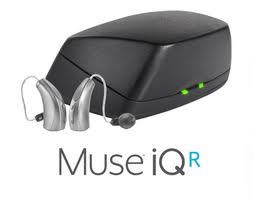
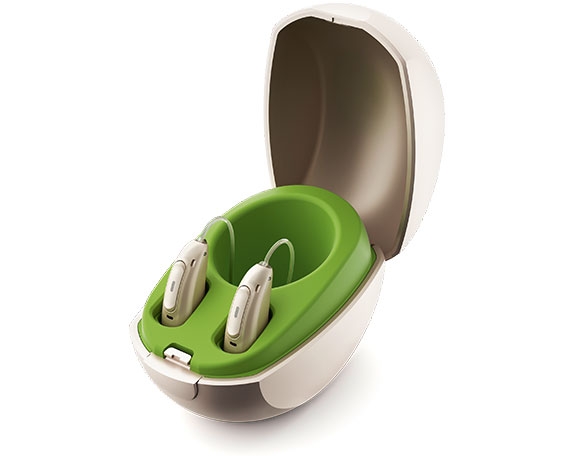
The Muse iQR hearing aids are now available, they are built on Starkey’s latest Synergy® platform and Acuity™ OS operating system. The devices offer 30 hours of use with streaming, full-day charging in less than three hours, a portable charging case for rapid 15-minute and “weekend” charges, a telecoil and finally, a CROS rechargeable system for individuals with a single-sided hearing loss. That’s a whole load of interesting.
20% Longer
Starkey says that their new Lithium-Ion system will provide 20% more power than any of their competitors. They have said that you will get over thirty hours of use with streaming. Obviously, you aren’t going to use it for thirty hours straight, unless of course, you work with my business partner Steve Claridge (Steve The SlaveDriver Claridge!). The thing is though, it means that no matter how much you stream audio, on the phone, listening to music or watching the TV, you simply won’t run out of juice.
Smallest Ever Rechargeable
The bragging rights up to now have been Unitron’s, however, Starkey says that their new rechargeable is 30% smaller than any of their competitors. Considering that is combined with so much power, that’s quite a feat.
Hot Damn, A Rechargeable CROS!
Hot damn indeed, the first ever rechargeable CROS device, about time really. Wireless CROS devices are a bit power hungry. It is the nature of what they do, one device is transmitting all of the time, while the other is receiving all of the time. Offering a rechargeable CROS simply makes sense, although, I am glad somebody finally thought about it.
Portable Charger Case
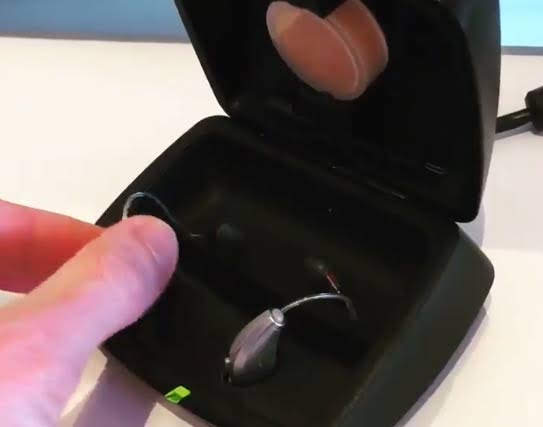
The devices come with an integrated portable charger case. The case retains a charge as well as charging the devices. It means that you can simply bring the case with you if you are going away for a few days. I am not sure of how many charges the case will offer, but we will find out soon enough. As more updates become available, we will let you know.
If you like what you see, share it so others can benefit
We have spoken before on Hearing Aid Know about the connection between hearing loss and dementia, initially with a warning about what was true and what wasn’t in the article “Untreated Hearing Loss Causes Dementia!!!!!!!“. We followed up that article with an update on the changing attitude of the medical profession in the article “Untreated Hearing Loss & The Dementia Connection“. In essence, we now believe that untreated hearing loss is a risk factor for the development of dementia. In this article, Cassie Lomax discusses hearing loss, dementia and why sometimes they can be confused, among other topics.
As well as being a natural part of the ageing process, hearing loss may be connected to cognitive impairment in older people. It is well known that leaving hearing loss undiagnosed can lead to anxiety, depression and social isolation. It is now believed that dementia, instead of starting independently from a gradual loss of hearing, can in some cases be caused by it directly.
Hear All Sides
A recent study reported in The Guardian showed that age-related hearing loss was significantly linked to cognitive decline. One theory behind this, examined by researchers at John Hopkins University, is that so much effort is required to decipher meaning that the brain becomes vulnerable to deterioration. Another is that people with untreated hearing loss are at risk of becoming more dependent on others and so start to decline physically and mentally. Social isolation, often a consequence of hearing loss, is also blamed for the onset of dementia.
Listen to Reason
You may notice someone close to you has started to not register important information and this could cause you to think they are starting to forget things but this might not be because of dementia. It’s impossible to remember something if you didn’t hear it in the first place. If you are concerned, it is important to ensure a hearing test is carried out and once any problems are corrected, it will be possible to deal with any underlying issues such as changes in mood or confusion that may have been masked by the loss of hearing. Understanding the signs of dementia, and being able to spot them early, means that therapies designed to ease symptoms can be started sooner. It also allows more time to consider the possibilities for future care.
Good to Hear
As well as demonstrating some of the same symptoms, hearing loss and dementia can use some of the same techniques to alleviate them. It’s important to ask for clarity and not be embarrassed to ask people to repeat themselves if you haven’t properly heard or understood. Use journals and posts it notes and tools such as clocks and calendars to keep informed. At the same time, if you are dealing with someone suffering from hearing loss and dementia, it is vital to be patient and to keep them included in the conversation, even if it is frustrating for you and them.
If hearing loss and dementia are preventing you or a family member from following everyday conversations, it’s easy to lose touch with basic social structures. For this reason, it’s vital to promote participation in society and keep connected in order to improve quality of life.
If you like what you see, share it so others can benefit
Google announced the release of two new features for Android phones on the 4th of February. The first is an app called Live Transcribe and the second is really a settings change they are calling Sound Amplifier. They’re both designed as accessibility features to help people who are deaf or hard of hearing. Google certainly has been late to this particular party, but it looks like they are set to make up for it. With the direct connection for some hearing aids expected within a few months, it seems like Google is serious about accessibility for the hard of hearing.
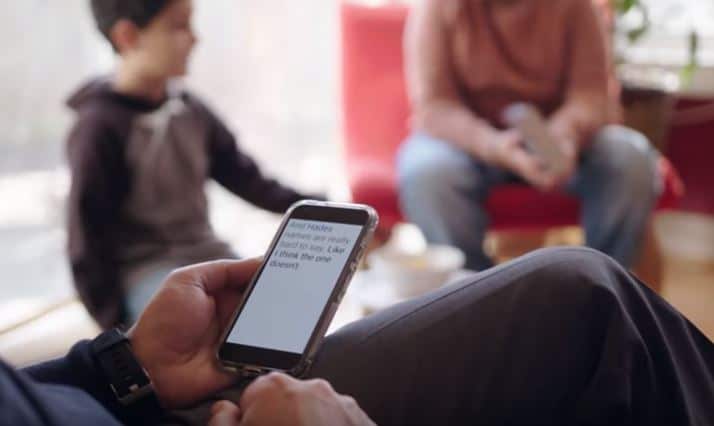
Live Transcribe is an app that automatically transcribes live speech in real time or close to it. It is hoped that it will allow people to communicate in situations where they might not otherwise be able to. Google research scientist Dimitri Kanvesky (who has been deaf from the age of twelve) and engineer Chet Gnegy worked together to bring the App to fruition.
Seeing the conversation
According to a report in The Verge, when you open the Live Transcribe app, it simply starts writing out what it hears in large, easy-to-read text. Dieter Bohn reported that the App works remarkably well, including adding punctuation and even understanding some context. He went onto say “The example Google showed us is that it was able to correctly capitalize the phrase, I am buying a new jersey in New Jersey.” The app does need an internet connection to work because a lot of the brute force computing is done in the cloud.
Design benefits from experience
You can see that a lot of thought has gone into Live Transcribe and I think it benefits greatly from the experiences and clear conceptual thinking of someone who is themselves hard of hearing. Dieter Bohn remarked that two features really stood out for him, one was a blue circle in the corner of the app which pulses slightly to show the ambient noise level so that you can visually see if you need to move the microphone closer to the speaker for it to work.
The other was that if somebody starts speaking after a period of silence, Live Transcribe will vibrate the phone to let you know to look at it to see what is being said. It is those intelligent touches that turn the App into a really useful tool. You can set a primary and secondary language in the app and toggle between them with a quick tap and the App supports up to 70 different languages.
Privacy protected
For people with privacy concerns, you will be happy to know that Google has thought of it. Google has not given the facility to save transcripts and they have said that they aren’t storing audio or transcriptions on their servers, or using any of that data to improve its algorithms.
Making stuff sound better!
Sound Amplifier is designed to allow you to tweak sound settings on your device to improve your ability to hear. It has been described as like a hearing aid app for your phone. For me though, it is like a really cool graphic equalizer for hard of hearing folk. The app was actually originally announced back in May 2019, but they are finally introducing it.
The new Sound Amplifier can be found inside the Accessibility Settings, the new option takes you to a screen with sliders for adjusting various sound settings. The parameters are Boost, Fine tuning, Mic volume, and Sound reduction intensity, along with adjustments for left and right ears. While the sliders are simple and easy to use, Google says that behind each of them are “thousands of parameters.” This App works locally, without the need for an internet connection
Noise reduction
A particularly fascinating feature is noise reduction, you can turn on the noise reduction and even change the aggressiveness of the feature. Again, this App can be used with live speech, so it means that you can get help on the go, the downside is that the feature can only be used with wired headphones though, which kinds of limits it a bit. You plug in a pair of wired headphones and then the phone processes incoming audio to make it easier to hear.
The really bad news
Both will be available preinstalled on Pixel 3 phones in Accessibility Settings and also available via the Google Play Store for other phones. However, Live Transcribe is being released as a limited beta, and Sound Amplifier requires phones running Android 9 Pie, which limits their availability. That and the fact that the new Made For iPhone features will only work with the Pixel 3 and phones with Android 9 Pie is a pretty good excuse to go and get yourself a new phone. Blame it on me, unless your wife or husband live in Dublin, then blame it on some other bloke down the pub.
Everyone knows hearing aids help people with hearing loss better understand the world around them. But that’s only part of the story. Today’s advanced hearing aids do so much more, giving hearing aid wearers new ways to hear the sounds most important to them. As hearing aid technology advances, features that seemed like a pipe dream just a few years ago have become reality.
Key among these modern hearing aid features is direct streaming – the ability to transmit live audio from a mobile device to your hearing aids. Rather than hearing things like music, TV, and phone calls with sub-optimal sound quality, streaming lets you hear what you want directly from your smartphone to your ears and at the perfect volume.
Simple listening events become challenges
If your hearing is diminished, simple things like listening on the phone can be challenging, even if you have hearing aids. The other person’s voice might sound too quiet or distorted, requiring you to adjust the settings on your phone, hearing aids, or both. The result? Rather than enjoying your conversation with a friend or relative, or getting information that you need, you must strain to understand the other person — if you can hear them at all. The situation is similar when watching TV or listening to music.
Your ideal volume might be too loud for your family and friends. This means someone will have to compromise and not hear properly, diminishing the enjoyment of what should be fun activities. However, with streaming, you benefit from a level of personalization and convenience that wasn’t possible before. You may even be able to walk into the kitchen to fix yourself a snack without missing any TV audio!
Better listening through streaming
Instead of continuing the cycle of struggling to hear over the phone, when watching TV, or listening to music, direct wireless streaming provides the solution. With a Bluetooth®-enabled smartphone, your hearing aids become high-functioning earphones that transmit sound in full stereo directly to your ears. Unlike previous streaming solutions that needed an intermediary device, today’s hearing aids can transmit audio signal from the smartphone alone.
The benefits of streaming in this way are many. When it comes to phone calls, you can hear the other person through both hearing aids rather than relying on just one ear as you would normally. Instead of having to put the phone against your ear, you can take the call hands-free. Today’s streaming hearing aids even allow you to easily switch between different streaming events. For example, if you’re watching TV and a phone call comes in, your smart hearing aids will automatically transition to stream the phone call, and return to the TV audio when the call ends.
Since the audio is streamed from your smartphone, they can also be used to control the volume for TV and music. While the audio from phone calls can also be controlled simply by the phone’s regular volume controls, you can adjust the volume of streaming TV audio or music through your hearing aid manufacturer’s app. Moreover, by streaming sound directly into your ears and adjusting the volume to the best setting, there’s no need to argue with your family about the TV being too loud or quiet.
Maintaining situational awareness
While direct streaming capability provides greater efficiency and convenience in how you go about your day, the technology behind streaming doesn’t sacrifice situational awareness. The technology can also adjust the hearing aids’ microphone input level along with the streamed audio signal to help you get the right balance of audio and ambient noise. For example, during streamed phone calls, the hearing aid can still pick up sounds in the environment, but just at a lower volume. This helps you hear other important sounds in the landscape without impacting the sound quality of the conversation.
The same holds true when watching TV or listening to music. The streaming audio doesn’t have to block out the rest of the landscape, so you can hear if someone is calling your name or if something else needs your attention. Connected hearing aids also include carefully selected default settings for these activities, resulting in less effort to fine-tune your hearing aids for each listening environment.
Stream the sounds you love
When paired with your smartphone, your hearing aids become powerful devices that can change how you enjoy your favourite everyday activities. From listening to music and watching TV to talking to your family and friends on the phone, the ability to transmit sound from your smartphone to your ears is no longer a dream. The reality is that you can stream sound for an optimal listening experience, no matter what you’re doing.
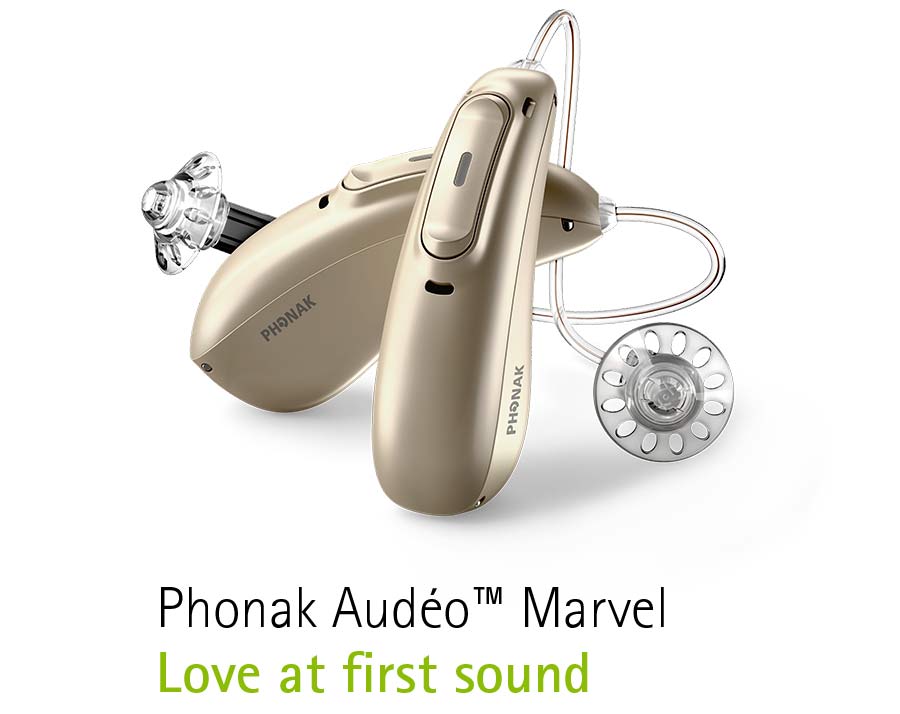
Phonak have announced the introduction of a new range of hearing devices that they are calling Marvel. The early information available about the devices and their features is that they are just that, a marvel. Let’s talk about the new Phonak Audeo Marvel. Firstly and probably most importantly, they sound good, performance in noise appears to be pretty good as does overall sound quality. Streaming audio is excellent; it is full with good bass mid and treble. The devices offer direct stereo streaming of audio from any Bluetooth enabled audio device and stereo truly hands-free telephone calls with any Bluetooth enabled mobile phone. And of course, there is more, I was lucky enough to speak to Martin Grieder who is Group Vice President of Hearing Instruments Marketing at Sonova and an old Friend, Jason Mayer who is Vice President of Commercial Sales in Phonak US.
Under Pressure For MFI
Phonak has been under pressure for the last few years because they are one of the few mainstream hearing aid brands without a Made-For-iPhone product. The introduction of the Audeo B-direct was pretty impressive, and while it connected to iPhones it still wasn’t a Made For iPhone product within the traditional concept. Phonak called it Made For Any Phone as it solved the dilemma of connecting to non-Apple phones which was pretty attractive for many.
A Unique Proposition
Phonak had decided to go a different way with their connectivity, one that would give them a direct connection to any mobile phone. They used the traditional Bluetooth protocol, which offered huge benefits, but also real technical problems. Unfortunately, that direction came with a price, no stereo audio streaming of phone calls or any other audio. It also ensured that Phonak’s quite famous ear to ear features did not work. For many, that was a compromise too far.
I spoke to an engineer at the time, and we discussed why Phonak had used one Bluetooth protocol with the B-direct that didn’t offer audio streaming, our consensus was power drain was the real issue. So, with the launch of a new product coming, I honestly expected to see a leap forward for Phonak in audio streaming but I was still convinced they would probably go down the route of traditional Made-For-iPhone (MFi). However, I was wrong, and I am delighted I was.
I put it to the two gentlemen that while Audeo B-Direct had been an interesting step forward, that it hadn’t satisfied the market really because it wasn’t essentially a fully featured Phonak hearing aid. I asked was the power drain and management a factor in that decision.
New Power Management
Martin replied that indeed the underlying issue for them was the power management and that is why they used the Bluetooth protocol that they had with the B-Direct. I said that I had been surprised that they didn’t use the full protocol and I had guessed that battery drain was an issue. Martin explained that they had designed a completely new power management system which allowed them to use the classic Bluetooth protocol to its full effect.
This really was the core of the new devices and their feature set. The new power management system will ensure that users will experience more or less normal battery usage even when streaming audio. While the lads were able to give me the stats on the Rechargeable option, they were unsure about the zinc-air figures. I will follow up with them at a later date.
I had a further discussion with Oliver Frank he explained more about the decisions that were made relating to the B-Direct. He said “That power consumption played very little part in their decisions. To deliver without compromise there were the following challenges:
BT is a peer to peer protocol. To enable two ears requires a proprietary extension to the standard BT protocol. This is difficult, complex and took a bit longer than Fall 2017
Music streaming (A2DP) was the two protocols that we put on lower priority based on our consumer research. Phone call and TV are by far the more important use cases for our target group. This does in no way mean music is not important and we would have liked to launch in in Fall 2017
BVST (Binaural Voise Stream Technology) – full audio streaming between two ears – was thought to be impossible for a hearing aid form factor by many engineers in- and outside the industry and was one of the biggest challenges. It requires a proprietary protocol and best radio sensitivity”
He also discussed the expected battery life of the hearing aids:
“The following battery life time is defined as 16 hours usage per day and consists of · 8 hours AutoSense OS 3.0 and Binaural VoiceStream Technology · 4 hours Bluetooth streaming, phone call (HFP) and media (A2DP) · 4 hours TV usage with TV Connector (AirStream Technology)”
Hearing aid
Audéo M-R
Audéo M-312/T
Audéo M-13T
Battery life time
1 day / >16 hours
60 hours
100 hours
As you can see from the table,you will get a lot of streaming and still have a full days’s use from the rechargeable. The M-312/T will provide just under 4 days of use, however, and in fairness, that is with a lot of streaming. The M-13T will deliver closer to 7 days of use even with all of that streaming. It will be interesting to see how these figures correalate with user experience. I would imagine, most people with a 312 will get four to five days of battery life. That is pretty standard with competing MFI hearing aids.
More Than Just Audio Connection
Martin explained that the Bluetooth connection was being used for more than just audio streaming. It is also now being leveraged for data exchange between the mobile phone and the hearing aids. It is this ability that ensures a much wider use case is available to consumers and professionals. The data exchange capability is the core of the new ability to remote fine tune the hearing aids in real time and for the Patient to give day to day feedback with the new Hearing Diary.
Remote Fine Tuning
I asked the gentlemen if they felt that consumers were ready for remote fine tuning and if they believed that there would be much uptake by consumers and professionals. Martin replied that certainly in their research consumers were interested in having this type of ability. While not every user may be interested, there will be a growing number who will come to expect it. As for the professional adoption, like consumers, there would be some who will be early adopters and the practice will probably grow from there.
No Real Loss of Face to Face
I said that I felt that the system did not deliver a sense of losing in-person or face to face time. That in fact, the video calling system gave the same sense of interaction, just through a different medium. Martin agreed that they had designed the remote ability with that in mind, they wanted to ensure that there was still the same sense of engagement between the professional and the consumer and they believed that they had delivered that well.
More Control, More Involvement
I further asked about the new app ecosystem that had been built around the new product and asked for their thoughts and reasoning for the concepts. Martin replied that more and more consumers wanted both control over and involvement in their hearing care. The new apps were designed to help customers become more engaged and involved in the process. Again, they felt that these apps would only further cement the relationship between the consumer and the professional.
Speech To Text
I asked about the text to speech app they had released with the new product, I found it fascinating and a really intelligent use case. Martin said that Phonak saw their job as aiding communication and they knew that even with audio streaming, some people still had some problems understanding what was being said on the phone. The new app acted as a transcription system which allows users to read what is being said on the other end of the phone. Thanks to hands-free phone calling you can hear and at the same time read the conversation. They believed that the app would give people with hearing loss that extra help to understand people on the phone, especially, people whos voice they may not have been familiar with.
Love at first Sound?
I asked about the change that has been mentioned in the first fit of the new Marvel. They said that they had gathered a lot of data in relation to customer preference for the first fit of their hearing aids. They had anonymous preference data from thousands of customers which all pointed towards one conclusion, that the existing first fit protocol wasn’t quite right for new customers. The decision was taken to change the first fit prescription to be more in line with what consumers were actually looking for. Hence, Love at First Sound for new users.
RogerDirect Coming
I asked the gentlemen about RogerDirect, I understand that it is coming in 2019, but when it does, will it simply be a backward compatible software upgrade to existing hearing aids? Martin said that the hearing aids can be upgraded in Fall 2019 by hearing care professionals so that RogerDirect™ can be installed which allows the Roger microphones to stream directly to Marvel hearing aids without having to attach an external receiver.
A Very Strong Offering
I would like to thank Martin Grieder and Jason Mayer again for giving me their time. I think that the Marvel is a very strong offering from Phonak, I listened to the audio streaming feature and I was pretty impressed with the quality. I didn’t actually get to test the hearing aids, I just listened to audio samples. So it will be interesting to see feedback from users when they actually do hit the market. Let’s take a deeper look at what we Know about the Phonak Marvel
What Do We Know About Phonak Marvel?
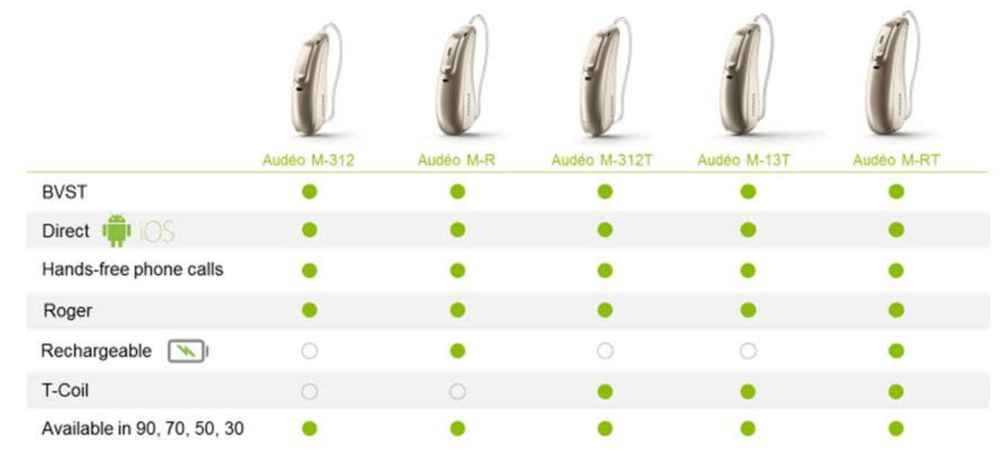
This is the initial offering on the new Marvel platform, as is common with Phonak the Audeo (their Receiver In Canal devices) is the first to be introduced. The Marvel Audeo family will be made up of five hearing aids of which two will be rechargeable. There will be no size 10 Audeo on the Marvel family, the smallest traditional battery size will be the 312. The rechargeable offerings are interesting, Phonak have decided to offer a smaller rechargeable device and slightly larger one that will offer a telecoil as well. That makes a lot of sense as Loop systems only seem to be becoming more and more popular.
Rocker Switch, Not Push Button
Phonak have also changed the push button on the devices, they now offer a rocker switch instead for more functionality.
Multi-functional and Feature Rich Hearing Aids
This hearing device is a hugely multi-functional and feature-rich hearing aid. The Marvel contains probably every single one of the current headline features in the hearing aid world, and they have even thrown in some new ones, here’s the quick list:
Stereo Bluetooth streaming: Stereo streaming from any Bluetooth enabled device, that means iPhone, iPad, laptops, computers, Macs, Android phones, Windows phones, hell any Bluetooth-enabled phone.
Real Hands-free calling in stereo: Like the Audeo B-direct, the Marvel offers true hands-free calling from Bluetooth-enabled phones and VOIP services like Skype, except, to both hearing aids.
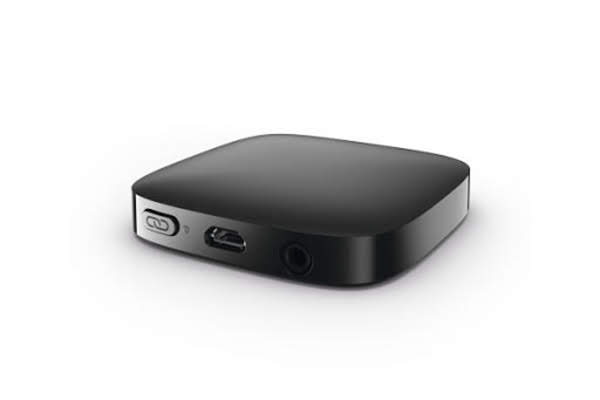
TV Streaming: Marvel can stream directly from Bluetooth-enabled TVs, and can also stream from the Phonak TV Connector accessory.
Rechargeability: They say both Marvel rechargeables will deliver a full day of hearing aid use from a single charge.
Remote adjustments: Marvel hearing aids can be adjusted remotely by your hearing expert.
New App Eco-System: Brand new apps to make life easier and engage the consumer in the process.
RogerDirect: This is really fascinating, for the first time, users will be able to stream from Roger devices directly to their hearing aids.
Full Phonak Feature Set: Unlike the Audeo B-direct, the Marvel devices will not be hobbled, they will offer full and up to date inter-ear features.
Stereo Bluetooth streaming
As I said, unlike the Phonak Audéo B-Direct, Marvel will stream stereo audio from any device capable of streaming audio via Bluetooth. This pretty much includes any device you can think of. Want to connect it to your Android phone? Go ahead. Want to connect it to your Mac Book or Windows laptop? Yup, no worries. That is pretty impressive stuff.
The quality of streaming audio appears to be excellent, the bass is full and warm and treble gives that zing you would expect. The Audeo B-Direct was a deal breaker for me because of the lack of audio streaming, Phonak have made up for that in a big way with the Marvel.
True Hands-Free Calling
As with the Audeo B-Direct, the Marvel offers true hands-free calling, however, it does so in stereo. So you will hear your phone calls in both ears giving you a better chance at understanding what is being said. Again, because it is true hands-free, you don’t need to hold your phone, in fact, your phone could be anything up to thirty feet away. You simply hit the button on your hearing aid to answer the call.
Versatile TV Streaming
While the Marvel hearing aids will connect to the Phonak TV Streamer, they will, in fact, connect directly to any Bluetooth enabled television. You simply need to set up the connection within your TV menu and the TV audio will stream directly to your hearing aids.
Rechargeable Option
The Marvel comes with two Lithium-Ion rechargeable hearing aid options. One device is smaller while the larger device offers a telecoil. Phonak say that the power cell will deliver up to sixteen hours use with four hours of audio streaming on one charge. That means even if you use the audio streaming function you should get a full days use out of the devices.
For me, the rechargeable option would be the device I would go for. Even with the new power management system, I would imagine the Bluetooth connection is pretty power hungry. With the rechargeable option, you never have to worry about battery drain. As I said, when I have full figures for the battery time on the zinc-air models I will update the article.
Remote Adjustment
This is the first ever Phonak hearing aid outside of the VA in the US which offers remote fine tuning to consumers. Phonak have been very intelligent with how they offer the system, it is a live system which means changes to the hearing aids are made in real time. The remote fine-tuning is undertaken during a video call which is begun from the professionals fitting software. It works really well and the video call offers face to face engagement with the professional. I saw this feature at work and I was very impressed with the functionality and experience.
New Apps
To facilitate the remote fine tuning Phonak have delivered a new app called the myPhonak App which allows you to access a hearing diary and the remote support feature. The hearing diary is to give feedback about your day to day experiences with the hearing aids and is a large part of the co-operation concept that Phonak has brought with these hearing aids.
The remote support feature is a fantastic option that will allow real-time fine-tuning of your hearing aids. This opens up real opportunities for fine-tuning of the hearing aids live in the situations you are having difficulty in. I think this will be a very popular feature moving forward and I believe more and more consumers will begin to look for this service as a matter of course.
Speech To Text App
The Phonak myCall-to-Text app allows you to read, in real time, what the person on the other end of the phone says. I mean this is a fantastic feature, what is even better, you can download this app and use it without wearing Phonak Hearing aids. I mean how cool is that. The app just works, it is pretty amazing to see it in action. The app writes out what the person on the other end of the phone says, in real time. It should allow you to communicate with anyone, anytime, anywhere without worrying about missing out on the conversation.
RogerDirect
Roger is an FM system from Phonak which offers direct streaming from accessory devices like microphones. The devices are viewed as the gold standard by many, however, because they only work with Roger receivers which need to be attached to your hearing aids, there hasn’t been a huge uptake in the devices. This really is a pity, because they truly offer fantastic help in more complex sound situations.
With the introduction of the Phonak Marvel, you will no longer need to use extra receivers for Roger devices, they are built in. Marvel hearing aids feature RogerDirect™ which allows Roger microphones to stream directly to Marvel hearing aids without having to attach an external receiver. This innovation, means that you can have easy access to the full Roger line-up which can really help you hear conversations even in very noisy environments such as restaurants, meetings at work and school activities. This feature will not go live until next year, however, every existing Marvel hearing aid will be upgraded with it.
Fully Featured Hearing Aids
As I said, these hearing aids aren’t hobbled in any way, they offer the very pinnacle of Phonak feature strategies including their much-vaunted ear to ear features. They also have a brand new Autosense, Autosense 3.0 which is the newest generation of the proprietary Phonak technology which recognises and automatically adapts to precisely match more listening situations than ever before. Interestingly enough, Autosense now classifies streamed signals and will adapt how it works to better help you to hear the way you should.
There is a lot to talk about with theses hearing devices, Phonak has really delivered quite an amazing new platform. I will be very interested to hear the feedback from users when these devices hit the market. I will also be very interested to see the take up on the remote support feature. We will further investigate the different facets of these devices over the next few weeks. The rechargeable Audéo M-R will be available in November along with the zinc air Audéo M-312, and Phonak will add the Audéo M-312T and Audéo M-13T in February 2019. A rechargeable version of Marvel with T-Coil (Audéo M-RT) and RogerDirect functionality will be available as a firmware upgrade in Fall 2019.
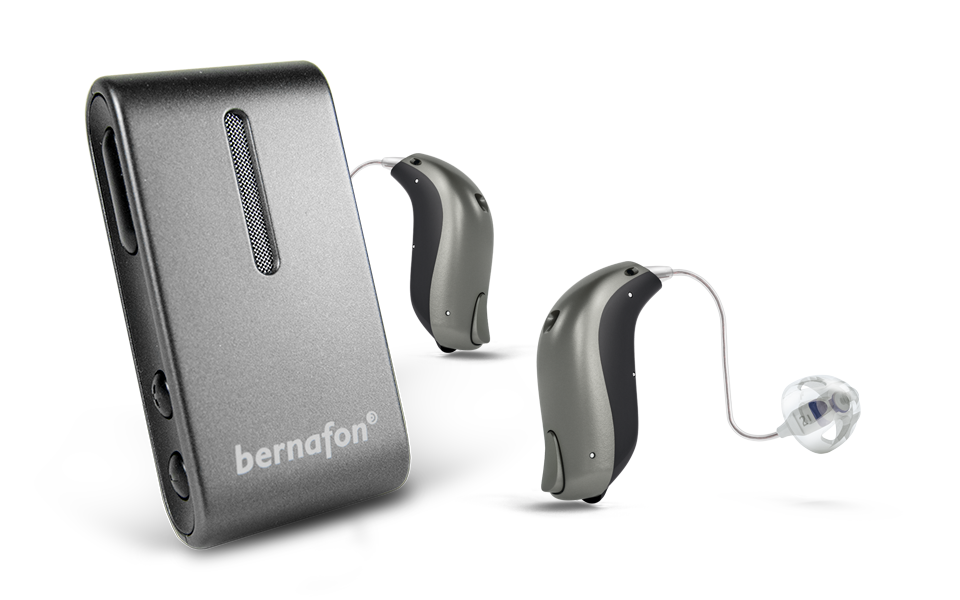
As more news leaks out about the Moxi All, it seems that Unitron has a really solid offering with no limitations. They are saying that the Moxi All will deliver sixteen hours of use with a full charge even with two hours of phone calls and five hours of TV streaming. Not just that, there will be no limitations in features and all of the usual features will be working at every tech level. Let’s take a look at the latest.
Sixteen hours of use with two hours of phone calls and five hours of TV, cool or what?
The Pertinent Points About The Moxi All
Let’s take a quick rundown of what we know so far about the Moxi All
Made For Any Phone
Rechargeable Hearing Aid
Hands-Free Calling
No Streamer
7 Hours To Full Charge
16 Hours of Use With 2 Hours of Phone Calls and 5 Hours of TV Streaming
A Full Complement of Features at Every Technology Level
No Compromises Hands-Free Calling
Fully Functional at Every Tech Level
Unitron has said that their high-end binaural features are fully functioning in Moxi All. They are in fact using the new SWORD™ 2.4 GHz chip to manage both the direct connection and streaming and any binaural features that they run. It simply means there will be no compromise if you choose the benefits of hands-free calling with Unitron.
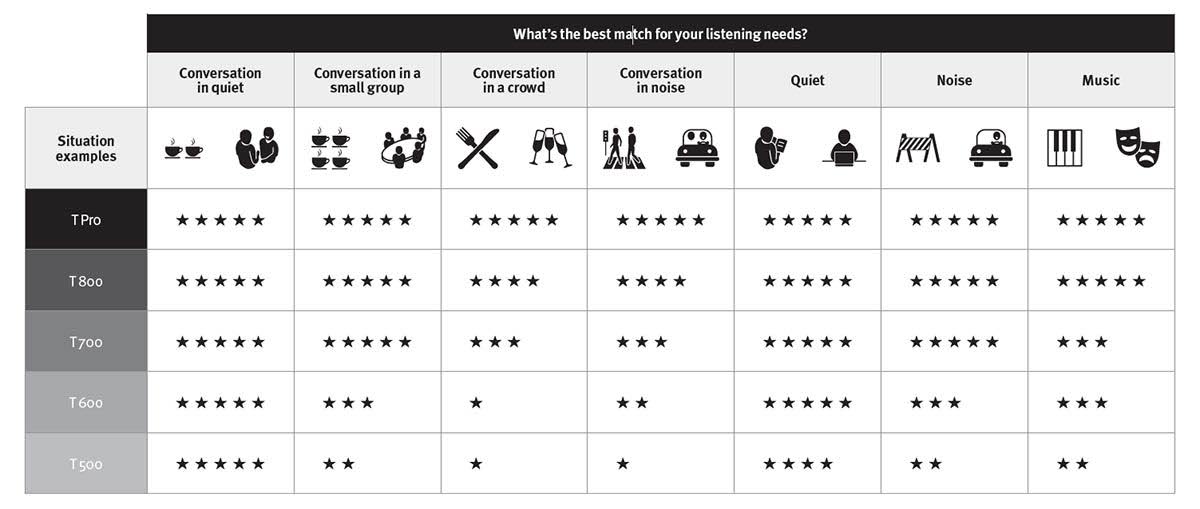
Tech Levels and Lifestyle Situations, click on the image for a larger picture
Flex Enabled
The Moxi All will also be Flex Enabled, which means that you can try different levels of technology if your Provider supports that and you can even upgrade your device to a higher level of technology after your purchase for a fee. It simply means that you can be more confident making a decision about your purchase because you should get to try the tech level you are thinking of and you know you aren’t necessarily stuck with it.
The Moxi All seems to be shaping up to be an interesting hearing aid. The Tempus platform, which the Moxi All will run on, has been pretty well received and I know many Professionals who swear by it. We hope to get a hold of a pair soon enough and put them through their paces, when and if we do, we will let you know.
If you like what you see, share it so others can benefit
One of the biggest complaints that people with hearing loss have is that they can’t hear well in noisy situations. The reason is simple, generally, most people with hearing loss can hear low-frequency sound well while their main issue is in the high frequencies. Noise is nearly all low-frequency sound, so they can hear that very well, the important parts of speech are high-frequency and they don’t hear them well at all. While hearing aids go some way to correct the problem, sometimes, even the very best hearing aids don’t fix the issue entirely. However, there are things that can help you out.
Remote Microphones
A remote microphone is a Bluetooth hearing aid accessory, most of the hearing aid brands offer them as an add on solution. With some of the hearing aid manufacturers you will need two devices, a remote microphone and a neck streamer. However, many of the brands offer direct connection remote microphones that don’t need a streamer. They simply connect to your hearing aids directly, even up to thirty feet away.
Even with the best hearing aids, sometimes hearing in noise is difficult at best
I have used a remote mic in noisy situations and it has honestly been a revelation. It made it easy to hear my companion even though we were in a noisy cafe with a lot going on. It really was an outstanding experience. The thing is, even with the very best hearing aids, sometimes hearing well in noise is difficult. When your hearing is damaged, it causes a lot of issues with understanding in noise, while good hearing aids help to fix it, they do not return normal hearing or normal abilities.
For some people, hearing aids alone can do the job, for others of us though, our natural ability to sort speech from noise has been compromised and there is only so much hearing aids can do. In cases like that, you need all the help you can get and a remote mic is a fantastic aid to hearing.
Using Communication Strategies
If a remote mic isn’t the answer for you, well then you need to think about other ways to help you hear better. We call these communication strategies and they are a large part of how we help people to hear better. There are certain things that you can do to give you a better chance to hear speech in noise.
Top Tips To Help You Hear in Noise
If you are planning a night out, always try to think ahead, pick a quieter restaurant or a less busy time. Try to find a restaurant with soft furnishings and carpets. Hard surfaces are your enemy, the cause echoes and bounce sound around.
As I said, pick the best day and time to dine out, a time when it is quiet.
Always try to get a table in the quietest part of the restaurant away from the kitchen, bar, service area.
Always try to sit with your back to the bulk of the noise, this will allow your directional microphones to work at their best.
Try to make sure you are sitting in a well-lit area, makes it easier to see your companion’s face.
Request that staff turn down background music.
Use your directional microphones programme if one is set up, as I said, always be sure to sit with your back to the main noise source.
Don’t freak out, try to relax and enjoy yourself, remember that even people with normal hearing experience greater difficulty in a noisy listening environment. Why wouldn’t you?
Researchers at the Karolinska Institutet have identified four types of neurons in the peripheral auditory system, three of which are completely new to science. The analysis of these cells may lead to new therapies for various kinds of hearing disorders, such as tinnitus and age-related hearing loss. The study is published in Nature Communications.
When sound reaches the inner ear, it is converted into electrical signals that are relayed to the brain via the ear’s nerve cells in the cochlea. Previously, most of these cells were considered to be of two types: type 1 and type 2 neurons, type 1 being the neuron transmitting most of the auditory information.
A new study by scientists at Karolinska Institutet shows that the type 1 cells actually comprise three very different cell types, which tallies with earlier research showing variations in the electrical properties and sonic response of type 1 cells.
“We now know that there are three different routes into the central auditory system, instead of just one,” says François Lallemend, research group leader at the Department of Neuroscience, Karolinska Institutet, who led the study. “This makes us better placed to understand the part played by the different neurons in hearing. We’ve also mapped out which genes are active in the individual cell types.”
The team conducted their study on mice using the relatively new technique of single-cell RNA sequencing. The result is a catalogue of the genes expressed in the nerve cells, which can give scientists a solid foundation for better understanding the auditory system as well as for devising new therapies and drugs.
“Our study can open the way for the development of genetic tools that can be used for new treatments for different kinds of hearing disorders, such as tinnitus,” says Dr Lallemend. “Our mapping can also give rise to different ways of influencing the function of individual nerve cells in the body.”
The study shows that these three neuron types probably play a part in the decoding of sonic intensity (i.e. volume), a function that is crucial during conversations in a loud environment, which rely on the ability to filter out the background noise. This property is also important in different forms of hearing disorders, such as tinnitus or hyperacusis (oversensitivity to sound).
“Once we know which neurons cause hyperacusis we’ll be able to start investigating new therapies to protect or repair them,” explains Dr Lallemend. “The next step is to show what effect these individual nerve cells have on the auditory system, which can lead to the development of better auditory aids such as cochlear implants.”


 Itshearingaidknow