A discrete well designed and satisfyingly high-quality solution
So, I got myself a set of Unitron’s latest hearing devices the Moxi All. I was fascinated when they were announced because it was clear that Unitron would use the Bluetooth connection without compromising function in their top end hearing aids. That has to be a good thing for the Patient. The other thing I was interested in was to find out how they worked, more how well they worked really.
Unboxing The Aids
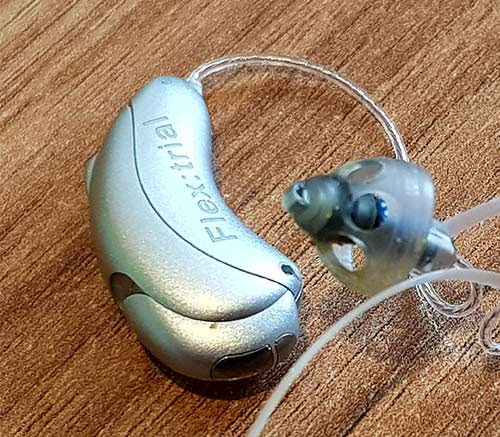
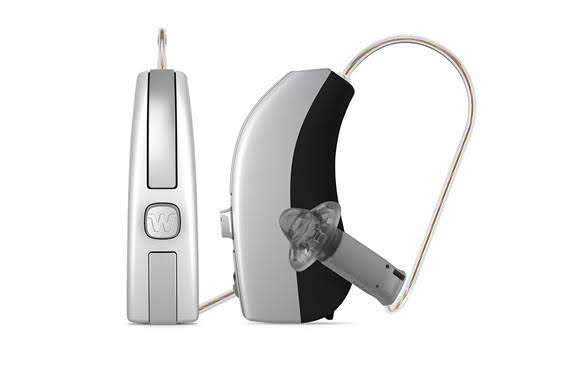
The hearing aids themselves are very pretty, mine is silver coloured and they are quite discreet for a size thirteen battery RIC. That is even more impressive when you consider that they are also rechargeable. Unitron has thought out the design of the battery doors well. While they are slightly larger than the profile of the hearing aid body, the Unitron designers have used this to their advantage, rather than a disadvantage.
The slightly bulging battery door is actually aesthetically pleasing and somehow accentuates the design rather than detracting from it. The picture here really doesn’t do them justice.
Of course, that’s just my opinion, others may well differ. The battery doors are stiff, I mean really stiff, I would assume over time they will loosen. Although in fairness, with the rechargeable system, you shouldn’t be opening them very often one way or the other. The use of the ZPower system allows you to throw in a traditional zinc-air battery if you forget to charge or go on a trip and forget your charger.
The Charger
The charger is typical of the ZPower range, it is satisfyingly heavy and it is equipped with the magnetic slots which gently pull the aids into the charger when you go to put the devices on charge. I find it ridiculously satisfying every time I do it, (definitely, dotard years setting in).
Both the hearing aids and charger speak of quality, I know that sounds a little strange, but it is something I consider. I had a set of hearing aids from a particular manufacturer a good while ago and while they worked exceptionally well, they were disgustingly plasticy (not a word, but you know what I mean right!).
I mean you can spend an inordinate amount of money on a set of hearing aids, you would like to think that the quality of materials used was high. I mean they should feel like precious objects because they really are. Which brings me to the packaging and presentation used by hearing aid manufacturers, it’s generally rubbish. Don’t get me wrong, it is functional, tends to be sturdy and nice enough, but it doesn’t really speak of high-quality luxury goods does it?
Anyway, I am digressing, back to the Moxi All, the charger is easy to use and is supplied with a plug with a flattened cable which won’t take up much space and is less likely to become crimped or squeezed when you throw it in your travelling bag.
Wearing Them Bad Boys
I charged the hearing aids and then programmed them up. I then paired my phone to them. The aids just pair to one hearing aid, in my case it was the right ear which I would say is the default. Apparently within the programming software, the professional can change that if you wish, but it was fine. Anyway, this all happened late at night, so I put them back in their charger and went to bed.
Frightening The Jebus Out of me
The next day I took them off the charger and put them on, I had a busy day in the clinic so I thought I would put them through their paces. I was driving across the motorway to work when the aids suddenly burst into life with a jingle that started in one ear and moved to the other. It frightened the bejebus out of me because I wasn’t expecting it and it took me a minute to work out I was getting a phone call.
I tell you what, that woke me up, anyway, I took the call through the hearing aids without incident. Considering both I and the caller were on mobile phones and I was in a moving car, I have to say the call quality was excellent. In fact, most of the calls I have had on the devices have been outstanding. But I will talk about that in another article.
Pretty Comfortable and Secure
I have found the hearing aids to be pretty comfortable and they are also really secure on the ear. The receivers I am using have open tips and they also have the retention tail on them that wraps into the bottom of your ear bowl. I found them a bit fiddly at the start, but quickly got used to them. During the time I have been wearing them I have never felt that there might be a chance I could lose them.
Anyway, enough for now, those are all my first impressions of the hearing aids, in a further article, I will talk about streaming audio, taking phone calls and day to day experiences of the devices.
If you like what you see, share it so others can benefit
A lot of people in my profession think that Unitron hearing aids are simply cheaper, re-badged Phonak hearing aids. It’s simply not true, while Phonak and Unitron share some technology, what they do with that tech and the features they design are very different. Those are pre-conceived ideas and personal bias, tut tut. I have known this for many years, no pre-conceived ideas or personal bias here. Now Bernafon, of course, they are just simply cheaper re-badged Oticon hearing aids. Turns out, that was a pre-conceived idea and a personal bias and I am a Gobshite. I shall stand facing the corner for an hour in penance, trust me.
The Man Down The Pub
It all started one day when I met a man down the pub, well, it was a hotel lobby actually at the ISHAA Conference yesterday and the man was a Bernafon representative. Turns out that while Bernafon and Oticon do share technology, what they do with that tech and the features they design are very different. Of course, if I wasn’t being a lazy idiot, I would have known this. As I listened to the feature sets and the strategies they use, I thought to myself, Jebus Geoff, some of this is really clever.
Long-Standing Ridicule
So Bernafon has been ridiculed by many for something that they call ChannelFree amplification. I have heard it said many times if they are channel free, why do they have 16 channels of directionality? To be honest, I was never that interested that I investigated, pre-conceived ideas at work again. It turns out that Bernafon does deserve ridicule, but it is only for choosing an absolutely stupid name for what is a very unique and interesting way to amplify speech.
Bernafon gives equal emphasis to each letter sound with their amplification strategy. In essence, they try to ensure that each letter sound is similar in intensity so that the user gets the optimal opportunity to understand speech. For instance, sh is a little less intense in volume than ca. Bernafon tries to ensure that the volume of both sounds is the same.
This is a little different from how other hearing aid brands do things and Bernafon called this really interesting strategy ChannelFree. They really need to call it something else, like speech sound equalisation, or harmonised speech strategy or whatever, answers on the back of a fifty-pound note and send them in.
Pretty Smart Quirks
The more I listened to Bernafon strategies, the more I thought that they had some pretty smart features. For instance, if you use your volume control on your Bernafon hearing aid to turn down the sound in a noisy environment, the first thing it does is to drop the low-frequency amplification. It does this on the basis that most noise is low frequency and turning it down a bit might give you a better chance at understanding speech.
I mean that is a pretty cool strategy, in fact, it is an excellent and intelligent strategy and I am not sure any other hearing aid brand does it. They have many features that I can say the same about, so, I stand admonished and shamed for pre-conceptions. Over the next while I will be adding a Bernafon page to the site that details their latest offerings and the features involved.
If you like what you see, share it so others can benefit
I had a really nice training meeting with an old friend who works with a hearing aid brand recently. She worked with me many years ago in one of the hearing aid providers I worked for and is a qualified hearing aid professional. I really love meeting up with her because we generally have a good giggle. She was telling me that she had suffered a sudden sensorineural hearing loss last year and didn’t recognise it for what it was. She waited nine days to get treatment, nine days! Thankfully, the treatment that was given worked and the outcome was favourable. It struck me that even if a trained professional was slow to recognise a serious problem, how quick would a so-called, normal Joe Soap. So here I am again with the warning.
Treat any sudden hearing loss as a medical emergency until you know better!
Unrecognised and Debilitating
Last year, Ruth Kirkham spoke about her experience with Sudden Sensorineural Hearing Loss (SSHL) in her article “Hear Today, Gone Tomorrow – An Account of Sudden Sensorineural Hearing Loss (SSHL)“. Her experience like many others was a tale of a serious problem that was unrecognised and delayed treatment that meant she was left with a debilitating condition.
The problem is that there really is not enough awareness out there about SSHL either in the general public or in fact the wider medical community. In the audiology profession, we are all too aware of the problem and its seeming increase in prevalence. Although, as my tale shows, that is no protection.
Woke up With a Hearing Loss
My friend woke up one morning with a hearing loss in one ear. She had been suffering a little with some mid ear problems so she didn’t immediately put much weight on it. However, nine days later, I mean hello! Nine days later she asked another professional to undertake a hearing test. Anyway, the test showed an asymmetrical sensorineural hearing loss in the ear that had been giving her problems, not the conductive loss she had thought it was.
She immediately received steroid injections intra tympanically (through the eardrum) among other treatments. Thankfully, after a few weeks, it was confirmed that her hearing had returned to normal levels. It was thought that there may have been some vestibular problem, or perhaps some sort of viral infection that affected her ability to hear because she was mildly dizzy as well.
A Wonderful, but Lucky Outcome
My friend’s treatment outcome can only be seen as a wonderful but amazingly lucky one. She was amazingly lucky to have her hearing restored considering the treatment was delayed and not given until nine days after the initial loss. Most of the experts agree that forty-eight hours is the ideal window.
Not Much Time to get Treatment
That’s the thing, forty-eight hours is not a long time to get diagnosed and treated. So you can’t hang around and you shouldn’t. If you wake up with a hearing loss, treat it as a medical emergency, get a hearing test as soon as and then present yourself at accident and emergency.
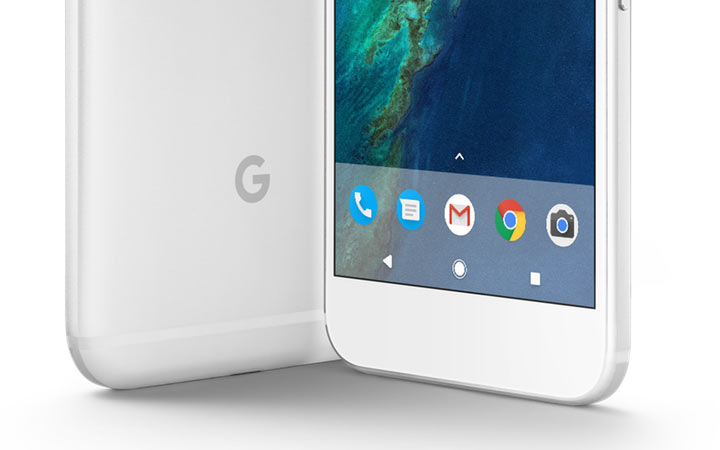
There’s will be a hearing aid Bluetooth profile in Android P and a hearing aid manager. The benefit of the new system will be that Bluetooth-enabled hearing aids will be able to directly connect to Android phones for the first time ever. It will allow users to make phone calls or listen to music without a streamer.
Only For Pixel and Pixel 2 Smartphone Owners
Unfortunately, it seems that the feature may only be rolled out to owners of Google Pixel and Pixel 2 smartphones for the moment. I have discussed the reasons why Made For Android has not become a feature up to now before. Basically, the problem has always been the fragmentation of Android as an operating system and the fact that the phone manufacturers all use different components.
Because of those two factors, it has been nearly impossible for Android to build a system that will work on all phones. They have decided to build the feature on Android P, but initially, it will just be available on the Pixel phones which Google control fully.
The original article stated
Thanks to the Android Open Source Project, we’re able to track some of the upcoming features in the next Android release, and there’s one feature we spotted that’ll make people with hearing disabilities excited to learn about: support for Bluetooth hearing aids. According to a series of code commits, the Google Pixel and Pixel 2 smartphones will natively support connecting to Bluetooth hearing aids…XDADevelopers Mishaal Rahman
Other Phone Brands Can Enable
The way the feature is embedded in Android P will allow other phone brands to enable it as they roll out the software update to their phones. I would imagine that Samsung will certainly enable it across its phones that can support it.
Released Quarter 3 2018
The people in the know seem to think that Android P will be released in late 2018. The only phones that will get the release immediately will be the Pixel range from Google. Other manufacturers will take time to push the upgrade out, of course, access to the upgrade will also be affected by your carrier.
They have been hinting about it for a while now, but today they officially launched their new hearing aid the Moxi All. The Moxi All is a made For Any Phone hearing aid with a twist, it is also a rechargeable hearing device. This makes so much sense, the Made For All hearing aids have proven to be power hungry, offering a rechargeable device means that users don’t have to worry about changing batteries. Let’s take a look.
Rechargeable Made For Any Phone
Like their stablemate Phonak, Unitron has chosen to offer a hearing aid that will connect to any mobile phone with Bluetooth using a headset protocol. However, in a very smart move, they have decided to make the devices, rechargeable. The rechargeable system seems to be the Z Power system that Unitron went with for the rest of their devices.
While there have been some issues with the Z Power system reported, they don’t seem widespread and the system seems to be pretty solid. This makes real sense for Unitron to do as the connection to Bluetooth is pretty power hungry.
Simple Freedom
The main pro here apart from the fact that it will connect to any phone is that the Moxi All will give you amazing freedom from your phone. They will act as a wireless headset, allowing you to both answer and refuse phone calls with a touch of the button on the hearing aids. They will also act to stream the call to the aids and to stream your voice back to the caller. Simply put, as with the Audeo B-Direct, you won’t need to touch your phone, it could be twenty feet away and you can still take a call and speak to the caller without ever needing to look for it.
One Ear Only
I would assume, but I am unsure, that the audio from the call will only be streamed to one ear. Considering the protocol they are using I think it will be a similar experience to the Audeo B-Direct. Audio in one ear while the second ear is muted. If I find out anything else, I will correct and update the article.
Confused About The Right Hearing Aid For You?
Our buying guide, easing the confusion with clear easy to understand info, we guarantee it will help you pick the right hearing aid for you.
No Music or Audio Books From The Phone
You probably won’t be able to stream audio other than phone calls from the phone. So no music or audio books, just phone calls. But again, the phone handling feature is outstanding and delivers real benefits as discussed.
TV Connector
Unitron is also introducing a new TV Connector, so you will have access to amazing stereo audio from any sound source once it is connected to it.
Five Different Price Points
The Moxi All will be available in five different technology levels and price points. In essence, that means no matter what your budget is, there will be a Moxi All for you
Tempus Platform
The new Moxi All is based on the Tempus platform and this is where it gets interesting. The Tempus platform delivers some pretty amazing localisation features without binaural communication. I think it will mean that top of the range Moxi All hearing aids will not be hobbled in the manner the Audeo B-Direct has been. Again, that will be something we will discuss later when we know a little more.
If you like what you see, share it so others can benefit
The sound made by the Krakatoa volcanic eruption in 1883 was so loud it ruptured eardrums of people 40 miles away, travelled around the world four times, and was clearly heard 3,000 miles away.
Think, for a moment, just how crazy this is. If you’re in Boston and someone tells you that they heard a sound coming from New York City, you’re probably going to give them a funny look. But Boston is a mere 200 miles from New York. What we’re talking about here is like being in Boston and clearly hearing a noise coming from Dublin, Ireland. Travelling at the speed of sound (766 miles or 1,233 kilometers per hour), it takes a noise about 4 hours to cover that distance. This is the most distant sound that has ever been heard in recorded history.
About a month ago we became aware of some problems with The Beyond Fusion and iPhone streaming and connectivity. It is rather unfortunate because they are outstanding hearing aids and when they work, the quality of the streamed audio is the very best in the business. For now though, reliably streaming audio is the biggest problem. Our initial interest was raised by a colleague who had two cancellations of Widex hearing aids. Something that has never happened before, Widex hearing aids in my experience stick.
When I discussed it with him the problem was the Beyonds and it’s failing as a Made For iPhone hearing aid. It just doesn’t work properly. The customers had consistent problems with the connection between hearing aids and iPhone that were so irritating, they no longer wanted to keep the hearing aids. So we decided to look into the problems and were surprised to see that they were common across the world. Quick addition here, Dan Tibbs, a friend and colleague has put his two cents worth in and it is worth reading, you can find it at the end of the original article.
Great Hearing Aids, Don’t Work With iPhone
All of the problems seem to be related to the pairing of the hearing aids to the iPhone. During transmission it appears that the audio signal is dropped constantly by one aid or, it seems that the signal may jump from one ear to the other for no apparent reason. The other complaint was described as the stuttering of the signal, like it was dropping and connecting again very quickly. To give you an idea, I have quoted users below and referenced where the quotes can be found:
“So far, my experience has been really good with these hearing aids. First, the actual hearing improvement has been great. Widex does a good job with music, and the sound quality has been superior to my previous Phonak aids. I am hearing my wife and children better now too. Some of that may just be having the hearing aids set louder. Either way, I’m happy with the hearing aids as far as hearing aids go. Now to the wireless functionality. I am using the aids with a new iPhone 7, which I bought specifically to use with these hearing aids, and the experience has been hit or miss. The hearing aids and phone seem to stay paired using bluetooth, but the audio streaming sometimes only goes through to one of my hearing aids… this happens with calls and streaming music, and I’m not sure, but it seems to happen more when the batteries are low. Last little issue is the battery life. I’ve been getting around 5 days on the batteries, with minimal streaming. I’m wishing they had a rechargeable option! Eddie P on Hearing Tracker“
They really do improve the sound over my previous hearing aids, however they also continually disconnect from the bluetooth and can’t reconnect without me having to open and close the battery door. This is especially problematic as they are connected to my phone’s bluetooth for work calls, and I never know when it’s disconnected, so after I answer the phone, I realize one or the other has been disconnected and have to go through the reconnection process. Dena C on Hearing Tracker
One interesting comment was on the Apple Support Community, it was as follows:
I have a pair of Widex beyond hearing aids. I am using ios 10.3.2 beta version. When I talk on the phone, the sound seems to jump from ear to ear. I also have a problem with a clicking noise when I am connected to apps that have sound. Both of these problems are very annoying and I am about to give up on hearing aids. I also tried a pair of Oticon opn hearing aids and had the same problems. I started with the current version ios and was told that apple was working on an update for this problem. That’s why I updated to the beta version. It doesn’t seem that the problem has been addressed. Does anyone have any knowledge regarding this? And can be found here for the moment.
There are other discussions across the web similar in nature, however, there seems little point bringing them up. The key though, is that the hearing aids aren’t working well for the purpose they are designed. I personally would find that hard to believe of a hearing aid from Widex. The very idea would give the R and D department in Denmark a fit. So I talked to a couple of people I know in relation to the underlying issue. I was talking to Widex, but they never got back to me.
The Problem is The iPhone
So it appears the problem is the iPhone, since one particular update of the ios it appears that there has been real problems with the Bluetooth system on iPhones when paired to hearing aids. In fact, the problem may not, and does not appear to be isolated to just Widex. I have heard reports of Oticon having similar problems and I am asking around about other manufacturers. Steve has his LiNX 3D 9s paired with an iPad on ios 10.3 and he isn’t having any issues, however, that may be because it is an iPad, bigger bluetooth antenna maybe or just bigger battery.
Bluetooth Hearing Aids or Bluetooth Compatible
We wrote a cornerstone article on Made For iPhone hearing aids that are available called funnily enough Blue tooth Hearing Aids, Made For iPhone Hearing Aids. In it we detailed what the difference was between Bluetooth Compatibility and Made For iPhone. The Blue tooth compatible systems that allow connection to a smart phone via a streamer device are outstanding. Steve owns an Android phone and he uses a PhoneClip + with his LiNX 3D 9s to stream calls and audio. He is writing an article about it right now but he is pretty happy.
The Widex Unique can be used with a Com Dex to do the same thing. I know streamers are a pain, but you know what they offer an outstanding and stable connection. That can’t be a bad thing. For now, and just for now because Apple might sort this out soon enough, the Beyond is a fantastic hearing aid, but most irritating.
Update: 08/06/2017
I was speaking to Dan Tibbs, great guy and an ex colleague from the States. He was surprised by what I was finding, because he has a lot of experience with the Beyond, he has been wearing them for nearly six months. He has them paired to an iPhone 6s that runs on IOS version 10.3.2. His app version is 1.1.0 (20097.18.3) and his hearing aids firmware version is 4.00. So with the scene set, let’s take a look at Dan’s experience.
Dan is in a similar boat to Steve, he suffers severe bilateral sensorineural hearing loss and he has over 35 Years of hearing instrument experience with multiple hearing aid brands. He says that the sound quality of streaming is outstanding and the performance in wind is the best he has ever experienced. He loves that the hearing aids are IP68 rated (almost waterproof) and that firmware updates for the hearing aids will be pushed to end-users through the Widex App. Dan said that he really enjoys the function of the Universal program, he finds it sophisticated enough to not need to change programs.
While he is both a technocrat and an experienced user, he says that he just prefers ease of use and “set and forget” performance from electronics. I just reckon he is getting lazy in his old age. Dan has tried several different batteries and he finds now that he is getting 4 to 4.5 Days with frequent streaming. Having said that, the battery has to cope with power receivers and the significant output to meet the needs of Dan’s hearing loss. I will hand over to Dan for an explanation of his own experiences:
“I could spend a lot of space discussing the various options, features and background of the devices, but for today’s discussion, I will focus on the streaming quality. I find the Widex Beyond offers an excellent sound quality. Producing sound in stereo, I find the function of the devices is consistent. As Geoff has mentioned, I use an iPhone 6s. I’ve not had a desire to upgrade to the iPhone 7 for several unrelated reasons, but have heard some issues with connectivity to the iPhone 7.
The issue doesn’t seem to be related specifically to the Widex Beyond but to the architecture/software of the iPhone 7 as you can find sources describing iPhone 7 issues with other Bluetooth headset platforms (see ref below). I think it is completely reasonable that hearing aid manufacturers may not be able to control the architecture on smart phones, particularity considering how often updates seems to get pushed through to our phones.
However, the net effect to the end-user that a phone model doesn’t “work well” may, in their mind, reflect more on the hearing aid than the phone (even if the phone is the culprit). I suspect that education on this issue may help both the dispensing professional and the end-user. At the end of the day, end-users have a level of expectation regarding how the hearing aids and their features/accessories should perform regardless of where the original “issue/problem” may be generating from. It is because of this, I like that the Beyond can receive firmware updates directly and not need a visit to the dispensing office.
The only time I have an issue with a drop off in sound quality is when I’m streaming DirecTV Now or YouTube and the network connection slows and the picture pixelates. At that point, the audio may get temperamental and drop in one ear or get static. When I play music stored on my phone or use Pandora, it works flawlessly for me. That being said, interference in your environment and what stage your battery is in their life cycle can impact streaming performance. When a battery gets low, many features, including streaming range may start to weaken.
We see this in many electronics when battery life gets low, performance doesn’t remain optimal. Staying on top of battery changes will help ensure consistent performance and streaming. In all, the Widex Beyond offers me a consistent, high-fidelity performance that is equivalent or superior to other direct to iPhone streaming devices I’ve listened to. Most challenges end-users experience with a direct 2.4 GHz connection, will likely be related to: the battery, network strength, environmental interference, or system architecture issues that likely impact many 3rd party vendors interfacing with that architecture. Future hearing aid and phone firmware updates from the manufacturer and appropriate expectations from the end-user should help.”
So Dan is getting on quite well and hasn’t really had any problems over and above what you would expect with Bluetooth. Bluetooth is inherently hinky, it is a quite irritating system, and you can find a device like a Bluetooth headset or speaker working seamlessly for weeks and then just suddenly decide quite petulantly not to connect. Dan like myself, has spoken about the use of direct streaming and streaming through intermediary streamers. His article is worth a look, and it can be found here: https://www.linkedin.com/pulse/direct-24-ghz-streaming-vs-intermediary-ghz106-mhz-accessory-tibbs
New Rechargeable Super Power, Rechargeable CROS and Children’s Hearing Aids
Phonak have just announced among other things an extension to their Lithium-Ion rechargeable hearing aids range. For the first time ever there will be a Lithium-Ion rechargeable Super Power hearing for people with profound hearing loss. They are also introducing a rechargeable hearing aid for children and a rechargeable CROS hearing device. Let’s take a look.
Rechargeable Super Power Hearing Aid
The Naida Belong R is the first ever Lithium-Ion rechargeable hearing aid for people with profound hearing loss. The hearing aid has been introduced as part of the launch of the new Naida B range. This is the 5th generation of Phonak’s Naida device and the core features of it will be in line with the rest of the Belong range. Phonak said
Phonak Naída B default first fit provides the industry’s best Speech Intelligibility Index (SII) results for clients with severe to profound hearing loss and enhanced performance in noise when combined with Roger wireless solutions. For the first time, Naída comes in a rechargeable Receiver-in-Canal (RIC) option, offering the most feature-rich rechargeable hearing aid from Phonak, dedicated to users with severe to profound hearing loss.
New Rechargeable Children’s Hearing Aids
Phonak also announced the launch of the Sky Belong R, a device that is firmly aimed at children. Again, I think this will be the first ever rechargeable hearing aid for children. It too is just one model from the launch of the new Sky Belong range. Phonak say
The Sky B portfolio features AutoSense Sky OS, the only operating system built specifically for children, and SoundRecover2 which gives children access to a broader range of sounds essential for speech and language development. Phonak now offers a rechargeable option, Sky B-PR, that gives children a full day of uninterrupted hearing on a single charge.
Rechargeable CROS B
I really like this idea, CROS devices can be a little bit power hungry, so introducing a rechargeable CROS device is a great idea. The fact that the rechargeable power pack is Lithium-Ion means that there will be plenty of power to run the devices. The introduction of the Belong CROS means that people with single-sided or asymetrical hearing loss can now avail of the latest Phonak hearing aids.
Phonak also announced the introduction of two new wireless microphones, they are called the Roger Select™ and the Roger Table Mic II.They are the first products to make use ofthe new MultBeam Technology that they announced just a short while ago. The Roger Select is a versatile microphone that uses MBT to help people with hearing loss hear better in noisy restaurants or other gatherings. They have said there will be three distinct modes (automatic, manual, lapel) which will allow wireless hearing in a variety of conversations and environments. The Roger Table Mic II is the successor to the Roger Table Mic, now featuring MBT. They have said that the microphone will be ideal for working adults who need to actively participate in meetings.
If you like what you see, share it so others can benefit
Phonak has finally introduced the Naida range on the Belong platform. It had to be expected and it was a question of when really. Although, they gave us a pleasant surprise by taking the opportunity to introduce the first ever rechargeable hearing aid for people with severe to profound hearing loss. Let’s take a look at the Naida B range.
The latest Upgrade of a Powerful Solution
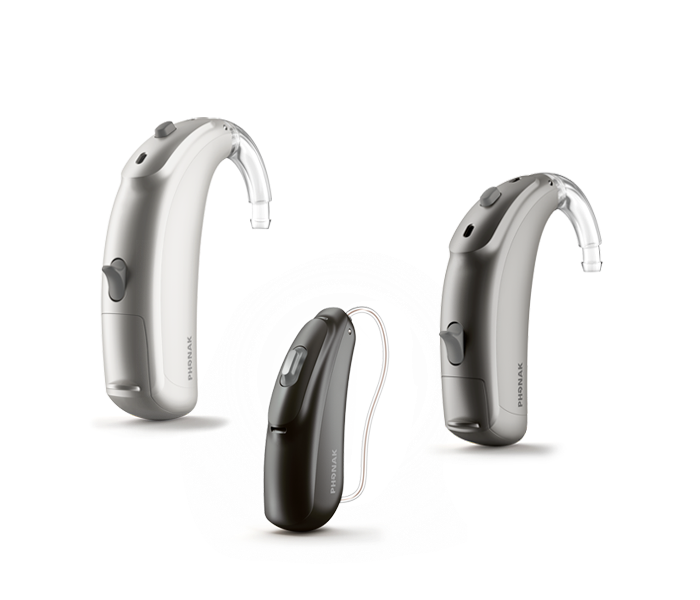
The Naida Belong is just the latest upgrade to a hearing aid range that has become foundation device for treating people with severe to profound hearing loss. The range is made up of three hearing aid types two of which will be available across four levels of technology. However, the third, the rechargeable RIC device will be available only across the three top levels of technology. The devices are:
Naida B R RIC
This is the first ever rechargeable Naida hearing aid, the device is a receiver in canal hearing aid which can be used with three power levels of receivers. The device has a programme button and is powered by a Lithium-Ion rechargeable cell, it will suit people with a hearing loss up to severe. The rechargeable hearing aid will only be available in the B50, B70 and B90 technology levels.
Naida B SP
The Naida B SP (Super Power) is a traditional Superpower BTE hearing powered by a size 13 battery that will suit people with a severe to profound hearing loss. The hearing aid has both a programme button and a volume control and will be available in the B90, B70, B50 and B30 levels of technology.
Naida B UP
The Naida B UP (Ultra Power) is a traditional Ultra power BTE hearing powered by a size 675 battery (huge battery) that will suit people with a profound hearing loss. The hearing aid has both a programme button and a volume control and will be available in the B90, B70, B50 and B30 levels of technology.
All The Latest Features
The hearing aids have all of the latest features from the Belong range but offer a new proprietary fitting formula called Adaptive Phonak Digital Contrast. Phonak say that the new formula offers real benefits to some people who have real difficulty with hearing speech sounds. In essence, the formula should really contrast the consonant sounds from the vowel sounds in speech to allow better understanding.
Of course, they also use the very well received Sound Recover 2 which seemed to perform very well in the Naida V when it was first introduced. The operating system has also been tweaked to offer a better more seamless experience as users move from sound situation to sound situation.
Great Devices, Hard Hearing Loss to Treat
The Naida range has proven to be a fantastic hearing aid offering real benefits to people with some of the most difficult hearing losses to treat. The Belong range, in general, has been very successful and I have had some really great results from the devices I have fitted. In fact, I would say that the Audeo Belong 50, seems to perform better than I expected. With all of that in mind, I would expect the new Naida Belong range to work well for people who really need it.
If you like what you see, share it so others can benefit
If you are interested in finding out what the new LiNX Quattro from GN is for you, this could be your chance. I noticed a tweet the other day from Amplifon, they are offering trials on the LiNX Quattro at their hearing aid centres across the UK and Ireland. You simply have to book an appointment for a hearing test and indicate that you would like to trial the Quattro. You can do so by clicking on the button below, it will bring you to their booking page.
The LiNX Quattro
Both myself and Steve have tried the Quattro rechargeables and we have been hugely impressed. Great sound quality, outstanding battery life and really solid connectivity, what’s not to like really? However, we both know that making a decision to purchase hearing aids is a big one. Trials are a good way for you to get a clear idea about what hearing aids will deliver for you.
What you need to realise
If you are a first time user, it is going to be very strange. Sounds will be odd and it will take a little time to get used to it. Don’t give up, persevere with it until your brain begins to acclimatise, it will just take a couple of days. You will notice the difference from the start, but believe it or not it will get better with every day of use.


 Itshearingaidknow